When military investigators from CID, NCIS, or OSI want to talk, your career, freedom, and entire future are on the line. The single most important thing you can do is to remain silent and immediately state, "I invoke my right to remain silent and I want a lawyer."
This isn't just a line from a movie. It’s your constitutional shield. It’s the one action that protects you from making career-ending mistakes before you even know the full scope of what you’re up against.
The First Call You Need to Make When Under Investigation

The moment law enforcement makes contact is a critical fork in the road. Every single word you say is recorded and can—and will—be used against you. Investigators are highly trained in interrogation techniques designed to make you feel comfortable, create a false sense of urgency, or even imply that talking is the only way to clear your name.
Don't fall for it. It's a strategic trap.
The primary goal of any investigator is to secure a confession or incriminating statements. They are not there to help you. They are there to build a case for the prosecution. This is exactly why your first move must be finding a "military defense lawyer near me," not as an afterthought, but as an immediate priority.
Understanding Investigator Tactics
Investigators often start with a friendly, non-confrontational approach. You'll hear things like, "We just need to clear up a few things," or the classic, "If you're innocent, just tell us your side of the story and this will all go away." This tactic, known as minimization, is designed to lower your guard.
On the flip side, they might use maximization. This is where they exaggerate the evidence they have or the penalties you’re facing. They might claim, "We have witnesses who saw everything," even when they have nothing of the sort. The goal is to make you feel hopeless and pressure you into talking.
The most dangerous moment for any service member is the belief that they can talk their way out of an investigation. The truth is, anything you say can only hurt you. The only words you should utter are those invoking your rights.
Another common tactic is creating a false sense of urgency. An agent might imply that if you don't give a statement right now, things will be much worse for you. This is a classic pressure move. You always have the right to consult with an attorney before answering any questions.
These first few minutes are chaotic and stressful. Here's a quick reference guide to keep your actions straight.
Immediate Actions When Facing a Military Investigation
| Action to Take (Do) | Mistake to Avoid (Don't) |
|---|---|
| Clearly state: "I invoke my right to remain silent and I want a lawyer." | Answer any questions, even seemingly harmless small talk. |
| Provide only your name, rank, and unit if asked directly. | Try to explain your innocence or tell "your side of the story." |
| Calmly and politely repeat your request for a lawyer. | Sign any documents, waiver forms, or written statements. |
| Obey a direct, lawful order to go to a location (e.g., CID office). | Physically resist or argue with investigators. |
Remember, once you clearly state you want a lawyer, investigators are legally required to stop questioning you. They may still try to chat, but you must hold firm and stay silent.
Voluntary Interview vs. Direct Order
It is absolutely critical to understand the difference between a request and an order. An investigator might "ask" you to come down to their office for a voluntary interview. You are not required to go. You should politely decline and state your desire for a lawyer.
However, if a superior in your chain of command gives you a direct, lawful order to report to a location (like the CID office), you must obey that order. This does not mean you have to speak.
Once you arrive, you still have the absolute right to remain silent and request a lawyer. Following the order to show up prevents an additional charge for failure to obey, while invoking your rights protects you from self-incrimination.
A top-tier civilian defense lawyer can help you navigate these initial, high-stakes moments. Your first call shouldn't be to a friend or family member—it should be to an experienced attorney who can step in immediately and take control. You can see from our case history at https://ucmjdefense.com/wp-content/uploads/2026/02/ucmj-defense-military-image-683×1024.webp how critical early intervention is.
How to Find and Vet a Civilian Military Defense Lawyer

Let’s be blunt: not all lawyers are created equal. This is never truer than when your military career, your freedom, and your future are hanging in the balance. The Uniform Code of Military Justice (UCMJ) isn't just another legal system; it’s a world of its own, with unique pressures and a distinct rulebook.
When you start searching for a "military defense lawyer near me," you aren't just looking for any attorney. You're searching for a specialist, an expert in a field most lawyers will never touch.
This brings us to a critical distinction: the difference between your free, detailed military counsel and a private civilian military defense attorney. Your assigned Judge Advocate General (JAG) counsel is a vital asset, but they often work under significant constraints.
Civilian Specialist vs. Detailed JAG Counsel
The scales of justice in the military are not always balanced. Recent data reveals that military-appointed defense counsel, who are often junior JAG officers, are frequently outnumbered and out-resourced by prosecutors. They can also face institutional pressures from the chain of command that might subtly influence their defense strategy.
This reality is a primary reason why many service members facing serious allegations decide to hire a specialized civilian attorney.
A seasoned civilian lawyer brings two things to the fight: deep experience and undivided loyalty. Their one and only mission is your defense, completely insulated from command influence. They aren’t juggling a massive caseload or balancing their defense work with other military duties.
Your defense is a job interview where you are the hiring manager. You are not just buying legal services; you are investing in an expert who has the specific skills to dismantle the government's case and save your career.
While your hometown criminal defense lawyer might have the best intentions, they are almost always out of their depth in a court-martial. Experience in state court just doesn't translate to the unique rules of evidence, procedures, and culture of the military justice system. You need a lawyer who lives and breathes the UCMJ.
How to Analyze a Law Firm's Website
The first step in your vetting process is a deep dive into a law firm’s website. You have to look past the slick marketing and hunt for hard evidence of genuine military law expertise.
Here’s what to zero in on:
- Case Results Specific to Military Law: Do they showcase actual wins in courts-martial, separation boards, and NJP proceedings? Be skeptical of firms that list generic victories like DUIs or state-level assault cases. That’s a red flag.
- Testimonials from Service Members: Look for reviews from clients who served in your branch. This proves they have real-world experience helping people in your exact shoes.
- Attorney Biographies: Do the lawyers have a background as former JAGs? Experience as a military prosecutor or defense counsel provides priceless inside knowledge. A detailed bio, like the one for our lead attorney Michael Waddington https://ucmjdefense.com/wp-content/uploads/2026/02/UCMJ_Michael-Waddington-1024×832.webp, reveals the depth of experience you should demand.
- Focus on UCMJ Defense: The firm’s entire practice should be dedicated to military law. If they also handle personal injury, divorce, and bankruptcy, they are generalists, not the specialists you need for this fight.
Finding True UCMJ Expertise
Your search should quickly narrow down to firms that focus exclusively on military defense. While military law is a niche field, some general advice on how to choose a criminal defense lawyer still provides a solid framework for your search. The core principles of verifying experience and asking tough questions apply across the board.
When you're evaluating a firm, ask yourself these questions:
- Do they handle cases worldwide, or are they stuck in one location? The best firms travel to their clients, wherever the mission takes them.
- Are they recognized as experts in the field? Look for authors of books on military law, instructors at legal seminars, or commentators on national news.
- Is their website a genuine resource packed with articles and guides on the UCMJ, or is it just a digital business card?
A true specialist leaves a deep digital footprint that proves their authority. Their website, publications, and public appearances all point to one singular focus: defending service members. This is the level of dedication you need to win the most important fight of your life.
The Attorney Consultation: Your One Shot to Get It Right

Let’s be blunt. That first meeting with a potential lawyer isn’t just a chat—it’s a job interview. You are the hiring manager, and the position you're filling is for the person who will defend your career, your freedom, and your entire future. This is your chance to cut through the slick sales pitch and find out if they actually have what it takes to win.
So, treat this meeting with the gravity it deserves. Don't be shy about asking hard, direct questions. A truly confident and experienced attorney will welcome the scrutiny. They'll give you clear, straight answers. If you get vague responses or promises that sound way too good to be true, consider it a massive red flag.
Digging Deeper Than "Experience"
Every single lawyer will claim to have "experience." That word is meaningless without context. Your job is to drill down and quantify what that experience actually looks like in the unique world of military law. General questions will only get you generic, useless answers.
You need to ask targeted questions that force them to show you their real, hands-on trial experience inside the court-martial system. Forget about "How long have you been an attorney?" That tells you nothing.
Actionable Questions to Uncover Real Trial Experience:
- "How many contested courts-martial have you personally taken to a not-guilty verdict in the last three years?" This is the key question. It measures recent, relevant success and shows they are actively fighting—and winning—in today’s military courtroom.
- "What percentage of your legal practice is dedicated only to military defense?" You need a specialist, not a jack-of-all-trades who just dabbles in the UCMJ. The only acceptable answer here is 100%.
- "Tell me about your experience with cases at my specific base and your familiarity with the prosecutors there." Knowing the local legal office, the military judges, and even the tendencies of the local jury pool can be a huge strategic advantage.
- "If I hire your firm, who exactly will be handling my case?" Make sure the senior partner who sells you isn't just going to pass your case off to a junior associate. You need to know precisely who is in charge of your defense.
A solid answer will include specific numbers, case examples (without breaking confidentiality, of course), and a clear, unapologetic focus on military law. An evasive attorney will try to pivot or talk in broad terms about "criminal defense" in general.
The single biggest mistake a service member can make is hiring a lawyer based on promises instead of a proven track record. Any lawyer who guarantees you a specific outcome is lying. A true expert gives you a frank assessment of the risks, the potential strategies, and a clear path forward.
Sizing Up Their Strategy and Communication
Beyond their resume, you have to find a lawyer whose strategic mind and communication style fit what you need. This person will be your guide through what is likely the most stressful time of your life. You have to trust their judgment completely.
During the consultation, pay close attention to how they answer you. Do they actually listen, or are they just waiting for their turn to talk? Can they explain complex legal jargon in a way that makes sense, without being condescending? A great military defense lawyer is a teacher as much as a fighter.
Here are the key areas to probe their strategic thinking:
- Their Opening Moves: Ask them to walk you through the very first three things they would do after you hire them. A top-tier attorney should immediately start talking about launching their own independent investigation, filing motions to preserve evidence, and taking control of all communication with your command and the investigators.
- Their Arsenal: Ask about their support staff, their network of forensic experts, and their investigators. A lone wolf attorney might not have the resources to go toe-to-toe with the unlimited power of the government.
- The Communication Plan: Ask directly, "What is your policy for client communication? How often can I expect updates, and who will be my main point of contact?" You absolutely need an attorney who is accessible and responsive.
This consultation is the final, critical step in vetting a "military defense lawyer near me." It’s where you confirm that the expertise you saw online translates into a real, actionable plan to protect you. By asking these tough questions, you move beyond the surface and hire a true advocate who is ready to fight for your future.
Digging Past the Slogans: How to Verify Real UCMJ Experience
Any lawyer can throw words like "aggressive" or "experienced" on a website. It's easy. But when your career and freedom are on the line, you need to look past the marketing slogans and find verifiable proof of their skill.
When you're searching for a "military defense lawyer near me," your job is to become an investigator. Real expertise within the Uniform Code of Military Justice (UCMJ) leaves a paper trail. You just have to know how to follow it. A lawyer's actual history in military courts is the single best predictor of how they'll perform for you.
Look for Former JAG Officers
One of the biggest advantages you can get is hiring an attorney who is a former Judge Advocate General (JAG) officer. These lawyers didn't just study the military justice system; they lived it. They’ve been on the inside as prosecutors, defense counsel, and sometimes even military judges.
This isn't just a minor resume item—it's a massive strategic edge.
- System Fluency: They don’t need a crash course on the UCMJ. They’ve spent years applying its unique rules of evidence, procedure, and courtroom etiquette.
- Command Influence: They have seen firsthand how a commander’s opinion can poison a case, and they know the pressure points to counter it.
- Network & Reputation: A respected former JAG often has a network of contacts at bases worldwide. That reputation can open doors during negotiations with prosecutors who know they can't be fooled.
Hiring a former JAG is like hiring a guide who not only owns the map but has also walked the treacherous path you're on dozens of times before.
Identify True Subject-Matter Experts
Beyond a JAG background, you need to spot the difference between a general practitioner and a true authority in military law. The real experts don't just practice the law—they teach it, write about it, and are called upon to analyze it on a national stage.
Don't get distracted by a slick website or a confident sales pitch. The best lawyers have a resume that speaks for itself. Their entire professional life is dedicated to mastering military law, and you can find the proof in their public contributions to the field.
Look for these dead giveaways of a genuine subject-matter expert:
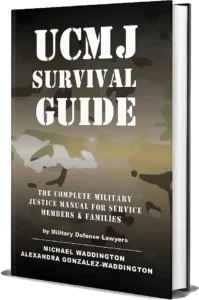
- Published Author: Have they literally written the book on court-martial defense? Authoring a UCMJ survival guide like this one for service members shows a deep commitment that goes way beyond just taking cases.
- Legal Educator: The top attorneys are frequently asked to teach trial advocacy at legal seminars. This means their peers—other lawyers—respect them as masters of the craft.
- Media Commentator: When CNN, FOX News, or the New York Times needs an expert to break down a high-profile military case, who do they call? Attorneys trusted by national media have a proven, public reputation for authority.
These aren't just vanity projects. They're the natural result of a career spent obsessively mastering a highly specialized and complex area of law.
Unpack Their Appellate Court Experience
Maybe the most powerful evidence of an attorney's mastery is their experience in military appellate courts. Specifically, you want to see a track record before the Court of Appeals for the Armed Forces (CAAF). This is the Supreme Court of the military.
Arguing before CAAF isn't for dabblers. It demands an incredibly deep understanding of the most complex legal theories in the military justice system.
As of 2026, the most recognized civilian military defense attorneys have built their practices on a foundation of appellate work. Top practitioners have argued 53 or more cases before CAAF, a level of experience that is extraordinarily rare. You can dig into this by reviewing the data on top military appellate attorneys.
This level of advocacy shows they've mastered the system from the trial level all the way to the highest court. When you verify an attorney's results, you aren't just counting wins and losses. You're measuring the depth of their commitment and the height of their expertise.
Why 'Near Me' Is About Expertise, Not Zip Code

When you're active duty, your world is global. One year you're at Fort Liberty, the next you're at Ramstein Air Base in Germany, and then it's off to Camp Humphreys in South Korea. The idea of "near me" isn't a ten-mile radius; it's defined by your mission.
That's why searching for a "military defense lawyer near me" requires a total shift in thinking.
The common mistake is to look for a lawyer whose office is just outside the base gate. This is a dangerous assumption that can lead you to hire an inexperienced local attorney over a world-class specialist. The most critical factor isn't their address—it’s their proven expertise in military law and their absolute willingness to travel to you, wherever you are.
The best civilian military defense firms are built for global operations. They don’t just serve a single city; they serve the entire U.S. military.
Expertise Travels—You Just Need the Right Team
Imagine you’re facing a court-martial at Naval Base Yokosuka, Japan. The local attorney down the street might be a good person, but they've likely never handled a contested court-martial. Their experience is in Japanese civil law, not the Uniform Code of Military Justice (UCMJ).
In sharp contrast, a top-tier UCMJ specialist from the United States already has a system in place. They fly to Japan, set up a "war room" on or near the base, and embed themselves with you. They are physically present for every critical stage of your case.
This means they are on the ground to:
- Conduct in-person witness interviews.
- Walk the alleged crime scene to find holes in the government's story.
- Aggressively argue motions in court, face-to-face with the judge.
- Cross-examine government witnesses during the trial itself.
This boots-on-the-ground presence is non-negotiable. The key is finding a firm with the resources, experience, and logistical capability to deploy its expertise anywhere on the planet at a moment's notice.
Your lawyer's physical address is irrelevant. What matters is their ability to show up prepared, experienced, and ready to fight for you at your base, whether it’s in San Diego or Sigonella. A local address doesn't win cases; a global reach combined with deep expertise does.
The military's own global posture reinforces this need. As strategic focus shifts, service members can face investigations in remote and unfamiliar jurisdictions. Analysis from the Center for Strategic and International Studies highlights how these global defense trends impact personnel. In this environment, you need defense counsel with the global reach to handle cases across any branch, anywhere.
Communication Technology Bridges the Distance
So how does it work when your lawyer isn't physically next door for daily check-ins? Modern technology makes constant communication seamless. The best firms operate with a clear system.
- Video Conferencing: For face-to-face strategy sessions and case preparation.
- Secure Client Portals: To share sensitive documents and evidence safely.
- Constant Availability: Via phone, text, and email for immediate questions.
This combination of technology for daily communication and physical presence for critical events gives you the best of both worlds. You get the responsiveness of a local office with the unmatched expertise of a nationally recognized specialist.
When you search for a military defense lawyer, prioritize firms that demonstrate this hybrid model of remote support and on-the-ground action. Their ZIP code doesn't matter; their courtroom results do.
Answering Your Questions About Hiring a Military Defense Lawyer
When you're under the stress of a military investigation, trying to figure out the legal world can be overwhelming. You've got questions, and you need straight answers, not legal jargon. We've been doing this for decades, so let's break down the most common concerns service members and their families have.
You’re probably searching for a "military defense lawyer near me" and getting hit with a wall of information. Let's cut through the noise and talk about what really matters: cost, timing, and strategy.
How Much Does a Civilian Military Lawyer Cost?
This is usually the first question, and for good reason. The cost for a top-tier civilian military defense lawyer isn't a simple number—it really depends on the fight you're facing.
Several things factor into the cost:
- Case Complexity: A simple administrative separation board will cost a fraction of what a full-blown, contested Article 120 court-martial does.
- Severity of Charges: A felony charge that could land you in Leavenworth for decades demands a much more intense—and therefore more expensive—defense effort.
- Attorney Experience: You're not just paying for a lawyer's time. You are paying for their specific, battle-tested expertise and their history of winning cases just like yours.
The best firms almost always work on a flat-fee basis. This is a massive advantage for you. It means you get total cost certainty right from the start. You'll know exactly what the investment is, with no terrifying surprise bills or hourly charges piling up. That fee should be laid out in a crystal-clear, written agreement detailing every service covered.
While the cost is a real consideration, it’s important to frame it correctly. This isn't an expense; it's an investment in your career, your freedom, your rank, your retirement, and your entire future.
A word of caution: be extremely wary of unusually low fees. A bargain-basement price is a red flag. It often means the lawyer lacks experience, doesn't have the resources to fight properly, or plans to put minimal effort into your case. For the most important fight of your life, you can't afford to cut corners.
Can I Use a Civilian Lawyer and My Detailed Military Counsel?
Absolutely. In fact, this "hybrid defense" is often the most powerful and strategic way to fight your case. You have a legal right to your assigned military counsel (your JAG), and hiring a civilian lawyer doesn't mean you fire them. Instead, you build a team.
Here's how it works: your hired civilian attorney takes the lead. They are the seasoned trial expert who calls the shots and crafts the overall defense strategy. Your detailed JAG, who is often younger and less experienced, acts as an invaluable force multiplier. They provide on-the-ground support and have access to the military's free resources.
A sharp civilian lawyer knows how to mentor the junior JAG, guiding them on trial tactics and using their presence on base to chase down evidence and witnesses. This approach combines the local access of your detailed counsel with the trial mastery and—most importantly—the undivided loyalty of your hired specialist. The result is a dynamic team focused on one thing: winning your case.
When Should I Hire a Civilian Lawyer?
Immediately. The absolute best time to hire a lawyer is the second you think you might be under investigation. This is often long before you're ever formally questioned by CID, NCIS, OSI, or CGIS.
Early intervention is the single most powerful move you can make to protect yourself. A lawyer can step in right away, shut down any interrogations, and take over all communication with investigators and your command. They start building your defense before the government has even finished building its case against you. We've seen it time and again: this proactive approach can stop charges from ever being filed in the first place.
If you wait until charges are preferred, you're already playing defense on their field. The prosecution has had weeks, maybe months, to build its narrative. While hiring a lawyer at that stage is still critical, you've lost precious time and ground. The earlier you get an expert in your corner, the better your odds of controlling the outcome.
My Assigned JAG Seems Capable. Why Spend the Money?
Many detailed JAG officers are bright, dedicated, and work incredibly hard. But they are almost always fighting with one hand tied behind their back. They are typically junior officers with very few contested trials under their belt, drowning under a massive caseload.
Crucially, they serve within the same chain of command that is prosecuting you. This creates unspoken pressures and potential conflicts of interest, whether they admit it or not.
A civilian specialist, on the other hand, answers only to you. Their loyalty is absolute and undivided.
When you hire a firm like Gonzalez & Waddington, you're not just getting a lawyer. You are retaining decades of focused court-martial trial experience. You are hiring a reputation for fighting—and winning—against the government. You are plugging into a network of resources, from independent investigators to world-class forensic experts, all designed to level a playing field that is heavily stacked against you.
Your assigned JAG might be capable, but a serious UCMJ case is the fight of your life. It demands a proven specialist, not a general practitioner who was simply next in line to get your file.
When your career and freedom are on the line, you need a law firm that lives and breathes military defense and has a global track record of success. The attorneys at Gonzalez & Waddington have the experience, the resources, and the aggressive mindset required to fight for your future. Visit us at https://ucmjdefense.com to see our case results and schedule a confidential consultation.