



Gang-Rape Allegation Collapses Against Navy Officer
U.S. v. Navy O-2 – Norfolk, Virginia – Pre-Charge Defense Allegations: Rape, Conspiracy, Indecent Acts, Fraternization, Adultery, Conduct Unbecoming Max Punishment: Life in prison, Dismissal,
The American military justice system is one of the most powerful prosecutorial machines in the world. When a service member is accused of misconduct, the command controls the investigators, the prosecutors, the judges, and even the jury pool. A single allegation can destroy a career, take away retirement benefits, and lead to confinement. You need military defense lawyers who can counter this system with skill, strategy, and real courtroom experience.
Gonzalez & Waddington, Attorneys at Law is a globally recognized military defense firm representing service members worldwide. Our court-martial attorneys have defended cases in more than a dozen countries and hundreds of military installations. We have fought — and won — some of the toughest UCMJ cases, including sexual assault, domestic violence, homicide, war crimes, fraternization, drug offenses, classified information cases, and complex multi-accuser investigations.
Unlike civilian courts, the military justice system gives extraordinary power to commanders. An accusation can lead to immediate career-impacting decisions long before trial. Without an aggressive civilian defense team, the process often tilts against the accused from day one.
Military defense lawyers must know how to dismantle biased investigations, challenge unlawful command influence, and expose weak or fabricated allegations.
Our firm defends every type of UCMJ case, from minor allegations to high-profile felony-level crimes. We handle all branches and all commands — Army, Navy, Air Force, Marines, Space Force, and Coast Guard.
Not every fight is a court-martial. Some of the most damaging cases arise from administrative actions. A single negative administrative move can derail a career or lead to separation before a service member ever has a chance to defend themselves fully.
Winning military cases requires a mixture of legal strategy, tactical experience, psychological insight, and mastery of cross examination. Our approach is built on decades of real courtroom success, not theory.
Our firm has built a worldwide reputation for winning military cases that others considered hopeless. We defend service members in the United States, Europe, Asia, the Middle East, and anywhere the U.S. military operates. We take only a select number of cases each year to ensure each client receives intense, focused representation.
Whether you are under investigation, facing an administrative separation board, or preparing for a general court-martial, your future depends on the strength and skill of your defense. Military prosecutors, investigators, and commanders are already building a case against you. You need a team with experience, credibility, and a proven global track record.
➤ Contact Gonzalez & Waddington for a Confidential Consultation
Yes. JAGs are hardworking, but they are overburdened and cannot match the experience of dedicated civilian military defense lawyers. A civilian attorney provides independent, aggressive representation not controlled by the command.
Absolutely. Civilian defense lawyers can appear at courts-martial worldwide. Gonzalez & Waddington regularly defends cases in Europe, Asia, the Middle East, and across the United States.
They defend UCMJ criminal cases, administrative separations, Boards of Inquiry, GOMOR rebuttals, security clearance issues, and investigations by CID, OSI, NCIS, or CGIS. Our firm covers everything from sexual assault to homicide to national security allegations.
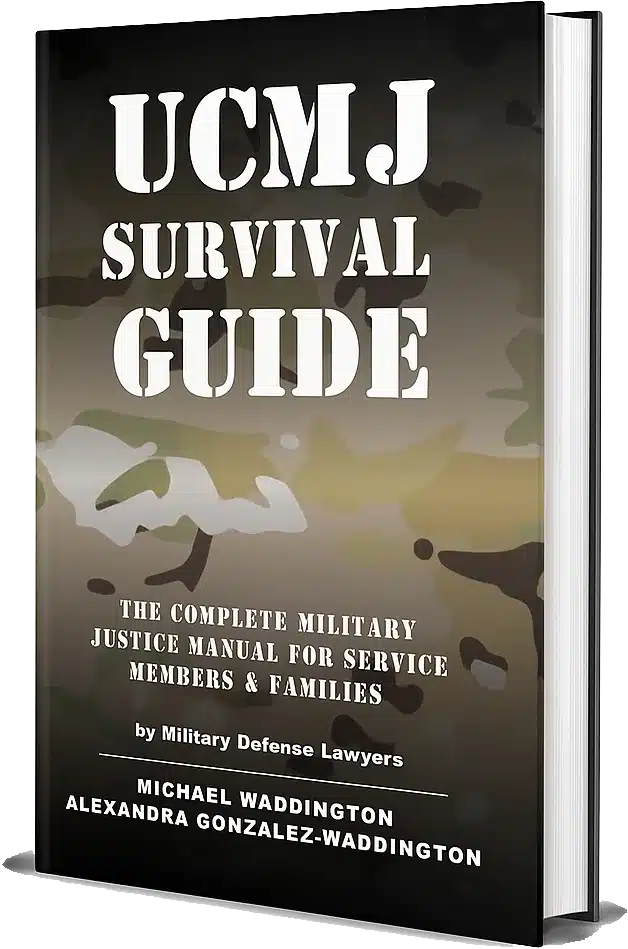
Michael and Alexandra Gonzalez-Waddington are internationally recognized military defense lawyers known for winning complex courts-martial around the world. They are authors, lecturers, and seasoned trial attorneys with a long history of defending service members in the toughest cases.
Immediately. Never wait until charges are filed. The earlier our team becomes involved, the more effectively we can shape the case, preserve evidence, and counter the government’s narrative.
Military defense lawyers play an essential role in providing legal support to service members facing charges under the Uniform Code of Military Justice (UCMJ). These attorneys assist clients in navigating the complexities of military law, ensuring their rights are protected throughout the disciplinary process. Whether dealing with courts-martial, administrative hearings, or investigations, military defense lawyers offer guidance tailored to the unique demands of military justice. Military defense legal services help service members address these challenges with informed and reliable legal representation.
Facing military legal challenges can be overwhelming, especially given the specialized nature of military law and procedures. Military defense lawyers act as advocates and advisors, helping service members understand their options and the potential consequences of various actions. This support is vital for preserving a service member’s career, reputation, and future opportunities within and beyond the armed forces.
Having dedicated legal representation in military defense matters ensures that service members receive fair treatment under the law. Military defense lawyers work to challenge evidence, negotiate favorable outcomes, and uphold procedural safeguards. Their involvement can significantly impact the resolution of cases, potentially reducing penalties or avoiding convictions that could harm a service member’s career and personal life.
At UCMJ Military Defense Lawyers located in Ft. Lauderdale, Florida, our team is committed to providing thorough and personalized legal support to those facing military charges. We understand the nuances of military law and the stress such cases impose. Our approach focuses on clear communication, diligent case preparation, and a strong commitment to defending your rights throughout every stage of the military justice process.
This guide is designed to help service members and their families understand the military justice system and the role of defense lawyers within it. We cover key concepts, procedures, and terms that are commonly encountered in military legal matters. With this information, clients can make informed decisions and better navigate the challenges they face.
Understanding the details of military law and the potential implications of charges can be complex. Our guide breaks down important topics in accessible language while emphasizing the critical aspects of defense strategy and client rights. It serves as a valuable resource for those seeking clarity in a demanding legal environment.
Military defense law involves the legal practices related to defending members of the armed forces who are accused of violations under the UCMJ. This area of law addresses offenses unique to the military context, including conduct unbecoming, insubordination, and other disciplinary matters. Defense counsel ensures that the accused receive a fair hearing and that the legal process respects their rights and obligations.
Military defense cases often begin with investigations or charges followed by hearings such as courts-martial or administrative reviews. Defense lawyers analyze evidence, advise clients on plea options, and represent them during proceedings. Understanding these processes, including pre-trial motions and sentencing, is essential for effective defense and achieving the best possible outcome under military law.
This section explains common terms used in military defense cases to help clients better understand the language and procedures involved. Familiarity with these terms supports clearer communication and more informed decision-making throughout the defense process.
The UCMJ is the foundational legal code that governs the conduct of members of the United States military. It outlines offenses, procedures, and penalties applicable within the military justice system, forming the basis for all disciplinary actions and courts-martial.
A court-martial is a military court that tries service members accused of violating the UCMJ. It functions similarly to a civilian criminal trial but follows specific military rules and procedures.
Non-Judicial Punishment is a disciplinary measure used within the military that allows commanders to impose penalties without a formal court-martial. It is often used for minor offenses and can include reprimands, fines, or extra duties.
An Article 32 hearing is a pre-trial investigation conducted to determine whether there is enough evidence to proceed to a court-martial. It provides an opportunity for defense counsel to review the prosecution’s case and raise objections.
Service members facing charges can often choose between different types of representation and defense strategies. Options vary from informal counsel to full court-martial defense. Each approach offers different levels of involvement and potential outcomes, making it important to carefully assess which option best fits the circumstances and desired resolution.
In cases involving minor infractions where the evidence is straightforward and the penalties are minimal, limited legal assistance might suffice. This approach focuses on resolving the matter quickly and efficiently without extensive litigation.
Certain disciplinary issues are handled administratively and do not require formal court-martial proceedings. In these situations, limited counsel can help negotiate terms and ensure fair treatment without the need for comprehensive defense efforts.
For serious allegations that carry heavy penalties such as confinement or discharge, full-scale legal defense is essential. Comprehensive representation involves thorough investigation, strategic planning, and vigorous advocacy throughout the military justice process.
Cases that involve multiple charges, complex evidence, or overlapping legal matters require detailed analysis and defense strategy. Comprehensive legal services ensure that all aspects of the case are addressed and that the client’s rights are fully protected.
A comprehensive defense approach offers service members the best opportunity to secure favorable outcomes by leveraging detailed knowledge of military law and procedure. This approach allows for tailored strategies that address all facets of the case, including evidence evaluation, witness preparation, and negotiation.
Beyond immediate case resolution, comprehensive defense can help protect a service member’s long-term career prospects and personal reputation. It also provides peace of mind by ensuring that no aspect of the defense is overlooked during critical stages of the military justice process.
Comprehensive defense includes in-depth investigation and preparation, which can uncover evidence favorable to the client and identify weaknesses in the prosecution’s case. This thoroughness is vital for building a strong defense and pursuing the best possible resolution.
An all-encompassing legal defense equips service members with skilled advocacy in hearings and negotiations. This can result in reduced charges, alternative sentencing, or case dismissal, depending on the circumstances and evidence presented.



Prompt legal advice is important when facing military charges. Early involvement allows defense counsel to gather evidence, interview witnesses, and develop a stronger case before proceedings advance.
Clear and ongoing communication with your defense lawyer ensures that your concerns are heard and that you stay informed about case developments and options throughout the process.
Military defense legal services provide critical support to service members facing disciplinary actions or criminal charges. The specialized nature of military law requires knowledgeable representation to navigate procedural requirements and protect rights effectively.
Choosing qualified legal counsel helps ensure that each case receives careful attention and that defense strategies are tailored to the unique circumstances of military proceedings. This increases the likelihood of favorable outcomes and preserves service members’ futures.
Military defense lawyers assist with a variety of cases ranging from minor infractions to serious criminal charges. Many clients seek representation when facing courts-martial, investigations, non-judicial punishments, or discharge proceedings, where expert guidance is essential.
Allegations such as insubordination, drug offenses, or conduct unbecoming can lead to formal charges that require skilled legal defense to protect rights and mitigate consequences.
Service members facing serious charges like assault, theft, or other felonies under the UCMJ benefit from comprehensive legal representation to address the complexities involved.
Defense lawyers also assist clients in administrative hearings or discharge processes, helping to ensure fair evaluations and explore options for retaining military status.

U.S. v. Navy O-2 – Norfolk, Virginia – Pre-Charge Defense Allegations: Rape, Conspiracy, Indecent Acts, Fraternization, Adultery, Conduct Unbecoming Max Punishment: Life in prison, Dismissal,
U.S. v. Marine E-6 – Iwakuni Air Base, Japan – Article 32 Hearings Allegations: Rape, Aggravated Sexual Assault, Adultery, Fraternization, Violation of an Order Max
U.S. v. Army O-1 – Fort Bragg, NC / Tried at Fort McNair, Washington D.C. – General Court-Martial Allegations: Aggravated Assault with Means Likely to
U.S. v. Navy E-6 – Norfolk Naval Base, Virginia – General Court-Martial Allegations: Article 120 Sexual Assault Max Punishment: 40+ years confinement, Dishonorable Discharge, Sex
U.S. v. Army E-6 – Fort Polk, LA – General Court-Martial Allegations: Article 120 Rape, Sexual Assault x4, Article 128 Assault, Total of 14 allegations
U.S. v. Army E-6 – Fort Bragg, North Carolina – General Court-Martial Allegations: Article 120 Sexual Assault, Article 128 Assault Consummated by Battery, Conduct Unbecoming
U.S. v. Army CW2 – Fort Gordon, GA
Allegations: RAPE, Fraternization, Adultery
Max Punishment: LIFE, Dismissal, Sex Offender Registration
Result: ALL CHARGES DISMISSED
Discharge: RETIRED WITH AN HONORABLE
Location/Branch/Rank: Fort Gordon – Augusta, GA/Army/CW2
U.S. v. Marine O-3 – Marine Forces Reserve, Naval Support Activity, New Orleans, LA Allegations: Article 120 Rape/Sexual Assault Max Punishment: Life in prison, Dismissal, Sex offender registration











If you are charged under the UCMJ, it is important to seek legal representation promptly. A military defense lawyer can guide you through the process, explain your rights, and help you prepare a defense strategy tailored to your case. Early intervention often leads to better outcomes by allowing time to collect evidence and build your defense. Avoid speaking to investigators without legal advice, as your statements may be used against you. Contacting a lawyer as soon as possible ensures your interests are protected from the beginning.
While it is technically possible to represent yourself in a military court-martial, it is generally not advisable. Military law is complex, and the procedures differ significantly from civilian courts. Without experienced legal counsel, you may miss critical defenses or procedural protections. A military defense lawyer understands the nuances of the UCMJ and can effectively advocate on your behalf. Having professional representation increases the likelihood of a fair trial and a favorable result. It is in your best interest to obtain qualified legal assistance early in the process.
A military defense lawyer assists clients by explaining the charges, advising on the best course of action, and representing them during hearings and trials. They work to challenge improper evidence, negotiate plea agreements, and protect clients’ rights throughout the military justice process. Their role is to ensure that the accused receives fair treatment and that all available defenses are thoroughly explored. By providing knowledgeable and dedicated representation, military defense lawyers help clients navigate a complex legal system with confidence.
Possible outcomes of a military court-martial range from acquittal to various types of punishment including reprimands, reduction in rank, confinement, or discharge from service. The severity of the outcome depends on the nature of the charges, the evidence presented, and the effectiveness of the defense. Courts-martial follow specific procedures designed to ensure fairness, but the stakes are often high for service members. Understanding the possible consequences can help clients make informed decisions with their defense counsel.
Non-judicial punishment (NJP) is a disciplinary measure used for minor offenses and does not involve a formal court-martial. While it is less severe than a court-martial, NJP can still have significant consequences such as loss of pay, extra duties, or a formal record of misconduct. It is important to carefully consider the implications before accepting NJP and to seek legal advice to understand your rights and options. Representation during NJP proceedings can help mitigate potential penalties.
An Article 32 hearing is a preliminary investigation required before certain courts-martial proceed. It provides the accused an opportunity to hear the evidence, cross-examine witnesses, and challenge the charges. The hearing officer then recommends whether the case should move forward. This hearing is a critical step for defense counsel to identify weaknesses in the prosecution’s case and to advocate for dismissal or reduction of charges before trial. Proper preparation is essential for a successful Article 32 hearing.
A military conviction can affect both your military career and your civilian life. It may result in discharge from service, loss of benefits, and a criminal record that could impact employment or security clearances outside the military. Understanding these potential consequences is important when facing military charges. Skilled legal defense aims to minimize these effects by seeking favorable outcomes and exploring all available legal options.
The duration of a military defense case varies depending on the complexity of the charges, the evidence involved, and the military justice process. Some cases are resolved quickly through negotiation or administrative actions, while others may take months or longer if proceeding to court-martial. Timely legal representation helps manage the process efficiently and keeps clients informed at every stage. Patience and cooperation with your defense counsel are important throughout the case.
During a military investigation, you have the right to remain silent and to consult with legal counsel before answering questions. Cooperation is important, but you should avoid making statements without understanding the potential consequences. Your defense lawyer can advise you on how to respond and protect your rights during questioning. Awareness of these rights helps prevent misunderstandings and protects you throughout the investigative process.
To contact a military defense lawyer, you can reach out to the UCMJ Military Defense Lawyers office in Ft. Lauderdale, Florida, by calling 800-921-8607. Our team is ready to provide confidential consultations and discuss your case in detail. Early contact is key to building an effective defense and ensuring your rights are protected. Do not hesitate to seek assistance as soon as you become aware of potential military charges or investigations.