UCMJ Military Defense Lawyers

Military Article 91 – Insubordinate Conduct Defense Lawyer

Military Criminal Defense Lawyers

Article 91 UCMJ – Insubordination Toward Noncommissioned Officers, Petty Officers, and Warrant Officers

Article 91 of the Uniform Code of Military Justice criminalizes acts of insubordination toward NCOs, Petty Officers, and Warrant Officers. This includes:

  • striking or assaulting an NCO/PO/WO
  • willfully disobeying an NCO/PO/WO
  • treating an NCO/PO/WO with contempt or disrespect

While less severe than Article 90 (disobeying a commissioned officer), Article 91 cases are among the most emotionally charged and aggressively pursued offenses in military justice. Commands treat disrespect or defiance toward NCOs and petty officers as direct threats to discipline, morale, and authority.

Article 91 charges frequently arise in environments involving:

  • stressful field training
  • late-night barracks or liberty incidents
  • alcohol or emotional disputes
  • shipboard or aviation operations
  • traffic stops or police interactions
  • mental health episodes
  • miscommunication during chaotic events

On Florida installations, Article 91 charges often come from:

  • barracks tensions in Jacksonville, Pensacola, and Tampa
  • shipboard arguments while docked in port
  • aviation training disputes with Warrant Officers
  • alcohol-related incidents in Florida nightlife districts
  • confusion during hurricane evacuation or emergency response

Many Article 91 cases stem from misunderstandings, emotional outbursts, or conflicting accounts—not true insubordination. This page explains Article 91’s legal elements, common government errors, real-world scenarios, and Gonzalez & Waddington’s defense strategies.

Article 91 – Full Legal Breakdown

Article 91 covers three categories of misconduct:

  • Striking or assaulting an NCO/PO/WO
  • Willfully disobeying the lawful order of an NCO/PO/WO
  • Using disrespectful or contemptuous language/behavior toward an NCO/PO/WO

Element 1 – Status of the Alleged Victim

The government must prove the alleged victim was:

  • a Noncommissioned Officer
  • a Petty Officer
  • a Warrant Officer

AND that the accused knew (or reasonably should have known) the person held that rank.

Element 2 – A Lawful Order (For Disobedience Cases)

For disobedience under Article 91, prosecutors must prove:

  • a specific order was issued
  • the order was lawful
  • the accused knew of the order
  • the accused willfully disobeyed it

Element 3 – Disrespect

Disrespect includes:

  • language (“screw you,” “you can’t tell me what to do”)
  • gestures (eye-rolling, laughing, walking away)
  • tone (sarcastic, mocking, threatening)
  • refusal to acknowledge authority

But context matters: stress, intoxication, mental health crisis, or chaos often explain behavior that was not deliberate disrespect.

Element 4 – Striking or Assaulting

Article 91 covers physical acts such as:

  • pushing
  • grabbing
  • slapping
  • shoving
  • throwing objects
  • aggressive posturing

What Article 91 Is NOT

  • raising your voice during an argument
  • asserting your rights
  • walking away to de-escalate
  • refusing unlawful orders
  • miscommunication caused by noise or stress
  • mental health episodes impairing judgment
  • accidental physical contact

Maximum Punishments Under Article 91

  • Striking an NCO/PO/WO: up to 10 years confinement + dishonorable discharge
  • Willful disobedience: up to 2 years confinement
  • Disrespect: up to 1 year confinement

Article 91 charges can permanently destroy careers and reputations, even when the underlying behavior was minor, misunderstood, or exaggerated.

Common Situations That Lead to Article 91 Charges

These scenarios reflect how easily routine leadership interactions, emotional stress, or chaotic events escalate into Article 91 cases.

  • A soldier mutters under his breath during a stressful inspection. The NCO hears part of it and claims “disrespect.”
  • A Marine tries to walk away from an argument to cool down. The sergeant interprets it as defiance.
  • A sailor accidentally bumps an LPO while intoxicated. The LPO claims assault.
  • An Airman refuses a task because he is on a medical profile. The NCO claims insubordination.
  • A service member raises their hands defensively during a heated confrontation. An NCO claims the gesture was an attempt to strike.
  • A Coast Guardsman misunderstands a verbal order in a loud engine room. CGIS charges willful disobedience.
  • A soldier snaps “I’m tired of this” after being corrected repeatedly. CID charges disrespect.
  • A Marine in a Florida bar argues with a sergeant over personal issues. NCIS claims disrespect toward an NCO in public.
  • An Air Force Warrant Officer gives rapid-fire instructions during a flight-line emergency. An Airman misses part of it and is accused of disobedience.
  • A sailor records a confrontation with a petty officer for safety. The command claims the act itself was disrespectful.
  • A junior Marine gestures dismissively while holding a phone. The sergeant interprets it as contempt.
  • A service member in mental health crisis becomes emotional during counseling. Leadership mislabels it as insubordination.
  • A soldier’s profanity-laced venting in the barracks is overheard and attributed to the wrong sergeant, leading to Article 91.
  • A junior Airman questions the legality of an order. OSI treats this as deliberate disrespect.
  • A sailor walks past a petty officer without saluting because his hands are full. The PO claims disrespect.
  • A soldier leaves the area briefly for a medical issue. The NCO claims the soldier intentionally departed without permission.
  • A Marine tries to explain he did not hear the order. The sergeant assumes attitude and charges insubordination.
  • A Coast Guardsman involved in a domestic dispute is instructed by the PO to “calm down.” He says “leave me alone,” which CGIS treats as contemptuous.
  • A service member physically separates himself during a tense argument. The NCO claims attempted assault.
  • An Airman laughs nervously during disciplinary counseling. The supervisor claims mocking behavior.

Most Article 91 charges arise from emotion—not malice. The defense must show the difference.

Common Government Misinterpretations in Article 91 Cases

  • Confusing tone with disrespect.
  • Assuming all gestures mean contempt.
  • Misinterpreting defensive movements as assault.
  • Treating silence or hesitation as defiance.
  • Ignoring medical or mental health issues.
  • Assuming all orders were lawful, clear, and heard.

Florida-Specific Misinterpretations

  • NCO–junior disputes in nightlife districts become criminalized.
  • Shipboard noise leads to misunderstood orders.
  • Aviation commands treat questioning as defiance.
  • Training environments amplify emotional reactions.
  • Hurricane stress or evacuation confusion becomes “disobedience.”

Real World Article 91 Military Scenarios (Expanded Operational Examples)

These real-case patterns demonstrate how quickly a misunderstanding, emotional exchange, or momentary lapse in judgment becomes an Article 91 charge. Many involve chaotic conditions, conflicting instructions, or misinterpretation of tone or body language.

  • A soldier walking to formation with headphones on does not hear an NCO yell his name. The NCO interprets this as “willful ignoring,” leading to an insubordination investigation.
  • A junior Marine suffering a panic attack walks away from a staff sergeant during a heated counseling session. The sergeant claims “walking away from an NCO” is contemptuous.
  • A sailor returning from liberty in Jacksonville, slightly intoxicated, tries to defuse a confrontation by backing away. The LPO claims he “raised his hands aggressively.” NCIS treats it as attempted assault.
  • A service member with PTSD startles during a loud confrontation and instinctively pushes an NCO who gets too close. Command calls it “striking an NCO.”
  • An Airman questions a Warrant Officer’s safety-related instruction during a flight-line exercise. OSI interprets it as defiance rather than legitimate concern.
  • A recruit in basic training fails to respond instantly to a drill instructor’s order due to exhaustion. The DI assumes defiance and reports insubordination.
  • A Coast Guardsman attempts to mediate a conflict between two shipmates. A petty officer misreads the tone and claims he was being “smart.” CGIS charges disrespect.
  • A Marine rolls his eyes after an NCO makes a sarcastic remark. The NCO reports “blatant disrespect.”
  • During a barracks fire alarm, a soldier is yelled at by multiple leaders simultaneously. He freezes and doesn’t move. CID interprets it as refusal to follow instructions.
  • A petty officer grabs a sailor’s arm to get his attention. The sailor reflexively pulls away. The PO claims the sailor “jerked back aggressively.”
  • A service member says, “Can you please stop yelling at me?” An NCO interprets this as talking back.
  • During hurricane-prep operations in Florida, a troop misunderstands staggered muster times. Leadership believes he intentionally skipped muster.
  • A service member in crisis requests to see mental health. An NCO assumes he is “making excuses” and claims insubordination when he leaves the room.
  • After being corrected multiple times, a soldier mutters “whatever.” The sergeant takes it personally and escalates to Article 91.
  • An intoxicated junior enlisted member stumbles into a petty officer at a club. The PO claims he was shoved on purpose.
  • A Marine refuses to perform heavy lifting due to a medical profile. The NCO hadn’t checked the profile and interprets the refusal as disobedience.
  • An Airman gives a safety-related recommendation during a maintenance task. The Warrant Officer interprets it as backtalk.
  • A soldier who is hard of hearing does not respond to an instruction. The NCO assumes deliberate disrespect.
  • During a training exercise, multiple leaders give conflicting instructions. The accused follows the safest option but is accused by one leader of insubordination.
  • A Coast Guardsman in a crowded, noisy engine room cannot hear instructions. CGIS charges deliberate disregard of orders.

Article 91 cases almost always stem from chaos, emotion, confusion, or misinterpretation—not intentional defiance.

How Article 91 Investigations Are Conducted

Article 91 investigations frequently suffer from confirmation bias, emotional narratives, and rank-driven assumptions. Investigators often presume the NCO/PO/WO is right and the junior enlisted member is wrong, regardless of evidence.

The “Authority Bias” Problem

Investigators routinely:

  • accept the senior’s version as truth
  • discount junior enlisted testimony
  • ignore tone, context, and environmental chaos
  • treat any defense as “excuses”

The Misinterpretation of Tone

Many Article 91 cases hinge on tone, but:

  • stress changes tone
  • fatigue affects speech
  • cultural differences shape communication
  • anxiety causes defensive or shaky tone
  • sarcasm is often misread as contempt

Common Evidence Used (Often Incorrectly)

  • partial text messages
  • snippets of video without context
  • witnesses influenced by NCO loyalty
  • sworn statements drafted by investigators
  • command investigations with a predetermined outcome
  • selective quoting of conversations

CID / NCIS / OSI / CGIS Patterns in Article 91 Cases

  • CID: accepts NCO versions without challenge, especially in Army units with strict discipline cultures.
  • NCIS: aggressively forwards any “disrespect” case from ships or barracks.
  • OSI: overanalyzes digital messages, often missing emotional or mental health context.
  • CGIS: misinterprets loud shipboard communication as intentional defiance.

How Emotional Reactions Become Criminalized

Investigators often turn:

  • crying
  • freezing
  • shaking
  • defensive posture
  • walking away to de-escalate

into allegations of contempt or attempted assault.

How Florida-Specific Conditions Create Article 91 Misunderstandings

Florida bases produce unique patterns:

  • barracks conflicts after alcohol consumption
  • misinterpretation of behavior during hurricane stress
  • shipboard noise drowning out instructions
  • aviation units where Warrant Officers give complex instructions rapidly
  • junior members overwhelmed by high-tempo training environments

These circumstances lead to innocent conduct being reframed as insubordination.

How Gonzalez & Waddington Defend Article 91 Cases

Article 91 cases almost always rest on misinterpretation. The prosecution’s narrative typically relies on emotion, rank bias, misunderstandings, and partial accounts rather than true insubordination. Gonzalez & Waddington dismantle these cases by exposing the psychological, environmental, and communication-based realities that shaped the accused’s behavior.

Step 1 – Destroy the Government’s Claim of Willful Disobedience or Disrespect

Article 91 requires intent. The defense shows the accused’s actions resulted from:

  • stress or panic
  • heat exhaustion or fatigue
  • alcohol impairment (affects tone, perception, and memory)
  • mental health symptoms (anxiety, PTSD, depression)
  • misheard instructions
  • miscommunication in noisy environments
  • conflicting or confusing orders
  • shock, overload, or emotional shutdown

These factors undermine “willfulness”—the cornerstone of Article 91 prosecutions.

Step 2 – Challenge NCO, PO, and WO Credibility

NCOs and Petty Officers are not perfect narrators. The defense exposes:

  • exaggeration fueled by anger, ego, or embarrassment
  • misinterpreting tone or body language
  • failure to follow training or leadership doctrine
  • selective memory or inconsistent statements
  • retaliatory motives (especially after a subordinate complains)
  • coordinated statements among NCOs trying to “hold the line”

Step 3 – Emphasize Environmental and Operational Chaos

Many Article 91 incidents occur in high-stress, noisy, or confusing spaces:

  • the flight line
  • the engine room
  • the barracks during a fight
  • nighttime liberty incidents
  • hurricane evacuation or weather emergencies
  • combat training ranges

These environments make miscommunication common and deliberate disrespect unlikely.

Step 4 – Attack the Alleged “Lawfulness” and Clarity of Orders

For a valid Article 91 disobedience charge, the prosecution must show:

  • a lawful order
  • a clear order
  • a direct order
  • a specific order

Many orders fail these requirements due to:

  • vague language
  • rapid-fire instructions
  • non-verbal cues misread as orders
  • instructions not heard by the accused
  • orders conflicting with medical profiles
  • lack of authority from the issuing NCO

Step 5 – Reframe the Accused’s Body Language and Tone

The government often treats normal or defensive body language as “contempt.” The defense shows:

  • nervous laughter does not equal mockery
  • eye-rolling is emotional—not criminal
  • shaky hands or raised arms can be self-protection
  • walking away can be de-escalation, not defiance
  • crying or shutting down indicates stress, not contempt

This is especially true in young troops, trainees, or members under pressure.

Step 6 – Highlight the Leadership Culture and Command Climate

Article 91 cases often arise in command environments where:

  • NCOs are overly aggressive
  • toxic leadership is common
  • senior enlisted encourage strict discipline
  • junior troops are afraid to speak up
  • unit turmoil leads to exaggerated accusations

Step 7 – Leverage Witness Testimony to Expose Bias and Exaggeration

Witnesses often:

  • did not hear the full conversation
  • only saw a small part of the interaction
  • were influenced by rank hierarchy
  • repeat narratives fed to them by leadership
  • misinterpret gestures in noisy or chaotic environments

Step 8 – Use Video and Digital Evidence Correctly

Video, CCTV, Snapchat clips, and bodycam are often taken out of context. The defense:

  • requests the full footage
  • examines the lead-up and aftermath
  • shows differences between accusations and reality
  • demonstrates confusion, not contempt

Step 9 – Florida-Specific Defense Strategies

Florida generates Article 91 cases shaped by:

  • noise and chaos at busy ports
  • crowded nightlife districts causing misinterpretation
  • multi-service environments with mixed leadership styles
  • heat and fatigue impacting behavior
  • stress during hurricane preparations or evacuations
  • aviation and shipboard tension leading to emotional exchanges

These factors often explain the accused’s conduct better than any prosecution narrative.

Pro Tips for Service Members Facing Article 91 Allegations

These steps help preserve your rights and strengthen your case immediately.

  • Do not speak to CID, NCIS, OSI, or CGIS without counsel.
  • Preserve all texts, messages, and social media posts related to the incident.
  • Identify witnesses who observed the communication or tone.
  • Document stress, medical issues, or mental health symptoms that affected your behavior.
  • Write down your exact recollection quickly while fresh.
  • Preserve videos if the incident occurred in barracks or public areas.
  • Request your NCO’s authority, orders, and justification in writing.
  • Do not delete anything—deletions look like guilt.
  • Record environmental details (noise, fatigue, heat).
  • Stay calm and professional around your chain of command.
  • Do not apologize without legal advice—apologies get twisted as admissions.
  • Gather character statements from peers and seniors.
  • Document conflicts or inconsistencies in leadership behavior.
  • Explain cultural or communication differences that influenced tone.
  • Preserve medical profiles or restrictions that affected compliance.
  • Note any alcohol presence or conflicting orders from others.
  • Prepare for exaggerated claims—rank dynamics distort perception.
  • Let your lawyer manage all communication with investigators.

Call to Action for Article 91 Insubordination Allegations

Article 91 allegations can instantly destroy a service member’s career and reputation. They are often based on misunderstandings, emotional exchanges, tone misinterpretation, or leadership overreaction. Because these cases rely heavily on perception—and because rank bias favors the accuser—you need a defense team that understands the psychology of military communication, the reality of unit culture, and the flaws in Article 91 investigations.

Gonzalez & Waddington have defended service members at all ranks—across all branches—in complex Article 91 cases. From physical confrontations to verbal misunderstandings, we know how to expose false narratives, challenge credibility, and show the truth.

To begin building your defense now, visit our Florida military defense hub at https://ucmjdefense.com/florida-military-defense-lawyers/.

For more UCMJ article guides, return to UCMJ Articles 77–134 Guide.

Understanding Article 91: Insubordinate Conduct Under the UCMJ

Article 91 of the Uniform Code of Military Justice (UCMJ) addresses offenses related to insubordinate conduct toward superior officers. This legal provision is essential in maintaining discipline and order within the military ranks. Those charged under Article 91 face serious consequences, including court-martial proceedings, which can impact their military careers and personal lives. It is important to understand the nature of these charges and the legal processes involved.

Defending against an Article 91 charge requires a thorough understanding of military law and the circumstances surrounding the alleged insubordination. This defense involves careful examination of the facts, the relationship between the accused and the superior officer, and the intent behind the conduct. Awareness of these elements helps service members navigate the complexities of military justice and protect their rights throughout the proceedings.

Significance of Legal Defense in Article 91 Cases

Having knowledgeable legal representation can make a significant difference in the outcome of an Article 91 case. Effective defense strategies can challenge the validity of the charges, question the evidence, and advocate for the rights of the accused. This service helps ensure that service members receive fair treatment and that their cases are thoroughly reviewed, potentially leading to reduced charges or dismissal.

About Our Firm and Military Defense Services

Our firm is dedicated to providing defense services for military personnel facing charges under the UCMJ, including Article 91. We understand the unique challenges of military legal cases and focus on delivering personalized support throughout the legal process. Our team approaches each case with careful attention to detail and a commitment to protecting the rights and interests of our clients in Ft. Lauderdale and throughout Florida.

Comprehensive Guide to Article 91 – Insubordinate Conduct

This guide offers an in-depth look at Article 91 offenses, outlining the legal definitions, common scenarios, and potential consequences for those charged. Understanding this information can help service members better prepare for their defense and make informed decisions during their case. The guide also highlights critical legal terms and processes relevant to Article 91 charges.

By exploring the key elements of insubordinate conduct, this resource aims to clarify the standards and expectations set by military law. It also provides insight into how these cases are handled within the military justice system, emphasizing the importance of timely and knowledgeable representation for those accused of violating Article 91.

Defining Insubordinate Conduct Under Article 91

Article 91 refers to acts of disrespect or disobedience toward superior officers, including verbal abuse, refusal to obey lawful orders, or other conduct that undermines authority. This article is designed to uphold military discipline by addressing behaviors that disrupt the chain of command. Understanding the precise definitions and examples of insubordination is essential for those confronting these allegations in a military court.

Key Elements and Legal Procedures of Article 91 Cases

Proving a violation of Article 91 requires demonstrating that the accused knowingly engaged in disrespectful or disobedient conduct toward a superior officer. The legal process typically involves investigation, charges, and a court-martial trial where evidence and witness testimony are presented. Service members facing these charges should be aware of their rights and the steps involved to ensure a fair hearing.

Related UCMJ Articles

Glossary of Terms Related to Article 91 Insubordinate Conduct

This section defines important military legal terms frequently encountered in Article 91 cases. Familiarity with these terms can assist service members in understanding their charges and the defense strategies available to them.

Insubordinate Conduct

Insubordinate conduct refers to actions that show disrespect or disobedience toward a superior officer, including verbal abuse, failure to follow lawful orders, or other behavior that challenges military authority.

Court-Martial

A court-martial is a military trial used to determine the guilt or innocence of service members accused of violating the UCMJ, including Article 91 offenses. It follows specific procedures distinct from civilian courts.

Superior Officer

A superior officer is a member of the military who holds a higher rank and has authority over other service members, particularly in matters of discipline and command.

Uniform Code of Military Justice (UCMJ)

The UCMJ is the legal framework governing military justice, outlining offenses, procedures, and penalties applicable to members of the armed forces.

Comparing Legal Defense Options for Article 91 Charges

Service members facing Article 91 charges can consider various legal defense approaches, ranging from limited representation focused on specific issues to a comprehensive defense addressing all aspects of the case. Understanding the differences between these options helps in selecting the most appropriate strategy based on individual circumstances.

When a Focused Defense Strategy May Be Appropriate:

Minor Infractions or Misunderstandings

In cases where the alleged insubordination stems from a misunderstanding or a relatively minor infraction, a limited legal defense may suffice to clarify the circumstances and seek leniency or dismissal.

Strong Evidence Supporting the Accused

If evidence clearly supports the innocence of the accused or undermines the prosecution’s case, a targeted defense approach can effectively highlight these points without the need for extensive legal proceedings.

Advantages of a Comprehensive Defense for Article 91 Cases:

Complex or Serious Charges

When charges involve serious allegations or complex circumstances, a comprehensive legal defense ensures that all aspects are thoroughly examined and the client’s rights are fully protected throughout the process.

Potential Impact on Military Career

Because Article 91 convictions can have lasting effects on a service member’s career and benefits, a detailed and proactive defense is essential to mitigate consequences and achieve the best possible outcome.

Benefits of Choosing a Comprehensive Defense Strategy

A thorough defense approach addresses every element of the case, from initial investigation to final resolution. This strategy offers the opportunity to uncover weaknesses in the prosecution’s evidence and develop strong counterarguments.

Additionally, a comprehensive defense supports the client throughout the process, providing guidance, representation, and advocacy that can reduce stress and improve the likelihood of a favorable outcome.

Thorough Case Analysis

This approach ensures a detailed review of all facts, witness statements, and legal aspects, enabling the defense to identify and challenge any inconsistencies or procedural errors.

Personalized Support and Advocacy

Clients receive attentive support tailored to their unique circumstances, helping them navigate the military justice system with confidence and clarity.


As Featured On:

logos

NEED MILITARY LAW HELP?

Fill out this form or call 1-800-921-8607 to request a consultation.

justice
Gonzalez & Waddington Law Firm

Practice Areas

Top Searched Keywords

Pro Tips for Navigating Article 91 Charges

Document Every Interaction

Keep detailed records of communications and orders from superior officers, as documentation can be vital when building a defense against insubordination charges.

Understand Your Rights

Familiarize yourself with your rights under the UCMJ to avoid self-incrimination and to ensure you receive a fair legal process.

Seek Prompt Legal Advice

Engage legal representation early to navigate the complexities of military law effectively and to protect your interests throughout the investigation and trial.

Why Consider Legal Defense for Article 91 Charges

Facing an Article 91 charge can be intimidating and have serious implications for your military career and personal life. Legal defense services provide essential support to help you understand the charges, your options, and the best course of action.

With knowledgeable legal assistance, you can ensure your case is handled with care and diligence, increasing the chances of a positive resolution and safeguarding your future within the military.

Typical Scenarios Leading to Article 91 Charges

Article 91 charges often arise in situations where there is a breakdown in communication or perceived disrespect within the chain of command. Common circumstances include disagreements over orders, verbal exchanges that escalate, or misunderstandings about duties and responsibilities.

Refusal to Obey Lawful Orders

A service member may face charges for intentionally refusing to carry out a lawful order from a superior officer, which is considered a breach of military discipline under Article 91.

Disrespectful Language or Behavior

Using inappropriate language or exhibiting behavior that disrespects the authority of a superior officer can lead to allegations of insubordinate conduct.

Failure to Salute or Render Proper Honors

Neglecting military customs such as saluting officers may be viewed as insubordination and result in charges under Article 91.


Meet Your Defense Team

11 Michael Waddington HeadshotPro
Alexandra Gonzalez - Top Military Defense Lawyer

Michael S. Waddington

Criminal Defense Lawyer

five golden stars product rating review for apps and websites vector 1

PARTNER

Michael Waddington is a best‐selling author and criminal defense attorney who represents military personnel in courts worldwide—both after charges are filed and during pre‐charge investigations—specializing in serious offenses such as war crimes, sex crimes, violent crimes, and white‐collar cases. Drawing on his rigorous discipline from Brazilian Jiu‐Jitsu, he trains both civilian and military defense lawyers in advanced cross‐examination techniques, a skillset detailed in his three popular books on the subject. His expertise is regularly sought by major media outlets—ranging from CNN and 60 Minutes to the BBC and ABC’s “Nightline”—and he has even contributed to episodes of the Golden Globe–winning series “The Good Wife.” Michael instructs both civilian and military criminal defense attorneys on the art of effectively cross-examining and discrediting adversarial witnesses. Drawing from his three best-selling books on cross-examination and years of experience confronting numerous cunning and aggressive prosecution witnesses.
Alexandra Gonzalez - Top Military Defense Lawyer

Alexandra González-Waddington

Criminal Defense Lawyer

five golden stars product rating review for apps and websites vector 1

PARTNER

Alexandra González is a founding partner of González & Waddington Law Firm, practicing in Florida, Georgia, and military courts worldwide, where she has defended hundreds of clients charged with violent crimes, sexual assault, and white-collar offenses since 2003. She has led high-profile military sexual assault and war-crimes cases stemming from the Iraq and Afghanistan conflicts and is regularly featured by major outlets such as 60 Minutes, ABC’s Nightline, Rolling Stone, the BBC, Fox News, and CNN. As one of the first Public Defenders for Georgia’s Augusta Judicial Circuit, she handled a broad spectrum of cases—including rape, larceny, violent crimes, and domestic violence—and she holds a J.D. from Temple University’s Beasley School of Law, where she completed the nationally ranked Integrated Trial Advocacy Program. A Georgia-registered mediator, she continues to shape the practice of military and civilian defense through her courtroom work and advocacy.

Battle-Tested Results

Recent Case Results

Make a False Rape Allegation & Win Soldier of the Year

U.S. v. Army CW2 – Fort Gordon, GA

Allegations: RAPE, Fraternization, Adultery
Max Punishment: LIFE, Dismissal, Sex Offender Registration
Result: ALL CHARGES DISMISSED
Discharge: RETIRED WITH AN HONORABLE
Location/Branch/Rank: Fort Gordon – Augusta, GA/Army/CW2

Cheating Marine Officer Calls Rape

U.S. v. Marine O-3 – Marine Forces Reserve, Naval Support Activity, New Orleans, LA Allegations: Article 120 Rape/Sexual Assault Max Punishment: Life in prison, Dismissal, Sex offender registration

ucmj2

Take Command of Your Defense

We understand the challenges that come with facing Article 91 charges. Our firm is committed to providing dedicated support and thorough legal representation to help you navigate the military justice system and protect your rights.

Why Service Members Trust Our Defense Lawyers for Article 91 Cases

Our lawyers focus exclusively on military defense, bringing extensive knowledge of the UCMJ and military court procedures. We prioritize personalized attention and strategic planning to achieve the best outcomes for our clients.
Located in Ft. Lauderdale, Florida, our team is accessible and responsive, ensuring that service members receive timely advice and representation throughout their case.

Call Us Today

Check Out Our Newest Book

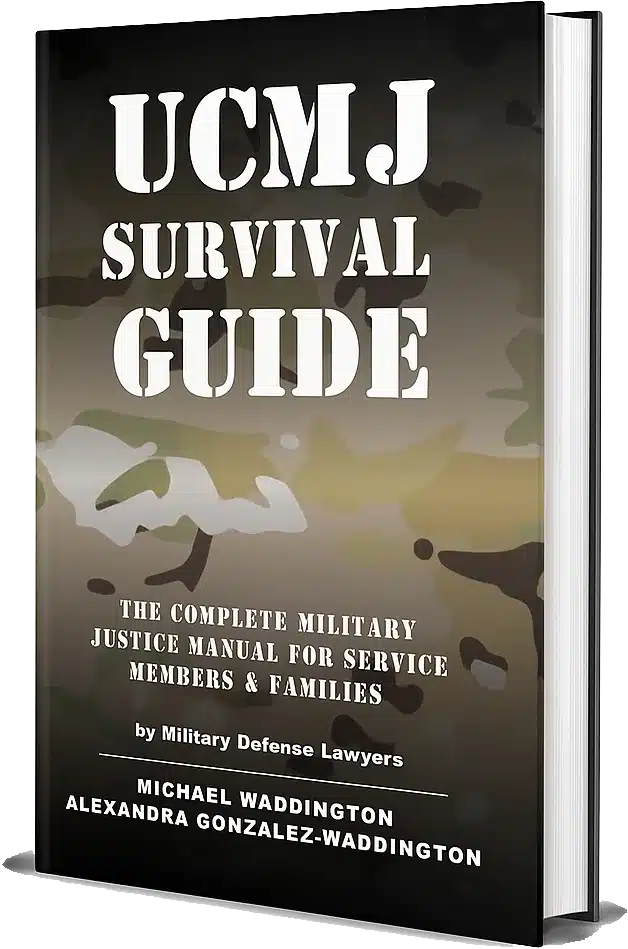
UCMJ Survival Guide

UCMJ Survival Guide: The Complete Military Justice Manual for Service Members & Families: Whether you’re facing an investigation, court-martial, Article 15 (NJP), or administrative separation, UCMJ Survival Guide is your essential resource for navigating the military justice system. Written by two of the most experienced and respected military defense lawyers in the field—Michael and Alexandra Waddington—this comprehensive guide delivers clear, actionable strategies to protect your career, reputation, and future. Michael and Alexandra are among the top military defense lawyers and recognized as some of the most experienced sexual assault defense attorneys in the country. They have successfully defended service members in high-profile Article 120 UCMJ sexual assault cases, complex court-martials, and administrative separation proceedings across all branches of the U.S. military.
amazonbuy
ucmjbook

UCMJ Criminal Defense Lawyers

ucmjglobe

Worldwide Military Defense Experience

Defending Service Members Across Every Theater and Installation

The González & Waddington Law Firm’s global reach sets them apart from regional military defense attorneys. With active cases spanning from Fort Bragg to forward operating bases in combat zones, from Norfolk Naval Station to remote Air Force installations, their practice truly encompasses the worldwide nature of modern military service.
ucmjsoldier 1

Specialized Expertise in Serious Military Offenses

War Crimes, Sexual Assault, Violent Crimes, and White-Collar Defense

The most serious charges under the UCMJ require the most experienced defense attorneys. The González & Waddington Law Firm has built its reputation by successfully defending service members against the gravest allegations—cases where the stakes couldn’t be higher and the margin for error is virtually nonexistent.
ucmjmedia

Media and High-Profile Case Experience

Featured on CNN, 60 Minutes, BBC, and Major News Outlets

The legal expertise of Michael Waddington and Alexandra González-Waddington has garnered attention from the world’s most prestigious media outlets, a testament to their standing as leading authorities in military criminal defense. This media recognition reflects not only their legal acumen but also their ability to handle high-stakes cases under intense public scrutiny.
gwyoutube scaled

Playlist

7 Videos

Frequently Asked Questions About Article 91 Insubordinate Conduct

What actions constitute insubordinate conduct under Article 91?

Insubordinate conduct under Article 91 includes actions such as disrespecting a superior officer, refusing to obey lawful orders, or using threatening language. These behaviors undermine the military chain of command and discipline. Each case depends on the specific facts and context, so understanding the details is important. If you face such charges, it is crucial to seek guidance to navigate your defense effectively.

Penalties for an Article 91 conviction vary depending on the severity of the offense and the circumstances involved. Consequences can range from non-judicial punishment to court-martial convictions that may include confinement, reduction in rank, forfeiture of pay, or even discharge from the military. The impact on your career and benefits can be significant, making a strong defense essential to protect your future.

While you have the right to represent yourself, defending against Article 91 charges can be complex and challenging without legal knowledge. Military law has its own procedures and standards, and a defense attorney can help ensure your rights are protected and that your case is presented effectively. Early legal advice increases the chances of a favorable outcome.

The military justice process for Article 91 cases typically begins with an investigation, followed by formal charges if warranted. The accused may face a court-martial, which is a trial conducted under military law. Throughout the process, various hearings and proceedings occur, allowing both sides to present evidence. Understanding this process helps service members prepare and respond appropriately.

If accused of insubordinate conduct, it is important to remain calm and avoid actions that could worsen the situation. You should seek legal counsel promptly to understand your rights and options. Gathering any relevant documentation and evidence can also be helpful. Early intervention can significantly influence the defense strategy and case outcome.

There are circumstances where Article 91 charges may be reduced or dismissed, such as insufficient evidence, procedural errors, or misunderstandings. A skilled legal defense can identify these opportunities and advocate on your behalf. Each case is unique, so a thorough review of the facts is necessary to determine the best approach.

The duration of an Article 91 case varies depending on factors such as the complexity of the charges, the military branch involved, and the legal process timeline. Cases can take several weeks to months to resolve. Staying informed and working closely with your legal representative helps manage expectations during this period.

An Article 91 conviction can have lasting effects on your military career, including disciplinary actions, loss of rank, and potential discharge. It may also affect future employment opportunities within and outside the military. Taking proactive steps to defend against these charges is vital to minimize such impacts.

Yes, Article 91 convictions can be appealed within the military justice system. Appeals may be based on legal errors, procedural mistakes, or new evidence. It is important to consult with legal counsel to understand the appeals process and to determine whether filing an appeal is appropriate in your case.

Legal assistance for UCMJ offenses, including Article 91 charges, can be found through military defense lawyers who specialize in these cases. In Florida, our firm offers dedicated representation to service members facing such charges. We provide guidance and advocacy to help clients navigate the complexities of military law and pursue the best possible outcomes.

LEGAL SERVICES

MILITARY DEFENSE & INVESTIGATIONS
LEGAL DEFENSE & INVESTIGATIVE SERVICES
MILITARY DEFENSE
ADMINISTRATIVE ACTIONS
INVESTIGATIONS
ADMINISTRATIVE & DISCIPLINARY PROCEEDINGS
ARMY
AIR FORCE
SPACE FORCE
MARINE CORPS
COAST GUARD
UNIFORM CODE OF MILITARY JUSTICE
SEX CRIMES
SEXUAL HARASSMENT
VIOLENT CRIMES
PROPERTY & FINANCIAL
INTEGRITY & TRUTH
MILITARY CONDUCT
CYBER & MISCONDUCT