


Fort Barfoot Article 134 Online Enticement / Predator-Style Sting Defense Lawyer

Understanding Article 134 Online Enticement and Predator-Style Stings
Allegations of online enticement under Article 134 can unfold quickly and carry heavy consequences for a Soldier’s career, reputation, and freedom. At Fort Barfoot in Blackstone, Virginia, investigators frequently use undercover personas, controlled chats, and recorded communications to build cases that can lead to court-martial or adverse administrative action. These operations can be confusing, especially when no real minor exists and the interaction occurs entirely online. The Uniform Code of Military Justice treats attempt, intent, and the service-discrediting nature of conduct seriously. Early guidance helps you avoid missteps, protect your rights, and begin building a defense aimed at the facts, the technology involved, and the government’s burden of proof under Article 134.
Predator-style stings often hinge on chat logs, app data, and assumptions about a user’s intent. Agents may pose as minors or concerned adults, inviting messages and arranging meetings that never occur. Distinguishing government inducement from your own intent requires careful legal analysis and digital forensics. If you are contacted by CID near Fort Barfoot or your command in Blackstone, do not engage in casual conversations or consent to searches before getting counsel. UCMJ Military Defense Lawyers represent service members facing these sensitive accusations across the United States and worldwide. Call 800-921-8607 for a confidential consultation and a clear plan tailored to your situation, your goals, and your future in the military.
Why a Targeted Article 134 Defense Matters
Article 134 online enticement cases turn on intent, words, and digital footprints. A targeted defense helps frame the narrative, challenge how chats were initiated, and test whether agents crossed the line into inducement. Focused advocacy can narrow the issues at an Article 32 hearing, suppress unreliable statements, and exclude evidence obtained without proper authorization. For Soldiers at Fort Barfoot and throughout Virginia, a tailored approach may also protect career options, reduce exposure, and preserve post-service opportunities. The right strategy aligns legal defenses with the facts, leverages recognized evidentiary rules, and presents mitigation that demonstrates character, rehabilitation, and command support, giving you the best path toward a favorable resolution.
About UCMJ Defense Lawyers: Waddington & Gonzalez
UCMJ Military Defense Lawyers, led by Waddington and Gonzalez, represents service members facing Article 134 online enticement allegations at installations worldwide, including Fort Barfoot in Blackstone, Virginia. The firm is known for meticulous case preparation, persuasive motion practice, and courtroom advocacy in contested sting operations. The team understands how CID structures chats, preserves data, and conducts interrogations, and it uses that insight to test the government’s theory at every stage. From early counsel assistance to trial, the firm develops a defense that addresses digital evidence, intent, and the service-discrediting element. When your career, clearance, and reputation are on the line, UCMJ Military Defense Lawyers provides steady guidance and relentless representation.
Article 134 Online Enticement Defense Guide
This guide explains how online enticement allegations under Article 134 are charged, investigated, and prosecuted, and how a defense can be built step by step. For many Soldiers, the case begins with a message on an app or social platform and ends with CID interviews, device seizures, and a charge sheet. Understanding the elements, including intent and the service-discrediting nature of the conduct, helps set realistic goals. We also discuss the role of attempt law under the UCMJ, the use of decoys, and how the absence of an actual minor affects proof. With the right plan, you can confront the evidence and protect your future.
At Fort Barfoot and across Virginia, investigators rely on undercover tactics, preserved chats, and device extractions to support online enticement cases. The process typically includes interviews, search authorizations, forensic imaging, and chain-of-custody documentation. Your defense should address each step, from initial contact to alleged agreement or travel. That means evaluating inducement, intent, and whether law enforcement followed policy and the law. A strong defense also prepares for an Article 32 hearing, potential pretrial negotiations, and, if necessary, trial. By understanding the roadmap early, you can make informed choices and work with counsel to position your case for the best possible outcome under the UCMJ.
Definition and Explanation
Online enticement under Article 134 typically alleges an attempt to persuade someone believed to be a minor to engage in sexual activity, even when the person is an undercover agent. The government often proceeds under the general article by proving conduct that is prejudicial to good order and discipline or service-discrediting. The case usually centers on chats, texts, images, or planned meetings, paired with statements made during interviews. Because an actual minor may not exist, the focus shifts to intent and steps taken to carry out the alleged plan. Understanding the difference between preparation and a substantial step is key to analyzing attempt and evaluating the strength of the charge.
Key Elements and Processes
Prosecutors generally try to prove intent to entice a person believed to be underage, a substantial step toward that goal, and that the conduct was service-discrediting or prejudicial. Investigations near Fort Barfoot often involve undercover chats initiated by agents, controlled records, and device extractions. The process may include Article 31(b) advisements, search authorizations, and preservation of digital evidence. Your defense examines inducement, the timing and content of messages, and whether law enforcement complied with policy and the law. Common tactics include motions to suppress statements, challenge search scope, and limit prejudicial evidence. Each step is designed to test the government’s proof and strengthen your position for hearing or trial.
Key Terms and Glossary
Understanding the language used in Article 134 online enticement cases helps you follow the investigation and contribute to your defense. The glossary below highlights concepts that appear in charge sheets, investigative reports, and court filings. Knowing how the general article operates, what entrapment means, how stings are run, and why Article 31(b) matters can shape smart decisions at every stage. As your case evolves, these terms guide discussions about evidence, motions, and strategy. The more clearly you understand the terminology, the better equipped you are to protect your rights, collaborate with your legal team, and pursue a resolution that aligns with your goals and your future.
Article 134 (General Article)
Article 134 is the UCMJ’s general article, allowing the government to charge conduct that is prejudicial to good order and discipline or service-discrediting. In online enticement cases, prosecutors often rely on Article 134 with attempt principles, using chats, planned meetings, and statements to establish intent and a substantial step. Because the general article is broad, the defense focuses on the precise conduct alleged, whether the facts truly meet the elements, and whether the government’s theory overreaches. Understanding Article 134 ensures your strategy addresses the specific clause used, the connection to military service, and the evidentiary hurdles the prosecution must clear before any conviction can be sustained.
Entrapment
Entrapment occurs when the government induces an otherwise unwilling person to commit a crime, and the person was not predisposed to commit it. In predator-style stings, agents may initiate contact, raise topics, and steer conversations. Entrapment is a fact-intensive defense that examines who started the idea, how persistent agents were, and whether the accused was ready and willing before law enforcement intervention. The analysis often compares the timing and tone of messages, the use of suggestive language, and whether opportunities to disengage were ignored by the government. If proven, entrapment can undermine the prosecution’s case and lead to relief through negotiation or litigation.
Predator-Style Sting Operation
A predator-style sting is an undercover operation where agents pose as minors or guardians online to identify and investigate suspected offenders. In the military context, agencies such as CID may use decoy profiles, chat scripts, and planned meeting locations to document intent and steps toward enticement. These stings rely on recorded communications, device seizures, and forensic analysis to support charges. The defense scrutinizes how contact began, the progression of messages, and whether the agent’s conduct escalated the situation. Understanding how stings are designed and executed helps your legal team challenge inducement, test credibility, and evaluate whether the evidence genuinely supports an Article 134 attempt theory.
Article 31(b) Rights
Article 31(b) requires that service members be advised of their rights before questioning about an offense, including the right to remain silent and the right to counsel. In online enticement cases, statements made without proper advisement may be challenged and, in some instances, suppressed. The defense assesses how and when warnings were delivered, what was said before and after rights were read, and whether any waiver was voluntary and informed. Protecting these rights is essential, especially when investigators hope to secure admissions that will anchor the case. Early legal guidance helps you avoid damaging statements and ensures the government follows the rules during interviews and searches.
Limited Counsel vs. Full-Scale Defense in Article 134 Cases
Some Soldiers need narrow assistance, such as advice before an interview, limited negotiation, or help responding to command inquiries. Others face charges that demand a full-scale defense with motions, experts, and trial preparation. A limited approach may work when evidence is thin, the chat history is brief, and command is open to administrative outcomes. Comprehensive representation is often necessary when intent is contested, digital forensics are extensive, or a harsh sentence is on the table. The right path depends on your goals, the strength of the government’s case, and the environment at Fort Barfoot. A candid assessment helps you choose the level of support that fits your risk.
When a limited approach may be enough:
Early intervention allows administrative resolution
When counsel is engaged early, before charges are preferred, it may be possible to frame the facts, present mitigation, and steer the matter away from court-martial. In some Fort Barfoot cases, a carefully crafted response to the command, supported by character statements and documented rehabilitation, leads to administrative handling rather than trial. Limited representation can include guidance on interviews, preserving evidence, and avoiding harmful statements, while focusing on a practical outcome. This approach can be appropriate where there is no travel, the chats are minimal, and the government’s proof of intent is weak. The goal is to prevent escalation and protect your record.
Evidence is minimal and mitigation is strong
If the chat history is short, there was no agreement to meet, and you withdrew quickly, limited representation may achieve a reasonable resolution. Strong mitigation, such as documented counseling, treatment, or command support, can further reduce the need for a trial posture. In these situations, the defense highlights gaps in proof, absence of a substantial step, and positive service history. The strategy centers on negotiations and a calibrated presentation to decision-makers at Fort Barfoot. While every case is different, combining thin evidence with meaningful mitigation allows a narrow approach that preserves options and minimizes disruption to your career in Blackstone, Virginia, and beyond.
When you need a comprehensive court-martial defense:
Disputed intent and aggressive sting tactics
When the government relies on extensive chats, suggestive decoy behavior, and planned meetings, a full defense is often required. The strategy may include digital forensics, messaging context analysis, and witnesses to document your state of mind. If agents steered conversations or escalated contact, the defense must develop a record that places their conduct under the microscope. Comprehensive representation also prepares for motion practice, including suppression, entrapment, and evidentiary limits. At Fort Barfoot, a contested posture may be the best way to expose overreach and protect your rights. Addressing disputed intent thoroughly can change outcomes in negotiations, hearings, and trial.
Complex digital evidence and statement challenges
Large data sets, device extractions, and multiple platforms can complicate online enticement cases. A comprehensive defense coordinates forensic experts, metadata review, and chain-of-custody analysis to identify gaps and inconsistencies. Statement challenges often accompany digital issues, requiring litigation over Article 31(b) advisements, voluntariness, and scope. The defense may also move to exclude prejudicial material that does not prove intent or a substantial step. This level of effort helps align the evidence with the actual elements and prevents the government from inflating allegations. For Soldiers stationed in Blackstone, Virginia, a thorough approach can be the difference between a damaging record and a result that keeps your future intact.
Benefits of a Comprehensive Article 134 Defense
A comprehensive defense allows your team to challenge the government’s theory on multiple fronts. Motions can limit overreach, while forensic reviews identify missing context, unreliable timestamps, or data integrity problems. Thorough preparation equips you to present a narrative that addresses intent and demonstrates withdrawal, misunderstanding, or government inducement. This strategy also supports negotiations by showing the prosecution the risks of proceeding. At Fort Barfoot and throughout Virginia, a complete approach can help protect rank, benefits, and long-term goals. By aligning legal, factual, and personal themes, the defense seeks outcomes that reflect who you are, not just what appears in select messages.
Comprehensive representation ensures no part of the case is overlooked, from initial contact to final resolution. It positions you to use Article 32 hearings effectively, preserve appellate issues, and present mitigation that resonates with decision-makers. The team can coordinate character evidence, treatment documentation, and command input to show progress and reliability. When the government relies on sting tactics, this approach brings clarity to the timeline and exposes how conversations evolved. It also helps prepare you for each decision point, so you act with confidence. In high-stakes Article 134 allegations, a broad strategy can create options, reduce exposure, and safeguard your future.
Strategic motion practice
Motion practice is often the engine of a successful defense in predator-style sting cases. Suppression challenges can target unwarned statements, overbroad searches, and unreliable identifications. Limiting prejudicial material keeps the focus on actual elements like intent and a substantial step, rather than speculation or moral outrage. Well-crafted motions can also influence negotiations by demonstrating litigation risk to the government. At Fort Barfoot, strategic filings that lean on military rules of evidence and constitutional protections can reframe the entire case. The aim is to exclude weak proof, sharpen the issues for trial, and create leverage for outcomes that reflect the true strength of the government’s claims.
Thorough investigation and mitigation
A complete investigation looks beyond the chat excerpts highlighted by the government. It includes full context, device records, location data, and witness interviews to show what actually happened. Effective mitigation humanizes you, presenting service history, community support, and steps toward growth. This dual track—investigation and mitigation—creates credibility with decision-makers and provides alternatives to the most severe outcomes. For Soldiers near Blackstone, Virginia, a well-documented personal story can matter as much as legal arguments. By pairing facts with a forward-looking plan, the defense places you in the best light, whether at an Article 32 hearing, during negotiations, or in front of a panel.
As Featured On:

NEED MILITARY LAW HELP?
Fill out this form or call 1-800-921-8607 to request a consultation.


Top Searched Keywords
- Article 134 online enticement
- predator sting defense
- Fort Barfoot military lawyer
- UCMJ Article 134 attorney
- CID undercover chat case
- entrapment defense UCMJ
- digital forensics court-martial
- Article 31(b) rights
- military sex offense defense
Pro Tips for Service Members Facing Online Enticement Allegations
Do not self-incriminate in chats or interviews
If contacted by CID or command at Fort Barfoot, exercise your right to remain silent and request counsel before any interview. Do not attempt to explain chats, delete messages, or adjust devices. Those actions can complicate your defense and may be misinterpreted. Avoid discussing details with friends, supervisors, or social media. Preserve your phone in its current state and secure login credentials. Early statements without guidance often become the centerpiece of the government’s case. A calm, measured approach protects your rights and options. Once counsel is retained, every communication and decision can be coordinated to align with your defense and long-term goals in Blackstone, Virginia.
Preserve evidence and document context
Engage a seasoned military defense team quickly
Early representation helps manage command interactions, preserve digital evidence, and avoid consent to overbroad searches. A seasoned team understands sting protocols and the ways investigators craft messages. Counsel can evaluate inducement, assess whether there was a substantial step, and guide you through interviews or electing silence. Acting quickly also positions you for strategic decisions about Article 32 hearings and negotiation windows. At Fort Barfoot, conditions can change quickly once a case gains momentum. Prompt, informed action helps protect your record, rank, and future assignments. Contact UCMJ Military Defense Lawyers at 800-921-8607 to get answers, set priorities, and move forward with confidence.
Reasons to Consider an Article 134 Online Enticement Defense Team
Online enticement allegations are uniquely technical. The evidence often spans multiple apps, devices, and accounts, each with metadata that can help or hurt your case. A defense team accustomed to these details can identify gaps, highlight context, and protect your rights under Article 31(b). For Soldiers at Fort Barfoot in Blackstone, Virginia, local command considerations and investigative practices also matter. A tailored plan can help reduce exposure, preserve career options, and present mitigation that decision-makers will consider. Getting aligned with the right team early provides structure, clarity, and the momentum needed to meet the government’s case on firm, defensible ground.
A dedicated defense helps manage stress, communicate with your chain of command, and respond strategically at each stage. From initial contact to potential trial, counsel orchestrates evidence preservation, witness outreach, and pretrial motions. The team can advise on collateral consequences, including impacts on credentials, security clearances, and future employment. Importantly, a measured approach can prevent missteps that complicate the case, such as casual remarks, deleted messages, or unauthorized device changes. When stakes are high, structure matters. Having a clear roadmap allows you to focus on your duties while your defense advances the legal, factual, and personal themes that best support a favorable outcome.
Common Scenarios Leading to Article 134 Online Enticement Charges
Many cases begin with an undercover profile reaching out on a popular app or forum. Messages can shift quickly from casual talk to age disclosure and suggestive topics, sometimes driven by scripted prompts. Other cases arise from command referrals, tips, or unrelated investigations that reveal old chats. Once CID is involved at Fort Barfoot, the process may move to interviews, device imaging, and a push for consent searches. Charges often hinge on whether the messages show intent and steps toward a meeting. Understanding these scenarios helps you avoid mistakes, preserve evidence, and work with counsel on a response that fits the actual facts.
Undercover decoy communications
Decoy-driven chats are designed to be preserved, searchable, and convincing. Agents may use believable photos, slang, and platform nuances to keep the conversation moving. The defense analyzes who initiated contact, how age was discussed, and whether the government escalated topics or suggested meeting locations. If there was no agreement to meet or you withdrew, that context matters. Screenshots alone rarely tell the whole story. A full review of the timeline can show hesitation, confusion about age, or attempts to end contact. For Soldiers near Blackstone, Virginia, understanding how decoy communications are scripted helps shape a defense that challenges the government’s narrative at each turn.
Location-based apps and peer-to-peer chats
Location-based platforms can make it appear as though meetings are imminent, even when no travel is planned. The defense examines geolocation data, message timing, and any steps—or lack of steps—toward a rendezvous. In many cases, discussions remain speculative and never progress beyond talk. When chat content is ambiguous, the government may try to frame it as intent. A careful review can reveal a different picture. For Fort Barfoot Soldiers, documenting where you were, who you were with, and why plans never materialized can be decisive. Device records, calendars, and duty rosters often support defenses that reduce the case to mere online chatter.
Digital forensics uncovering historical messages
Sometimes, unrelated investigations reveal old messages during a device search. The age of the chats, missing context, and uncertain identities can complicate the government’s case. The defense scrutinizes the authorization for the search, the extraction methods, and whether the scope was exceeded. Messages may be incomplete, out of order, or lacking critical timestamps. If age was unclear or never confirmed, that ambiguity can undermine allegations of intent. For Fort Barfoot service members, proving that historical messages do not reflect a substantial step or present-day conduct can change outcomes. A methodical forensic review often narrows the issues and strengthens negotiation positions.
Meet Your Defense Team


Michael S. Waddington
Criminal Defense Lawyer

PARTNER
Alexandra González-Waddington
Criminal Defense Lawyer
PARTNER
Battle-Tested Results
Recent Case Results
Gang-Rape Allegation Collapses Against Navy Officer
U.S. v. Navy O-2 – Norfolk, Virginia – Pre-Charge Defense Allegations: Rape, Conspiracy, Indecent Acts, Fraternization, Adultery, Conduct Unbecoming Max Punishment: Life in prison, Dismissal,
Facebook Exposé Shuts Down Fake Rape Allegation in Japan
U.S. v. Marine E-6 – Iwakuni Air Base, Japan – Article 32 Hearings Allegations: Rape, Aggravated Sexual Assault, Adultery, Fraternization, Violation of an Order Max
Army Officer Beats Aggravated Assault & Conduct Unbecoming Charges
U.S. v. Army O-1 – Fort Bragg, NC / Tried at Fort McNair, Washington D.C. – General Court-Martial Allegations: Aggravated Assault with Means Likely to
Navy Sailor’s Sex Assault Case Tossed After UCI Bombshell
U.S. v. Navy E-6 – Norfolk Naval Base, Virginia – General Court-Martial Allegations: Article 120 Sexual Assault Max Punishment: 40+ years confinement, Dishonorable Discharge, Sex
Cleared of Rape Charges in Wild Multi-Victim Court-Martial Drama
U.S. v. Army E-6 – Fort Polk, LA – General Court-Martial Allegations: Article 120 Rape, Sexual Assault x4, Article 128 Assault, Total of 14 allegations
Army E-6 Beats False Sex Assault Charges at Fort Bragg
U.S. v. Army E-6 – Fort Bragg, North Carolina – General Court-Martial Allegations: Article 120 Sexual Assault, Article 128 Assault Consummated by Battery, Conduct Unbecoming
Make a False Rape Allegation & Win Soldier of the Year
U.S. v. Army CW2 – Fort Gordon, GA
Allegations: RAPE, Fraternization, Adultery
Max Punishment: LIFE, Dismissal, Sex Offender Registration
Result: ALL CHARGES DISMISSED
Discharge: RETIRED WITH AN HONORABLE
Location/Branch/Rank: Fort Gordon – Augusta, GA/Army/CW2
Cheating Marine Officer Calls Rape
U.S. v. Marine O-3 – Marine Forces Reserve, Naval Support Activity, New Orleans, LA Allegations: Article 120 Rape/Sexual Assault Max Punishment: Life in prison, Dismissal, Sex offender registration

Take Command of Your Defense
Why Service Members Choose UCMJ Defense Lawyers for Article 134 Online Enticement Cases
Call Us Today
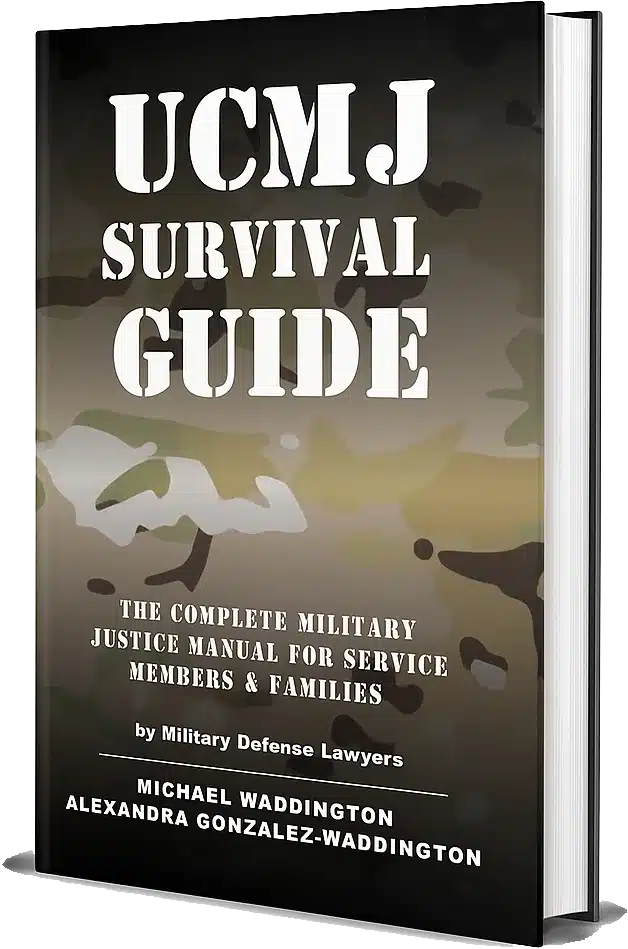
Check Out Our Newest Book
UCMJ Survival Guide

UCMJ Criminal Defense Lawyers

Worldwide Military Defense Experience
Defending Service Members Across Every Theater and Installation

Specialized Expertise in Serious Military Offenses
War Crimes, Sexual Assault, Violent Crimes, and White-Collar Defense

Media and High-Profile Case Experience
Featured on CNN, 60 Minutes, BBC, and Major News Outlets

Playlist

3:34

7:32
6:57

7:58

21:35
7:24

4:24
Article 134 Online Enticement Defense FAQs
What does Article 134 online enticement mean in a military case?
Article 134 online enticement typically alleges an attempt to persuade someone believed to be a minor to engage in unlawful sexual activity. The government often proceeds under the general article by claiming the conduct was service-discrediting or prejudicial to good order and discipline. Because an actual minor may not exist, the focus is on intent and whether the accused took substantial steps toward the alleged objective. Chats, images, and any planned meetings are usually central to the government’s theory. Your defense centers on the elements the prosecution must prove. That includes intent, a substantial step, and the service connection. Many cases turn on the context of messages, how contact began, and whether law enforcement encouraged or escalated the conversation. By reviewing the full chat history, device data, and statements, your legal team can challenge the government’s narrative and show a more accurate picture of what occurred under the UCMJ.
Can I be charged if there was no real minor, only an undercover agent?
Yes, prosecutions often go forward even when there is no real minor. Under attempt law, the government can charge an accused who believed they were communicating with a minor, even if the other party was an undercover agent. The case usually depends on chats, statements, and any steps taken toward a meeting. The absence of an actual minor does not, by itself, end the inquiry into intent or a substantial step. However, the lack of a real minor can present defenses and opportunities. The government must still prove what you intended and whether your actions moved beyond talk. If agents initiated contact, steered conversations, or escalated topics, those facts matter. A defense that challenges how the sting unfolded and whether you withdrew or hesitated can weaken the prosecution’s theory. Careful evaluation of timing, language, and the decoy’s behavior often creates leverage for a better outcome.
What should I do if CID contacts me about chats or a planned meeting?
If contacted by CID, remain calm, decline to answer questions, and request counsel immediately. Do not consent to searches or provide passcodes without guidance from your legal team. Anything you say can be used against you, and offhand comments often become key evidence. Preserve your devices and do not delete messages. Document the time, place, and nature of the contact, and avoid discussing details with anyone else. After exercising your rights, contact UCMJ Military Defense Lawyers for a confidential consultation at 800-921-8607. Early representation can prevent harmful statements, manage command communications, and ensure digital evidence is preserved properly. Counsel will help you decide whether to participate in interviews, how to respond to command inquiries at Fort Barfoot, and what steps to take immediately. The goal is to protect your rights while positioning your case for the best possible resolution.
How does entrapment work in predator-style sting operations?
Entrapment occurs when the government induces an otherwise unwilling person to commit a crime, and the person was not predisposed to commit it. In predator-style stings, agents may initiate conversations, suggest meetings, or introduce sexual themes. The defense examines who started the idea, how persistent agents were, and whether you showed readiness before the government’s involvement. The timing and tone of chats often drive this analysis. To present entrapment effectively, the defense gathers the entire chat history, explores your background, and highlights evidence of hesitation or withdrawal. If agents escalated contact or ignored your attempts to disengage, that can support the defense. While entrapment is fact-specific, it can be a powerful lever in negotiations or at trial when the government’s conduct shaped the alleged offense. A detailed timeline helps reveal whether the case reflects predisposition or government-driven inducement.
What penalties could I face if convicted under Article 134 for online enticement?
Penalties vary with the facts, the forum, and command decisions, but consequences can include confinement, reduction in rank, forfeitures, a punitive discharge, and collateral impacts on benefits and future employment. Sentencing often turns on the length and content of chats, any travel or planning, and statements made during interviews. The government may push for significant punishment when it believes intent and a substantial step are clear. Your defense can influence sentencing outcomes by limiting the scope of admissible evidence, highlighting mitigating factors, and demonstrating progress through treatment, counseling, or community support. Character letters, performance records, and a strong service history can help. Early advocacy aims to reduce exposure and present a balanced picture of who you are. With a strategic plan, your team can pursue alternatives that protect your career and future under the UCMJ.
How can digital forensics help my defense?
Digital forensics can reveal context and accuracy that chat excerpts alone cannot show. A thorough review examines timestamps, metadata, device settings, and whether messages are complete and in order. It can identify missing segments, edits, or mismatched time zones that create misleading narratives. For location-based apps, data can confirm that no travel occurred or that meetings were never realistic. These details can reshape the government’s theory of intent. Forensics also addresses chain of custody, extraction methods, and whether the search exceeded authorized scope. If the process was flawed, the defense may move to exclude evidence or limit its use. In Fort Barfoot cases, demonstrating technical weaknesses can lead to better negotiations or outcomes at hearings and trial. A rigorous forensic review aligns the evidence with the actual elements of attempt under Article 134 and prevents speculation from filling gaps.
What is an Article 32 preliminary hearing and why does it matter?
An Article 32 preliminary hearing is a pretrial proceeding that tests the basis for the charges and recommends how the case should proceed. It allows the defense to cross-examine witnesses, present limited evidence, and preserve issues for litigation. While it is not a full trial, it can influence decisions about referral, charges, and pretrial negotiations. For online enticement cases, the hearing highlights strengths and weaknesses in the government’s timeline and chat evidence. A smart Article 32 strategy focuses on narrowing the case to what truly matters. The defense may demonstrate gaps in proof, challenge inducement, or expose technical problems with digital evidence. Establishing these issues early can shape later motions and plea discussions. For Soldiers at Fort Barfoot, the hearing provides a valuable opportunity to test the case before committing resources to trial, often improving leverage and clarity.
Should I talk to my command about my case or make a written statement?
Do not make statements to your command about the facts without counsel. Even well-meaning explanations can be misinterpreted and later used against you. Avoid written statements that address the allegations. If the command requests information, consult your defense team to coordinate a response that protects your rights and aligns with your strategy. Clear, respectful communication about your legal representation is typically appropriate. Your defense can manage command interactions to prevent misunderstandings and ensure your position is consistent. In many Fort Barfoot cases, measured engagement preserves relationships while avoiding harmful admissions. Counsel can also assist with leave, duty status, and other practical concerns that arise during investigations. The priority is to protect you legally while maintaining professionalism within your unit in Blackstone, Virginia.
Will I have to register as a sex offender if convicted of online enticement under Article 134?
Registration depends on the offense of conviction, the forum, and applicable federal and state laws. Because Article 134 online enticement theories vary, outcomes differ by case. Some convictions may trigger registration requirements, while others may not. Your defense should assess potential consequences early so you understand the risks associated with specific charges or pleas. This assessment informs negotiations and trial decisions. Counsel will consider Virginia and federal law, as well as potential interstate implications if you transfer duty stations. Understanding collateral consequences helps you weigh options and evaluate offers. Where possible, the defense seeks resolutions that reduce or avoid registration. Clear advice allows you to make informed choices that protect your long-term interests and your family’s stability.
How quickly should I hire counsel after learning about an investigation at Fort Barfoot?
Act quickly. Early representation protects your rights, preserves evidence, and prevents missteps that complicate the case. When you first learn of an investigation at Fort Barfoot, avoid interviews, do not delete messages, and decline consent searches until you speak with counsel. Prompt action allows your defense to shape the narrative, manage command communications, and plan for possible Article 32 proceedings or pretrial negotiations. Contact UCMJ Military Defense Lawyers at 800-921-8607 for a confidential consultation. The sooner your team is involved, the sooner strategy, preservation, and motion practice can begin. Fast engagement also reduces stress by providing clear steps and realistic expectations. For Soldiers in Blackstone, Virginia, timely guidance can make a meaningful difference in how an Article 134 online enticement case develops and resolves.