


Fort Bragg Military Article 134 Defense: Online Enticement & Predator-Style Sting Cases

Fort Bragg Military Article 134 – Online Enticement / Predator-Style Sting Defense Lawyers
If you are stationed at Fort Bragg and accused of online enticement, solicitation of a minor, or involvement in a predator-style sting operation under Article 134 of the UCMJ, you are facing one of the most aggressive and misleading types of military prosecutions. These cases often begin with undercover agents posing as teenagers, staged chat conversations, deceptive online personas, and law enforcement tactics designed to lure Soldiers into conversations they never intended to pursue.
What starts as casual texting, curiosity, role-playing, or banter can suddenly become a full CID investigation, a no-contact order, digital device seizure, clearance suspension, an attempt to obtain a confession, and ultimately referral to a general court-martial.
Aggressive Military Defense Lawyers: Gonzalez & Waddington
Watch the military defense lawyers at Gonzalez & Waddington break down how they defend service members worldwide against UCMJ allegations, CID/NCIS/OSI investigations, court-martials, Article 120 cases, administrative separations, and GOMORs. If you’re under investigation or facing charges, this video explains what your rights are and how experienced civilian military counsel can make the difference.
If CID, Military Police, or your chain of command has approached you about online messaging, social media communication, or alleged communication with a minor—STOP speaking immediately. Do not try to explain yourself. Do not volunteer your phone. Do not consent to searches. Contact Gonzalez & Waddington at 1-800-921-8607 for a confidential consultation. Our civilian military defense lawyers defend Soldiers worldwide and have deep experience fighting online enticement stings, undercover operations, and Article 134 prosecutions arising from Fort Bragg.
These cases are very different from other UCMJ offenses because they rely on digital evidence, undercover tactics, ambiguous conversations, artificial “scripts,” and law enforcement strategies that push Soldiers into saying things they would never say in real life. Soldiers frequently believe they were talking to an adult, a bot, or an unstable person—not a minor. Yet CID and prosecutors aggressively treat even the weakest case as if it involved a real child. This guide provides the most detailed Fort Bragg-specific analysis of online enticement cases and how to defend them.
Official installation information for Fort Bragg is available at home.army.mil/bragg, and the Fayetteville area information can be found at fayettevillenc.gov. What follows, however, is focused entirely on protecting Soldiers from Article 134 online solicitation and sting-driven prosecutions.
Understanding Article 134 Online Enticement & Predator-Style Stings at Fort Bragg
What Article 134 Enticement Charges Involve
Under Article 134, the military prosecutes Soldiers for:- Online solicitation of a minor
- Attempted enticement
- Sexual communication with a decoy or undercover agent
- Sending explicit images or asking for them
- Arranging to meet someone you believed was underage
- Sharing explicit content during online chats
Why These Cases Are Treated So Harshly at Fort Bragg
Fort Bragg houses the 82nd Airborne Division, XVIII Airborne Corps, elements of USASOC, and specialized intelligence units. Any allegation involving minors is treated as a major threat to the Army’s image. As a result:- Commands presume guilt immediately
- CID seizes phones and electronics aggressively
- Soldiers are pulled from leadership positions
- Protective orders, flags, and restrictions happen overnight
- Prosecutors push for general courts-martial even on weak evidence
How CID Conducts Online Enticement Investigations at Fort Bragg
Undercover Personas
CID frequently creates fake profiles on:- Snapchat
- Whisper
- Kik
- Tinder/Bumble-style apps
- Gaming platforms (Xbox, PlayStation, Steam)
Active Luring and Manipulation
Agents may:- Initiate sexual conversation
- Ask personal questions
- Send suggestive messages first
- Encourage explicit talk
- Claim emotional distress to pull the Soldier in
- Flirt aggressively
Selective Evidence Collection
CID often omits messages showing:- the Soldier hesitated
- the Soldier declined
- confusion about age
- the decoy appeared to be an adult
- role-playing or fantasy context
Device Seizures
CID typically obtains search authorizations to seize:- phones
- computers
- tablets
- external drives
- game systems
- cloud accounts
Common Soldier Mistakes During CID Online Enticement Investigations
Mistake #1 – Talking to CID
CID interrogators are trained to manipulate conversations to elicit statements that “sound” incriminating. Their goal is to push you to admit curiosity or embarrassment, then twist it into criminal intent.Mistake #2 – Trying to Explain the Messages
Soldiers often believe context will save them. CID deletes context, misinterprets tone, and only highlights selective messages.Mistake #3 – Consenting to a Search
Never hand your phone to CID. Once you do, you lose control of the narrative and your defense options.Mistake #4 – Talking to Friends or Partners About the Case
Anyone you talk to is a potential witness. CID will subpoena their statements.Mistake #5 – Deleting Messages or Apps
Deletion looks like guilt. Preservation gives your lawyer ammunition to fight back.Common Patterns in Fort Bragg Online Enticement Cases
“Age Drop” Technique
Many Soldiers believe they were talking to an adult until the decoy suddenly claims to be 14 or 15. If the Soldier expresses hesitation or reluctance, CID omits those parts in their report.Fantasy Play Misinterpreted
Adults sometimes role-play as younger characters online. CID often treats this as criminal even when no intent existed.Alcohol-Influenced Messaging
Many Soldiers send messages while intoxicated, not realizing the decoy’s age claim until later. Prosecutors ignore this context.No Intent to Meet
Many Soldiers never attempted to meet anyone. CID still frames the case as enticement “attempt.”False Accusations Following Relationship Breakdowns
Ex-partners or jealous partners sometimes weaponize digital messages to harm a Soldier’s career.How the Army Prosecutors Build Article 134 Sting Cases
They Tell a Simplified Story
The government presents the case as:- “You believed they were underage.”
- “You intended sexual contact.”
- “You pursued the conversation.”
They Assume Intent Where None Existed
Messaging alone does not prove intent. The defense must show alternative interpretations.They Ignore Behavioral Context
Prosecutors rarely acknowledge:- emotional distress
- alcohol influence
- confusion created by the decoy
- lack of any steps toward meeting
They Use “Grooming” Buzzwords
Even when conversations were casual or non-sexual, the government may label them as grooming.Defense Strategies for Article 134 Online Enticement at Fort Bragg
1. Challenge the Decoy’s Conduct
Decoys often flirt, initiate sex talk, or manipulate conversation. The defense exposes this manipulation.2. Reconstruct the Full Chat Log
CID frequently cherry-picks the worst excerpts. Full logs often show hesitation, confusion, or lack of intent.3. Attack Intent
Online messaging must be proven to represent real criminal intent. Many Soldiers were joking, confused, intoxicated, or not serious.4. Demonstrate Entrapment-Like Conduct
While entrapment is hard in military law, exposing decoy misconduct influences panels enormously.5. Use Digital Forensics
Metadata may show messages were unsent, out of order, or manipulated by the app.6. Present Soldier’s Character and Service
Valor, deployments, leadership, awards, flawless service—these matter in sentencing, credibility, and verdict.Consequences of Article 134 Online Enticement Allegations at Fort Bragg
Criminal Penalties
- Years of confinement
- Dishonorable discharge
- Total forfeitures
- Sex offender registration
Administrative Consequences
- GOMOR
- Relief for cause
- Loss of clearance
- Administrative separation
Social & Career Consequences
False labeling as a predator destroys unit trust and personal relationships. The defense must fight these labels aggressively.What To Do Immediately If You Are Accused or Contacted by CID
Tip 1: Invoke Silence
Say nothing. Silence cannot be used against you.Tip 2: Refuse Searches
Do not consent to phone searches. CID will try to convince you otherwise.Tip 3: Save All Evidence
Screenshots, timestamps, and saved conversations often prove critical.Tip 4: Do Not Confront the Accuser
This creates new charges—obstruction, tampering, or MPO violations.Tip 5: Hire Civilian Counsel Immediately
These cases move rapidly at Fort Bragg. Early defense intervention changes outcomes.Fort Bragg Military Justice Resource Index
- Fort Bragg Article 120 Sexual Assault Defense
- Fort Bragg Article 120b Child Sexual Offense Defense
- Fort Bragg Article 120c Indecent Conduct / Voyeurism Defense
- Fort Bragg Article 128 Assault Defense
- Fort Bragg Domestic Violence Defense (128b)
- Fort Bragg Child Pornography (134) Defense
- Fort Bragg Article 112a Drug Crimes Defense
- Fort Bragg Article 15 Defense
- Fort Bragg GOMOR Rebuttals
- Fort Bragg Administrative Separation Boards
- Fort Bragg Boards of Inquiry
- Fort Bragg CID Investigation Guide
- Fort Bragg Court-Martial Defense Overview
Bottom Call to Action
If you are stationed at Fort Bragg and accused of online enticement, solicitation, or involvement in a predator-style sting, contact Gonzalez & Waddington immediately at 1-800-921-8607. These cases require skilled digital forensics, aggressive cross-examination, and a deep understanding of CID sting tactics. We are ready to fight for your freedom, your reputation, and your future.Understanding Military Article 134 Charges for Online Enticement at Fort Bragg
Facing charges under Article 134 of the UCMJ for online enticement or predator-style sting offenses at Fort Bragg can be overwhelming. Located in North Carolina near Fayetteville, this military base falls under specific military jurisdiction where these serious allegations carry significant consequences. Our focus is to provide clear guidance on defending against these charges, ensuring your rights are protected throughout the legal process.
Military personnel stationed at Fort Bragg who are accused of online enticement offenses must navigate complex military law. The charge under Article 134 involves using electronic communication to attempt or conspire in illegal acts. Understanding the nuances of these cases, including the digital evidence involved and military procedural rules, is essential to mount an effective defense in this unique setting.
Why Effective Defense Matters in Online Enticement Cases at Fort Bragg
Proper legal defense in online enticement and predator-style sting cases under Article 134 at Fort Bragg is vital to protect your military career and personal future. These charges can lead to court-martial, administrative actions, and lasting reputational harm. A thoughtful defense approach can help challenge the prosecution’s evidence, protect your rights, and seek the best possible outcome under military law.
UCMJ Defense Lawyers Serving Fort Bragg and Surrounding North Carolina Areas
UCMJ Defense Lawyers, led by attorneys Waddington and Gonzalez, provide dedicated legal support for military members facing Article 134 charges at Fort Bragg and throughout North Carolina. Their knowledge of military law and local jurisdiction ensures tailored defense strategies. Serving the Fayetteville region, they understand the impact such charges have on service members and work diligently to protect clients’ rights and futures.
Comprehensive Guide to Article 134 Online Enticement Defense at Fort Bragg
This guide covers the essential aspects of defending against online enticement charges under Article 134 at Fort Bragg. It explains the legal definitions, processes, and key terms involved in these cases. Understanding this information is critical for service members to navigate the military justice system effectively and make informed decisions.
We also discuss common scenarios, the differences between limited and comprehensive defense approaches, and how to benefit from experienced legal representation. This detailed overview aims to empower you with knowledge and clarify what to expect throughout your defense journey.
What Is Online Enticement Under Military Article 134?
Online enticement under Article 134 involves using electronic communication to attempt to persuade or lure another individual to engage in illegal activities, often involving minors or prohibited conduct. This offense is prosecuted under the Uniform Code of Military Justice and includes predator-style sting operations designed to catch alleged offenders. The legal definition encompasses attempts, conspiracies, and solicitations conducted through digital platforms.
Key Elements and Legal Processes in Article 134 Online Enticement Cases
To prove an Article 134 online enticement charge, the military prosecution must establish specific elements such as the intent to commit an illegal act and the use of electronic communication to facilitate it. The legal process includes investigation, preferral of charges, Article 32 hearing, and possibly a court-martial. Understanding these steps will help you anticipate what lies ahead and prepare your defense accordingly.
Glossary of Terms Related to Article 134 Online Enticement Defense
Below are important terms and definitions relevant to online enticement charges under Article 134 to help clarify legal language and concepts you may encounter.
Article 134, UCMJ
A general article in the Uniform Code of Military Justice covering offenses that are not specifically listed elsewhere but are considered prejudicial to good order and discipline or of a nature to bring discredit upon the armed forces.
Online Enticement
The act of using electronic communication methods to persuade or attempt to persuade another person to engage in illegal conduct, typically involving minors or prohibited sexual activity.
Predator-Style Sting
A law enforcement tactic involving undercover operations where officers pose as minors or vulnerable individuals online to catch offenders attempting illegal enticement or solicitation.
Court-Martial
A military judicial proceeding to determine guilt or innocence in cases involving violations of the UCMJ, which may result in various punishments including confinement or discharge.
Evaluating Legal Defense Approaches for Article 134 Charges at Fort Bragg
When facing online enticement charges at Fort Bragg, service members can choose from different defense strategies ranging from limited representation to comprehensive legal defense. Each approach has distinct benefits and challenges depending on the complexity of the case, evidence involved, and desired outcomes.
Situations Where Limited Legal Defense May Be Appropriate:
Minor or Technical Violations
A limited defense may be suitable when the allegations involve minor infractions or technical violations of Article 134 that do not carry severe penalties or long-term consequences. In these cases, focused legal assistance can help mitigate immediate impacts without extensive litigation.
Early Case Resolution Opportunities
If there is a chance for early resolution through negotiation or administrative action, a limited approach may effectively address the issue quickly, minimizing disruption to your military service and personal life.
Reasons to Opt for Comprehensive Defense in Online Enticement Charges:
Complex Evidence and Serious Allegations
Comprehensive legal defense is critical when cases involve complex digital evidence, undercover operations, or serious allegations that could result in significant penalties. A detailed investigation and vigorous defense strategy are essential in such situations.
Protecting Long-Term Military and Civilian Future
Because Article 134 convictions can severely impact military careers and civilian life post-service, comprehensive defense aims to preserve your record and reputation through thorough legal representation and advocacy.
Advantages of a Comprehensive Defense Strategy at Fort Bragg
A comprehensive defense approach offers in-depth case analysis, meticulous evidence review, and strategic planning tailored to your specific circumstances under Article 134 charges at Fort Bragg. This thoroughness increases the likelihood of favorable outcomes and safeguards your rights throughout the process.
By engaging experienced military defense attorneys familiar with Fort Bragg’s legal environment, you gain access to resources and knowledge that can challenge prosecution tactics and protect your future both in and out of service.
Tailored Defense Strategy
Each case is unique, and a comprehensive approach allows for customized defense strategies that address specific evidence, witness testimony, and procedural nuances, increasing the chances for a successful defense.
Extensive Legal Support and Resources
Comprehensive defense provides access to a wide range of legal tools and expert consultation to dissect complex digital evidence and develop counterarguments, ensuring thorough representation at every stage.
As Featured On:

NEED MILITARY LAW HELP?
Fill out this form or call 1-800-921-8607 to request a consultation.


Top Searched Keywords
- Article 134 Online Enticement Defense Fort Bragg
- Military Predator Sting Defense Lawyer North Carolina
- Fort Bragg UCMJ Defense Attorneys
- Military Online Enticement Charges Defense
- Military Criminal Defense Fort Bragg NC
- UCMJ Article 134 Defense Strategies
- Predator-Style Sting Legal Representation
- North Carolina Military Defense Lawyers
- Fayetteville Military Legal Defense
Tips for Facing Online Enticement Charges at Fort Bragg
Act Quickly to Secure Legal Representation
Time is critical when facing Article 134 charges. Early consultation with a military defense attorney can help preserve evidence and provide guidance on your rights from the outset of the investigation.
Be Cautious with Communications
Understand the Military Justice Process
Familiarize yourself with the court-martial and Article 32 hearing procedures so you know what to expect and how to prepare effectively with your legal team.
Why Choose Legal Defense for Article 134 Online Enticement at Fort Bragg?
Choosing professional legal defense ensures your rights are upheld during complex military judicial processes. Charges of online enticement under Article 134 carry severe implications, and proper representation is key to protecting your military career and personal life.
With tailored defense strategies and knowledge of Fort Bragg’s legal environment, you can confidently face the charges and pursue the best possible outcome through informed legal guidance.
Typical Situations Leading to Online Enticement Charges at Fort Bragg
Military members may be charged with online enticement following investigations of inappropriate communications, undercover sting operations, or accusations involving electronic solicitation. Understanding these scenarios helps clarify when legal defense services are essential.
Undercover Sting Operations
Law enforcement often conducts undercover operations posing as minors online to detect and apprehend alleged offenders, frequently leading to Article 134 charges based on electronic communications.
Accusations from Digital Interactions
Allegations may arise from messages, chats, or social media interactions that are interpreted as attempts to entice or solicit illegal conduct under military law.
Misunderstandings or False Claims
Sometimes charges stem from misunderstandings or false accusations related to digital communications, making skilled legal defense critical to ensuring fairness and accuracy.
Meet Your Defense Team


Michael S. Waddington
Criminal Defense Lawyer

PARTNER
Alexandra González-Waddington
Criminal Defense Lawyer
PARTNER
Battle-Tested Results
Recent Case Results
Gang-Rape Allegation Collapses Against Navy Officer
U.S. v. Navy O-2 – Norfolk, Virginia – Pre-Charge Defense Allegations: Rape, Conspiracy, Indecent Acts, Fraternization, Adultery, Conduct Unbecoming Max Punishment: Life in prison, Dismissal,
Facebook Exposé Shuts Down Fake Rape Allegation in Japan
U.S. v. Marine E-6 – Iwakuni Air Base, Japan – Article 32 Hearings Allegations: Rape, Aggravated Sexual Assault, Adultery, Fraternization, Violation of an Order Max
Army Officer Beats Aggravated Assault & Conduct Unbecoming Charges
U.S. v. Army O-1 – Fort Bragg, NC / Tried at Fort McNair, Washington D.C. – General Court-Martial Allegations: Aggravated Assault with Means Likely to
Navy Sailor’s Sex Assault Case Tossed After UCI Bombshell
U.S. v. Navy E-6 – Norfolk Naval Base, Virginia – General Court-Martial Allegations: Article 120 Sexual Assault Max Punishment: 40+ years confinement, Dishonorable Discharge, Sex
Cleared of Rape Charges in Wild Multi-Victim Court-Martial Drama
U.S. v. Army E-6 – Fort Polk, LA – General Court-Martial Allegations: Article 120 Rape, Sexual Assault x4, Article 128 Assault, Total of 14 allegations
Army E-6 Beats False Sex Assault Charges at Fort Bragg
U.S. v. Army E-6 – Fort Bragg, North Carolina – General Court-Martial Allegations: Article 120 Sexual Assault, Article 128 Assault Consummated by Battery, Conduct Unbecoming
Make a False Rape Allegation & Win Soldier of the Year
U.S. v. Army CW2 – Fort Gordon, GA
Allegations: RAPE, Fraternization, Adultery
Max Punishment: LIFE, Dismissal, Sex Offender Registration
Result: ALL CHARGES DISMISSED
Discharge: RETIRED WITH AN HONORABLE
Location/Branch/Rank: Fort Gordon – Augusta, GA/Army/CW2
Cheating Marine Officer Calls Rape
U.S. v. Marine O-3 – Marine Forces Reserve, Naval Support Activity, New Orleans, LA Allegations: Article 120 Rape/Sexual Assault Max Punishment: Life in prison, Dismissal, Sex offender registration

Take Command of Your Defense
Why Military Personnel at Fort Bragg Trust UCMJ Defense Lawyers
Call Us Today
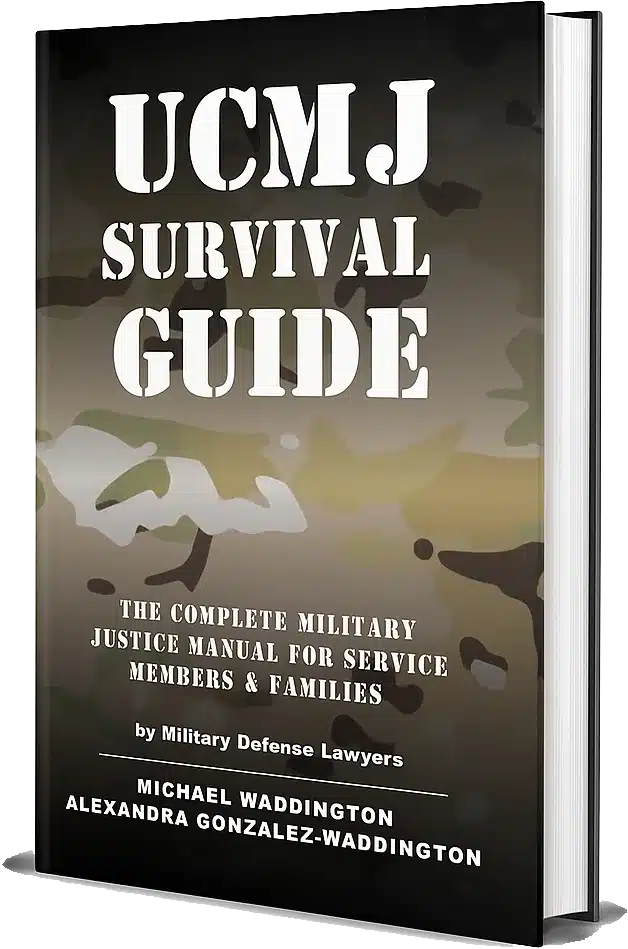
Check Out Our Newest Book
UCMJ Survival Guide

UCMJ Criminal Defense Lawyers

Worldwide Military Defense Experience
Defending Service Members Across Every Theater and Installation
Specialized Expertise in Serious Military Offenses
War Crimes, Sexual Assault, Violent Crimes, and White-Collar Defense

Media and High-Profile Case Experience
Featured on CNN, 60 Minutes, BBC, and Major News Outlets

Playlist

3:34

7:32
6:57

7:58

21:35

7:24

4:24
Frequently Asked Questions About Article 134 Online Enticement Defense
What is Article 134 online enticement?
Article 134 online enticement refers to the use of electronic communication to attempt to induce or solicit illegal conduct, typically involving minors or prohibited acts under military law. This can include messages, chats, or other digital interactions intended to persuade another person to engage in unlawful activities. The charge falls under the general provisions of Article 134 of the Uniform Code of Military Justice (UCMJ), which covers offenses prejudicial to good order and discipline or bringing discredit to the armed forces. The military takes these allegations seriously, and they often result in court-martial proceedings. Defending against such charges requires a clear understanding of the legal definitions and the evidence involved to ensure your rights and future are protected.
How is an undercover sting operation conducted at Fort Bragg?
Undercover sting operations at Fort Bragg involve law enforcement officers posing as minors or vulnerable individuals in online environments to detect and apprehend those attempting to commit illegal acts such as online enticement. These operations use digital communications to engage suspects and gather evidence of intent and actions. The evidence collected during these stings is critical in Article 134 prosecution. However, the tactics and procedures must comply with legal standards to ensure the evidence is admissible. Having knowledgeable legal counsel helps scrutinize the validity of such operations and defend against potential procedural errors or entrapment claims. Understanding the nature of these stings is essential to prepare a strong defense.
What are the potential penalties for Article 134 online enticement charges?
Penalties for Article 134 online enticement charges can be severe and vary depending on the specifics of the case, evidence, and military judicial decisions. Possible punishments include confinement, reduction in rank, forfeiture of pay, and dishonorable discharge, which can have long-lasting effects on a military career and personal life. The military justice system considers the gravity of the offense and circumstances when determining sentencing. It is important to approach these charges with serious and informed legal defense to mitigate potential consequences. Early and comprehensive legal representation plays a key role in navigating sentencing considerations and advocating for the most favorable outcome possible.
How can I defend against predator-style sting allegations?
Defending against predator-style sting allegations requires a detailed examination of the evidence, including the conduct of law enforcement during the operation and the communications involved. Defense strategies may focus on challenging the intent element, questioning the validity of electronic evidence, or asserting procedural defenses such as entrapment. It is critical to analyze whether the accused was improperly induced to commit the offense or if the evidence was obtained unlawfully. Skilled legal counsel can identify weaknesses in the prosecution’s case and develop arguments to protect your rights and future. Preparation, attention to detail, and understanding military justice norms are essential components of an effective defense.
What should I do if I am investigated for online enticement at Fort Bragg?
If you are under investigation for online enticement at Fort Bragg, it is vital to seek legal advice immediately. Early legal guidance can help you understand the charges, your rights, and the steps involved in the military justice process. Avoid making statements to investigators without your attorney present, as these can be used against you in court. A knowledgeable military defense lawyer will assist in preserving evidence, advising on conduct during the investigation, and preparing for any hearings or trials. Acting promptly increases your chances of a favorable resolution and helps protect your military career and personal liberty.
Can digital evidence be challenged in military court?
Digital evidence plays a central role in online enticement cases but can be challenged in military court on various grounds. Issues such as chain of custody, authenticity, and legality of evidence collection methods may impact its admissibility. Additionally, questions about the interpretation of messages, context, or intent behind communications may arise. Defense attorneys skilled in military law and digital forensics can scrutinize the evidence to uncover inconsistencies or procedural errors. Effectively challenging digital evidence is crucial for building a strong defense and ensuring that only reliable and legally obtained information is considered by the court.
How long does the Article 134 legal process take?
The timeline for Article 134 cases involving online enticement can vary widely depending on the complexity of the case, the evidence involved, and military procedural requirements. Initial investigations, Article 32 hearings, pretrial motions, and court-martial proceedings all contribute to the overall duration. Some cases may resolve quickly through negotiation or administrative action, while others require extended litigation. Understanding the process and timeline helps service members prepare and cooperate effectively with their defense counsel. Patience and proactive legal support are essential throughout this often lengthy military justice journey.
Will an Article 134 conviction affect my military career?
An Article 134 conviction for online enticement can have significant consequences on a military career, including disciplinary actions, loss of rank or pay, and possible discharge from service. Beyond military penalties, such convictions may affect future employment, security clearances, and personal reputation. The military justice system treats these offenses seriously due to their impact on discipline and trust within the armed forces. Therefore, it is critical to engage skilled legal representation to minimize these risks and advocate for your rights and future. Understanding the potential long-term effects underscores the importance of a strong defense.
Do I need a military defense lawyer for these charges?
Having a military defense lawyer is essential when facing Article 134 online enticement charges. Military legal processes are complex and distinct from civilian courts, requiring specialized knowledge of the Uniform Code of Military Justice and military procedures. A defense attorney familiar with these cases can provide guidance on rights, advocate on your behalf, and help navigate investigations, hearings, and trials. They also assist in developing defense strategies tailored to your situation. The right legal representation increases the likelihood of protecting your military career and obtaining a favorable outcome.
How do UCMJ Defense Lawyers assist clients at Fort Bragg?
UCMJ Defense Lawyers assist clients at Fort Bragg by offering dedicated legal counsel focused on military law and Article 134 defense. Attorneys Waddington and Gonzalez provide personalized representation, analyzing case details, challenging evidence, and preparing for court-martial proceedings with a commitment to protecting clients’ rights and futures. Their understanding of Fort Bragg’s legal environment and military protocols ensures informed and effective advocacy. They support clients through every stage, from investigation to resolution, aiming to secure the best possible outcomes under the law.