



Fort Bragg Command-Directed Investigations – AR 15-6 Defense Lawyers
If you are stationed at Fort Bragg and targeted in a command-directed investigation, especially an AR 15-6 investigation, the decisions you make now will shape your future. A command investigation is often the first step in a process that leads to a GOMOR, Article 15, administrative separation board, suspension, relief for cause, or even court-martial. Contact Gonzalez & Waddington at 1-800-921-8607 for a confidential consultation. Our civilian military defense lawyers defend Soldiers worldwide and understand the unique investigative culture at Fort Bragg and in the surrounding Fayetteville, North Carolina area.
Command-directed investigations at Fort Bragg are not neutral fact-finding missions. They are often initiated when leadership wants answers fast—and sometimes wants justification for a decision already made. Soldiers mistakenly believe these investigations are informal or low-risk, only to learn later that the findings are used to force them out, issue a GOMOR, revoke their jump status, pull their clearance, or destroy their professional reputation. This page explains exactly how Fort Bragg investigations work and how to protect yourself from their consequences.
Understanding AR 15-6 Investigations at Fort Bragg
What an AR 15-6 Really Is
An AR 15-6 investigation is a commander-directed inquiry into alleged misconduct, leadership failures, SHARP complaints, alcohol-related incidents, toxic leadership, financial irregularities, safety violations, inappropriate relationships, or any allegation the chain of command wants examined. It is an administrative process—not criminal—but the consequences can be just as severe.
Why AR 15-6 Investigations Are Dangerous
Unlike CID, which uses trained agents, AR 15-6 investigations often rely on inexperienced officers who lack legal training, investigative skill, or understanding of evidence and witness credibility. Many investigating officers default to accepting accusations as fact, especially if the command expects a particular result. A flawed, one-sided 15-6 can form the foundation for elimination, separation, flags, adverse paperwork, or criminal referral.
The Fort Bragg Command Climate and BOI/Sep Board Pipeline
Fort Bragg’s leadership environment is fast-paced and unforgiving. Because the installation houses elite units—the 82nd Airborne Division, XVIII Airborne Corps, special operations commands—leaders often take aggressive action to protect readiness and reputation. A 15-6 finding is frequently the first document used to justify further action such as:
- Relief for cause
- Loss of jump status
- GOMOR / LOR
- Bars to continued service
- Article 15 NJP
- Officer BOI (elimination board)
- Enlisted administrative separation board
- CID referral or criminal charges
This is why it is critical not to underestimate a 15-6 investigation at Fort Bragg.
How Command Investigations Begin in the Fort Bragg Environment
Common Sources of Allegations
Command investigations often begin with:
- Complaints from Soldiers or NCOs
- SHARP or EO allegations
- Domestic disturbances reported by Fayetteville police
- Alcohol-related events downtown or in off-post housing
- Rumors or unit gossip
- Anonymous tips
- Misinterpreted text messages or social media posts
- Accusations from disgruntled subordinates or peers
Immediate Reactions by Fort Bragg Commands
Commands frequently:
- Flag the Soldier
- Issue no-contact orders
- Remove the Soldier from leadership positions
- Reassign the Soldier to administrative duties
- Seize electronic devices
- Restrict access to classified areas
These actions typically occur before the investigation begins, demonstrating that the chain of command may already have an opinion of guilt.
The Role of the Investigating Officer
Why IOs Are Often Unqualified
AR 15-6 Investigating Officers (IOs) are often:
- Junior officers with minimal investigative training
- Peers or subordinates of key witnesses
- Unfamiliar with digital evidence, metadata, or forensics
- Influenced (intentionally or not) by command expectations
Bias in Investigations
Many IOs enter the process with an assumption that misconduct occurred simply because the command initiated the investigation. The structure encourages confirmation bias—the IO looks for evidence that supports allegations and disregards evidence that contradicts them.
What IOs Frequently Get Wrong
Common errors include:
- Misinterpreting texts, tone, or context
- Assuming guilt based on emotional statements
- Failing to interview key witnesses who support the Soldier
- Misunderstanding Army policy or regulation
- Mischaracterizing lawful behavior as misconduct
- Relying on hearsay or second-hand summaries
- Not understanding the nuances of consent, leadership dynamics, or operational tempo
These errors are later treated as “facts” unless effectively dismantled.
Types of Command Investigations Common at Fort Bragg
1. SHARP / Sexual Misconduct Investigations
Fort Bragg aggressively investigates allegations of sexual harassment, sexual assault, and inappropriate conduct. Even minor or ambiguous incidents can trigger formal inquiries. These cases frequently escalate to CID and Article 120 charges, even when evidence is weak. AR 15-6 findings are often used to justify GOMORs or elimination attempts.
2. Toxic Leadership Allegations
High-tempo units often confuse strict discipline with toxicity. Subordinates may misinterpret firm standards or heated moments during stressful operations. Commanders sometimes use 15-6 findings to remove leaders they no longer want in position.
3. Domestic Incidents Originating in Fayetteville
Fayetteville police respond to thousands of domestic calls each year, many involving Soldiers. Even if no one is arrested, military commands often initiate command-directed investigations. Statements from partners or neighbors can be misinterpreted or exaggerated.
4. Fraternization and Inappropriate Relationships
Accusations of relationships across rank lines or between officers and enlisted Soldiers often trigger 15-6 investigations. Many are based on rumor, jealousy, or misunderstood social interactions.
5. Misuse of Government Resources or Travel Funds
Investigations into DTS, government credit cards, or lodging receipts can lead to administrative or criminal consequences.
6. Hazing or Maltreatment Cases
Training environments, airborne practices, or high-pressure units may create conditions where joking or tough instruction is mischaracterized as hazing.
How Investigations Expand Into UCMJ Consequences
From AR 15-6 to CID
If the IO suspects criminal misconduct, the case often escalates immediately to CID. This creates a dual-track threat where administrative findings feed into criminal inquiries.
From Findings to GOMORs
A negative 15-6 is frequently used to issue a GOMOR, which can destroy an officer’s or NCO’s career even without formal punishment.
From GOMOR to BOI or Separation Board
The Army often uses 15-6 findings as justification for kicking Soldiers out through elimination boards or enlisted separation boards.
From AR 15-6 to Article 15 or Court-Martial
Commanders rely on 15-6 findings when deciding whether to impose nonjudicial punishment or refer a court-martial.
How to Survive an AR 15-6 Investigation at Fort Bragg
Do Not Speak Without Counsel
The number one mistake Soldiers make is giving statements without legal advice. Attempting to “clear things up” often leads to self-incrimination. IOs and chain of command members may misinterpret or twist statements to fit the allegation.
Gather Your Own Evidence
Save texts, screenshots, social media posts, photos, videos, and witness names. Many Soldiers fail to preserve critical evidence that could prove innocence.
Document Your Version Privately
Prepare a detailed written account of events immediately. Share it only with your attorney. Do not email it, message it, or store it on shared devices.
Identify Witnesses Early
Many IOs ignore defense witnesses unless directly told to interview them. Civilian counsel ensures your story is heard.
Challenge Procedural Errors
If the IO fails to follow AR 15-6 rules or shows bias, those defects can weaken the entire case.
How Gonzalez & Waddington Defends Soldiers in AR 15-6 Investigations
We Dismantle Flawed Investigations
We examine the investigative file line-by-line, exposing bias, incomplete evidence, and false assumptions. We show how alternative explanations make more sense than the narrative the command is pushing.
We Rebuild the True Story
We construct a coherent, fact-based narrative that explains what actually happened, supported by witness statements, digital evidence, and Soldier performance history.
We Prepare Soldiers for Interviews
When Soldiers must speak, preparation is everything. We ensure they understand the questions, avoid traps, and articulate facts clearly.
We Attack the Government’s Case at Every Level
Whether the government relies on a weak 15-6, a biased IO, incomplete interviews, or digital misunderstandings, we expose the weaknesses and force the command to confront their own investigative failures.
Types of Evidence We Analyze in AR 15-6 Cases
Digital Communications
Texts, emails, Signal/WhatsApp chats, social media messages, and group chat histories often tell a different story than the accuser’s statements.
Social Media and Metadata
Timestamps, location data, and image metadata can disprove allegations or show that claims were fabricated.
Witness Statements
We examine witness relationships, motives, and inconsistencies. Many 15-6 witnesses are biased or misinformed.
Performance History and Evaluations
NCOERs, OERs, awards, and deployment history can undermine the narrative that a Soldier suddenly became untrustworthy.
Why Fort Bragg Soldiers Need Civilian Counsel for AR 15-6 Cases
Military Lawyers Are Overloaded
Trial Defense Service attorneys are often stretched thin. Civilian counsel provides the focused attention your case requires.
Command Bias Is Real
Commands at Fort Bragg frequently prefer action over fairness. Civilian lawyers push back and force due process.
The Stakes Are Enormous
An AR 15-6 finding can lead to separation, loss of benefits, adverse evaluations, court-martial, or permanent reputational harm.
Pro Tips for Soldiers Facing Command Investigations
Tip 1: Assume You Are Being Observed
Anything you say or do may be reported or included in the investigative file.
Tip 2: Be Strategic, Not Emotional
Emotional reactions are often misinterpreted as guilt.
Tip 3: Stay Away From Social Media
Do not discuss your case or post anything that could be twisted by investigators.
Tip 4: Follow Orders, But Do Not Volunteer Information
You must comply with lawful orders, but you do not have to incriminate yourself.
Tip 5: Get Civilian Counsel Early
Your chances of success are highest when we intervene before the IO interviews you or submits findings.
Connection to the Fort Bragg Military Defense Hub
This page is part of the Fort Bragg Military Justice Knowledge Center. Related topics include BOIs, Article 15 defense, Article 120 actions, domestic violence, separation boards, assault allegations, and child pornography defense. Together, these pages form the most comprehensive military justice resource available for Fort Bragg Soldiers.
Bottom Call to Action
If you are stationed at Fort Bragg and face a command-directed investigation or AR 15-6 inquiry, do not navigate this alone. Contact Gonzalez & Waddington at 1-800-921-8607 for a confidential consultation. We defend Soldiers worldwide and are ready to help you challenge the investigation and protect your future.
Understanding Military Defense Services at Fort Bragg
Located near Fayetteville, North Carolina, Fort Bragg is a key military installation where service members may face charges under the Uniform Code of Military Justice (UCMJ). Our firm specializes in defending military personnel stationed at Fort Bragg, providing dedicated legal support tailored to the unique demands of military law. We are committed to protecting the rights of soldiers throughout the legal process.
Facing a UCMJ charge can be overwhelming, especially when stationed far from home. Our team understands the complexities and nuances of military justice at Fort Bragg and works diligently to secure the best possible outcome for each client. We offer comprehensive defense strategies designed to meet the specific circumstances of military legal cases.
The Value of Skilled Military Legal Defense at Fort Bragg
Military legal defense services are essential for service members at Fort Bragg who face UCMJ charges. These services help ensure that legal rights are upheld and that every case receives thorough review and preparation. Effective defense can mitigate consequences and provide peace of mind during challenging times in a military career.
About Our Firm and Our Commitment to Fort Bragg Service Members
Our law firm has a strong record of representing military personnel at Fort Bragg, North Carolina. We bring extensive experience in navigating military legal proceedings and are dedicated to serving those who serve our country. Our approach is client-focused, ensuring personalized attention and vigorous defense throughout the legal process.
Comprehensive Guide to UCMJ Defense at Fort Bragg
This guide provides detailed information about defending against UCMJ charges at Fort Bragg, North Carolina. We cover essential aspects such as the military justice process, common offenses, and defense strategies tailored to the needs of service members stationed at this key military base.
Understanding the military legal system is crucial for service members facing charges. Our guide aims to demystify the process, explain your rights, and outline how our firm supports clients throughout every stage of their case to achieve the most favorable outcomes possible.
What is UCMJ and How Does It Apply at Fort Bragg?
The Uniform Code of Military Justice (UCMJ) is the set of laws governing conduct for all U.S. military personnel, including those stationed at Fort Bragg in North Carolina. It outlines offenses and procedures unique to the military justice system, differing from civilian law. Understanding these distinctions is key to mounting an effective defense.
Key Components of the UCMJ Defense Process at Fort Bragg
Defending a UCMJ charge involves multiple steps, including investigation, pre-trial motions, hearings, and possibly court-martial proceedings. At Fort Bragg, these processes require careful navigation, awareness of military protocols, and strategic planning to protect the rights and interests of the accused service member.
Important Terms in Military Defense at Fort Bragg
Familiarity with key military legal terms helps in understanding the defense process. This glossary explains common terminology encountered in UCMJ cases at Fort Bragg to assist service members and their families in comprehending the legal environment.
UCMJ
The Uniform Code of Military Justice is the federal law that defines criminal offenses and legal procedures for U.S. military personnel, including those at Fort Bragg.
Court-Martial
A military court proceeding used to try service members accused of violating the UCMJ, often held at or near Fort Bragg for local cases.
Article 32 Hearing
A pre-trial investigation to determine if there is enough evidence to proceed to a court-martial, commonly conducted for cases involving Fort Bragg personnel.
Non-Judicial Punishment (NJP)
A disciplinary measure under the UCMJ allowing commanders at Fort Bragg to address minor offenses without a formal court-martial.
Comparing Legal Defense Options for Fort Bragg Service Members
Service members at Fort Bragg may consider various defense approaches, including informal resolutions, non-judicial punishment, or formal court-martial defense. Each option has different implications, and understanding these helps in choosing the most appropriate course of action with sound legal counsel.
When a Targeted Defense Strategy May Be Appropriate at Fort Bragg:
Minor Offenses or Administrative Issues
For less serious infractions or administrative matters at Fort Bragg, a focused legal approach may suffice to resolve the issue efficiently while minimizing disruption to the service member’s career.
Early Resolution Opportunities
Certain cases at Fort Bragg may be resolved early through negotiation or agreements, making a limited defense approach effective in achieving favorable outcomes without prolonged litigation.
The Need for Full-Spectrum Defense at Fort Bragg:
Complex or Serious Charges
More severe or complicated UCMJ offenses at Fort Bragg require a thorough legal defense that addresses all aspects of the case to protect the service member’s rights and future.
Protecting Long-Term Military Career
A comprehensive legal defense is essential for safeguarding a service member’s long-term career prospects when facing charges that could result in significant penalties or discharge from service at Fort Bragg.
Advantages of Choosing Full Legal Support at Fort Bragg
Engaging a full-service military defense team ensures that every detail of the case is addressed, evidence is thoroughly examined, and all legal options are explored to achieve the best defense possible for Fort Bragg personnel.
This approach also provides consistent communication and support throughout the legal process, alleviating stress and helping service members focus on their duties while their defense is managed by capable attorneys.
In-Depth Case Analysis
A comprehensive defense includes detailed investigation and case review that can uncover weaknesses in the prosecution’s case or identify procedural errors at Fort Bragg, improving the likelihood of a favorable outcome.
Strategic Legal Planning
Strategic planning tailored to the circumstances of UCMJ charges at Fort Bragg helps in crafting effective defense arguments and preparing for all stages of the military justice process, from hearings to trial.
As Featured On:

NEED MILITARY LAW HELP?
Fill out this form or call 1-800-921-8607 to request a consultation.


Top Searched Keywords
- Fort Bragg UCMJ Defense
- Military Criminal Defense North Carolina
- UCMJ Lawyers Fayetteville NC
- Military Law Defense Fort Bragg
- Court-Martial Defense Fort Bragg
- Non-Judicial Punishment Representation
- Article 32 Hearing Lawyers
- Military Legal Rights Defense
- Defense for Military Personnel NC
Pro Tips for Military Defense at Fort Bragg
Know Your Rights Under the UCMJ
Understanding your rights as a service member at Fort Bragg is fundamental. Before engaging with investigators or command representatives, familiarize yourself with the protections and procedures outlined in the UCMJ to avoid unintended self-incrimination.
Seek Legal Counsel Early
Maintain Confidentiality
Limit discussions about your case to your legal counsel and avoid sharing details with others to protect your defense interests during proceedings at Fort Bragg.
Why Choose UCMJ Defense at Fort Bragg?
Facing UCMJ charges at Fort Bragg requires dedicated defense tailored to military law and the unique environment of this North Carolina base. Our services provide knowledgeable representation that understands local procedures and command structures.
With an emphasis on protecting your rights and career, we offer personalized legal strategies designed to address your specific situation and help navigate the complexities of military justice effectively.
Typical Scenarios for Military Defense at Fort Bragg
Service members at Fort Bragg may require defense services for a variety of reasons, including allegations of misconduct, drug-related offenses, insubordination, or other violations of the UCMJ. Each case demands a careful and knowledgeable approach to ensure fair treatment.
Accusations of Unauthorized Absence
Unauthorized absence charges at Fort Bragg can jeopardize a soldier’s military career and require prompt legal action to challenge the allegations and protect the service member’s rights.
Drug-Related Offenses
Drug offenses under the UCMJ at Fort Bragg are taken seriously and often lead to significant disciplinary action, making skilled defense essential to address the charges and potential consequences.
Conduct Unbecoming and Other Misconduct
Charges related to conduct unbecoming or other violations can arise at Fort Bragg and require a thorough defense approach to ensure the allegations are properly examined and contested.
Meet Your Defense Team


Michael S. Waddington
Criminal Defense Lawyer

PARTNER
Alexandra González-Waddington
Criminal Defense Lawyer
PARTNER
Battle-Tested Results
Recent Case Results
Gang-Rape Allegation Collapses Against Navy Officer
U.S. v. Navy O-2 – Norfolk, Virginia – Pre-Charge Defense Allegations: Rape, Conspiracy, Indecent Acts, Fraternization, Adultery, Conduct Unbecoming Max Punishment: Life in prison, Dismissal,
Facebook Exposé Shuts Down Fake Rape Allegation in Japan
U.S. v. Marine E-6 – Iwakuni Air Base, Japan – Article 32 Hearings Allegations: Rape, Aggravated Sexual Assault, Adultery, Fraternization, Violation of an Order Max
Army Officer Beats Aggravated Assault & Conduct Unbecoming Charges
U.S. v. Army O-1 – Fort Bragg, NC / Tried at Fort McNair, Washington D.C. – General Court-Martial Allegations: Aggravated Assault with Means Likely to
Navy Sailor’s Sex Assault Case Tossed After UCI Bombshell
U.S. v. Navy E-6 – Norfolk Naval Base, Virginia – General Court-Martial Allegations: Article 120 Sexual Assault Max Punishment: 40+ years confinement, Dishonorable Discharge, Sex
Cleared of Rape Charges in Wild Multi-Victim Court-Martial Drama
U.S. v. Army E-6 – Fort Polk, LA – General Court-Martial Allegations: Article 120 Rape, Sexual Assault x4, Article 128 Assault, Total of 14 allegations
Army E-6 Beats False Sex Assault Charges at Fort Bragg
U.S. v. Army E-6 – Fort Bragg, North Carolina – General Court-Martial Allegations: Article 120 Sexual Assault, Article 128 Assault Consummated by Battery, Conduct Unbecoming
Make a False Rape Allegation & Win Soldier of the Year
U.S. v. Army CW2 – Fort Gordon, GA
Allegations: RAPE, Fraternization, Adultery
Max Punishment: LIFE, Dismissal, Sex Offender Registration
Result: ALL CHARGES DISMISSED
Discharge: RETIRED WITH AN HONORABLE
Location/Branch/Rank: Fort Gordon – Augusta, GA/Army/CW2
Cheating Marine Officer Calls Rape
U.S. v. Marine O-3 – Marine Forces Reserve, Naval Support Activity, New Orleans, LA Allegations: Article 120 Rape/Sexual Assault Max Punishment: Life in prison, Dismissal, Sex offender registration

Take Command of Your Defense
Reasons Service Members Trust Our Fort Bragg Defense Team
Call Us Today
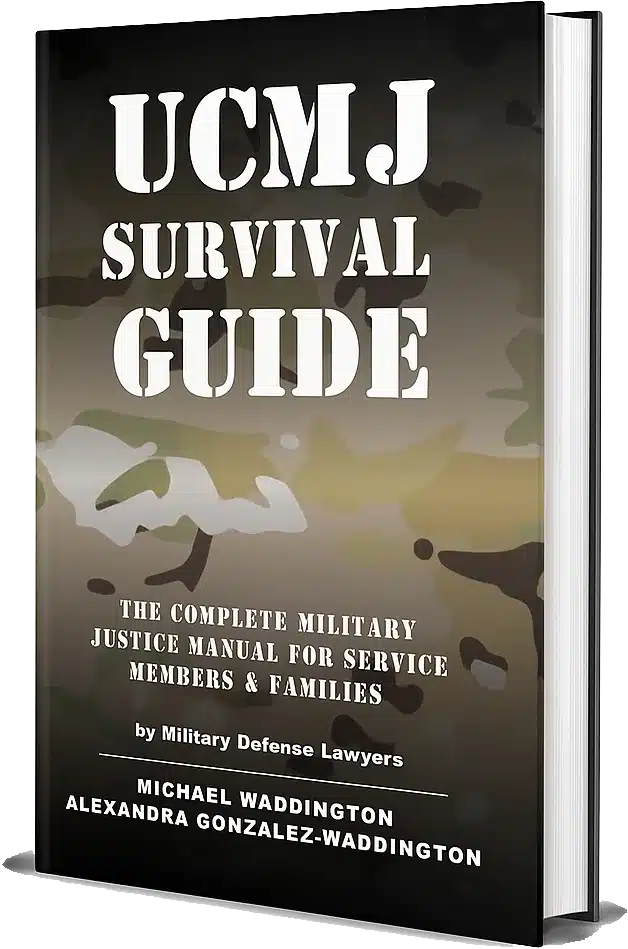
Check Out Our Newest Book
UCMJ Survival Guide

UCMJ Criminal Defense Lawyers

Worldwide Military Defense Experience
Defending Service Members Across Every Theater and Installation
Specialized Expertise in Serious Military Offenses
War Crimes, Sexual Assault, Violent Crimes, and White-Collar Defense

Media and High-Profile Case Experience
Featured on CNN, 60 Minutes, BBC, and Major News Outlets

Playlist

3:34

7:32

6:57

7:58

21:35

7:24
4:24
Frequently Asked Questions About UCMJ Defense at Fort Bragg
What should I do if I am notified of a UCMJ investigation at Fort Bragg?
If you are notified of a UCMJ investigation at Fort Bragg, it is important to seek legal counsel promptly. Early representation can help ensure your rights are protected throughout the investigative process. Avoid discussing the case with others until you have consulted with an attorney who understands military law. Having knowledgeable legal advice can guide you through your options and the next steps. Maintaining composure and following legal guidance will contribute to the best possible defense strategy tailored to your circumstances at Fort Bragg.
How does the military justice process differ from civilian courts at Fort Bragg?
The military justice system at Fort Bragg operates under the Uniform Code of Military Justice, which has distinct procedures and rules compared to civilian courts. For example, court-martial proceedings are conducted by military officers and follow different evidentiary standards. Additionally, service members have specific rights and responsibilities unique to the military context. Understanding these differences is critical to effectively navigating the process. Our firm provides clear explanations and representation to ensure you are well-prepared for each stage of your case at Fort Bragg.
Can I remain on active duty during my UCMJ case at Fort Bragg?
In many cases, service members can remain on active duty during UCMJ proceedings at Fort Bragg, depending on the nature of the charges and command decisions. However, certain offenses or circumstances may result in suspension of duties or administrative actions. It is important to work with legal counsel to understand how your case might impact your status. We assist clients in maintaining their military careers while vigorously defending against charges under the UCMJ at Fort Bragg.
What are the possible outcomes of a court-martial at Fort Bragg?
Possible outcomes of a court-martial at Fort Bragg range from acquittal to various forms of punishment, including reduction in rank, confinement, or discharge from service. The severity of the sentence depends on the charges and evidence presented. It is essential to have a comprehensive defense strategy to challenge the prosecution’s case and protect your rights. Our legal team works diligently to minimize potential penalties and pursue the most favorable resolution for each client.
How can I prepare for an Article 32 hearing at Fort Bragg?
Preparing for an Article 32 hearing at Fort Bragg involves understanding the purpose of this pre-trial investigation, which is to assess whether there is sufficient evidence to proceed with a court-martial. We help clients gather relevant information, plan testimony, and navigate the hearing process. Being well-prepared can influence the outcome and potentially prevent unnecessary formal charges. Our guidance ensures you approach the hearing with confidence and clarity.
What rights do I have during non-judicial punishment at Fort Bragg?
During non-judicial punishment (NJP) at Fort Bragg, service members retain certain rights, such as the option to refuse NJP and demand a trial by court-martial. However, accepting NJP might be quicker and less severe in some cases. Understanding these rights and the potential consequences is critical before making decisions. We provide thorough explanations and advise clients on the best course of action tailored to their specific situation at Fort Bragg.
How long does a UCMJ case typically take at Fort Bragg?
The duration of UCMJ cases at Fort Bragg varies widely depending on the complexity of the charges and the legal process involved. Some cases may resolve in a matter of weeks, while others can extend over several months or longer if they proceed to court-martial. Our firm manages timelines proactively to keep clients informed and prepared at each stage, helping to reduce uncertainty and stress throughout the proceedings.
Can I appeal a court-martial verdict at Fort Bragg?
Yes, service members have the right to appeal court-martial verdicts at Fort Bragg, but the appeals process is governed by specific military appellate procedures. Appeals may be based on legal errors, new evidence, or procedural issues. We assist clients in evaluating the merits of an appeal and navigating the complex military appellate system to protect their interests.
Will a UCMJ conviction affect my military benefits at Fort Bragg?
A UCMJ conviction can impact military benefits such as retirement eligibility, pay, and security clearances at Fort Bragg. The extent of these effects depends on the nature of the conviction and disciplinary actions imposed. Understanding these potential consequences helps service members make informed decisions about their defense. We provide guidance on how to mitigate negative impacts and preserve benefits whenever possible.
How do I contact a UCMJ defense lawyer near Fort Bragg?
To contact a UCMJ defense lawyer near Fort Bragg, you can reach our firm by phone or through our website for a confidential consultation. We are dedicated to serving military personnel in North Carolina and provide prompt, responsive legal assistance. Early contact allows us to begin building your defense and protecting your rights effectively from the outset of your case.