



Fort Bragg Child Pornography Defense – Article 134 UCMJ Attorneys
If you are stationed at Fort Bragg and facing allegations under Article 134 involving child pornography—possession, viewing, receiving, distributing, producing, or allegedly attempting to access such material—you are dealing with one of the most severe and career-threatening accusations in the military justice system. Contact Gonzalez & Waddington at 1-800-921-8607 for a confidential consultation.
Our civilian military defense lawyers have decades of experience defending Soldiers in high-stakes digital evidence cases and know how Fort Bragg, CID, digital forensics labs, and military prosecutors handle these complex investigations.
Child pornography allegations under Article 134 are not simple cases. They involve complex legal issues, digital forensics, metadata interpretation, browser artifacts, file path analysis, thumbnail cache reconstruction, shared device questions, cloud storage logs, app data, and the nuances of whether a
Soldier knowingly and intentionally possessed or viewed contraband material. At Fort Bragg, any allegation involving children will trigger immediate and aggressive action from command, CID, prosecutors, and specialized digital forensic investigators. Even mere suspicion can result in flagging, suspension of clearance, duty removal, separation attempts, and social consequences within the unit.
Aggressive Military Defense Lawyers: Gonzalez & Waddington
Watch the military defense lawyers at Gonzalez & Waddington break down how they defend service members worldwide against UCMJ allegations, CID/NCIS/OSI investigations, court-martials, Article 120 cases, administrative separations, and GOMORs. If you’re under investigation or facing charges, this video explains what your rights are and how experienced civilian military counsel can make the difference.Understanding Article 134 Child Pornography Allegations at Fort Bragg
Why These Allegations Are Treated More Aggressively Here
Fort Bragg is home to airborne infantry units, special operations commands, military intelligence elements, and national mission units whose missions depend on the ability to maintain a spotless public image. When an allegation of child pornography surfaces, even before any forensic examination is complete, commands often react as if guilt is already established. Soldiers may be immediately removed from their unit, placed on administrative duties, relocated, or treated as threats before investigators gather even the most basic facts. The desire to protect the reputation of the Army and Fort Bragg drives this hyper-aggressive response.The Scope of Article 134 Child Pornography Cases
Article 134 cases do not require distribution or production. Even unintentional downloads, auto-saved thumbnails, cached fragments, or corrupted files can trigger charges. CID digital forensic examiners often discover questionable content in unexpected places—browser caches, app metadata, unallocated space, and preview directories—then presume knowing possession. The challenge for defense counsel is to prove that files were not knowingly saved, accessed, or controlled by the accused.How Child Pornography Investigations Begin at Fort Bragg
Mandatory Reporting
Most cases start with a report filed by a spouse, partner, roommate, friend, coworker, landlord, technician, or even a civilian police officer. Sometimes the report is based on misunderstanding, revenge, a domestic conflict, or a misinterpreted image. Commands often bypass preliminary checks and immediately refer cases to CID.CID Search Warrants and Digital Seizures
Once CID gets involved, they typically seize every digital device connected to the Soldier—phones, laptops, tablets, gaming systems, external drives, SD cards, cloud accounts, and more. Soldiers often comply without realizing the scope of what investigators will examine. CID sends seized devices to digital forensic labs, sometimes taking months to complete analysis.Investigations Triggered by Civilian Agencies
Some cases begin when civilian police departments or federal agencies such as Homeland Security Investigations or the National Center for Missing & Exploited Children (NCMEC) share tipline information. Even if the civilian report is vague, Fort Bragg will begin its own investigation immediately.Common Misconceptions About Article 134 Child Pornography Cases
Misconception 1: “If the material is deleted, CID cannot find it.”
Wrong. Deleted files often leave behind fragments such as thumbnails, metadata timestamps, or trace signatures. But that does not prove intentional possession. Skilled defense counsel can explain that such artifacts may be created automatically without conscious user action.Misconception 2: “If the device used my Wi-Fi, I must be responsible.”
Incorrect. Shared networks, unsecured Wi-Fi, multiple users on a device, remote access, pop-up ads, malware, and hacked accounts frequently complicate attribution. CID often assumes the Soldier was the only possible user, which is not always true.Misconception 3: “If CID found something, I must be guilty.”
Not at all. CID examiners often do not understand how files were created, saved, or accessed. Their tools are powerful, but not perfect. They sometimes misinterpret system artifacts, assume intentionality, or overlook benign explanations.Types of Digital Evidence Used at Fort Bragg
1. Thumbnails and Preview Files
Most preview images on devices are created automatically and without user intent. CID may treat thumbnails as “proof” of knowing possession, even when the user never opened the file.2. Browser Cache Data
Cache content is often created by auto-loading ads, pop-ups, or unintended clicks. Browser artifacts alone rarely establish knowing possession.3. Messaging Applications
Apps like WhatsApp, Signal, Snapchat, Instagram, Facebook Messenger, Telegram, and Kik sometimes auto-save images to temporary storage, even when the user never viewed them or blocked the sender.4. File Path and Folder Structure
CID examiners often claim files in certain folders imply knowledge. However, many applications automatically store content in folders the user does not know exist.5. Cloud Storage Metadata
Cloud sync features can place files on a device without user initiation. Dropbox, Google Drive, iCloud, OneDrive, and app-based backups often auto-download content.How CID Builds Article 134 Child Pornography Cases
Presumption of Intent
CID’s default assumption is that any presence of prohibited material equals deliberate wrongdoing. This simplistic view ignores how digital systems work. It is the defense attorney’s job to show alternate explanations and undermine weak interpretations of metadata.Overreliance on Forensic Software Output
CID uses tools like Cellebrite, X-Ways, Griffeye, and EnCase. While powerful, these tools sometimes generate misleading reports, particularly when dealing with auto-generated thumbnails or corrupted files. Defense counsel must understand how these tools interpret metadata.Failure to Consider Alternative Users
Shared devices, household computers, borrowed laptops, guest accounts, or previous owners can all create ambiguity. CID often ignores these possibilities.Inadequate Analysis of File Creation Events
Understanding how operating systems create, modify, and store files is essential. Many cases hinge on whether the files were intentionally downloaded or automatically generated.Defending Article 134 Cases at Fort Bragg
Step 1: Attack the Forensic Evidence
Most child pornography prosecutions collapse when the defense exposes weaknesses in forensic analysis. This includes showing that files were auto-generated, that the Soldier never accessed them, that timestamps are unreliable, or that the material originated from outside the user’s control.Step 2: Question Intent and Knowledge
Intent is the heart of Article 134. The government must prove the Soldier knowingly possessed or viewed the material. If the content was created by malware, pop-ups, cached media, remote access, or accidental exposure, there is no knowing possession.Step 3: Present Expert Testimony
Defense experts can explain system logs, user activity, and metadata. They can show that alleged contraband may have been automatically created or never actually opened.Step 4: Challenge the Narrative
The government often simplifies the case: “files existed, therefore guilty.” A proper defense shows the complexity of digital systems and the implausibility of intentional misconduct.Step 5: Build a Soldier-Centered Story
Many Soldiers accused of these offenses have long, honorable careers, deployments, commendations, and no history of misconduct. Presenting who the Soldier is—not just what CID claims—is critical for raising doubt and winning acquittal or dismissal.Why Fort Bragg Soldiers Are at Higher Risk for False Accusations
High Operational Stress
Fort Bragg’s tempo contributes to strained relationships, emotional breakdowns, and situations where partners make exaggerated claims out of anger or retaliation.Civilian-Military Interactions
Because so many Soldiers live in Fayetteville, a simple argument, a break-up, or a misunderstanding can become a criminal inquiry if someone reports suspicious behavior involving electronics.Misinterpretation of Innocent Browsing Activity
Clickbait, pop-up ads, hacked accounts, and malicious websites can cause contraband images to appear on devices without the Soldier’s intent.When Article 134 Cases Lead to Other Actions
Administrative Separation
Even without a court-martial, the Army may attempt to separate the Soldier. The burden is low, and the stakes are enormous.Security Clearance Suspension
Any allegation involving minors triggers automatic clearance suspension. A strong defense is crucial for protecting long-term career prospects.Collateral Misconduct Allegations
Domestic disputes, alcohol incidents, or unrelated allegations often become tied to Article 134 cases. A comprehensive defense attacks all angles.Common Defense Strategies Used by Gonzalez & Waddington
Demonstrating Automatic System Behavior
We show how devices generate thumbnails, cached previews, or duplicate files without user intent.Showing No Evidence of Intent
We highlight the absence of deliberate searches, purposeful downloads, or manual saving.Establishing Third-Party Access
We prove alternative users, shared accounts, or unsecured networks could be responsible.Highlighting Weak Forensic Interpretation
We expose flaws in CID’s analysis and demonstrate how forensic tools misinterpret data.Presenting the Soldier’s Character and Service
An honorable record matters. Character witnesses, evaluations, awards, and deployment history often influence outcomes.Pro Tips for Fort Bragg Soldiers Accused Under Article 134
Tip 1: Do Not Talk to CID
Silence is your legal right. Any statement can be misinterpreted and used against you.Tip 2: Preserve All Devices
Do not wipe, alter, or discard devices. This can harm your defense and create suspicion.Tip 3: Avoid Discussing the Case
Friends, coworkers, or partners may be questioned. Anything you say could become evidence.Tip 4: Document Your Timeline
Write down key dates, events, and digital activity. Share with counsel only.Tip 5: Hire Experienced Civilian Defense Counsel Early
Early strategy prevents irreversible mistakes and shapes how the investigation proceeds.Connection to the Fort Bragg Legal Defense Hub
This page is part of the Fort Bragg Military Defense Knowledge Center, which includes deep-dive guides on BOIs, Article 15 defense, domestic violence, assault, sexual misconduct, separation boards, and command-directed investigations. Combined, these resources provide Soldiers with the strongest legal information ecosystem available for Fort Bragg UCMJ defense.Bottom Call to Action
If you are stationed at Fort Bragg and accused of child pornography under Article 134, you face severe penalties and life-changing consequences. Contact Gonzalez & Waddington at 1-800-921-8607 for a confidential consultation. Our civilian defense lawyers have the digital evidence expertise, trial experience, and strategic skill needed to fight these complex cases.Understanding Defense Services for Article 134 Charges at Fort Bragg, North Carolina
Facing charges under Article 134 of the Uniform Code of Military Justice (UCMJ) related to child pornography at Fort Bragg, North Carolina can be a daunting experience. Located near Fayetteville, Fort Bragg is a key military installation where adherence to military law is strictly enforced. Our legal team is dedicated to providing thorough defense services to service members accused of these serious offenses, ensuring their rights are protected throughout the legal process.
Navigating the complexities of military law at Fort Bragg requires a focused approach that considers both federal and military regulations. Charges involving child pornography under Article 134 carry significant consequences, including potential confinement and dishonorable discharge. Our firm is committed to helping clients understand the charges they face and the best legal strategies available to them, tailored specifically to the military justice system in North Carolina.
The Importance of Skilled Defense in Article 134 Child Pornography Cases at Fort Bragg
Defending against Article 134 child pornography charges demands careful legal analysis and strategic defense. At Fort Bragg, the stakes are high, and the military justice system operates differently from civilian courts. Effective legal representation can significantly influence the outcome, ensuring that all procedural protections are enforced and that any mitigating circumstances are presented. This service helps safeguard your military career and personal future by providing comprehensive defense tailored to your unique situation.
Overview of Our Military Defense Firm and Our Commitment to Fort Bragg Service Members
Our firm, serving clients in Fort Bragg and the surrounding North Carolina region, is dedicated to defending service members charged under the UCMJ. With extensive experience handling military criminal cases, we understand the nuances of Article 134 charges, particularly those involving child pornography. We focus on providing thorough investigation, aggressive defense strategies, and clear communication throughout the process to help you navigate these challenging legal issues.
Comprehensive Guide to Article 134 Child Pornography Defense at Fort Bragg
This guide provides detailed information about Article 134 charges related to child pornography and the defense options available to service members at Fort Bragg. Understanding the specific legal framework and potential penalties under the UCMJ is essential for mounting a strong defense. We outline key elements of the legal process, common challenges faced, and strategic considerations to help you prepare for your case effectively.
By exploring the legal definitions, evidentiary requirements, and possible defenses, this guide aims to empower you with knowledge about your rights and the military justice system. It also highlights how our firm supports clients through investigation, negotiation, and if necessary, trial representation, ensuring a comprehensive approach tailored to the unique demands of Fort Bragg cases.
Defining Article 134 Charges for Child Pornography at Fort Bragg
Article 134 of the UCMJ covers offenses that are not specifically listed elsewhere but are considered prejudicial to good order and discipline or bring discredit upon the armed forces. Child pornography offenses under this article involve possession, distribution, or production of illegal material involving minors. At Fort Bragg, these charges are treated with utmost seriousness due to their severe implications for military discipline and community standards.
Key Elements and Legal Procedures in Article 134 Child Pornography Cases
To establish a violation under Article 134 for child pornography, the prosecution must prove the accused knowingly engaged in prohibited conduct involving illegal material. The process includes investigation by military authorities, potential administrative actions, and court-martial proceedings. Defense strategies often focus on challenging evidence validity, procedural errors, and intent, all within the framework of military law applied at Fort Bragg.
Important Terms and Glossary for Understanding Article 134 Defense
Familiarity with key military legal terms can assist in understanding the defense process for Article 134 child pornography cases. This glossary defines essential concepts relevant to these charges and the military justice system in North Carolina.
Article 134
A section of the Uniform Code of Military Justice covering offenses not specifically detailed in other articles but considered detrimental to military order, including child pornography violations.
Court-Martial
A military court that tries service members accused of violating the UCMJ, including serious charges such as those under Article 134.
UCMJ
The Uniform Code of Military Justice, the legal code that governs all members of the United States armed forces, including provisions related to criminal offenses.
Pretrial Investigation
The process by which military authorities collect evidence and review charges before deciding whether to proceed with a court-martial.
Comparing Legal Defense Options for Article 134 Charges at Fort Bragg
Service members facing Article 134 child pornography charges at Fort Bragg can explore various defense approaches. Options range from negotiating lesser administrative actions to full court-martial defense. Each approach has different implications for career and legal outcomes. Understanding these options helps in making informed decisions about how to proceed with your defense.
Situations Where a Limited Legal Approach May Be Appropriate:
Minor Infractions or First-Time Offenses
In cases where the evidence is minimal or the alleged offense involves minor infractions, a limited defense approach focused on negotiation and administrative remedies may be suitable. This can help mitigate consequences without the need for prolonged court proceedings.
Strong Evidence Supporting Innocence
When evidence clearly supports a service member’s innocence or shows procedural errors by investigators, a more streamlined defense focused on dismissal or reduction of charges might be effective without extensive litigation.
Why a Comprehensive Defense is Often Necessary in Article 134 Cases:
Complexity of Military Legal Procedures
Military legal proceedings involve intricate rules and protocols that require thorough understanding and careful navigation. Comprehensive defense ensures all aspects of the case are addressed, protecting your rights at every stage.
Severe Consequences of Conviction
Convictions under Article 134 for child pornography can result in significant penalties including confinement, dishonorable discharge, and long-term impact on military and civilian life. A full defense approach works to minimize these risks through robust legal advocacy.
Benefits of Choosing a Comprehensive Defense Strategy at Fort Bragg
A comprehensive defense approach provides a complete evaluation of the case, including investigating evidence, challenging procedural errors, and developing tailored defense arguments. At Fort Bragg, this strategy is vital to ensure that all legal protections are utilized effectively.
This method increases the likelihood of favorable outcomes, whether through dismissal, reduced charges, or acquittal, and supports service members in maintaining their military status and future opportunities.
Thorough Case Analysis
Comprehensive defense involves detailed scrutiny of all case elements, uncovering weaknesses in the prosecution’s case and identifying viable defenses that may otherwise be overlooked in a limited approach.
Strong Advocacy Throughout Proceedings
From pretrial motions to court-martial, comprehensive defense ensures persistent and informed representation, protecting your interests at every step within the military justice system at Fort Bragg.
As Featured On:

NEED MILITARY LAW HELP?
Fill out this form or call 1-800-921-8607 to request a consultation.


Top Searched Keywords
- Military defense lawyer Fort Bragg
- Article 134 child pornography defense
- Fort Bragg UCMJ defense attorney
- Military criminal defense North Carolina
- Defense for military child pornography charges
- UCMJ Article 134 legal representation
- Fort Bragg military justice lawyer
- Child pornography court-martial defense
- North Carolina military legal defense
Pro Tips for Defending Article 134 Charges at Fort Bragg
Understand the Specific Charges Fully
Carefully reviewing the exact allegations and evidence is essential. Knowing the details helps in crafting an effective defense strategy that addresses all aspects of the charge.
Act Quickly to Preserve Evidence
Maintain Communication with Your Legal Team
Open and regular communication with your military defense lawyer ensures you stay informed and can respond effectively to developments in your case.
Why Choose Our Defense Services for Article 134 Charges at Fort Bragg
Facing Article 134 child pornography charges requires a defense team familiar with the military justice system and the unique environment of Fort Bragg, North Carolina. Our firm provides dedicated representation focused on protecting your rights and future in the military.
We understand the serious nature of these charges and the impact they can have on your career and personal life. Our approach is thorough, strategic, and client-centered, aiming to achieve the best possible outcomes for service members accused of these offenses.
Common Situations Leading to Article 134 Child Pornography Charges
Charges often arise from investigations triggered by electronic device searches, tips from military personnel, or civilian law enforcement cooperation. Misunderstandings or unauthorized access can also lead to allegations requiring immediate legal defense.
Possession of Illegal Digital Content
Service members may face charges due to possession of prohibited images found on personal or government-issued devices during routine inspections or investigations.
Distribution or Sharing of Prohibited Material
Allegations can arise from sharing or transmitting illegal images via electronic communications within or outside the military community.
Unintentional Exposure or Access
In some cases, charges result from accidental exposure to illegal content or unauthorized downloads, underscoring the need for a strong and informed defense.
Meet Your Defense Team


Michael S. Waddington
Criminal Defense Lawyer

PARTNER
Alexandra González-Waddington
Criminal Defense Lawyer
PARTNER
Battle-Tested Results
Recent Case Results
Gang-Rape Allegation Collapses Against Navy Officer
U.S. v. Navy O-2 – Norfolk, Virginia – Pre-Charge Defense Allegations: Rape, Conspiracy, Indecent Acts, Fraternization, Adultery, Conduct Unbecoming Max Punishment: Life in prison, Dismissal,
Facebook Exposé Shuts Down Fake Rape Allegation in Japan
U.S. v. Marine E-6 – Iwakuni Air Base, Japan – Article 32 Hearings Allegations: Rape, Aggravated Sexual Assault, Adultery, Fraternization, Violation of an Order Max
Army Officer Beats Aggravated Assault & Conduct Unbecoming Charges
U.S. v. Army O-1 – Fort Bragg, NC / Tried at Fort McNair, Washington D.C. – General Court-Martial Allegations: Aggravated Assault with Means Likely to
Navy Sailor’s Sex Assault Case Tossed After UCI Bombshell
U.S. v. Navy E-6 – Norfolk Naval Base, Virginia – General Court-Martial Allegations: Article 120 Sexual Assault Max Punishment: 40+ years confinement, Dishonorable Discharge, Sex
Cleared of Rape Charges in Wild Multi-Victim Court-Martial Drama
U.S. v. Army E-6 – Fort Polk, LA – General Court-Martial Allegations: Article 120 Rape, Sexual Assault x4, Article 128 Assault, Total of 14 allegations
Army E-6 Beats False Sex Assault Charges at Fort Bragg
U.S. v. Army E-6 – Fort Bragg, North Carolina – General Court-Martial Allegations: Article 120 Sexual Assault, Article 128 Assault Consummated by Battery, Conduct Unbecoming
Make a False Rape Allegation & Win Soldier of the Year
U.S. v. Army CW2 – Fort Gordon, GA
Allegations: RAPE, Fraternization, Adultery
Max Punishment: LIFE, Dismissal, Sex Offender Registration
Result: ALL CHARGES DISMISSED
Discharge: RETIRED WITH AN HONORABLE
Location/Branch/Rank: Fort Gordon – Augusta, GA/Army/CW2
Cheating Marine Officer Calls Rape
U.S. v. Marine O-3 – Marine Forces Reserve, Naval Support Activity, New Orleans, LA Allegations: Article 120 Rape/Sexual Assault Max Punishment: Life in prison, Dismissal, Sex offender registration

Take Command of Your Defense
Why Service Members at Fort Bragg Trust Our Military Defense Lawyers
Call Us Today
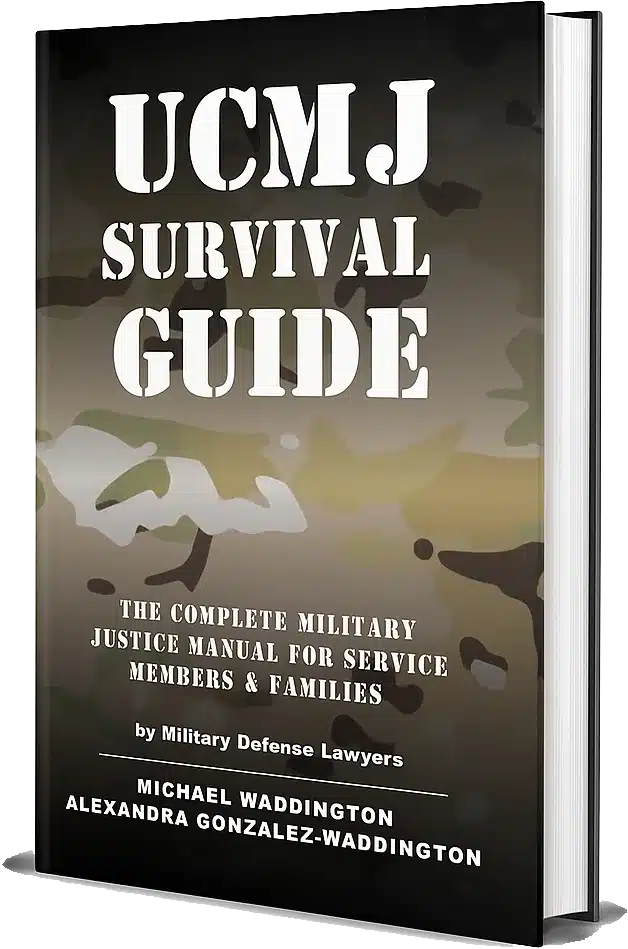
Check Out Our Newest Book
UCMJ Survival Guide

UCMJ Criminal Defense Lawyers

Worldwide Military Defense Experience
Defending Service Members Across Every Theater and Installation
Specialized Expertise in Serious Military Offenses
War Crimes, Sexual Assault, Violent Crimes, and White-Collar Defense

Media and High-Profile Case Experience
Featured on CNN, 60 Minutes, BBC, and Major News Outlets

Playlist

3:34

7:32
6:57

7:58

21:35

7:24

4:24
Frequently Asked Questions About Article 134 Child Pornography Defense
What is Article 134 under the UCMJ?
Article 134 of the Uniform Code of Military Justice covers offenses not specifically addressed by other articles but considered prejudicial to good order and discipline in the military. This includes a wide range of offenses, such as child pornography charges, which are taken very seriously due to their nature and impact on military values. Understanding Article 134 is crucial for service members facing such allegations. The article serves as a catch-all provision, allowing the military to address misconduct that could harm the reputation or functioning of the armed forces. Charges under Article 134 require careful legal attention because they can result in severe penalties, including confinement and discharge.
What penalties can result from child pornography charges at Fort Bragg?
Penalties for child pornography charges under Article 134 at Fort Bragg can be severe, including confinement, reduction in rank, forfeiture of pay, and dishonorable discharge. The military justice system treats these offenses with utmost seriousness given their implications for military discipline and public trust. The exact punishment depends on the circumstances of the case, the evidence presented, and the outcome of the court-martial. Early and effective legal defense is important to potentially mitigate these consequences and protect a service member’s future.
How does the military court-martial process work for these charges?
The military court-martial process begins with an investigation and potential preferral of charges. If charges are preferred, a preliminary hearing may be conducted to determine if there is sufficient evidence to proceed. Following this, the case can move to trial before a military judge or panel. Throughout the process, the accused has rights similar to civilian courts, including the right to counsel, to confront witnesses, and to present a defense. Understanding these rights and the procedural steps is vital for service members facing Article 134 charges at Fort Bragg.
Can I receive non-judicial punishment instead of a court-martial?
Non-judicial punishment (NJP) may be an option in some cases, depending on the nature and severity of the offense and the discretion of commanding officers. NJP allows for resolution without a formal court-martial but can still involve penalties such as restriction or loss of privileges. However, child pornography charges are often serious enough to warrant court-martial proceedings. Consulting with a military defense lawyer can help determine the best course of action based on the circumstances of your case.
How do I protect my rights if accused of these charges?
Protecting your rights begins with seeking immediate legal counsel experienced in military defense. Avoid making statements or admissions without legal advice, as these can be used against you. It is important to understand the charges and the investigation process early on. Maintaining confidentiality and cooperating appropriately with your lawyer can help build a strong defense. Being informed about your legal options and rights under the UCMJ is essential to navigate the complexities of military criminal proceedings.
What role does evidence play in defending Article 134 charges?
Evidence plays a critical role in Article 134 cases, as the prosecution must prove that the accused knowingly engaged in prohibited conduct. This includes digital forensics, witness testimony, and other investigative findings. Challenging the collection, handling, and interpretation of evidence is a key part of defense strategies. Ensuring that evidence was obtained legally and accurately is crucial to protecting your rights and contesting the charges effectively.
Are civilian and military laws different in child pornography cases?
While civilian laws also address child pornography offenses, military law under the UCMJ has distinct procedures and potential penalties. The military justice system emphasizes maintaining order and discipline within the armed forces. This means that service members may face separate charges and consequences even if civilian courts are involved. Understanding these differences is important for developing a comprehensive defense strategy.
How can a defense lawyer help during pretrial investigations?
During pretrial investigations, defense lawyers can assist by advising the accused on their rights and ensuring proper procedures are followed. They can also begin gathering evidence and identifying witnesses to support the defense. Active legal involvement at this stage can prevent rights violations and help shape the case’s direction, potentially influencing whether charges proceed or are dropped.
What are common defenses against Article 134 child pornography charges?
Common defenses include challenging the validity and legality of the evidence, demonstrating lack of knowledge or intent, and showing procedural errors during the investigation. Each case is unique, requiring tailored defense approaches. An experienced military defense attorney can evaluate the facts and circumstances to identify the most effective strategies to defend against Article 134 child pornography charges at Fort Bragg.
How do convictions affect a military career?
Convictions under Article 134 for child pornography can have profound effects on a military career, including separation from service, loss of benefits, and damage to reputation. These consequences may also impact civilian employment opportunities. Understanding the long-term implications highlights the importance of a strong defense and proactive legal representation to protect your future within and beyond the military.