Article 134 of the UCMJ criminalizes indecent conduct or language that is prejudicial to good order and discipline or brings discredit upon the armed forces. The provision is a general article covering sexually explicit behavior, lewd acts, and grossly obscene communications not addressed by a more specific statute. Gonzalez & Waddington defends service members charged under Article 134 throughout the military justice process.
The government must prove the accused engaged in specific conduct or language, that the conduct or language was indecent, and that circumstances made it prejudicial to good order and discipline or discrediting to the armed forces. The accused must have acted knowingly; specific intent to violate military law is not required. Gonzalez & Waddington defends service members against these Article 134 charges at courts-martial and Article 32 hearings.
Under the Manual for Courts-Martial, Article 134 indecent conduct or language carries up to two years' confinement, forfeiture of all pay, and a dishonorable discharge for offenses before December 27, 2023. Offenses on or after that date fall under sentencing Category 2, authorizing zero to 24 months' confinement. A conviction can also result in reduction to E-1, administrative separation, loss of retirement, and revocation of a security clearance.
Defending an Article 134 indecent conduct or language charge requires examining whether the alleged conduct meets the legal definition of indecency under military community standards and whether the terminal element—harm to good order or discredit to the armed forces—is actually supported by evidence.
Michael Waddington, a former Army Senior Defense Counsel, scrutinizes the prosecution's evidence for constitutional violations, including unlawful searches of electronic communications or coerced statements. For a confidential consultation, call 1-800-921-8607.
Reviewed by Michael Waddington, Founding Partner · Updated October 8, 2026
Table Content
Article 134 of the Uniform Code of Military Justice covers indecent conduct or language that is prejudicial to good order and discipline or that brings discredit upon the armed forces. The provision is a general article, meaning it criminalizes behavior not specifically addressed elsewhere but which the military deems incompatible with service standards. The offense focuses on conduct that violates accepted standards of decency in the military environment.
Indecent conduct includes actions that offend common standards of propriety, such as lewd acts, sexually explicit behavior in inappropriate settings, or actions that show a disregard for the dignity of others. Indecent language involves words that are grossly offensive, obscene, or sexually explicit under the circumstances. The conduct must either disrupt good order and discipline or be of a nature to discredit the armed forces.
Typical examples include:
Any servicemember subject to the UCMJ may be charged under Article 134. The provision applies regardless of rank, duty status, or location, so long as the accused is under military jurisdiction at the time of the conduct.
The offense generally requires that the accused knowingly engaged in the conduct or used the language. Specific intent to offend or to undermine discipline is not required. Negligent or accidental acts typically do not satisfy the required mental state.
Attempt liability can apply when a servicemember takes substantial steps toward committing indecent conduct, even if the act is not completed. Conspiracy charges may arise when two or more persons agree to engage in prohibited indecent conduct. Accomplice liability is recognized when an individual aids, encourages, or assists another in committing the underlying offense.
Watch the military defense lawyers at Gonzalez & Waddington break down how they defend service members worldwide against UCMJ allegations, CID/NCIS/OSI investigations, court-martials, Article 120 cases, administrative separations, and GOMORs. If you’re under investigation or facing charges, this video explains what your rights are and how experienced civilian military counsel can make the difference.
To establish a violation of Article 134 for indecent conduct or language, the government must prove each element of the offense beyond a reasonable doubt. These elements focus on the nature of the conduct, the accused’s awareness of their actions, and the impact of those actions on good order, discipline, or the reputation of the armed forces.
The mens rea generally requires that the accused acted knowingly or intentionally with respect to the conduct or language at issue. The government must show that the accused was aware of the nature of their actions, even if they did not intend to violate military law.
The actus reus consists of engaging in behavior or using language that meets the definition of indecency. Indecent conduct or language typically involves actions or expressions that are grossly vulgar, obscene, or repugnant to common propriety, and that tend to excite sexual desire or degrade moral standards.
Statutory interpretation of the term “indecent” focuses on community standards within the military environment. The final element requires proof that the conduct had an adverse effect on good order and discipline or tended to harm the public esteem of the armed forces, consistent with the terminal element of Article 134.
Punishment under the Uniform Code of Military Justice depends on the date of the alleged offense. The traditional maximum_punishment model applies to offenses committed before December 27, 2023. Offenses on or after that date are sentenced under the revised framework created by the Military Justice Act sentencing reforms, which use sentencing categories and confinement ranges.
Under the pre_December 27, 2023 system, Article 134: Indecent Conduct or Indecent Language is a non-mandatory_minimum general article offense. The maximum authorized punishment includes:
These limits reflected the traditional model in which each enumerated Article 134 offense carried a specific maximum sentence rather than a structured sentencing range.
For offenses occurring on or after December 27, 2023, Article 134: Indecent Conduct or Indecent Language falls into the sentencing-category system implemented by the Military Justice Act reforms. Under this system:
Sentencing categories are structured ranges assigned to groups of offenses with similar severity. Unlike the pre_reform model, which relied on discrete maximum punishments for each offense, the category system provides a confinement range within which the court-martial adjudges a specific term. Punitive discharges, reductions, and forfeitures remain authorized as collateral components but are not tied to fixed maximums in the same way as under the prior model.








Charging decisions under Article 134 for indecent conduct or indecent language are shaped by the specific fact pattern, the results of preliminary inquiries, and the command’s assessment of good order and discipline. Because Article 134 is a “general article,” it is often used when misconduct does not neatly fit within a more specific offense but still carries a clear military impact.
In practice, Article 134 indecent conduct or language charges most often arise from routine interactions in barracks, work centers, and social environments rather than extreme situations. Cases frequently begin with complaints about:
Cases typically originate with a complaint from a witness, victim, or supervisor. Commands often begin with an informal inquiry or a commander’s investigation to clarify the circumstances. If the alleged conduct suggests criminality or involves digital evidence, law-enforcement agencies—CID, NCIS, OSI, or CGIS—may assume responsibility. These agencies conduct interviews, analyze electronic communications, and assess whether the conduct meets the indecency standard or implicates other offenses.
Article 134 is frequently used to capture conduct that overlaps with other offenses but may not fully meet the elements of those more specific articles. Prosecutors often charge Article 134 as an alternative theory to ensure coverage if a panel concludes that the conduct was improper but does not satisfy all elements of a related offense. Charge-stacking is common when conduct spans multiple interactions, mediums, or victims. The broad scope of Article 134 also allows prosecutors to address cumulative misconduct that collectively impacts good order and discipline even when individual acts might appear minor in isolation.
Prosecutions under UCMJ Article 134 involving indecent conduct or language often hinge on whether the government can establish each required element beyond a reasonable doubt. These cases also frequently involve disputes over witness credibility, the admissibility of evidence, and interpretation of statutory or regulatory language that defines what constitutes “indecent” under military law.
Litigation commonly focuses on whether the conduct or language alleged meets the statutory elements of indecency, service discrediting behavior, or prejudice to good order and discipline. Contested issues may include:
These challenges center on evidentiary sufficiency and the application of legal definitions rather than disputes over trial strategy.
Mens rea is frequently litigated in Article 134 cases because the level of intent associated with indecent conduct or language may vary depending on the underlying theory of liability. Issues often arise concerning:
Because Article 134 covers a range of behaviors, determining the applicable mental state often shapes the scope of permissible evidence and argument.
Credibility assessments can play a significant role in these prosecutions. Disputed facts may concern what was said, how it was communicated, or the circumstances surrounding the alleged conduct. Inconsistencies in testimony, memory limitations, or differing perceptions among witnesses can influence how factfinders interpret events, particularly when the alleged indecency occurs in informal or digital environments.
Evidentiary disputes frequently arise regarding the admissibility of statements, digital messages, or recordings. Questions may include:
Interpretation disputes may stem from ambiguity in the term “indecent,” variations in regulatory guidance, or overlapping provisions within Article 134. Courts may be required to determine how broadly or narrowly certain phrases should be read and how precedent applies to evolving forms of communication, including digital and online interactions.
Overview of other offenses charged under the Article 134 umbrella
Wrongful distribution of intimate images involving indecent or offensive conduct
Indecent viewing, recording, or exposure as a related indecency-based offense
Communicating threats frequently co-charged in misconduct involving offensive language
Provoking speeches or gestures connected to abusive or indecent verbal conduct
Collateral consequences are administrative, professional, and legal effects that may occur independently of any sentence imposed by a court-martial. These outcomes arise from military regulations, federal or state law, and institutional policies, and they may continue to affect a service member after completion of judicial punishment.
A conviction under Article 134 for indecent conduct or language may influence several administrative decisions. Command authorities may initiate separation processing, and the characterization of service could range from Honorable to Other Than Honorable depending on the facts of the case and the member’s overall record. Such a conviction may also affect eligibility for promotion or reenlistment and could limit opportunities for special duty assignments. For members nearing retirement, administrative actions may influence retirement eligibility or the characterization of retired status.
Indecent conduct or language offenses may raise concerns about judgment, reliability, and personal behavior, which are factors assessed in security clearance determinations. Loss or suspension of a clearance can affect access to classified information and continued suitability for certain military occupations. Post-service employment in fields that rely on clearance eligibility may also be impacted.
Depending on the nature of the conduct, certain convictions under Article 134 may fall within federal or state definitions that require sex offender registration. Whether registration applies is determined by the federal Sex Offender Registration and Notification Act and the laws of the state of residence, not by the court-martial alone.
The same conduct that forms the basis of a court-martial conviction may also violate federal or state criminal statutes. In some circumstances, civil claims such as harassment or intentional infliction of emotional harm may also arise, depending on the facts.
For non-citizens, certain convictions may affect admissibility, deportability, or future immigration benefits. Naturalized service members may also encounter questions about eligibility for future immigration filings or related administrative reviews.
During the investigative phase of an alleged UCMJ Article 134 violation, many decisions occur before charges are considered. How a service member responds to early inquiries, interacts with investigators, and handles evidence can influence the trajectory of the case long in advance of any formal action.
Military investigations typically begin with rapid evidence gathering, including witness statements, digital communications, and command documentation. Early legal involvement helps ensure that evidence is preserved accurately, that statements are not taken out of context, and that digital material is handled in a manner consistent with established procedures. A civilian military defense lawyer may also help clarify how certain types of information may be interpreted during later stages of review.
Initial interviews by command or law-enforcement authorities often occur before a service member has full visibility into the nature of the allegations. Providing statements without understanding the scope of the inquiry or applicable rights can introduce inaccuracies or omissions that later become difficult to correct.
Command-directed investigations and administrative inquiries can run parallel to, or independently from, criminal processes. Findings made during these early reviews may influence later administrative decisions, making the initial stages significant for record accuracy and procedural compliance.
Early decisions—such as consenting to searches, providing written statements, or responding to administrative requests—can carry forward into court-martial proceedings or administrative actions. These early steps often shape how evidence is understood and how later decisions are made.
Gonzalez & Waddington is a civilian military defense law firm that represents service members facing allegations under the Uniform Code of Military Justice. The firm focuses on defending clients in complex military criminal cases, including those involving alleged violations of UCMJ Article 134. With experience across all branches of the armed forces, the firm provides guidance and representation at every stage of the military justice process.
If you are facing allegations under UCMJ Article 134 and need informed legal guidance, Gonzalez & Waddington is available to discuss your situation. Contact the firm to schedule a confidential consultation and learn more about the services they provide in military justice matters.
Q: What does UCMJ Article 134: Indecent Conduct or Language cover?
A: Article 134 addresses conduct or language of a sexual or offensive nature that negatively affects good order, discipline, or the reputation of the armed forces. The behavior does not need to be criminal in the civilian context; it is evaluated based on military standards. Cases often involve inappropriate communications, public behavior, or actions considered prejudicial to the service, and the specific facts determine whether the conduct meets the legal elements.
Q: What is the maximum punishment for UCMJ Article 134: Indecent Conduct or Language?
A: Maximum punishment depends on the specific form of indecent conduct or language charged and any aggravating factors. Possible outcomes may include confinement, reduction in rank, forfeiture of pay, or a punitive discharge when handled at a general or special court-martial. The exact maximum is determined by the President’s guidance under the Manual for Courts-Martial, which outlines authorized sentencing limits for each variation of the offense.
Q: Can an allegation under this article lead to administrative separation even without a conviction?
A: Yes. A service member may face administrative separation based on substantiated misconduct even without a court-martial conviction. Commanders may initiate separation processing if they determine that the underlying conduct is inconsistent with military standards or has affected unit readiness or cohesion. Administrative actions use a lower evidentiary standard than courts_martial, so the outcome depends on the overall record, investigative findings, and the service’s administrative regulations.
Q: Do I need a civilian military defense lawyer for an investigation under this article?
A: Service members have the right to free appointed military counsel during investigations and any subsequent proceedings. Some individuals choose to hire a civilian defense lawyer for additional support, particularly in cases involving complex evidence or potential long_term consequences. Whether to retain civilian counsel is a personal decision based on factors such as case complexity, desired level of representation, and available resources, rather than a legal requirement.
Q: Can an Article 134 allegation be handled without a court-martial, such as through administrative action or nonjudicial punishment?
A: Yes. Commands may address alleged indecent conduct or language through administrative counseling, reprimands, or nonjudicial punishment when they believe the conduct does not require a court_martial. These processes rely on different standards of proof and allow commanders to respond proportionally based on the circumstances. The chosen approach typically reflects the severity of the conduct, prior history, and the command’s assessment of its impact on discipline and readiness.
Q: Which agencies typically investigate alleged indecent conduct or language under Article 134?
A: Investigations may be conducted by organizations such as military law enforcement, the Naval Criminal Investigative Service, Army CID, or Air Force OSI, depending on the service branch and the nature of the allegation. These agencies gather witness statements, electronic communications, and other relevant evidence. The command may also conduct its own inquiry when the matter is minor. The specific investigative approach depends on the seriousness and context of the alleged conduct.
If you want to review the Articles of the UCMJ and learn more about military law, you can start here: UCMJ Articles and Military Justice Resources. You may also find helpful official information from the Air Force Judge Advocate General’s Corps at afjag.af.mil.

A renowned military criminal defense attorney and best-selling author, Michael Waddington defends clients worldwide in serious cases and trains lawyers in advanced cross-examination. He is frequently featured by major media outlets like CNN and 60 Minutes.
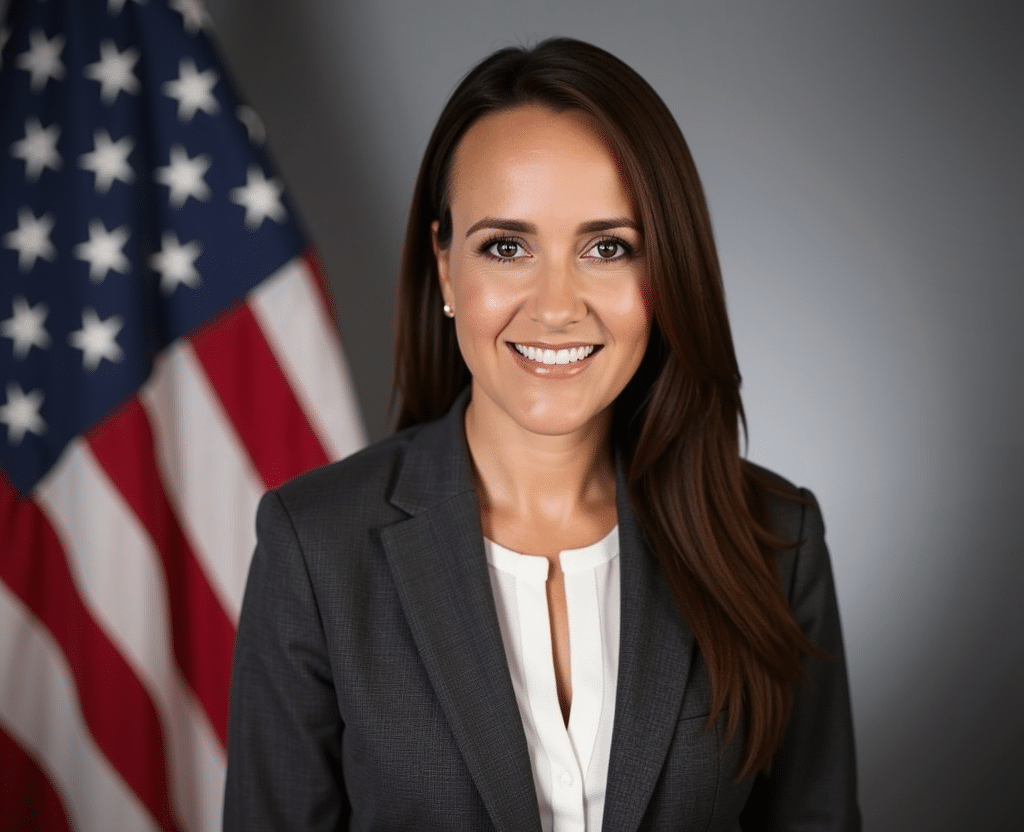
Alexandra González-Waddington is a top military and civilian defense attorney who has handled high-profile sexual assault, violent crime, and war-crimes cases globally. Her work is widely recognized by media outlets including 60 Minutes and ABC’s Nightline.

