Table Content
Article 120c of the Uniform Code of Military Justice criminalizes certain forms of nonconsensual visual conduct and indecent exposure. It is designed to protect individuals’ reasonable expectation of privacy and to regulate service members’ behavior in a manner consistent with good order and discipline. The article applies across all branches of the U.S. armed forces.
Article 120c prohibits knowingly and wrongfully viewing, recording, photographing, filming, or broadcasting the private areas of another person without their consent and under circumstances where the person has a reasonable expectation of privacy. It also prohibits distributing or publishing visual recordings of another person’s private areas without consent. Additionally, it makes indecent exposure an offense when it is intentional and under circumstances likely to cause affront or alarm.
Conduct commonly covered includes:
Any service member subject to the UCMJ may be charged under Article 120c. The article applies regardless of rank, duty status, or location, provided jurisdiction exists under the UCMJ. Civilians may be charged only if they fall under UCMJ jurisdiction, such as certain civilian employees accompanying the force.
The statute generally requires that the accused act knowingly and wrongfully. For indecent exposure, intent to expose oneself indecently is required. Negligent conduct alone is not sufficient to establish liability under this article.
Attempted violations of Article 120c may be charged under Article 80 when a service member takes substantial steps toward committing the prohibited conduct. Conspiracy to commit an Article 120c offense may be charged under Article 81 if there is an agreement and an overt act. Accomplice liability under Article 77 may apply when an individual aids, abets, or encourages another in committing the offense.
To obtain a conviction under Article 120c, the government must prove each element of the charged offense beyond a reasonable doubt. These elements define the specific conduct, mental state, and circumstances that constitute indecent viewing, recording, or exposure under the Uniform Code of Military Justice.
The mens rea typically requires that the accused acted knowingly and wrongfully. Knowledge applies both to the act of viewing, recording, or exposing, and to the awareness that the other person did not consent or had a reasonable expectation of privacy.
The actus reus consists of the prohibited conduct: indecent viewing, indecent recording, broadcasting a recording, or indecent exposure. Each involves an affirmative act that violates personal privacy or public decency.
Key statutory terms include “private area,” which refers to genitalia, anus, buttocks, or female areola or nipple, and “reasonable expectation of privacy,” which depends on circumstances indicating the person was not open to public observation.
Punishment for violations of Article 120c, UCMJ, depends on the date of the alleged offense. Offenses committed before December 27, 2023 are sentenced under the traditional maximum_punishment model. Offenses committed on or after that date fall under the revised sentencing framework established in the 2023 Manual for Courts-Martial.
Article 120c includes multiple offense variants. The maximum authorized punishments under the pre_December 27, 2023 system were as follows:
For offenses occurring on or after December 27, 2023, Article 120c offenses fall under Sentencing Category 3 of the 2023 sentencing system. Under this category:
Under the revised sentencing structure, offenses are placed into standardized categories that establish a confinement range rather than individualized maximum punishments for each statutory offense. This differs from the prior model, which assigned a unique maximum confinement term to each specific offense. The new system provides uniform sentencing ranges within each category, while still allowing the court to adjudge punitive discharges, reductions, and forfeitures as authorized by the UCMJ and the Rules for Courts_Martial.








Charging decisions under Article 120c typically stem from concrete fact patterns that emerge during routine unit activities, digital_device reviews, or interpersonal complaints. Command discretion, corroborating evidence, and investigative findings significantly influence how the offense is framed and whether it is charged alone or alongside related misconduct.
In practice, Article 120c charges most often arise from behavior occurring in shared living or working spaces. Cases frequently involve service members who are alleged to have viewed or recorded individuals in showers, bathrooms, berthing areas, or changing spaces where a reasonable expectation of privacy exists. Allegations may come from accidental discovery of a recording device, a report from a roommate or coworker, or the disclosure of images circulated within a small peer group.
Digital platforms also play a significant role. Investigations may begin when a third party reports receiving images or videos depicting another service member in a private setting, prompting inquiries into how the material was obtained. Occasionally, unit leaders become aware of misconduct after routine inspections uncover improperly stored media or devices configured for surreptitious recording. Less frequently, exposure allegations arise in the context of alcohol_related incidents in barracks or during unit gatherings, especially when conduct is witnessed by multiple personnel.
Cases commonly begin with a report to a first-line supervisor, senior enlisted leader, or unit commander, who then notifies military law enforcement. CID, NCIS, OSI, or CGIS typically conduct interviews, execute digital_forensic collections, and document physical environments where the conduct allegedly occurred. Command-directed inquiries may precede formal investigations when the information is limited or preliminary, but once potential criminal conduct is identified, law enforcement agencies assume primary responsibility. Digital evidence analysis often becomes a central component, particularly in allegations involving recording or distribution.
Prosecutors frequently charge Article 120c alongside related offenses to capture different legal theories tied to the same conduct. Charge_stacking occurs when both viewing and recording offenses are alleged, even if arising from a single device or incident. Overlap with Article 134 is common when broader reputational or organizational impacts are evident. Charging decisions often reflect the need to preserve alternative theories for referral, recognizing that digital cases may involve fragmented or partially recoverable evidence.
Prosecutions under UCMJ Article 120c often hinge on whether the government can establish each statutory element beyond a reasonable doubt. Litigation in these cases frequently focuses on the specific circumstances of the alleged conduct, the credibility of witnesses, the handling and interpretation of digital or physical evidence, and how statutory language should be applied to the facts.
Disputes commonly arise over whether the government has demonstrated each required element of indecent viewing, recording, or exposure. These issues often relate to:
Such questions typically center on factual development and interpretation of the statutory elements rather than disputes over broader legal strategy.
Mens rea is frequently contested because Article 120c includes conduct requiring proof of intent, knowledge, recklessness, or, in limited contexts, negligence. Litigation may concern:
Because mental state can often be inferred only through indirect evidence, disputes over mens rea regularly play a central role.
Cases under Article 120c often rely heavily on testimony from complainants, bystanders, or investigators. Contested issues may involve:
These credibility disputes can influence how fact-finders assess whether elements are satisfied but do not predetermine any outcome.
Evidentiary challenges are common, particularly where digital evidence or electronic devices are involved. Issues may include:
Article 120c contains terms that require interpretation, and litigation may arise from ambiguities in statutory definitions or cross-references. Common issues include:
Such matters generally require close analysis of statutory text, legislative history, and controlling case law.
Wrongful distribution of intimate images, a closely related privacy-based offense
Collateral consequences are administrative, professional, and legal effects that can result from a conviction independently of any sentence issued at court-martial. These consequences arise from military regulations, federal or state law, and professional standards, and may continue to affect a service member after the court-martial process is complete.
A conviction under Article 120c may prompt administrative separation processing, even when the member completes any adjudged sentence. Outcomes can include an other-than-honorable or general discharge, depending on the circumstances. The conviction may also influence decisions about promotion, assignments, reenlistment eligibility, and continued service. In some cases, it may affect calculations related to retirement if the member is separated before qualifying service is reached.
Conduct involving indecent viewing, recording, or exposure may raise concerns regarding judgment, reliability, and adherence to standards. This can result in suspension or revocation of a security clearance or denial of future access to classified information. Post-service employment in fields that require clearance eligibility or trust-related certifications may also be impacted.
Depending on the specific offense and underlying conduct, certain Article 120c convictions may trigger sex offender registration requirements. These obligations are determined by federal law and the registration statutes of the state or locality where the individual resides. Duration and reporting rules vary by jurisdiction.
The same conduct that led to a military conviction may also fall within federal or state criminal statutes, potentially creating exposure to separate civilian proceedings. In some situations, civil actions—such as privacy or emotional distress claims—may also arise.
For non-citizens, certain convictions may affect immigration status, admissibility, or future naturalization applications. These consequences depend on federal immigration law and the nature of the offense.
During an investigation under UCMJ Article 120c, many decisions occur before any charges are preferred, and these early steps often influence how the case develops. Actions taken in the investigative phase can shape evidentiary issues, the scope of the inquiry, and how command authorities interpret the service member’s conduct.
Military investigators typically begin gathering evidence immediately, including statements, electronic communications, and digital media. Early legal involvement can help ensure that evidence is preserved accurately, that the service member does not inadvertently provide incomplete or unclear information, and that investigators interpret documents and digital materials within an appropriate context.
Initial interviews by command or law-enforcement personnel often occur before a service member fully understands the allegations or the scope of the investigation. Without legal guidance, a service member may make statements that are incomplete, poorly phrased, or unrelated to the issue at hand, which can later be viewed as inconsistent. Consulting qualified counsel, including experienced civilian military defense lawyers, can help the service member understand their rights during these interviews.
Administrative inquiries and command-directed investigations can proceed separately from any criminal investigation. Decisions made during these processes—such as written responses or participation in interviews—may later influence command perceptions, administrative outcomes, and potential disciplinary actions.
Choices made early in the process, including consenting to searches, providing statements, or responding to administrative questions, can have continuing effects throughout a court-martial or subsequent administrative proceedings. These early decisions may influence evidentiary rulings, credibility assessments, and the overall trajectory of the case.
Gonzalez & Waddington is a civilian military defense law firm that represents service members facing allegations under the Uniform Code of Military Justice. The firm focuses on defending clients in courts-martial and related military justice proceedings worldwide. Its attorneys have extensive experience handling complex UCMJ cases, including those involving sensitive allegations under Article 120c.
If you are facing an allegation under UCMJ Article 120c or have been notified of an investigation, Gonzalez & Waddington is available to discuss your situation and help you understand your legal options. Contact the firm to schedule a confidential consultation and learn more about how experienced civilian military defense counsel can assist you in navigating the military justice process.
Q: What does UCMJ Article 120c: Indecent Viewing, Recording, or Exposure cover?
A: Article 120c addresses conduct involving the unauthorized viewing, recording, broadcasting, or indecent exposure of another person under circumstances where they have a reasonable expectation of privacy. It applies to actions such as secretly recording someone in a private setting, exposing oneself in an indecent manner, or distributing images without consent. The article aims to protect personal privacy and maintain good order and discipline within the military environment.
Q: What is the maximum punishment for UCMJ Article 120c: Indecent Viewing, Recording, or Exposure?
A: Maximum punishment depends on the specific misconduct and whether aggravating factors are present. Possible penalties may include confinement, reduction in rank, forfeiture of pay, and a punitive discharge. The precise maximum sentence varies because Article 120c includes several distinct offenses with different elements and severity levels. If the case goes to a general court-martial, the sentencing authority evaluates the conduct and circumstances to determine the appropriate punishment within applicable statutory limits.
Q: Can an allegation under this article lead to administrative separation even without a conviction?
A: Yes. Military commands may initiate administrative separation based on substantiated misconduct or concerns about suitability for continued service, even when there is no court_martial conviction. The burden of proof in administrative proceedings differs from that in criminal cases, and adverse actions can occur if the command determines that the conduct undermines trust, readiness, or discipline. Service members generally have rights to respond or present evidence during administrative separation processing.
Q: Do I need a civilian military defense lawyer for an investigation under this article?
A: A service member is entitled to military defense counsel at no cost, but may choose to hire a civilian attorney for additional representation. This decision depends on the individual’s circumstances, including the nature of the allegations, potential consequences, and personal preference. Civilian counsel can sometimes offer additional time and resources, but obtaining one is not required. Regardless of representation choice, service members should understand their rights during any investigative process.
Q: Can allegations under Article 120c be handled without a court-martial, such as through administrative action or nonjudicial punishment?
A: Yes. Commands may address certain Article 120c allegations through nonjudicial punishment, administrative reprimands, counseling, or separation actions instead of court_martial proceedings. This approach often depends on the severity of the conduct, available evidence, and the judgment of command authorities. While administrative outcomes are generally less severe than criminal prosecution, they can still carry significant career and reputational consequences. Each case is evaluated individually to determine the appropriate forum.
Q: Which military investigative agencies typically handle Article 120c cases?
A: Investigations may be conducted by agencies such as the Naval Criminal Investigative Service, Army Criminal Investigation Division, or Air Force Office of Special Investigations, depending on the service branch. These agencies gather digital evidence, interview witnesses, and assess the circumstances surrounding alleged privacy violations or indecent acts. Their involvement often begins when a report suggests potential criminal misconduct or when command authorities request a formal inquiry.
Q: What types of evidence are commonly reviewed in Article 120c investigations?
A: Investigators frequently examine digital devices, electronic communications, images, and video files to determine whether unauthorized viewing, recording, or exposure occurred. They may also review access logs, forensic data, and witness statements. Because many allegations involve technology, forensic examinations can play a significant role in establishing intent, identifying individuals involved, and confirming whether any material was created, shared, or stored without proper consent.
You can review the individual Articles of the UCMJ and learn more about military law by clicking here: UCMJ Articles and Military Justice Resources. You can also explore official military law guidance from the Army Judge Advocate General’s Corps at jagcnet.army.mil.

A renowned military criminal defense attorney and best-selling author, Michael Waddington defends clients worldwide in serious cases and trains lawyers in advanced cross-examination. He is frequently featured by major media outlets like CNN and 60 Minutes.
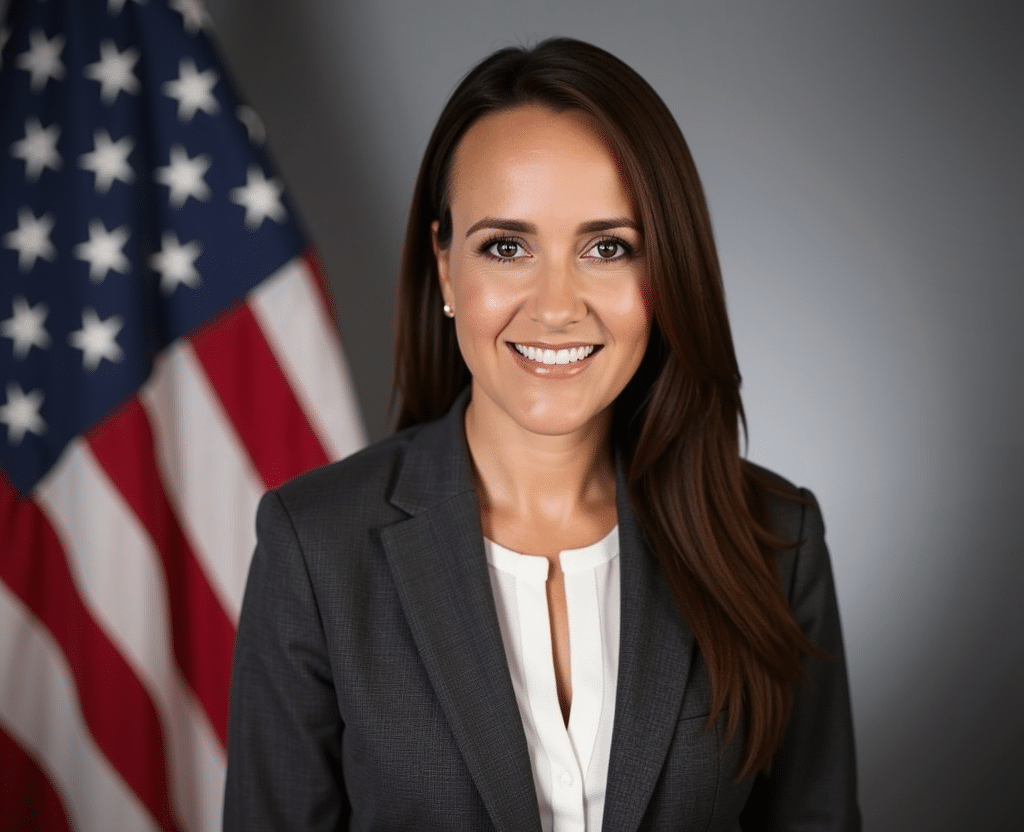
Alexandra González-Waddington is a top military and civilian defense attorney who has handled high-profile sexual assault, violent crime, and war-crimes cases globally. Her work is widely recognized by media outlets including 60 Minutes and ABC’s Nightline.

