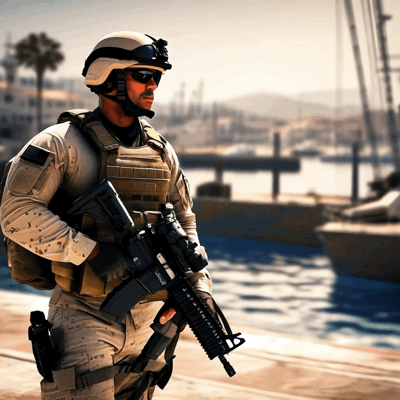
Fort Bragg: High Tempo, High Risk, High Stakes Legal Environment
Fort Bragg, North Carolina, is one of the most important Army installations in the world. It is the historic home of the 82nd Airborne Division, U.S. Army Special Operations forces, and a wide range of airborne, special mission, and support units. With that level of operational tempo and visibility comes a harsh reality. When allegations arise, commands often react fast and hard.
Soldiers at Fort Bragg face everything from sexual assault and domestic violence accusations to financial fraud, drug cases, and alleged misconduct in training and deployments. Many cases begin with an AR 15-6 investigation, a CID interview, or a so-called “minor” incident that suddenly becomes career ending. This guide explains how the Fort Bragg legal environment really works, what types of cases commonly arise, how the UCMJ and administrative processes interact, and why having the right civilian military defense lawyer can make the difference between redemption and separation.
Fort Bragg History and Mission
Fort Bragg dates back to the early twentieth century, when it was established as an artillery training installation. Over time it evolved into the premier airborne and rapid deployment base for the U.S. Army. It became the home of the 82nd Airborne Division, U.S. Army Special Operations Command, and multiple airborne and special mission units that project power around the globe.
For decades, Fort Bragg has sent Soldiers to the most demanding operational environments, from World War Two and Vietnam to Iraq, Afghanistan, and many other theaters. It is a place where leaders are expected to perform at the highest level under constant pressure. It is also a place where career ending accusations can arise overnight, sometimes from battlefield decisions and sometimes from off duty conduct that draws command attention.
That mix of elite units, intense training, and global missions shapes the legal culture. The base expects discipline. Senior leaders are under constant outside scrutiny. When misconduct is alleged, commanders often feel compelled to act swiftly and visibly, even while the facts are still in dispute.
Fort Bragg Location, Jurisdiction, and Legal Overlap
Fort Bragg sits in central North Carolina near Fayetteville. Soldiers live on post, in surrounding communities, and in nearby towns such as Spring Lake, Hope Mills, and Raeford. This creates overlapping legal jurisdictions. A single event can involve:
- Military police and CID on post.
- City or county law enforcement off post.
- State courts in North Carolina.
- Federal law if certain offenses or locations are involved.
Under the UCMJ, Fort Bragg commanders and military prosecutors can pursue court-martial charges even when civilian authorities decline to prosecute. In other situations, Soldiers face both civilian charges and military administrative or punitive actions at the same time.
This overlapping jurisdiction means a mistake in how you talk to law enforcement, how you respond to an AR 15-6 investigation, or how you handle a General Officer Memorandum of Reprimand can echo across both systems. A smart defense strategy at Fort Bragg must anticipate both military and civilian consequences.
The Fort Bragg Legal Climate: What Soldiers Actually Experience
The Fort Bragg legal climate is shaped by high profile units, media attention, and frequent inspections and oversight. When allegations surface, local commanders often feel pressure from multiple directions: higher headquarters, public affairs, investigative agencies, and political leadership. That pressure can translate into aggressive legal action.
Patterns we often see include:
- Heavy use of AR 15-6 investigations to build adverse information packets.
- Fast referrals to CID for sexual assault, domestic violence, and serious misconduct allegations, even when facts are thin.
- GOMORs and written reprimands used when evidence is too weak for court-martial but leadership wants something permanent in the file.
- Intense attention on NCOs and officers whose conduct might be seen as setting a bad example in elite units.
- Separation boards initiated quickly for Soldiers flagged with multiple adverse actions, even if they are combat proven.
In this environment, hoping the system will sort itself out is not a plan. You must understand how your case fits into the bigger picture and respond with a clear strategy from day one.
Common UCMJ Charges and Allegations at Fort Bragg
Fort Bragg Soldiers face the full range of UCMJ offenses, but some case types show up over and over due to the local environment, unit culture, and mission demands.
- Article 120 allegations involving sexual assault, abusive sexual contact, or sexual harassment in barracks, training, or off duty settings.
- Domestic violence and family based offenses, especially in situations where civilian law enforcement and military authorities both respond.
- Drug cases under Article 112a, including THC, cocaine, controlled prescriptions, and club drugs from Fayetteville and nearby nightlife.
- Alcohol related misconduct such as DUI, DWI, disorderly conduct, and fights in local bars or off post housing.
- Assault and maltreatment cases tied to leadership, hazing accusations, or heated training environments.
- Financial and fraud allegations including BAH fraud, travel fraud, and misuse of government cards.
- Dereliction and orders violations such as failure to follow SOPs, safety regulations, or command policies.
- Online misconduct involving social media, indecent communications, or digital evidence seized by CID.
Each of these case types carries its own evidentiary traps and long term consequences. A one size fits all defense does not work. Your lawyer must know how Fort Bragg investigates and prosecutes these specific charges.
How UCMJ Actions Work at Fort Bragg
At Fort Bragg, UCMJ and administrative actions are linked. Many cases move through a sequence instead of a single event. That sequence often looks like this:
- An allegation is reported to leadership or law enforcement.
- Command orders an AR 15-6 investigation or immediately involves CID.
- Soldier is interviewed, sometimes without counsel, and is placed under a flag.
- Command reviews the investigation and chooses a path:
- No action or counseling only.
- Article 15 or nonjudicial punishment.
- A GOMOR or written reprimand.
- Referral to court-martial.
- Initiation of an administrative separation or Board of Inquiry.
The same underlying complaint can produce more than one action. For example, a Soldier may receive a GOMOR, then face a separation board, then later have the same adverse information used in QMP or promotion review. Understanding where you are in that cycle helps you decide how to respond, how much to say, and what evidence to put in the record.
Investigations at Fort Bragg: AR 15-6, CID, and More
A strong defense at Fort Bragg starts with understanding the investigation behind your case. Different agencies operate with different priorities and methods.
- AR 15-6 command investigations used for leadership issues, alleged misconduct, training accidents, climate complaints, and alleged failures in supervision.
- CID investigations for felony level offenses, including sexual assault, serious assaults, fraud, and high value property crimes.
- Military police reports documenting on post arrests, DUI checkpoints, disturbances, and domestic calls.
- Civilian police investigations in Fayetteville and surrounding counties for off post incidents.
- Security clearance and counterintelligence inquiries for allegations that may signal insider threats or reliability issues.
- Digital forensic reviews for phones, laptops, and social media accounts when electronic evidence is involved.
Each type of investigation has its own documentation style and common weaknesses. That is where an experienced military defense lawyer can pick apart assumptions, highlight contradictions, and show decision makers why the government has not carried its burden.
How to Hire Civilian Military Defense Counsel for Fort Bragg Cases
Soldiers at Fort Bragg have access to on post legal resources, but those resources have limits. Trial Defense Service lawyers carry heavy caseloads. Legal assistance attorneys may not have extensive court-martial or GOMOR experience. In serious cases, many Soldiers choose to retain civilian counsel to work alongside their detailed military lawyer or to handle the case directly.
When you evaluate civilian military defense lawyers, consider:
- Experience defending Soldiers at or near Fort Bragg in UCMJ and administrative matters.
- Background in contested courts-martial, not just plea negotiations.
- Knowledge of AR 15-6, AR 600-37, AR 635-series separation regulations, and clearance procedures.
- Willingness to travel and appear in person for interviews, boards, and trials.
- Ability to coordinate with your detailed lawyer instead of working at cross-purposes.
Every conversation with your chain of command, every statement to an investigator, and every written rebuttal can either build your defense or destroy it. Civilian counsel helps you make those choices deliberately instead of under pressure.
Recommended Military Defense Lawyers Serving Fort Bragg
No single lawyer is perfect for every Soldier and every case. You should talk with more than one attorney, ask direct questions, and choose the advocate whose experience and style fit your situation. The following list is provided as a general resource. It is not a ranking and is not exhaustive.
- Gonzalez & Waddington, Attorneys at Law – International military defense firm focusing on court-martial defense, GOMOR rebuttals, AR 15-6 responses, administrative separation boards, and Boards of Inquiry. Represents Soldiers worldwide, including Fort Bragg and other major installations. Phone: 1-800-921-8607. Website: Gonzalez & Waddington, Military Defense Lawyers
No single lawyer is the “best” for every case. The goal is to find someone who understands Fort Bragg, understands the UCMJ, and is willing to fight for you.
Official Fort Bragg Information
For official information about the installation, missions, and services, visit the Army’s official base website:
Official Army Installation Page
Keep in mind that the official site focuses on command messaging and public information, not on defense strategy. For legal defense, you should speak with a qualified military defense lawyer.
Related UCMJ Topics for Fort Bragg Soldiers
- Article 120 UCMJ Sexual Assault and Related Offenses
- Article 112a UCMJ Drug Offenses
- Article 128 UCMJ Assault and Domestic Violence
- Article 92 UCMJ Failure to Obey Orders and Regulations
Related Administrative Actions That Often Follow Fort Bragg Cases
- GOMOR and Letter of Reprimand Rebuttals
- Article 15 Nonjudicial Punishment Responses
- Administrative Separation Boards for Enlisted Soldiers
- Boards of Inquiry and Show Cause Boards for Officers
- Security Clearance Revocation and SOR Responses
Investigations Connected to Fort Bragg Legal Problems
- AR 15-6 Command Investigations
- CID Investigations and Titling
- Digital Forensics in UCMJ and Administrative Cases
- QMP and Promotion Review Actions
Pro Tips for Soldiers Facing Legal Action at Fort Bragg
Tip 1: Never assume a “simple” AR 15-6 or MP report will stay simple. Many serious cases at Fort Bragg began as “routine paperwork.” Treat every investigation as if it could end up at a board or court-martial.
Tip 2: Do not give a statement to CID or other investigators without talking to a defense lawyer. You have the right to remain silent and to consult counsel. Use it.
Tip 3: Save and organize your own evidence. Texts, emails, photographs, and witness names can disappear quickly. Preserve them as soon as you suspect trouble.
Tip 4: Be careful what you say to leaders, chaplains, and friends about the accusations. Many of those statements can be repeated and used against you.
Tip 5: Think long term. A quick apology or poorly worded rebuttal might feel good in the moment but can haunt you at QMP, separation boards, and promotion reviews.
Tip 6: Work on your performance and conduct while your case is pending. Clean evaluation reports, strong duty performance, and positive character evidence can help offset allegations later.
Tip 7: Get representation early. The earlier civilian counsel is involved, the more options you have to shape the investigation, the record, and the outcome.
Fort Bragg Military Defense Lawyers Frequently Asked Questions
Do I really need a civilian lawyer if I already have a JAG at Fort Bragg
Trial Defense Service or other detailed JAG lawyers provide important services, but they carry heavy caseloads and must answer to the same system that is prosecuting or separating you. A civilian military defense lawyer is independent, can spend more time on your case, and often has broader experience in complex courts-martial, GOMOR rebuttals, and separation boards. Many Soldiers use both, with civilian counsel leading strategy and the JAG assisting on post specific procedures.
What should I do first if CID or my command wants to question me
Respectfully invoke your right to counsel and your right to remain silent. You can say something as simple as, “I want to cooperate, but I will not answer questions without a lawyer.” Then contact a defense lawyer immediately. Once you give a statement, especially if you guess or try to explain away details, it is very difficult to undo the damage.
Can a GOMOR or Article 15 at Fort Bragg end my career even if I stay in for now
Yes. A single GOMOR or serious Article 15 can block promotions, trigger QMP or promotion review, and serve as the basis for separation boards years later. It can also lead to negative NCOERs and OERs, which compound the damage. That is why experienced lawyers treat these actions almost as seriously as courts-martial. They are often the first step in a long campaign to push a Soldier out.
What types of cases do Fort Bragg military defense lawyers handle most often
Common case types include Article 120 sexual assault allegations, domestic violence and assault, drug offenses, DUI and alcohol related incidents, fraternization, financial crimes such as BAH or travel fraud, AR 15-6 leadership and misconduct investigations, and administrative actions like GOMORs, separation boards, and Boards of Inquiry. A strong defense team must be comfortable moving between criminal and administrative arenas.
Who are Michael and Alexandra Gonzalez-Waddington
Michael and Alexandra Gonzalez-Waddington are internationally recognized civilian military defense lawyers. They have defended Soldiers, Sailors, Airmen, and Marines in serious courts-martial and administrative actions across the United States and overseas. Their firm, Gonzalez & Waddington, focuses on high stakes UCMJ cases, complex cross-examination, and strategic defense of service members facing career ending allegations at installations such as Fort Bragg.
When is the right time to call a Fort Bragg military defense lawyer
The best time is as soon as you know you are under investigation, flagged, or at risk of adverse action. Waiting until charges are filed, or until a board date is set, often means lost evidence, hardened command positions, and fewer options. Early involvement lets your defense lawyer shape the record, protect you from harmful statements, and position you for the strongest possible outcome.