Asia Military Defense Overview
Short answer: Gonzalez & Waddington defends service members stationed in Asia and the Pacific in courts-martial, NCIS, Air Force OSI and Army CID investigations, Article 15/NJP, reprimands and administrative separation boards. Michael Waddington is a former Army JAG prosecutor and Senior Defense Counsel with over 25 years defending service members. The firm travels to Asia and the Pacific for interviews, hearings and trials. Call 1-800-921-8607 or text 954-799-4019.
Why Service Members in Asia and the Pacific Hire Gonzalez & Waddington
- Who we defend: Service members in Japan, South Korea, Singapore and Diego Garcia.
- Military experience: Former Army prosecutor, Trial Defense Counsel and Senior Defense Counsel. The firm has defended thousands of service members since 2006.
- Trial lawyers: Michael Waddington tries contested courts-martial himself, including Article 120 sexual assault cases. He has handled well over 100 separation boards.
- Works with your free lawyer: You keep your free detailed military defense counsel, and we work alongside them.
- Local police: Police in your host country may be able to arrest you off duty. Ask for a lawyer before you answer any questions.
- NCIS, Air Force OSI or Army CID wants to interview you: You have the right to stay silent. Call a lawyer before any interview.
Asia Military Bases at a Glance
Gonzalez & Waddington, LLC represents service members at military installations in Asia. The table shows each installation, its branch, the nearest city, which agency investigates misconduct there, and where to find the base-specific guide.
| Installation | Branch | Nearest city | Investigators | Base guide |
|---|---|---|---|---|
| Busan Naval Base | Navy | Busan | NCIS | Busan Naval Base court-martial lawyers |
| Fleet Activities Yokosuka | Navy | Yokosuka | NCIS | Fleet Activities Yokosuka court-martial lawyers |
| Naval Base Guam | Navy | Apra Harbor, Guam | NCIS | Naval Base Guam court-martial lawyers |
| Navy Support Facility Diego Garcia | Navy | Diego Garcia | NCIS | Navy Support Facility Diego Garcia court-martial lawyers |
| Okinawa | Marine Corps and Air Force | Okinawa | Air Force OSI, NCIS | Okinawa court-martial lawyers |
| Sembawang (Singapore) | Navy | Singapore | NCIS | Sembawang court-martial lawyers |
| Yokota Air Base | Air Force | Fussa (Tokyo) | Air Force OSI | Yokota Air Base court-martial lawyers |
| Camp Zama | Army | Zama | Army CID | Covered on this page |
| Misawa Air Base | Air Force | Misawa | Air Force OSI | Covered on this page |
| Marine Corps Air Station Iwakuni | Marine Corps | Iwakuni | NCIS | Covered on this page |
| Fleet Activities Sasebo | Navy | Sasebo | NCIS | Covered on this page |
| Kadena Air Base | Air Force | Kadena | Air Force OSI | Covered on this page |
| Camp Foster | Marine Corps | Ginowan | NCIS | Covered on this page |
| Camp Hansen | Marine Corps | Kin | NCIS | Covered on this page |
| Camp Schwab | Marine Corps | Nago | NCIS | Covered on this page |
| Marine Corps Air Station Futenma | Marine Corps | Ginowan | NCIS | Covered on this page |
| Camp Kinser | Marine Corps | Urasoe | NCIS | Covered on this page |
| Camp Humphreys | Army | Pyeongtaek | Army CID | Covered on this page |
| Osan Air Base | Air Force | Pyeongtaek | Air Force OSI | Covered on this page |
| Kunsan Air Base | Air Force | Gunsan | Air Force OSI | Covered on this page |
Country guides: Japan, Okinawa, South Korea.
Key Legal Facts for Asia Military Cases
- The UCMJ applies overseas: Service members stationed in Asia remain subject to the Uniform Code of Military Justice wherever they serve (Article 5, UCMJ, 10 U.S.C. § 805).
- Civilian counsel: You may hire a civilian lawyer at your own expense and keep your free detailed military defense counsel (Article 38(b), UCMJ, 10 U.S.C. § 838).
- Questioning: NCIS, Air Force OSI and Army CID agents must tell you what offense you are suspected of and that you have the right to remain silent before they question you (Article 31(b), UCMJ, 10 U.S.C. § 831; Mil. R. Evid. 305).
- Host-nation jurisdiction: Whether a local court or a court-martial handles an off-duty offense in Asia depends on the agreements between the United States and the host nation. Either way, military charges remain possible (Article 5, UCMJ, 10 U.S.C. § 805).
- Drugs: Whatever local law allows, use or possession of marijuana, THC products or other controlled substances by a service member is a crime under Article 112a, UCMJ (10 U.S.C. § 912a), on or off base.
- Sexual assault cases: For Article 120 offenses (10 U.S.C. § 920) committed after December 27, 2023, the Office of Special Trial Counsel, not the local commander, decides whether to refer charges (Article 24a, UCMJ, 10 U.S.C. § 824a).
- Preliminary hearing: Before charges can be referred to a general court-martial, you are entitled to an Article 32 preliminary hearing (10 U.S.C. § 832).
Michael Waddington and Alexandra Gonzalez-Waddington of Gonzalez & Waddington, LLC are civilian military defense lawyers who represent service members stationed in Asia in investigations, courts-martial and administrative actions. Michael Waddington is a former Army JAG prosecutor and Senior Defense Counsel; each partner has practiced military and criminal defense for more than 20 years. Call 1-800-921-8607 for a free, confidential consultation.
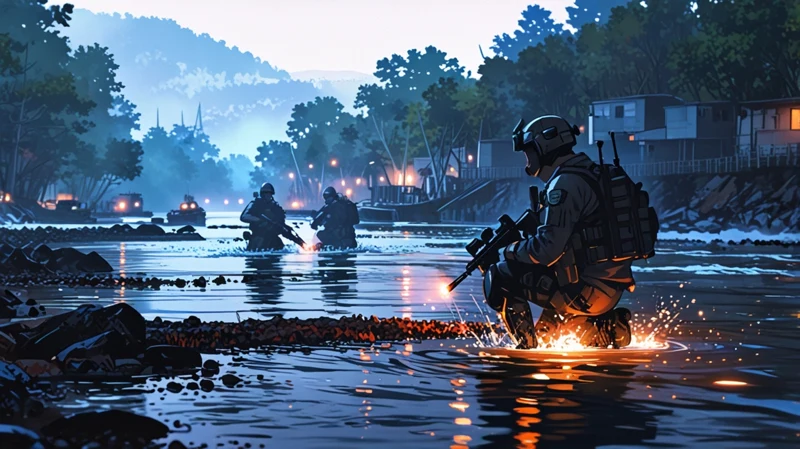
Court-Martial and UCMJ Defense in Asia
Asia is one of the most important overseas regions for U.S. military justice, forward-deployed commands, joint operations, airpower, naval operations, Marine expeditionary forces, Army deterrence missions, rotational deployments, and Indo-Pacific security cooperation. Service members in Asia may be stationed in Japan, Okinawa, South Korea, Guam, Singapore, the Philippines, Thailand, Australia, Diego Garcia, or other Indo-Pacific locations.
Gonzalez & Waddington defends service members stationed in Asia. We handle courts-martial, Article 15 actions, NJP, GOMOR rebuttals, letters of reprimand, administrative separation boards, and Boards of Inquiry.
Cases here often start with:
- Japan-based Navy, Marine Corps, Air Force, Army, and Space Force missions
- Okinawa Marine Corps camps and air stations
- South Korea Army, Air Force, and joint command assignments
- Guam naval, submarine, airpower, logistics, and missile-defense missions
- Rotational forces in the Philippines, Thailand, Singapore, and Australia
- Liberty incidents in Tokyo, Yokosuka, Sasebo, Okinawa, Seoul, Pyeongtaek, Busan, Guam, Singapore, Manila, Angeles City, Bangkok, Pattaya, Darwin, and Sydney
- SOFA-related issues, host-nation police investigations, passport restrictions, command curfews, and off-base conduct rules
- Hotel allegations, dating-app encounters, alcohol incidents, domestic calls, assault claims, digital evidence, travel records, command records, and local police reports
Call 1-800-921-8607 or text 954-799-4019 for a confidential consultation.
Japan, Okinawa & U.S. Forces Japan Cases
Japan is one of the largest overseas U.S. military hubs. Cases may involve Yokota Air Base, Yokosuka Naval Base, Camp Zama, Naval Air Facility Atsugi, Misawa Air Base, Sasebo, MCAS Iwakuni, Kadena Air Base, Camp Foster, Camp Hansen, Camp Schwab, Camp Courtney, Camp Kinser, Camp Gonsalves, and other Okinawa locations.
Japan-based cases may involve:
- Article 120 sexual assault and abusive sexual contact allegations
- Liberty incidents in Tokyo, Yokohama, Yokosuka, Roppongi, Shinjuku, Sasebo, Hiroshima, Iwakuni, Naha, Chatan, and Okinawa nightlife areas
- Host-nation police reports and Japanese-language records
- SOFA custody issues and command restrictions
- Curfew, alcohol, off-base conduct, and liberty policy violations
- Hotel records, CCTV, taxi records, train records, gate logs, and phone location data
- Marine Corps, Navy, Air Force, Army, and joint command investigations
South Korea, Camp Humphreys, Osan, Kunsan & USFK Cases
South Korea cases often involve U.S. Forces Korea, Eighth Army, Camp Humphreys, Osan Air Base, Kunsan Air Base, Daegu, Yongsan-area assignments, rotational units, combined exercises, and high-visibility deterrence missions.
Korea-based cases may involve:
- Incidents in Pyeongtaek, Songtan, Seoul, Itaewon, Hongdae, Gangnam, Daegu, Busan, and Gunsan
- Korean National Police records and Korean-language witness statements
- Taxi, subway, hotel, CCTV, bar, club, and phone-location evidence
- Curfew, alcohol, off-limits area, and command policy allegations
- Domestic violence, assault, disorderly conduct, DUI, and sexual assault allegations
- Rotational unit witness problems
- PCS, DEROS, passport, restriction, and command-control issues
Guam, Naval Base Guam, Andersen AFB & Pacific Forward-Base Cases
Guam is a major forward operating location for Navy, Air Force, Marine Corps, submarine, logistics, airpower, and Pacific deterrence missions. Cases may involve Naval Base Guam, Andersen Air Force Base, Camp Blaz, submarine units, bomber task forces, security forces, port operations, aircraft maintenance, missile-defense activity, and rotational forces.
Guam cases may involve:
- Liberty incidents in Tumon, Tamuning, Hagåtña, Dededo, and beach or hotel areas
- Hotel, resort, bar, taxi, rideshare, and CCTV evidence
- NCIS, OSI, Security Forces, command, and local Guam police investigations
- Submarine, aviation, logistics, security, and classified-duty records
- Travel-card, TDY, lodging, rental-car, and reimbursement issues
- Domestic violence, sexual assault, assault, DUI, drug, and digital-evidence cases
Singapore, Philippines, Thailand, Australia & Rotational Force Cases
Many Asia cases involve rotational forces, exercises, port visits, temporary duty, training missions, embassy support, or partner-nation operations. These cases may arise in Singapore, the Philippines, Thailand, Australia, Papua New Guinea, Diego Garcia, or other Indo-Pacific locations.
Rotational and temporary-duty cases may involve:
- Port visits and liberty incidents
- Hotel allegations and dating-app encounters
- Foreign police reports and local witness statements
- Exercise-related misconduct allegations
- Alcohol-related incidents in entertainment districts
- Travel-card, lodging, per diem, passport, and orders issues
- Host-nation CCTV, immigration records, airline records, and phone data
- Witnesses who leave the country quickly after the event
Common Asia UCMJ Case Types
Article 120 Sexual Assault & Abusive Sexual Contact
These cases may involve hotels, barracks, apartments, short-term rentals, port visits, liberty nights, dating apps, alcohol, delayed reports, foreign-language witnesses, CCTV footage, messages, social media, rideshare records, taxi records, and phone extractions.
Domestic Violence & Assault
Overseas domestic violence and assault allegations may involve military police, local police, medical records, photographs, protective orders, no-contact orders, Family Advocacy, housing records, and command-directed restrictions.
Drug & Alcohol Cases
Asia-based drug and alcohol cases may involve urinalysis, prescription issues, DUI, public intoxication, disorderly conduct, local police contact, bar fights, off-limits areas, curfew violations, and alcohol-related liberty incidents.
Fraud, Travel-Card, Orders & False Statement Cases
These cases may involve TDY orders, lodging records, per diem claims, rental cars, airfare, government travel cards, purchase cards, reimbursement claims, false official statements, and overseas entitlements.
Digital Evidence, Phones & Messaging Apps
Asia cases often turn on texts, iMessage, WhatsApp, LINE, KakaoTalk, Signal, Instagram, Snapchat, TikTok, Telegram, Facebook, deleted messages, screenshots, location data, metadata, and partial phone extractions.
How Local Asia Incidents Become Military Legal Problems
The following examples are hypothetical. They are not claims about any actual case, command, business, unit, person, or country. They show how overseas facts can matter when a U.S. service member in Asia is accused of misconduct.
- Tokyo or Seoul hotel allegation: A service member meets someone through a dating app during liberty. The allegation later becomes an Article 120 investigation. The case may involve hotel key-card records, local CCTV, subway records, taxi data, messages, alcohol evidence, and competing timelines.
- Okinawa liberty incident: A Marine or Sailor is accused of assault after a night in Chatan, Naha, or near an off-base bar. Host-nation police, NCIS, command witnesses, CCTV, taxi receipts, and unit liberty rules may all matter.
- Korea curfew or alcohol issue: A Soldier or Airman faces command action after a Songtan, Itaewon, or Pyeongtaek incident. The case may involve local police, gate logs, taxi records, command policy, and witness statements from rotational personnel.
- Guam domestic call: A family argument in base housing or off-base housing leads to military police, local police, Family Advocacy, a no-contact order, and possible Article 128b domestic violence action.
- Port visit misconduct: A Sailor is accused during a port visit in Singapore, Thailand, the Philippines, or Australia. The ship may depart quickly. Witnesses and evidence can disappear unless preserved early.
- Travel-card or TDY issue: A service member is accused of false lodging claims, improper per diem, unauthorized rental car use, or false statements during an overseas TDY.
- Classified or operational-security issue: A member is accused of mishandling information, taking unauthorized photos, misusing a government system, or discussing sensitive operations online.
- Foreign-language statement issue: A host-nation witness gives a statement in Japanese, Korean, Thai, Tagalog, or another language. A translated summary may miss uncertainty, tone, slang, sequence, or context.
Asia Military Defense Lawyers: Key Points
U.S. service members in Asia can face UCMJ consequences from on-base allegations, off-base liberty incidents, host-nation police reports, hotel allegations, dating-app encounters, domestic calls, travel-card issues, operational-security concerns, and command investigations.
A civilian military defense lawyer can work alongside detailed military counsel in:
- Courts-martial and Article 32 hearings
- Article 120 sexual assault cases
- Article 15, NJP, GOMOR, and reprimand matters
- Administrative separation boards and Boards of Inquiry
- Security clearance, SOFA, travel-card, digital-evidence, overseas witness, host-nation police, and command investigations
Because Asia cases often involve Japan, Okinawa, South Korea, Guam, Singapore, the Philippines, Thailand, Australia, host-nation records, foreign-language witnesses, local police, SOFA procedures, hotel records, CCTV, travel documents, digital evidence, and command restrictions, defense strategy must address both the UCMJ case and the overseas evidence problem.
Video transcript
Transcript of the video “How to Choose a Court-Martial Lawyer | What Trial Experience Actually Matters?,” with Michael Waddington of Gonzalez & Waddington.
Read the full transcript of this video
What trial experience actually matters in a court-martial lawyer? The experience that counts is personally trying contested cases to a verdict. Standing up, cross-examining government witnesses, arguing motions, making objections, and giving the closing. Recent contested trials in military courts matter most. Years in practice, the number of cases handled and plea deals don’t tell you whether a lawyer can win a trial.
And here’s the part people miss. Trial experience matters even if your case never goes to trial. I’m Michael Waddington, civilian military defense lawyer and co-founder of Gonzalez & Waddington. And I’ve tried cases in military and civilian courts around the world for 26 years. I teach trial skills to other defense lawyers and I wrote kick-ass closings and the art of trial warfare.
In this video, I’ll explain which kinds of experience matter, how plea practice differs from trial work, and how to check what a lawyer has really done. First, why trial experience matters even if you plead. Most cases don’t end in a full trial. Many end in a plea agreement, a dismissal, or an administrative resolution. So, why does trial experience matter?
Leverage. Prosecutors, special trial counsel, and convening authorities know which defense lawyers try cases and which ones always plead. When the government believes your lawyer will take the case to verdict and do it well, the offers get better, weak charges get dropped, and some cases go away. A lawyer who never tries cases negotiates from weakness, whether they say so or not. If a plea agreement is the right choice for you, you want it negotiated by someone the government doesn’t want to face at trial.
We have a separate video on how plea agreements work. Second, the kinds of experience and what each one is worth. Lawyers describe their experience in ways that sound alike but aren’t. Contested trials to verdict. The lawyer led the defense through a full trial and the panel or the judge decided.
This is the experience that matters most. Motions litigation. Suppressing statements or searches, unlawful command influence, speedy trial, and illegal pre-trial punishment. Strong motions practice can win a case before trial. Article 32 hearings useful and a chance to lock in witness testimony, but a preliminary hearing isn’t a trial.
Second chair, valuable training, but the person in the second chair didn’t make the decisions. Plea negotiation, a real skill, but a different one. Prosecution experience. A former trial counsel knows how the government builds a case. That helps, but prosecuting and defending take different instincts.
And civilian criminal trials. Many trial skills carry over, but a court-martial has different rules, a different jury, and a different culture. Third, why military trial experience is its own thing. A good civilian trial lawyer can still be lost in a courtroom on base. Here’s what’s different.
The panel. Court-martial members are officers, and if you ask, enlisted members selected by the convening authority. They’re educated, used to following orders, and trained to respect the chain of command. You don’t argue to them the way you argue to a civilian jury. The rules, the military rules of evidence and the rules for courts-martial are close to the federal rules, but not the same.
The differences decide motions. Sentencing for offenses after December 27th, 2023. The military judge decides most sentences under new sentencing parameters. That changes how you present mitigation and when you choose a panel. And rank and culture.
How a witness’s rank, a unit’s reputation, or a commander’s opinion plays with members. That’s learned in the courtroom, not from a book. Fourth, what trial skill actually looks like. When you’re judging a lawyer, these are the skills behind the word experienced. Witness control on cross.
Short leading questions. The witness answers the lawyer’s questions, not the ones they wish they’d been asked. Impeachment. When a witness changes their story, the lawyer commits them to the new version, builds up the earlier statement, and then confronts them with it cleanly so the panel sees it. Objections knowing when to object, when not to, and how to preserve the issue for appeal.
Experts challenging whether an expert should testify at all and cross-examining them if they do. A theory that runs from start to finish. The same story in voadier, opening, cross, and closing. Adapting testimony goes sideways in every trial. Experienced lawyers adjust without losing the thread and the closing pulling the evidence together into reasonable doubt the members can explain to each other in deliberations.
Fifth, recency. Military justice has changed more in the last 10 years than in the 40 years before. The Military Justice Act of 2016, the Office of Special trial counsel, and new sentencing rules have changed how cases are charged, tried, and sentenced. Ask about contested trials in the last few years, not just a career total. Sixth, things that sound impressive, but don’t prove trial skill.
Years licensed. 20 years of paperwork is not 20 years of trials. Never lost a case. That often means the lawyer doesn’t try cases. Every trial lawyer who tries hard cases has lost some.
Television appearances. I’ve done a lot of media work. It doesn’t prove anything about trial skill. Mine or anyone else’s and the number of cases handled. Most of those may be please Article 15s and administrative actions.
Seventh, how to check. Ask directly. How many contested trials to verdict in the last 3 years? What were the charges? Who conducted the cross and the closing?
Ask about a loss. What happened? And what did you learn? A real trial lawyer answers that without flinching. Look at appellet opinions.
Opinions from the court of appeals for the armed forces and from the service courts of criminal appeals often name defense counsel. They’re public. Look at what they teach and write. If other lawyers ask someone to teach trial skills, that’s a signal you can check and watch them. Many lawyers have videos of themselves teaching or explaining cases.
Watch how they think. At Gonzalez & Waddington, Alexandra and I personally try contested courts. Marshall, I’ve defended cases in Germany, Italy, Japan, South Korea, Bahrain, Iraq, England, and across the United States. I’ve taught cross-examination and trial strategy for the National Association of Criminal Defense Lawyers, the National Trial Lawyers Summit, and Gideon’s Promise. And I teach as an adjunct professor at Florida International University College of Law.
I’m Michael Waddington with Gonzalez & Waddington. So, what trial experience actually matters? Recent contested trials to verdict in military courts where the lawyer you’re hiring did the cross and the closing. That experience wins trials and it gets better results in the cases that never go to trial. I’m Michael Waddington with Gonzalez & Waddington.
We defend service members worldwide. Call us at 1800-921-8607 or visit ucmjdefense.com. When the command knows you’ve got real defense, the game changes.
Under Investigation in Asia? Know These Rules First
Before you answer military investigators' questions. Under Article 31(b) of the UCMJ, agents of military investigators (CID, OSI, NCIS or CGIS) must advise you of the suspected offense and of your right to remain silent before questioning you as a suspect. You can decline the interview and ask for counsel, and your silence cannot be used as evidence of guilt. Statements made to "explain your side" are one of the most common reasons service members in Asia end up charged.
Titling can follow you. Military investigators can title you as the subject of an investigation, which indexes your name in the Defense Central Index of Investigations, on a low "credible information" standard. Titling is not a finding of guilt, but the record can surface in later background and security clearance checks even if no charges are ever brought.
Who decides whether you are charged. For covered offenses, including sexual assault, domestic violence, stalking, kidnapping, murder, child pornography and, since 2025, sexual harassment, the decision to prefer and refer charges belongs to an independent special trial counsel rather than your commander in Asia. For other offenses the command still decides. Which track a case is on shapes the defense from the first day.
Family and relationship allegations. Domestic violence is charged under Article 128b, and strangulation or suffocation can be charged as aggravated assault whether or not there is a mark. The hidden cost is the Lautenberg Amendment: a qualifying conviction bars possession of firearms and ammunition, which few military careers survive.
Drug and off-duty allegations overseas. Article 112a of the UCMJ applies to service members in every host nation whatever local law allows, and host-nation authorities may also have jurisdiction under the Status of Forces Agreement. A positive urinalysis can still be challenged on chain of custody, testing and innocent ingestion.
BAH and allowance cases. An overpayment is a debt, not a crime. To convict under Article 121 (larceny) or Article 124 (frauds against the United States), the government must prove intent, and that is where many BAH cases fall apart once the paperwork history is reconstructed.
If you are under investigation in Asia, talk to a military defense lawyer before you make any statement. Call Gonzalez & Waddington at 1-800-921-8607.
I was wrongly accused under articles 120, 128b, and 130, and the legal battle was an incredibly draining experience. Throughout the two-and-a-half-year ordeal, Michael and Alexandra displayed unmatched professionalism, deep legal expertise, and genuine care for my case.
Prior results and client testimonials do not guarantee a similar outcome, and you may not obtain the same or similar results. Every case is different. No client was paid for a review.
Asia Military Defense FAQ
Can a local police report in Japan, Korea, Guam, Singapore, or another Asian location become a military case?
Yes. A host-nation or local police report can trigger a command investigation, Article 15, NJP, administrative separation, Board of Inquiry, or court-martial. The military may act even while local authorities are still investigating.
Can a hotel, bar, liberty, port visit, or dating-app allegation become an Article 120 case?
Yes. Overseas sexual assault allegations often involve hotels, barracks, apartments, port visits, dating apps, alcohol, local witnesses, CCTV, taxi records, rideshare records, phone data, and messages. Early evidence preservation is critical.
Do service members in Asia need civilian military defense counsel if they already have military counsel?
They may. Detailed military counsel can be important. Civilian counsel can add independent investigation, family communication, digital evidence review, witness preparation, cross-examination strategy, and continuity outside the command structure.
Can commanders restrict a service member before charges are preferred?
Yes. Commands overseas may impose no-contact orders, liberty restrictions, passport holds, base restrictions, weapons restrictions, clearance actions, suspension from duties, adverse paperwork, or administrative action before trial.
Why do translation and foreign-language records matter?
Foreign-language statements can lose meaning when summarized. Tone, sequence, qualifiers, slang, uncertainty, and cultural context can matter. The defense should compare original records, recordings, and translations before accepting the government’s version.
Can a service member face UCMJ action even if host-nation authorities decline prosecution?
Yes. The military can still pursue Article 15, NJP, administrative separation, Board of Inquiry, clearance action, or court-martial even if local authorities decline, reduce, or dismiss a case.
Military investigators want to interview me in Asia. Do I have to talk to them?
No. Article 31(b) of the UCMJ requires investigators to tell you what you are suspected of and that you have the right to remain silent, and you can ask for a lawyer before answering anything. An interview is evidence collection, and military investigators can title you as a subject on a low "credible information" standard that can follow you into background and clearance checks even if the case is dropped. Politely decline, ask for counsel, and call a military defense lawyer before you say anything.
Why Choose Gonzalez & Waddington for Asia Military Defense
Gonzalez & Waddington, LLC is a civilian military defense firm representing service members worldwide. The firm is led by Michael Waddington and Alexandra Gonzalez-Waddington. The firm focuses on military criminal defense, court-martial litigation, UCMJ investigations, separation boards, Boards of Inquiry, GOMOR and letter of reprimand rebuttals, Article 15 matters, sexual assault defense, violent offense defense, and digital-evidence cases.
Michael Waddington
Michael Waddington is a former Army officer and former Army JAG. He served as an Army Trial Defense Counsel, Senior Defense Counsel, Army prosecutor, Special Assistant United States Attorney, and Chief of Military Justice. He has more than 25 years of military defense experience. He is licensed in Florida, Georgia, Pennsylvania, New Jersey, and South Carolina. He practices in military courts worldwide.
Alexandra Gonzalez-Waddington
Alexandra Gonzalez-Waddington is a founding partner, former public defender, and experienced military defense lawyer licensed in Florida and Georgia. She practices in military courts worldwide. She has defended service members in sexual assault, violent crime, war crimes, murder, classified-information, domestic violence, and white-collar cases. She co-tries the firm’s cases with Michael Waddington and is bilingual in English and Spanish.
The firm’s attorneys have defended service members in Japan, South Korea, Guam, the Middle East, Iraq, Afghanistan, Europe, and other overseas locations. For service members in Asia facing allegations involving CID, NCIS, OSI, CGIS, host-nation police, local witnesses, foreign-language records, digital evidence, hotel records, travel records, command restrictions, clearance concerns, or serious UCMJ charges, that overseas court-martial experience matters.
Talk to a Civilian Military Defense Lawyer Serving U.S. Forces in Asia
If you are stationed in Asia and are under investigation or facing command action, get legal guidance before making statements or submitting paperwork that may be used against you later.
- Facing CID, NCIS, OSI, CGIS, military police, Security Forces, local police, or command questioning
- Accused of Article 120 sexual assault
- Dealing with a host-nation police report or liberty incident
- Receiving an Article 15, NJP, GOMOR, or letter of reprimand
- Preparing for an administrative separation board or Board of Inquiry
- Worried about SOFA issues, passport restrictions, clearance risk, foreign witnesses, digital evidence, travel records, or command restrictions
Call Gonzalez & Waddington at 1-800-921-8607 or text 954-799-4019 to request a confidential consultation. No attorney can guarantee a result. The goal is to intervene early, protect your rights, and challenge the government’s theory before it hardens.
Related Asia & Indo-Pacific Military Legal Guides
- Japan Military Defense Lawyers
- Okinawa Military Defense Lawyers
- South Korea Military Defense Lawyers
- Guam Military Defense Lawyers
- Philippines (covered on this page)
- Thailand (covered on this page)
- Singapore Military Defense Lawyers
- Australia Military Defense Lawyers
- Middle East Military Defense Lawyers
- Global Military Base Directory
- Court-martial defense attorneys
- Article 120 sexual assault defense
- Article 15 and NJP lawyer
- Separation board and Board of Inquiry lawyers
- GOMOR and reprimand rebuttal lawyer
Aggressive Criminal Defense Lawyers
This video explains what your rights are and how experienced criminal defense lawyers can make a difference.






Facing a military investigation, UCMJ allegation, or serious criminal charge? Gonzalez & Waddington provides trial-focused defense for high-stakes cases. Call 1-800-921-8607 or text 954-799-4019 for a confidential, no-cost consultation.