Table Content
Article 120 of the Uniform Code of Military Justice establishes criminal offenses involving sexual acts and sexual contact committed without consent or under legally prohibited circumstances. The article applies to all servicemembers subject to the UCMJ and covers a wide range of conduct, from rape to lesser forms of sexual assault. The statute defines each offense with specific elements that must be proven beyond a reasonable doubt.
Article 120 prohibits engaging in a sexual act by force, threat, or causing bodily harm. It also criminalizes sexual acts and sexual contact when the victim is incapable of consenting due to impairment, unconsciousness, or other qualifying conditions. The statute further covers abusive sexual contact, defined as intentional and nonconsensual touching of specific body parts.
Any servicemember subject to the UCMJ may be charged under Article 120 regardless of rank or duty status at the time of the offense. The article also applies to reservists during qualifying periods of military jurisdiction. Civilians may be charged only if otherwise subject to the UCMJ under specific statutory provisions.
The government must prove the accused acted with the required mens rea for each offense. Most Article 120 offenses require that the accused committed the act intentionally and knew, or reasonably should have known, of the victim’s lack of consent or incapacity. Negligence alone is generally insufficient unless the statute expressly includes a negligence standard for particular elements.
Attempted rape or attempted sexual assault may be charged under Article 80. Conspiracy to commit any Article 120 offense may be prosecuted under Article 81. Accomplice liability, including aiding or encouraging the offense, may be charged under Article 77 when the elements of participation are met.
The government must prove each element of an Article 120 offense beyond a reasonable doubt. These elements define the specific conduct, mental state, and circumstances that constitute rape or sexual assault under the Uniform Code of Military Justice.
The mens rea generally requires that the accused intentionally performed the sexual act and was aware, or reasonably should have been aware, of the lack of consent or coercive circumstances. Certain subsections require specific knowledge, such as awareness of the victim’s incapacity.
The actus reus consists of the performance of a statutory “sexual act,” which includes penetration, however slight, of the penis, vulva, or anus, or penetration by any object with the intent to abuse, humiliate, harass, or gratify sexual desire.
Critical statutory definitions include “consent,” meaning a freely given agreement, and “bodily harm,” which includes any offensive touching. Incapacity, force, and threat are also defined terms that govern how the elements are applied.
Punishment for violations of UCMJ Article 120 depends on the date of the alleged offense. Offenses committed before December 27, 2023, are sentenced under the traditional maximum_punishment model. Offenses committed on or after that date fall under the sentencing_parameter system established by statute and implemented by the President.
Under the pre_December 27, 2023 framework, punishments were based on maximum authorized penalties listed in the Manual for Courts_Martial (MCM).
Under this system, the sentencing authority imposed any lawful sentence up to the maximum, without a required confinement range.
Offenses committed on or after December 27, 2023 are sentenced under the sentencing_parameters model. Rape and sexual assault fall within the highest sentencing category established by the President.
Under the sentencing_parameter system, offenses are grouped into categories with predetermined confinement ranges. The court must impose a sentence within the applicable range, unlike the prior model, which allowed any lawful term up to the maximum. This provides structured sentencing while retaining judicial discretion within each defined range.








Charging decisions under Article 120 are largely shaped by the underlying fact pattern, the scope and direction of the law-enforcement investigation, and the command’s assessment of the available evidence. Because the article covers a wide range of conduct, prosecutors often tailor charges to match specific circumstances revealed during interviews, digital forensics, medical exams, and command-level reports.
In practice, Article 120 charges most often arise from incidents occurring in social settings where alcohol or off-duty interaction is involved. These include situations at barracks gatherings, parties, liberty events, or mixed-unit social engagements where the parties already know each other. Allegations frequently surface when one party reports impaired capacity, non-consensual physical contact, or actions taken while one or both individuals were intoxicated. Another common scenario involves incidents that occur in deployed environments or training settings, where close living quarters and hierarchical relationships can complicate perceptions of consent and reporting. Reports may also originate from relationship disputes in which an encounter is later described as nonconsensual. Across these scenarios, cases typically begin with firsthand reports from the involved parties or from third-party disclosures made to peers, leaders, or medical personnel.
Most cases begin with a report to a supervisor, chaplain, medical provider, or directly to law enforcement. Once received, the matter is typically referred to the appropriate investigative agency—CID for the Army, NCIS for the Navy and Marine Corps, OSI for the Air and Space Forces, or CGIS for the Coast Guard. Investigators collect statements, secure digital communications, request forensic analyses, and coordinate medical examinations where relevant. Commands may conduct parallel administrative inquiries to address immediate safety and workplace concerns, but the primary fact-finding responsibility remains with the investigative service.
Prosecutors often use multiple specifications to capture alternative theories of criminal liability, such as charging both incapacitation-based and force-based theories when evidence might support either. Overlapping statutes—such as Articles 128 and 134—are sometimes included to ensure that peripheral conduct is addressed. Charge-stacking occurs in some cases to reflect each discrete act alleged within a single incident. These patterns generally reflect an effort to align charges with the full scope of available evidence and to accommodate the various interpretations that may arise throughout the investigative and adjudicative process.
Prosecutions under UCMJ Article 120 often involve close examination of statutory elements, assessments of witness credibility, and rulings on evidentiary and procedural matters. Litigation regularly turns on how specific provisions are interpreted and whether the evidence presented satisfies each required component of the offense.
Contested issues frequently focus on whether the government has met its burden on one or more statutory elements. These may involve questions about the existence of a prohibited sexual act, the circumstances surrounding the alleged conduct, or whether the evidence sufficiently establishes lack of consent. Disputes may also arise over whether physical contact occurred in the manner alleged or whether the government’s proof links the accused to the conduct with the precision required by the statute. Such challenges typically center on evidentiary sufficiency and the reliability or completeness of the underlying facts.
Mens rea remains a central area of litigation in Article 120 prosecutions. Controversies may involve whether the government has adequately shown the accused acted with the required intent or knowledge, or whether recklessness or negligence standards apply to particular subsections. The distinction between actual knowledge, reasonable belief, or mistaken belief may become relevant depending on the statutory formulation in effect at the time of the alleged conduct. Courts often examine contextual evidence, including statements and surrounding circumstances, when evaluating the mental state associated with each element.
Disputes regarding credibility can significantly affect the trajectory of Article 120 cases. These may involve assessments of witness reliability, inconsistencies in accounts, memory limitations, or the influence of external factors on testimony. Investigative steps, documentation practices, and potential errors may also bear on how fact-finders evaluate competing narratives. Such issues do not predetermine outcomes but often shape how evidence is weighed.
Evidentiary challenges commonly arise concerning the admissibility of statements made by the accused, results of searches or seizures, and digital or forensic materials. Questions may focus on compliance with constitutional and military procedural requirements, voluntariness of statements, or whether digital evidence has been properly authenticated. Disputes may also concern the relevance or potential prejudice of particular items of evidence and whether military evidentiary rules permit their use.
Ambiguities in statutory language or definitions within Article 120 can become contested matters. These may involve interpreting terms related to consent, incapacity, or the nature of specific sexual acts. Cross-referenced provisions and amendments over time may also generate interpretive questions. Courts often rely on legislative history, related statutes, and precedent to resolve such issues.
Related child sexual offense provisions under Article 120b
Assault and aggravated assault charges that may accompany sexual assault allegations
Obstruction of justice concerns arising in sexual assault investigations
Wrongful distribution of intimate images associated with sexual misconduct cases
Serious bodily harm and maiming issues potentially linked to violent sexual offenses
Collateral consequences are administrative, professional, or legal effects that may arise independently of any sentence imposed by a court-martial. These consequences often result from regulatory or statutory requirements and may continue to affect a service member long after the judicial portion of the case has concluded.
A conviction under UCMJ Article 120 may affect a service member’s standing within the military in several ways. Administrative separation proceedings are common, and the resulting discharge characterization may range from General to Other Than Honorable, depending on the circumstances. Such convictions typically halt promotion eligibility and can adversely affect considerations for retention or continuation on active duty. In some cases, a member close to retirement may face limitations on the ability to reach a qualifying retirement or receive associated benefits. Reentry into military service is usually restricted or barred following a conviction for sexual offenses.
A conviction for rape or sexual assault can lead to the suspension or revocation of a security clearance due to concerns about judgment, reliability, and personal conduct. Loss of clearance may also restrict access to classified environments or billets requiring sensitive duties. After separation, individuals seeking employment in fields that rely on clearance eligibility may encounter significant challenges.
Depending on the specific offense and jurisdiction, a conviction under Article 120 may trigger federal or state sex offender registration requirements. These obligations are governed by civilian law and can include periodic reporting, residency restrictions, and public notification rules.
The same conduct underlying a court-martial conviction may also expose an individual to potential federal or state criminal charges, as well as civil claims such as personal injury actions. These processes are independent of military proceedings.
For non-citizens, a conviction for a qualifying sexual offense may affect immigration status, including admissibility and potential removal proceedings. Naturalized service members may also face consequences related to the underlying conduct depending on applicable immigration laws.
During an investigation under UCMJ Article 120, choices made in the initial stages often shape the case long before any decision to prefer charges. Early legal representation helps ensure that the service member understands the process and how preliminary actions may influence subsequent proceedings.
Military investigators typically begin collecting evidence immediately after an allegation is reported. This may include witness statements, digital communications, electronic devices, and physical evidence. Early legal involvement can help a service member understand how evidence is gathered, how their own statements may be interpreted, and how preservation or disclosure of materials may affect investigative conclusions.
Initial interviews by command or law_enforcement personnel often occur before a service member fully understands the nature of the allegation or their rights. Responding without guidance can lead to statements that are incomplete, unclear, or inconsistent with later information. Legal representation, including that provided by experienced civilian military defense lawyers, can help ensure the service member’s rights are clearly understood at the earliest stage.
Commands may initiate administrative inquiries or command_directed investigations that proceed independently of criminal processes. Early decisions in these inquiries—such as providing written statements or responding to questionnaires—become part of the record and may influence later legal or administrative actions.
Choices made at the outset, including whether to consent to searches, how to respond to administrative requests, or what information to provide in interviews, can have lasting effects throughout a court_martial or any subsequent administrative proceeding. Understanding these implications early helps ensure actions taken during the initial phase remain consistent with long_term legal considerations.
Gonzalez & Waddington is a civilian military defense law firm that represents service members worldwide in cases arising under the Uniform Code of Military Justice. The firm focuses on complex criminal cases, including allegations under UCMJ Article 120, and provides independent, civilian representation for clients facing military investigations, courts-martial, and related administrative actions.
If you are facing an allegation under UCMJ Article 120 and would like to understand your legal options, Gonzalez & Waddington is available to discuss the circumstances of your case. Contact the firm to schedule a confidential consultation and receive guidance on the next steps in the military justice process.
Q: What does UCMJ Article 120: Rape and Sexual Assault cover?
A: Article 120 addresses several forms of sexual misconduct, including rape, sexual assault, and aggravated sexual contact. It defines prohibited conduct based on lack of consent, use of force, threats, or situations where a person is unable to consent due to impairment or incapacitation. The article applies to service members in all environments, and investigations focus on the specific circumstances, the actions of each party, and whether the legal elements of the offense are met.
Q: What is the maximum punishment for UCMJ Article 120: Rape and Sexual Assault?
A: Maximum punishments vary depending on the specific offense within Article 120. Rape carries the most severe penalties, which can include confinement for life and a dishonorable discharge. Sexual assault and aggravated sexual contact have lower maximum sentences but can still include lengthy confinement and punitive discharges. Sentencing is determined by the court-martial based on the proven charges and the circumstances presented during the proceedings.
Q: Can an allegation under this article lead to administrative separation even without a conviction?
A: Yes. Commanders may initiate administrative separation procedures regardless of whether a case results in a court-martial conviction. Administrative actions require a lower standard of proof than criminal proceedings and rely on the command’s assessment of the service member’s suitability for continued service. The nature of the allegation, available evidence, and overall service record may influence whether administrative separation is pursued.
Q: Do I need a civilian military defense lawyer for an investigation under this article?
A: Service members are entitled to military defense counsel at no cost, but some choose to retain a civilian military defense attorney for additional support. Civilian counsel can provide independent advice and may have specialized experience in handling Article 120 cases. The decision depends on personal preference, the complexity of the case, and the service member’s assessment of the legal representation they believe is most appropriate for their situation.
Q: Can an Article 120 allegation be handled without a court-martial, such as through administrative action or nonjudicial punishment?
A: In some circumstances, commanders may address certain Article 120 allegations through administrative measures or nonjudicial punishment rather than a court-martial. This typically occurs when the available evidence does not support criminal prosecution but suggests a violation of standards. The chosen approach depends on the severity of the conduct, the evidence, and command discretion. Each option carries different procedures and potential long_term career effects.
Q: Which agencies typically investigate allegations under Article 120?
A: Allegations of sexual assault are usually investigated by military criminal investigative organizations such as CID, NCIS, or OSI. These agencies gather statements, forensic evidence, electronic records, and other materials relevant to determining what occurred. Investigators operate separately from the command, and their findings help inform command decisions about preferral of charges, administrative actions, or other appropriate steps under the UCMJ.
Q: What types of evidence are commonly reviewed in an Article 120 investigation?
A: Investigations often review physical evidence, digital communications, witness statements, security footage, and forensic examinations. Investigators assess whether the evidence supports or contradicts the legal elements of the alleged offense, including consent and the actions of both parties. The relevance and weight of each piece of evidence are later evaluated by legal authorities and, if charges proceed, by the court_martial panel or judge.
If you want to review the Articles of the UCMJ and learn more about military law, you can start here: UCMJ Articles and Military Justice Resources. You may also find helpful official information from the Air Force Judge Advocate General’s Corps at afjag.af.mil.

A renowned military criminal defense attorney and best-selling author, Michael Waddington defends clients worldwide in serious cases and trains lawyers in advanced cross-examination. He is frequently featured by major media outlets like CNN and 60 Minutes.
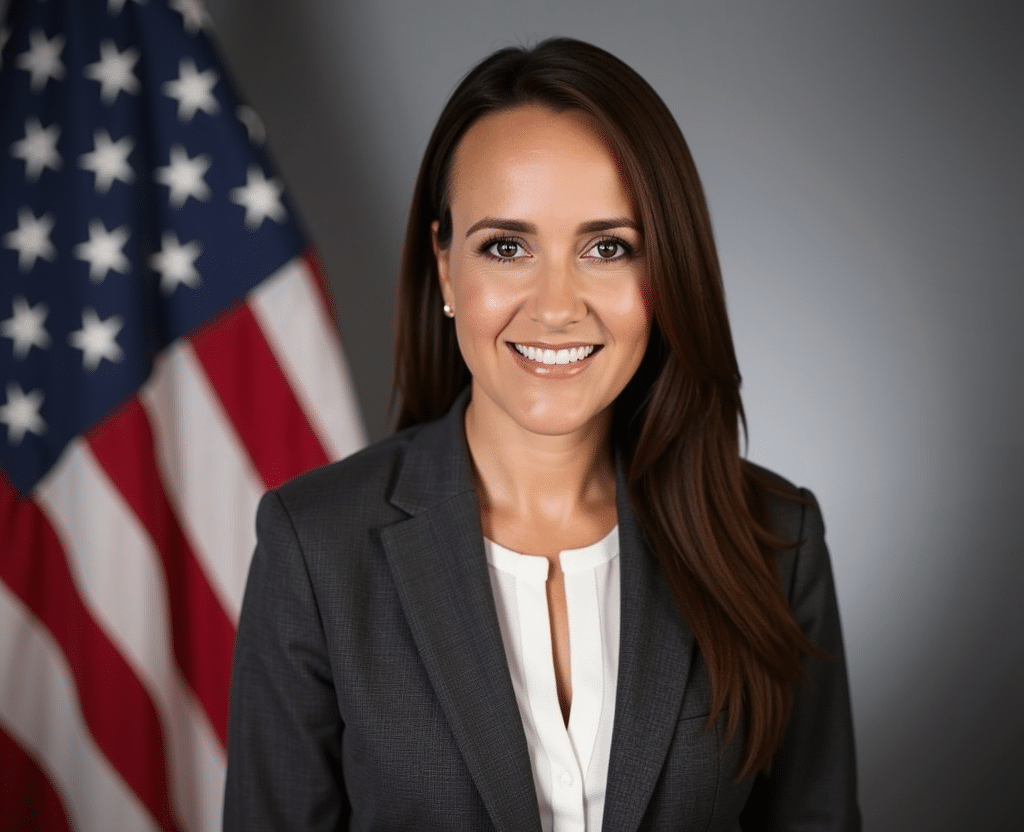
Alexandra González-Waddington is a top military and civilian defense attorney who has handled high-profile sexual assault, violent crime, and war-crimes cases globally. Her work is widely recognized by media outlets including 60 Minutes and ABC’s Nightline.

