What Does Article 112a of the UCMJ Prohibit and Who Does It Cover?
Article 112a of the UCMJ criminalizes the wrongful use, possession, manufacture, distribution, importation, and exportation of controlled substances by persons subject to military jurisdiction. Codified at 10 U.S.C. § 912a, Article 112a applies to all active-duty service members, qualifying reservists, and others under UCMJ jurisdiction at the time of the alleged offense. Controlled substances include all drugs listed under the federal Controlled Substances Act as well as substances designated by the President.
To obtain a conviction, the government must prove beyond a reasonable doubt that the accused wrongfully used, possessed, distributed, manufactured, or introduced a controlled substance; that the substance was prohibited; and that the accused knew of its presence and contraband nature. Actual knowledge is required — negligence is not sufficient to establish guilt under Article 112a. Gonzalez & Waddington defends service members charged under Article 112a at every stage, from investigation through court-martial.
Article 112a Penalties and How Gonzalez & Waddington Defends These Cases
Under the Manual for Courts-Martial, wrongful distribution of a controlled substance authorizes a dishonorable discharge, up to 15 years confinement, and total forfeiture of pay and allowances; wrongful use of a Schedule I–III substance authorizes up to 5 years confinement and a dishonorable discharge. A conviction also risks administrative separation, reduction to E-1, loss of retirement eligibility, and revocation of a security clearance.
Gonzalez & Waddington attorneys examine urinalysis chain-of-custody records, laboratory procedures, and command notification timelines for procedural defects that can undermine the government's evidence. Michael Waddington, a former Army Senior Defense Counsel, challenges proof of knowing and wrongful conduct — including innocent ingestion and lawful authorization defenses — at Article 32 hearings and courts-martial. The firm also contests administrative separation boards triggered by drug-related charges.
Gonzalez & Waddington defends service members from every branch — Army, Navy, Air Force, Marine Corps, Coast Guard, and Space Force, including Reserve and National Guard — in military courts in the United States and overseas, including Germany, Italy, Japan, and South Korea. The firm handles courts-martial, Article 32 hearings, NJP, and administrative separations. Call Gonzalez & Waddington at 1-800-921-8607 — all consultations are confidential.
Reviewed by Michael Waddington, former Army JAG and founding partner of Gonzalez & Waddington · Updated November 21, 2026
UCMJ Article 112a: Drug Offenses
Short answer: Article 112a makes it a crime to wrongfully use, possess, distribute, manufacture, import or export a controlled substance, including marijuana and THC products regardless of state law. Gonzalez & Waddington defends service members facing Article 112a charges, including positive urinalysis cases, from Article 15 through court-martial. Michael Waddington, a former Army prosecutor and Senior Defense Counsel, challenges the collection, testing and chain of custody behind the result. Call 1-800-921-8607 or text 954-799-4019.
Article 112a of the Uniform Code of Military Justice establishes criminal liability for the wrongful use, possession, manufacture, distribution, importation, and exportation of controlled substances by persons subject to military jurisdiction. The article is designed to preserve readiness and good order by prohibiting drug-related conduct that undermines military effectiveness. Violations may be prosecuted at courts-martial and can result in punitive discharge, confinement, or other authorized penalties.
Prohibited Conduct
The statute criminalizes a range of drug-related activities when done “wrongfully,” meaning without legal authorization. Prohibited conduct includes:
- Using a controlled substance
- Possessing a controlled substance
- Manufacturing a controlled substance
- Distributing or intending to distribute a controlled substance
- Importing or exporting a controlled substance
Controlled substances include those listed in federal drug schedules and substances designated by the President or the Secretary of War.
Persons Subject to the Article
Article 112a applies to all individuals subject to the UCMJ, including active-duty service members, certain reservists, and other persons under Articles 2 and 3. The article does not apply to civilians unless they fall under military jurisdiction for a specific reason. Jurisdiction is determined at the time of the alleged offense.
Mental State Requirements
The government must typically prove that the accused knowingly and wrongfully engaged in the prohibited conduct. Knowledge that the substance was controlled is required, though the accused need not know the precise drug schedule. Negligence is insufficient to establish guilt under Article 112a.
Related Liability: Attempts, Conspiracy, and Accomplice Conduct
Attempted drug offenses may be charged under Article 80, provided there is a substantial step toward committing the offense. Conspiracy to violate Article 112a may be charged under Article 81 when there is an agreement and an overt act in furtherance of the offense. Aiding and abetting liability under Article 77 applies to individuals who assist, encourage, or facilitate another’s drug offense.
Aggressive Military Defense Lawyers: Gonzalez & Waddington
Watch the military defense lawyers at Gonzalez & Waddington break down how they defend service members worldwide against UCMJ allegations, CID/NCIS/OSI investigations, courts-martial, Article 120 cases, administrative separations, and GOMORs. If you’re under investigation or facing charges, this video explains what your rights are and how experienced civilian military counsel can make the difference.
Elements of UCMJ Article 112a: Drug Offenses
The government must prove each element of an Article 112a offense beyond a reasonable doubt. These elements define the specific conduct prohibited by the Uniform Code of Military Justice and establish the factual and mental components necessary for criminal liability.
Required Elements
- That the accused used, possessed, distributed, manufactured, or introduced a controlled substance.
- That the substance was a prohibited drug as defined by federal law or military regulation.
- That the accused’s conduct was wrongful.
- That the accused knew of the presence of the substance and its contraband nature.
The mens rea requirement under Article 112a generally consists of knowledge: the accused must know both that the substance was present and that it was a controlled or prohibited drug. Wrongfulness further requires that the conduct was without legal justification or authorization.
The actus reus varies depending on the charged theory of liability. It may include physical possession, ingestion or other forms of use, transferring the substance to another person, manufacturing a controlled substance, or bringing it onto a military installation or vessel.
Statutory definitions incorporate controlled substances identified under the Controlled Substances Act, as well as additional drugs designated by the Department of War. Terms such as “possession,” “distribution,” and “introduction” carry their established legal meanings, which focus on control, transfer, or movement of the substance rather than on ownership.
Maximum Punishment and Sentencing Exposure
Punishment depends on when the offense was committed. Offenses committed on or before December 27, 2023 are sentenced under the maximum punishments in the Manual for Courts-Martial. Offenses committed after December 27, 2023 are sentenced by a military judge under the sentencing parameters required by the National Defense Authorization Act for Fiscal Year 2022 and set out in Executive Order 14103, which added Appendices 12B through 12D to the Manual for Courts-Martial.
Maximum Punishment for Offenses Committed On or Before December 27, 2023
For offenses committed on or before December 27, 2023, the maximum punishments are those set in Part IV of the Manual for Courts-Martial and summarized in its Appendix 12:
- Wrongful use or possession of a Schedule I, II, or III substance (including cocaine, heroin, amphetamine, LSD, methamphetamine, and marijuana, except possession of less than 30 grams of marijuana): dishonorable discharge, forfeiture of all pay and allowances, confinement for 5 years, and reduction to E-1.
- Wrongful use of marijuana, wrongful possession of less than 30 grams of marijuana, or use or possession of phenobarbital or a Schedule IV or V substance: dishonorable discharge, forfeiture of all pay and allowances, confinement for 2 years, and reduction to E-1.
- Wrongful manufacture or introduction of a Schedule I, II, or III substance: dishonorable discharge, forfeiture of all pay and allowances, confinement for 5 years, and reduction to E-1.
- Wrongful manufacture or introduction of phenobarbital or a Schedule IV or V substance: dishonorable discharge, forfeiture of all pay and allowances, confinement for 2 years, and reduction to E-1.
- Wrongful distribution, possession or manufacture or introduction with intent to distribute, or importation or exportation of a Schedule I, II, or III substance: dishonorable discharge, forfeiture of all pay and allowances, confinement for 15 years, and reduction to E-1.
- The same offenses involving phenobarbital or a Schedule IV or V substance: dishonorable discharge, forfeiture of all pay and allowances, confinement for 10 years, and reduction to E-1.
For commissioned officers, dismissal takes the place of a dishonorable or bad-conduct discharge, and officers cannot be reduced in grade.
Sentencing Parameters for Offenses Committed After December 27, 2023
For offenses committed after December 27, 2023, a military judge sentences the accused within the confinement range for the offense category assigned in Appendix 12C of the Manual for Courts-Martial (2024 ed.). The ranges are set in Appendix 12B (R.C.M. 1002(a)(2)).
- Wrongful use or possession of a Schedule I, II, or III controlled substance: Category 1, 0 to 12 months of confinement.
- Wrongful use, possession, manufacture, or introduction of phenobarbital or a Schedule IV or V controlled substance: Category 1, 0 to 12 months of confinement.
- Wrongful manufacture or introduction of a Schedule I, II, or III controlled substance: Category 2, 1 to 36 months of confinement.
- Wrongful distribution, possession with intent to distribute, or importation or exportation of any controlled substance: Category 2, 1 to 36 months of confinement.
If the maximum confinement for the offense is lower than the top of its category range, the lower maximum controls. The judge may sentence outside a range only after finding specific facts that warrant it and stating them in writing on the record. The parameters govern confinement. A punitive discharge, forfeitures, and reduction in grade remain available up to the maximum punishment for the offense.






How UCMJ Article 112a: Drug Offenses Under the UCMJ Is Commonly Charged
Charging decisions under Article 112a are driven by the specific fact pattern, how the allegation first surfaced, and the level of command attention involved. Cases tend to reflect routine issues encountered in barracks life, workplace interactions, medical screenings, and routine inspections rather than unusual or extreme scenarios.
Common Charging Scenarios
Most prosecutions arise from recurring, real-world situations rather than isolated or extraordinary conduct. Common scenarios include:
- Positive urinalysis results from random unit-wide testing or targeted follow-up testing following prior concerns.
- Observed possession of controlled substances during health and welfare inspections, gate checks, or routine security sweeps.
- Admissions to unit leadership, medical personnel, or investigators during unrelated inquiries or when a member self-reports use.
- Drug use or possession uncovered in the course of misconduct investigations involving alcohol, fights, or barracks disturbances.
- Digital evidence of drug activity discovered during authorized searches of phones or barracks rooms conducted for unrelated reasons.
Frequently Co-Charged Articles
Article 112a is often paired with other UCMJ provisions when the surrounding conduct suggests broader misconduct. Common co-charges include:
- Article 92 (Failure to Obey an Order or Regulation) when drug possession or use also violates a standing command policy or punitive regulation.
- Article 107 (False Official Statements) when members deny use or possession and later evidence contradicts those statements.
- Article 121 (Larceny) when government-owned or controlled substances are improperly obtained.
- Article 134 offenses when the conduct involves paraphernalia, distribution indicators, or behavior prejudicial to good order and discipline.
Investigative Pathways
Cases typically start with routine command processes or reports from service members rather than complex operations. Command-directed urinalysis programs remain the most common trigger for an inquiry. When contraband is found or allegations surface, commanders may initiate preliminary inquiries that, depending on the facts, lead to referral to service law-enforcement organizations such as CID, NCIS, OSI, or CGIS. These agencies commonly conduct interviews, collect physical evidence, and coordinate with medical or forensic laboratories for confirmatory testing. Information may also originate from medical personnel, security forces, or gate security, prompting formal investigative involvement.
Charging Trends and Overlap
Prosecutors often charge both use and possession when the underlying evidence supports multiple theories, even if the facts stem from a single incident. Charge-stacking occurs when digital, testimonial, and physical evidence suggest separate acts within a close time period. Overlap with Articles 80 (attempts) and 134 offenses may appear where conduct is incomplete, indirect, or broader than straightforward use or possession. These patterns reflect efforts to capture the full scope of misconduct under available statutory frameworks.
Common Defenses and Contested Legal Issues
Prosecutions under UCMJ Article 112a often involve close examination of the statutory elements, the reliability of witness testimony, evidentiary rulings, and the interpretation of statutory and regulatory language. Because drug offenses can involve scientific evidence, chain-of-custody questions, and issues of authorization or knowledge, litigation frequently centers on whether the government has satisfied each required component of proof.
Element-Based Challenges
Disputes commonly arise regarding whether the government has established all elements of wrongful use, possession, distribution, introduction, or manufacture of a controlled substance. Questions may involve:
- Whether the substance at issue has been properly identified as a controlled substance through admissible scientific or testimonial evidence.
- Whether the accused’s alleged conduct constitutes “use” or “possession” under controlling case law and military instructions.
- Whether the government has established a connection between the accused and the substance, particularly when multiple individuals had access to a location or container.
These challenges typically focus on sufficiency of evidence rather than on competing narratives about intent or motive.
Mens Rea and Intent Issues
Knowledge and intent are frequently contested, particularly where the government must show that the accused acted “wrongfully.” Litigation often examines:
- Whether the accused knew the substance was controlled or prohibited.
- Whether ingestion was voluntary, inadvertent, or the result of misidentification of a substance.
- Whether the circumstances demonstrate recklessness or negligence in cases where the statutory language or precedent permits such inferences.
The mental-state requirement shapes both the scope of permissible evidence and the interpretation of surrounding circumstances.
Credibility and Factual Disputes
Witness credibility can influence disputes regarding source of the substance, chain of custody, or the context of alleged use or possession. Investigators, informants, or cooperating witnesses may provide testimony that is scrutinized for consistency, motive, and reliability. Contested factual narratives often arise when testimonial accounts diverge or when circumstantial evidence requires interpretation.
Evidentiary and Suppression Issues
Article 112a cases frequently involve evidentiary challenges related to admissibility and reliability. Issues may include:
- The admissibility of urinalysis results, to include foundation, testing procedures, and chain of custody.
- The validity of searches and seizures under military rules, including inspection authorities, command authorizations, and digital-data collection.
- The admissibility of statements in light of rights advisement requirements and voluntariness standards.
These disputes often determine what evidence may be presented at trial.
Statutory Interpretation Issues
Ambiguities in statutory definitions, scheduling of controlled substances, or references to federal drug regulations can generate interpretation questions. Litigation may address the scope of terms such as “wrongful,” “use,” or “possession,” or how evolving drug classifications interact with UCMJ provisions. Such issues shape how the statute applies to specific factual contexts.
Related UCMJ Articles
Conspiracy can be charged when drug activity involves coordination with other service members
Collateral Consequences Beyond Court-Martial Punishment
Collateral consequences are administrative, professional, or legal effects that may arise independently of any sentence imposed by a court-martial. These consequences often stem from separate regulatory or statutory processes and may continue to affect a service member after the judicial portion of the case has concluded.
Administrative and Career Consequences
A conviction under UCMJ Article 112a can trigger several administrative actions. These may include:
- Administrative separation processing, which may result in an honorable, general, or other-than-honorable discharge depending on the circumstances and service record.
- Limitations on future promotion eligibility, as adverse actions are typically reflected in personnel records and may interrupt career progression.
- Effects on retirement eligibility, including the potential loss of benefits if separation occurs before qualifying service is completed.
- Restrictions on reenlistment or continuation of service, as drug-related offenses commonly influence suitability determinations.
Security Clearance and Professional Impact
Drug-related convictions can affect eligibility for a security clearance. Loss or denial of a clearance may limit access to classified information and restrict assignment opportunities. Following separation, some civilian positions—particularly in defense, intelligence, or federal contracting—may be affected if clearance eligibility is diminished.
Registration and Reporting Requirements
Convictions under Article 112a generally do not trigger sex offender registration. However, certain drug offenses may require reporting to federal databases used for background checks. Registration and reporting requirements, where applicable, are governed by federal and state law and vary by jurisdiction.
Related Civilian Legal Exposure
The same conduct underlying a military drug offense may also fall within federal or state criminal statutes. In some cases, parallel civilian investigations or civil penalties may occur independently of military proceedings.
Immigration and Citizenship Considerations
For non-citizens, a drug-related conviction may affect immigration status, including admissibility determinations or eligibility for certain immigration benefits. Naturalized service members may face additional review if the conviction implicates statutory criteria related to good moral character.
Why Early Legal Representation Matters
Decisions made during the investigative phase often influence the course of a UCMJ Article 112a case long before any charges are preferred. Early legal representation, whether from appointed counsel or civilian military defense lawyers, helps ensure that actions taken during this period are informed and aligned with the service member’s rights.
Timing of Evidence Collection
Military investigators typically collect key evidence soon after an allegation arises. This may include urinalysis records, witness statements, command documentation, and digital communications. Early legal involvement can guide how a service member responds to evidence requests and can help ensure that statements or materials are preserved, clarified, or contextualized in a manner consistent with procedural requirements.
Risks of Early Interviews
Command or law-enforcement interviews often occur before a service member fully understands the scope of the inquiry. Without proper guidance, individuals may provide incomplete or inaccurate statements, waive rights unintentionally, or respond to questions without knowing the full nature of the allegations. Legal representation helps prevent misunderstandings that could later be interpreted as inconsistencies or admissions.
Command-Driven Investigations
Commands may initiate administrative inquiries or command-directed investigations independent of formal criminal charges. Decisions made during these processes—such as providing statements or documents—can influence later determinations, including potential adverse administrative actions.
Long-Term Impact of Early Decisions
Choices made early in the investigative timeline, including consenting to searches, providing statements, or responding to administrative inquiries, can affect the direction of a future court-martial or administrative proceeding. These early actions often shape the evidentiary landscape and may influence later evaluations of credibility, intent, or compliance with procedures.
Video transcript
Transcript of the video “Article 112a UCMJ Explained | Positive Urinalysis, Drug Charges & Military Defense,” with Michael Waddington of Gonzalez & Waddington.
Read the full transcript of this video
Article 112a of the UCMJ makes it a crime to wrongfully use, possess, distribute, manufacture, or bring onto a military installation a controlled substance. It’s one of the most frequently charged articles in the military, and most cases start with a single cup of urine. I’m Michael Waddington, civilian military defense lawyer and co-founder of Gonzalez & Waddington. Here’s what Article 112a covers, what it carries, how drug cases start, and how they’re defended, including the rules on hemp, CBD, and Delta-8.
First, the elements. For a use case, the government has to prove that you used a controlled substance and that your use was wrongful. Wrongful means without legal justification, like a valid prescription, and it requires that you knew you were using the substance. Possession requires that you knowingly had the drug under your control. Distribution means delivering it to someone else, and that includes handing a friend a pill at a party. No money has to change hands.
Second, the punishment. Using marijuana or possessing less than 30 grams carries up to 2 years and a dishonorable discharge. Using or possessing cocaine, methamphetamine, LSD, ecstasy, heroin, and most other Schedule 1, 2, and 3 drugs carries up to 5 years. Distribution carries up to 15 years, and 5 years are added if the offense happens on duty as a sentinel, aboard a ship or aircraft, in a missile facility, in a combat zone receiving hostile fire pay, or in time of war. Beyond the court-martial, every service requires commanders to begin administrative separation for drug abuse, which means even a case resolved at Article 15 can end your career with an other than honorable discharge.
Third, how cases start, the urinalysis. Most 112a cases begin with a positive drug test. How the test was ordered matters. A random inspection, a probable cause test, or a test you consented to can be used against you at court-martial. A command-directed or fitness for duty test, or one taken as part of a medical treatment program, generally can’t be used for punishment, but can still be used for administrative separation. The sample goes to a DoD drug testing lab, which uses a screening test and a confirmation test with set cutoff levels. A positive result lets a court-martial infer that you used the drug knowingly and wrongfully. That inference is the government’s whole case in many prosecutions, and it can be rebutted.
Fourth, the other ways cases start. Admissions to friends, chain of command, or investigators. Text messages and Venmo payments found during a search of someone else’s phone. A friend who gets caught and names everyone they’ve used with or sold to, often in exchange for leniency. Controlled buys by CID, NCIS, or OSI using an informant. And civilian arrests off post that the military picks up.
Fifth, hemp, CBD, and Delta-8. Since March 2020, the Department of Defense has prohibited service members from using any product made or derived from hemp, including CBD oils, lotions, gummies, and Delta-8 THC, even if the product is legal where you bought it. Each service implemented this through a punitive general order, so a violation is charged under Article 92, failure to obey a general order, which carries up to 2 years and a dishonorable discharge. And because those products can contain THC, a hemp product can also cause a positive urinalysis for marijuana. "I only used CBD" is not a defense to the order, and it isn’t automatically a defense to the 112a charge.
Sixth, the defenses. Innocent ingestion. You didn’t know the substance was in what you consumed. For example, someone spiked a drink or food, and that has to be supported by evidence, not just a story. Lab and collection errors. The chain of custody, the observer, the labeling, the bottle seal, and the lab’s own documentation packet, which a defense expert can review line by line. Unlawful inspection. Whether the urinalysis was a true random inspection or a disguised search targeting you.
Valid prescription. Some positives are explained by a lawful medication. And for possession and distribution, knowledge, control, and the credibility of a cooperating witness who’s trading testimony for a better deal.
Seventh, prescription drugs. Taking someone else’s Adderall to stay awake on duty or a friend’s Oxycodone for a back injury is wrongful use under Article 112a. So is using your own prescription in a way that wasn’t prescribed, depending on the facts. These cases are common and they’re often more defensible than people think.
Eighth, what to do. One, if you’re notified of a positive urinalysis, don’t make any statement to your command or investigators about what you took or why. Two, don’t consent to a search of your phone, car, or room. Three, write down for your lawyer everything you ate, drank, and took in the days before the test and who you were with. Four, request the lab’s documentation packet through your lawyer. Five, decide on Article 15 versus court-martial only after a lawyer has reviewed the evidence because the separation board that usually follows is a separate fight.
At Gonzalez & Waddington, we’ve challenged positive urinalysis results with forensic toxicologists and lab packet reviews. And we’ve defended distribution cases built on informants and text messages.
So, what is Article 112a of the UCMJ? It’s the military’s drug offense, covering wrongful use, possession, or distribution of controlled substances with up to 5 years for most use cases, 15 years for distribution, and mandatory separation processing even if you’re never court-martialed.
I’m Michael Waddington, a civilian military defense lawyer and co-founder of Gonzalez & Waddington with my law partner, Alexandra González-Waddington. For more than 20 years, we’ve defended service members stationed around the world in military investigations, courts-martial, Article 15s, reprimands, and administrative separation boards.
If you’re facing a positive urinalysis or a drug charge, don’t wait. The decisions you make early can shape the entire case. When the government builds a case, we build your defense. You can learn more at ucmjdefense.com or call 1-800-921-8607 for a free, confidential consultation.
When the command knows you’ve got real defense, the game changes.
About Gonzalez & Waddington
Gonzalez & Waddington is a civilian military defense law firm that represents service members worldwide in cases arising under the Uniform Code of Military Justice. The firm focuses on defending clients facing courts-martial, administrative actions, and military investigations, providing guidance rooted in extensive experience with the complexities of military law and procedure.
How We Help in UCMJ Article 112a: Drug Offenses Under the UCMJ
- Court-martial defense for service members charged with drug use, possession, distribution, or related offenses under Article 112a.
- Representation during military criminal investigations conducted by CID, NCIS, OSI, and CGIS, including advisory support before interviews and searches.
- Assistance with command-directed investigations and responses to allegations that may lead to criminal or administrative action.
- Advocacy at administrative separation boards, suspension of favorable actions, and other adverse personnel processes linked to alleged drug misconduct.
- Strategic case analysis, including review of evidence, testing procedures, and investigative practices relevant to Article 112a allegations.
If you are facing an Article 112a matter or anticipate action related to a drug allegation, Gonzalez & Waddington can help you understand the process and your options. To discuss your situation in a confidential consultation, you may contact the firm for more information about available representation.
Frequently Asked Questions
Q: What does UCMJ Article 112a: Drug Offenses Under the UCMJ cover?
A: Article 112a addresses the wrongful use, possession, distribution, introduction, or manufacture of controlled substances by military personnel. The article applies to a broad range of substances, including illegal drugs and certain prescription medications when used or possessed without proper authorization. The government must generally prove knowledge, wrongful conduct, and the nature of the substance. The specific facts of a case determine which part of the article applies and how it may be charged.
Q: What is the maximum punishment for UCMJ Article 112a: Drug Offenses Under the UCMJ?
A: Maximum punishments vary depending on the specific offense, such as use, possession, or distribution, and the type and quantity of the substance. Penalties can include confinement, reduction in grade, forfeiture of pay, and a punitive discharge. Distribution-related offenses typically carry the most severe maximum punishments. The actual sentence, if any, depends on the circumstances, the service member’s record, and the forum in which the case is adjudicated.
Q: Can an allegation under this article lead to administrative separation even without a conviction?
A: Yes. Commanders have the authority to initiate administrative separation proceedings based on credible evidence of drug-related misconduct, even without a court-martial conviction. The standard of proof for administrative separation is lower than at trial, and the process may consider a wide range of information. Potential outcomes can include retention, a rehabilitative approach, or separation with various characterization levels, depending on the circumstances and service regulations.
Q: Do I need a civilian military defense lawyer for an investigation under this article?
A: Service members have the right to consult with military defense counsel at no cost, but some choose to retain civilian military defense attorneys for additional representation. Whether to hire civilian counsel depends on factors such as the complexity of the case, potential adverse actions, and personal preference. Early legal consultation can help clarify rights, the investigative process, and possible outcomes, but the decision to obtain civilian counsel is entirely optional.
Q: Can an Article 112a case be handled without a court-martial?
A: Yes. Alleged drug offenses may be addressed through nonjudicial punishment, administrative actions, or command counseling instead of a court-martial, depending on the evidence and command discretion. Nonjudicial punishment can impose penalties such as restriction, extra duties, or rank reduction. Administrative actions may include separation proceedings or rehabilitative measures. The chosen process varies based on the seriousness of the allegation, service policies, and the member’s record.
Q: Which agencies typically investigate suspected violations of Article 112a?
A: Investigations may be conducted by military law enforcement organizations such as CID, NCIS, or OSI, depending on the branch of service. These agencies can interview witnesses, collect physical evidence, and obtain laboratory results from certified testing facilities. Commanders may also initiate preliminary inquiries before referring matters to investigators. The investigative scope depends on the nature of the allegation and whether potential distribution or broader misconduct is suspected.
Q: What types of evidence are commonly used in Article 112a cases?
A: Evidence may include urinalysis results, witness statements, digital communications, physical drug evidence, or admissions made by the service member. Laboratory confirmation testing is typically required for urinalysis-based cases. Investigators may also examine access to substances, opportunities for ingestion, and knowledge indicators. The weight given to each type of evidence depends on reliability, documentation, and compliance with required procedures throughout the investigation and testing process.
You can review the individual Articles of the UCMJ and learn more about military law by clicking here: UCMJ Articles and Military Justice Resources. You can also explore official military law guidance from the Army Judge Advocate General’s Corps at jagcnet.army.mil.

Michael Waddington
A former Army JAG, best-selling author and FIU adjunct law professor, Michael Waddington defends clients worldwide in serious cases and trains lawyers in advanced cross-examination. He is frequently featured by major media outlets like CNN and 60 Minutes.
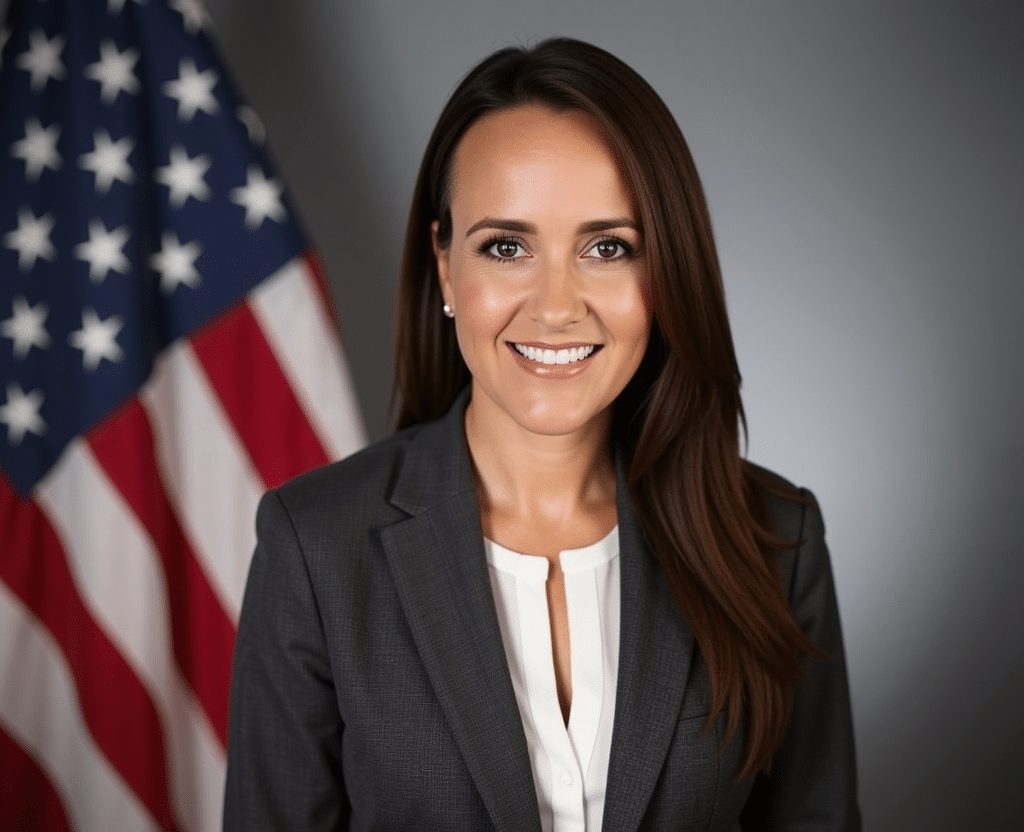
Alexandra González-Waddington
Alexandra González-Waddington is a military and civilian defense attorney with more than 20 years of experience who has handled high-profile sexual assault, violent crime, and war-crimes cases globally. Her work is widely recognized by media outlets including 60 Minutes and ABC’s Nightline.