What are the most important rules for witnesses to follow during cross-examination in a military trial?
The most important rules for witnesses during cross-examination include listening carefully before answering, telling only the truth, never guessing, and staying calm under pressure. Avoiding volunteering extra information and correcting mistakes immediately also protect credibility. Following these principles helps witnesses maintain composure and reliability throughout testimony.
Facing cross-examination in a courtroom can be one of the most intimidating experiences for any witness, whether you are involved in a civil dispute or a high-stakes criminal trial. Your testimony may well be the linchpin on which the case balances, and surviving cross-examination with your credibility intact is paramount to achieving a favorable outcome.
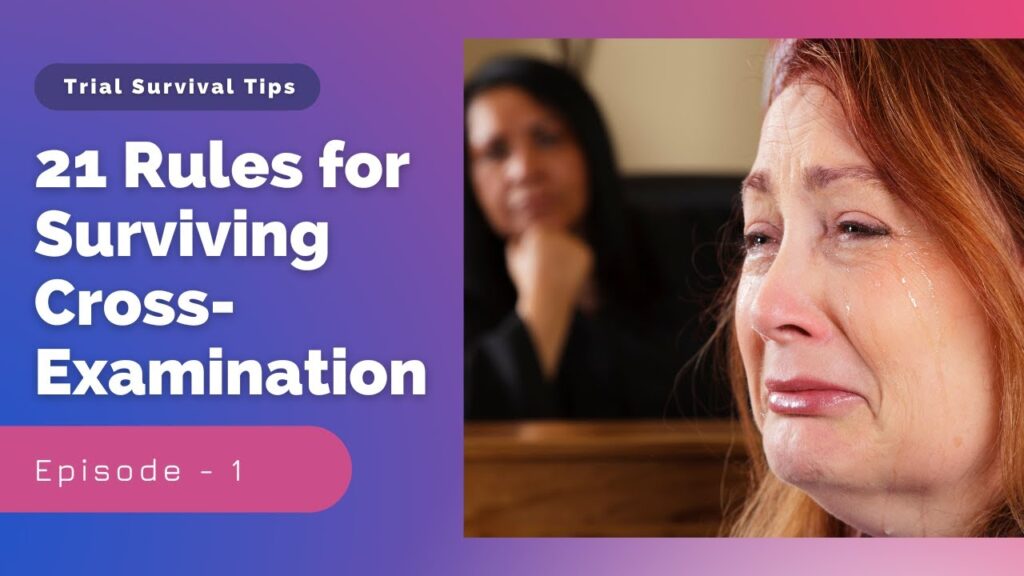
In the insightful video “How to Survive Cross-Examination: Cross-examination Tips for Witnesses”, seasoned criminal defense attorney Michael Waddington shares his expert advice distilled into 21 clear rules designed to help witnesses navigate the challenges of cross-examination confidently and effectively. Drawing on over 20 years of courtroom experience, Waddington breaks down the tactics that can make or break your testimony.
Why Cross-Examination Matters
Cross-examination is a critical phase in any trial. It is the moment where opposing counsel attempts to test the reliability, consistency, and truthfulness of your statements. A skilled cross-examiner will seek to trip you up by exploiting any misstatements, inconsistencies, or signs of evasiveness. Therefore, understanding how to handle this scrutiny is essential to preserving your credibility and ultimately impacting the trial’s outcome.
The 21 Rules for Surviving Cross-Examination: A Deep Dive
1. Listen Carefully and Don’t Interrupt
At first glance, this seems obvious. However, many witnesses fall into the trap of responding prematurely or interrupting the questioner. Interrupting not only risks providing a non-responsive answer but also makes you appear disrespectful and evasive. The key is to listen fully, allowing the question to be completed before you respond.
2. Identify the Facts in the Question
Each question during cross-examination typically focuses on a single fact. By carefully identifying this fact, you can tailor your answer precisely. For example, if asked, “Are you wearing a blue shirt?” focus solely on that fact without adding unsolicited information.
3. Pause and Think Before Answering
Time seems to slow when you’re on the stand, but taking a brief moment to process the question before answering can prevent mistakes and help you deliver clear, accurate responses. This pause can be as brief as a half-second but is invaluable for maintaining control.
4. Answer Only the Question Asked
Resist the urge to provide explanations or additional context during cross-examination. Sticking to the question keeps your testimony focused and avoids giving the opposing counsel ammunition to challenge your credibility.
5. Always Tell the Truth
Truthfulness is non-negotiable. Attempts to bend the truth or provide half-truths often backfire, as skilled lawyers will pick up on inconsistencies and exploit them. Remember, the truth is often easier to remember and less likely to be discredited.
6. Respond with ‘Yes’ or ‘No’ When Possible
Simple, direct answers reduce the opportunity for cross-examiners to manipulate your testimony. If a question can be answered with a “yes” or “no,” do so succinctly.
7. Provide the Shortest, Most Direct Answer When ‘Yes’ or ‘No’ Isn’t Possible
Sometimes complex questions require more than a binary response. In these cases, keep your answers brief and to the point, avoiding rambling or volunteering additional information.
8. Admit When You Don’t Know or Remember
It’s perfectly acceptable to say, “I don’t know,” or “I don’t remember.” Guessing or speculating can severely damage your credibility.
9. Maintain a Positive Attitude
An adversarial or negative attitude can alienate the judge and jury, making them less sympathetic to your testimony. Politeness and composure can foster trust and respect.
10. Avoid Speculation
Stick to facts you know. Speculating or guessing opens the door for cross-examiners to question your reliability.
11. Don’t Try to Explain During Cross-Examination
Cross-examination is not the time for explanations. Save clarifications and context for redirect examination where your attorney can guide the narrative more effectively.
12. Stop Talking After Answering
Volunteering extra information can be detrimental. Answer the question and then remain silent, allowing the next question to be asked.
13. Ask for Clarification if You Don’t Understand the Question
If a question is confusing or ambiguous, it’s better to ask for it to be repeated or clarified rather than guessing.
14. Don’t Volunteer Information
Limit your answers to what is asked. Offering unsolicited details can provide the opposing counsel with new lines of attack.
15. Don’t Vouch for Your Own Credibility
Let your testimony and demeanor speak for themselves. Trying to convince the court of your honesty often has the opposite effect.
16. Avoid Humor, Sarcasm, or Wit
These can be misinterpreted and damage your seriousness and credibility.
17. Don’t Quibble Over Minor Details
Arguing about small issues can make you appear petty or defensive.
18. Avoid Staring at the Jury, Judge, or Your Lawyer
Maintain appropriate eye contact but don’t fixate on any one person, which can be perceived as confrontational or evasive.
19. Be Polite
Courtesy goes a long way in courtroom settings and helps maintain a professional atmosphere.
20. Don’t Argue with Lawyers or the Judge
Respect the court’s decorum. Arguments can undermine your credibility and disrupt proceedings.
21. Dress Appropriately for Court
Your appearance impacts perceptions. Dressing professionally helps convey respect for the court and seriousness about your testimony.
Additional Insights and Context
Michael Waddington’s 21 rules are deceptively simple but require conscious practice and preparation. Many witnesses fail because they underestimate the psychological pressure of the courtroom and the skill of experienced cross-examiners who use subtle tactics to unsettle witnesses.
Preparation is key. Witnesses should work closely with their attorneys ahead of time, practicing answers, understanding the types of questions they may face, and developing strategies to remain calm and clear. Sometimes, mock cross-examinations help build confidence and reveal potential pitfalls.
Moreover, the courtroom is a highly visual and psychological environment. Jurors often rely on non-verbal cues as much as verbal testimony. Maintaining composure, exhibiting confidence, and demonstrating honesty can sway jurors’ perceptions in your favor.
Conclusion: Your Credibility is Your Best Defense
Surviving cross-examination isn’t about being combative or evasive; it’s about preserving your credibility through honesty, clarity, and composure. By adhering to these 21 rules, witnesses can navigate the pressures of the courtroom with greater assurance and protect the integrity of their testimony.
Remember, your words on the stand can have life-altering consequences. Equip yourself with these essential strategies, prepare thoroughly, and approach cross-examination with confidence and professionalism.
For more detailed insights and advanced trial tactics, consider exploring the resources offered by Michael Waddington and his firm at ucmjdefense.com.
Full Transcription
Video transcript
Transcript of the video “Preparing Witnesses for Cross-Examination: The 21 Rules of Cross Examination for Lawyers,” with Michael Waddington of Gonzalez & Waddington.
Read the full transcript of this video
My name is Michael Waddington, and I’m a trial attorney. In this class, I’m going to teach you the 21 rules for surviving cross-examination. This class is designed for all types of lawyers, anyone who is preparing a client to testify in any type of proceeding, civil, criminal, it doesn’t matter. Whether you’re the prosecutor or the defense, plaintiff, defense attorney, doesn’t matter. This set of rules in this video can help you and help your client give better testimony and survive a cross-examination with as much of their credibility intact as possible.
Now, that’s easier said than done. Most cases rise and fall on the cross-examination. That’s what, that’s what the lawyers and the juries and the judges wait for, to see how someone can withstand a cross-examination. Who am I, and why am I teaching this class? I’ve been practicing law for about 22 years. I practice primarily criminal defense, in almost all of my cases end up at trial.
I have prepared hundreds of witnesses to testify, many, many, many people accused of crimes. I’ve also done the same in civil courts and to prepare CL clients for anything from testifying in a deposition, to a child custody case, to a case where their life is literally on the line. So these are techniques and rules that I developed over the years of practice.
And I came up with this class because as I went through my years of practice and successes and failures, many failures, and that’s how I learned my lessons, I went to the textbooks that we were taught in law school, the books available online, and I just didn’t find much information out there onto really how to prepare your client to testify. I went to the, to various websites of, of legal organizations and law firms and that have information about preparing your client to testify, informational articles, things like that, and there just wasn’t much.
As a matter of fact, I was on a, a major, uh, national law organization’s website, and their article on how to prepare your client to testify was about 500 Words long, and it was generic stuff like prepare them, practice with them, and tell them to answer the questions. That is not helpful. And so not only have I prepared many clients to testify successfully and to survive cross-examination, I’ve also cross-examined thousands of people.
And when cross-examining Witnesses, I look for some of these things that we’re going to talk about in this class to exploit. And it, sometimes the witnesses just can’t help it. They, they step, step, um, they step into the traps every time. It’s their ego, it’s their, it’s their biases. Those things come out, and they in effect assist me in destroying their credibility live in front of an audience.
As part of this class, you’re going to get the slides that will allow you to walk your client through this process and practice with them, as well as the 21 Rules, a list of them that you can give to your clients and to the lawyers in your firm to practice and keep in mind and keep handy when you’re preparing witnesses to testify. I hope you learned something from this, and I hope you enjoy the class.
Credibility. We all know that’s what cases and testimony often Rises and falls on: The credibility of the witnesses, of the lawyers, of the evidence, the overall credibility of the defense Theory, the prosecution Theory, the plaintiff’s theory, whatever. It comes down to credibility, believability. And it’s very hard to Define what credibility is, but, but we all know it when we see it. We know when someone’s trying to sell us something that they have, where they have a bias or they have a vested interest.
As lawyers, particularly, we can sense these things. Often our clients don’t understand that, so we have to help them understand what credibility is. And as lawyers, we of have to understand that the way that we cross-examine our Witnesses, the way we do our directs, the way we do everything is being watched by the judge or the jury, and they’re making decisions in real time as they process this information. So rude comments, slip UPS, being rude to the bayith, those are things that jury picks up on, and no one really teaches about how to, how to do things and how not to do them.
In this class, we are going to hit on all of the areas that I think can destroy a witness’s credibility when they’re being cross-examined. But overall, you’re going to hear this theme coming up, so credibility is key. Demeanor: how you act, how you speak, how you react, all of those things TI to one’s demeanor. Now, whether or not the person, the witness or the lawyer or anyone in the court or anyone you encounter, has a scowl on their face, whether they’re Rude, mean, whether they’re rolling their eyes, those are all things that as humans we pick up on, and we pick up on them and we start to make judgments.
They teach in law school where it’s all about the facts and the evidence and the arguments. A lot of it comes down to who they like. I really believe that it, it’s not a popularity contest, but if you’re unpopular, you’re hurting your case in your client’s case, if you’re the person testifying or you’re the defendant or the plaintiff or the defense side in a civil’s case. If they don’t like you, it makes it much easier for them, the jury or the judge, to vote against you. Unlikable means it makes your job, makes the lawyer’s job much harder. Now, that means the lawyer being unlikable and the witness.
This is a technique that I developed over the years, and it, I would win cases sometimes where they had evidence and everyone would be mad. The prosecution would be mad, the judge would be making comments, and this is a case where, I’m telling you, they had the evidence, and the jury acquits the person. Why? And so a lot of my colleagues and friends and co-workers have discussed this. We’re like, why would the jury acquit that guy? And the witness got up there and said all these things, and the, the story was corroborated.
It’s, I think it’s the bad personality of some of the witnesses being C called by the opposing Council, and I call this impeachment by a bad personality. Here’s the deal: nobody likes a jerk. No one likes, likes a, a prick. Nobody likes that person who comes in and immediately causes a knot in your chest.
These are the 21 Rules plus the golden rule, okay? Some of these seem basic, and you’re going to be like, duh, that seems pretty simple to me. It might not be simple to your client, okay? It might be simple to you because you’ve done this for many years, but this is a system, because I like systems. I don’t like just ad hoc, willy-nilly preparing a client. I like to run them through this checklist that I’m about to go through with you.
The Golden Rule: lose the attitude. This is really the most important rule. If your clients are going to testify, they need to, to get this: lose the attitude. And you know what that means. Lose your attitude, man. You come in here, I’m talking to the client, you come in here acting like you’re so cool, you know it all, you have your head tilted back. It, it’s, it’s what you say, what you do, how you act.
Give your client in there in the chair, he’s like running his mouth and being as smart, interrupting you. Those are all things you need to really sit down with the client, and you need to say down those rough edges as much as possible. You’re not going to change someone’s personality, I know that, but you can at least get those really obnoxious rough edges off of them. Now, some people might be offended by that, because their attitude is ingrained with who they think they are.
But you have to explain to them: you may think you’re that cool, sassy, funny, smart mouth back on the Block, but you know what that means to you? And you’re, and you’re the plaintiff in a car accident case, and you’re going up against an older retired librarian that is very clean cut and is very proper and perent proper. The librarian might be liable, but if you come across with a bad attitude, they will have no problems limiting your damages or fighting against you. You don’t believe it? Try it out for yourself. Uh, but if, if it comes down to it, it’s about winning your case and getting the best result possible, so lose the attitude.
And as you do that, that you have to realize and identify these negative emotions that come up: fear, anger, resentment, anxiety. You’re going to have all those things being cross-examined in a trial, even if you’re just a, a random eyewitness or, or just an unbias expert. But when these things creep in, people start acting weird. When I say weird, I mean they start, some start fidgeting. People that are great speakers, I’ve seen them get on the stand and just do a horrible job, and they violate a lot of the rules, uh, because the fear and those, those internal emotions and the situation start to Bubble Up, and the cortisol starts injecting into their body, uh, and they become tense and they become defensive and they can’t make good decisions.
So by following a set of rules, it allows you to control your emotions and the negativity that’s flowing through your body when you’re on the stand, okay? Some may say to me, and I get this all the time, as a matter of fact, if someone talked to us the other day, and they’re like, I want you to destroy all those people that are accusing me. I want you to destroy this person and destroy that person. And we’re like, hold on a second. This isn’t about destroying anyone and being mean and yelling at the person that’s accusing you of attacking them, okay? If you want to go to prison, I will do that, but it is not the way to win a case.
The way I approach all Witnesses in people in the court is to be as polite and kind as possible, to be more polite than necessary under the circumstances, and to be kinder to people then is even necessary. Not to manipulate them or to try to get something out of them; it just becomes a habit, right? So if you’re kind to people and you’re polite to people, it pays dividends off down the road, whereas if you’re rude, nasty, aggressive, mean, people don’t like that.
Going back to what I’ve been saying all along, if they don’t like you, if they don’t like your, uh, client in a criminal case, Beyond a reasonable doubt’s up here. They hate your guts down here. There’s bad facts against you down here. It isn’t, it isn’t like, oh, they hate you, the facts are, are bad, but they just aren’t there quite yet at the summit of Beyond Reasonable Doubt. A, in a civil case, the standard is much lower, so you’re, you’re on thin ice here going into this. You’re on thin ice, your client is on thin ice.
And if you’re a lawyer, you want to get paid, right? You want to get the best result possible. You want to get paid, especially in the civil case. You don’t want to be losing cases that are winnable.
So what do you do when a lawyer is rude and nasty to you? This is not one of the rules, but this is just underlying the principle of lose the attitude. Let them have their bad attitude. Let that lawyer be rude, nasty. You sit there, be kind, smile, and the jury will like you much more.
Some of you were sitting there, I know this cuz lawyers are skeptical, and they, some are cynical, they’ll say, oh, this isn’t a popularity contest, I want a case once, blah, blah, blah. Okay, I’m sure you did. I’m sure you did, okay? And that’s great, but it, I don’t think it’s, if, if you have an attitude like that, you’re probably not going to learn anything from my class or any other class. I’m telling you what works for me and what I see working in other courts that I watch and talking a lot of other lawyers. You make everybody mad, which you don’t have to do, you’re going to probably lose more cases than you should. So be nice.
Rule number one: listen to the question being asked. Listen to the question being asked. Oh, that’s kind of silly, Mr. Waddington, some of you may say. Listen to the question, of course. Well, sit down with your client in practice and ask them questions, and you see the answers you get. It’s obvious from that preparation time and watching Witnesses on the stand, they often don’t listen to the question.
Obviously, if you’re Crossing someone, you should be following the basic rules, but even if you ask one new fact per question, often Witnesses go way outside of the Rails. Like if it’s a bowling game, they’re bowling on, you’re on, uh, Lane one, they’re on Lane 10. And, and here’s the thing: you want your client to be in the lane right down the middle, answering the question.
So you have to practice with them, ask them various types of questions, and teach them. They need to know how to identify these types of questions. Often these questions are objectionable. They’re bad questions. I’m not saying that compound questions are good, confusing questions, triggering questions, I’m not saying those are good, but that’s the type of stuff you’re going to be hit with, especially if you’re going against a bad lawyer, like a lawyer doesn’t know the rules or someone who does whatever they want. Uh, a bad lawyer, a bad trial lawyer can be a real problem to deal with when you’re a witness who’s testifying for the first time.
And so teach them what a compound question is. It’s when a question asked for more than one fact, or there’s multiple, u, facts that are being elicited or propositions being elicited in the same question. And once you teach them this, because you know most of our Witnesses are not, they’re not lawyers. I have never represented a lawyer. Uh, they come from all walks of life. You could be representing a mechanic, a surgeon, a teacher, you don’t know. Uh, it could be someone that, that, you know, English is their second language and they work at a restaurant somewhere, and so they just never have been through this. So you have a duty to them, I believe, to teach them these things in a very basic fashion so they get it the first time.
Confusing questions. Um, triggering questions are questions designed to get someone angry, provoke them. They have to be able to identify it. Once you identify it, you know, it’s like you’re a fish in the water and you see the plastic worm on the hook. You can identify it and just swim away, ignore the bait.
Argumentative questions. I mean, there is a, I was watching the Peter, the Michael Peterson staircase, uh, HBO show, and, and I watched the documentary, actually watched the documentary twice for various reasons, and I watched it with my kids. And, uh, there were comments being made, and that even in the documentary, where the lawyer would just make a rude comment, particularly the prosecutor, a rude, sarcastic comment that’s not even a question, and walk away and sit down, like, o, I proved my point.
Sometimes the clients will snap back at that and, and answer those questions. Teach them not to take the break, the debate, and avoid non-questions. I’m not saying leading question. I’m talking about a statement made by the lawyer. It’s often something sarcastic, or they think it’s being witty. Don’t have your client, have them identify, but don’t answer it.
Rule two: identify the facts of the question. So you listen to the question. Now we’re processing: what are the facts being elicited in the question? Now, again, this is cross-examination. There should be a fact in the question, should be. Obviously, on cross, the witness can ask who, what, when, where, why is, if they want to. Generally not advisable unless you really know what you’re doing under the circumstances, and that should be used sparingly.
But if you’re asking one new Factor question, have your client practice identifying the facts to just train them a little bit on, oh, that’s multiple facts, I got what you’re saying, um, and, and I, and I can recognize that as we go forward. If they can’t identify the facts, then they’re on really, really thin ice here when it comes to trying to answer a question when they don’t even know the facts of the question.
And I, I use this as an example. This is just a madeup question, but I’ve seen these things asked, okay? I saw them asked in the Johnny Depp trial, like a minute-long question, and, and as a lawyer, I’m just sitting there thinking, like, what is the question here? Like, what is this person asking, and what is the purpose? I don’t get what they’re asking. The jury is probably not even listening.
That, in that case, on the videos that came out, you couldn’t see the jury’s faces, at least not what, on what I saw, and I can imagine some of them were sleeping, rolling their eyes. I was sitting there on some of these watching them with my daughter, and I’m like, and she would look at me, she like, what is this guy asking? And she’s not a lawyer, but she knows just as well as I do and everyone else watching that this is a horrible question.
So here’s an example: you claim, and you can say this in the most theatrical way you want, like some lawyers think they’re actors, they’re not, uh, and by saying something with a, with a spin that sounds like you’re a Shakespearean actor in a thespian doesn’t add, doesn’t add anything to the jury’s comprehension or to the, to the, to the witness’s ability to understand what you’re asking. Because think about it: on Cross, if the, if the witness doesn’t understand what you’re asking, you’re not doing a good job, because you’re supposed to be eliciting facts that help your case, discredit the witness, or have some purpose.
So if you were to say, you claim to, for the first time, you saw a blue car barreling North Down Smith Street at around midnight, in It sped through a red light and smash head first in the left side of a Ford truck parked at the 7el. That, that’s what you want the jury to believe? Now, obviously, like I said, and you could tell that is a madeup question, and it seems a little exaggerated, and I admit that I did exaggerate it for the purpose. How many facts are in that question? Could anyone answer that yes or no? I mean, you could, I guess, um, but you’re going to run into trouble.
So there’s, I counted 18 facts, and then when I went back through these slides once they were finalized, I actually realized there’s 19 slides, or 19 facts in this, um, in this fact pattern. And so this is multiple questions that could be broken down into a series of questions, and we’re not going to go through them all. And if your client, your client should be able to identify, like, that is a multi-, multia question.
So teach them, like, here are four facts. These are facts you can either acknowledge yes or no if the question is asked: it was a truck, it was a Ford truck, the Ford truck was parked, the Ford Tru, Ford truck was parked at the 711. In practice with them on whatever facts you have in your case to teach them, because so many witnesses is just get destroyed on cross. And that’s, it’s like a fumble in a football game. It’s a fumble that they run back for Touchdown. You know when it happens that you just lost momentum. So I’m not going to go through all the facts there, but have them identify what facts are.
Rule number three: pause and think before answering. You know, I remember back in law school, and, and I went to another course that reiterated this, the theory was if you ask questions yes, yes, yes, get them the yes, yes, yes, then you throw in the 12th question or the 10th one that’s a no, or, or should be something else, and maybe you’ll trip up the person. I tell you what, you don’t win and lose cases based on whether or not you could trip someone up by asking yes, yes, yes 12 times in a row and maybe trick them.
First off, whoever teaches that forgot about something called redirect. If you slip up and say yes to something inadvertently, the jury is not gonna be like, oh, he just admitted it, he just admitted it. When you stand up there and you ask him, hey, you said this on Cross, did you ask, was that an accidental answer, or what happened? You have them explain it, and, and then you can just go off and explain all that and pretty much cement that Little Blooper that you made.
So have your clients, either way, listen, stop, think, take a breath, acknowledge the question, answer the question. Dy take a breath, breathe in, breathe out. This is not a meditation breathing class, but that does help. Teach your clients, if you train them: listen to the question, understand this lawyer is trying to bait you, identify the facts. It’s a puzzle in their head. Answer yes or no to the fact, but don’t just blow down answers. I, I mean, pretty much a slick lawyer can get anyone to say anything if you ask them questions fast enough. The client or the witness testifying must slow down the pace.
Answer the question that’s being asked. That’s rule number four: answer only the question being asked, and that should be it. If you answer a question that is not being asked and don’t answer the question, you’re going to look evasive, and your client is going to look like they either didn’t understand or they’re hiding something.
Rule number five: tell the truth. This may be seen as a no-brainer, like, of course they’re going to tell the truth. But we could argue, what is the truth? What is telling the truth? And there’s often Many Shades of Gray in the minds of your clients as to what the truth is or what is true. Like, this isn’t a philosophy class or philosophy lesson, and neither is testifying on a witness stand. You need to tell the truth, truth. If you’re a witness, what you know to be certain, that is telling the truth.
And includes not being evasive. It includes not shading the truth. It includes not embellishing. It includes not saying things that you don’t know with certainty. Like, if you don’t know what happened in the bar that started the fight, then don’t say it.
I’ve had multiple cases where I get the file and I’m reading through these investigative notes and I’m looking through the report, and I say, my goodness, there’s like three eyewitnesses. They saw the guy pull the knife. And, and you go and interview these people, and they tell the story, depending on how you interview them: oh yeah, he pulled the knife, and he, this happened and that happened. And then you get them on the witness stand, and if you don’t know what you’re doing, they’re going to tell that story.
But, but so many times in those types of cases, we, we ask them details about where they were, what happened next, who was next to them, and you start realizing that this witness is telling you what happened, but they didn’t see what happened. They heard what happened from someone, or the police might have told them, or they read about it on the news, but they in fact did not see it with their own eyes. Now, you may think I’m exaggerating. This is something to me in my cases that comes up all the time, and it’s usually tied to poor investigative work and poor initial questioning.
Like, if you pull someone over on this side of the street and there’s a dead body and there’s a car, you say them, my God, what happened? And they say the car ran the red light, plowed in this guy who was crossing his street on their bike, and then he went flying, and here he is, he’s bled out. Okay, got, we got ourselves a witness, right? Here’s the thing: you don’t know if that person just repeated what they deduced from the situation, what they’re speculating about. You don’t know if they actually saw it with their own two eyes.
So this all involves telling the truth. You want to get destroyed on cross-examination? You want your clients to get destroyed? Let them get up there and say stuff that they don’t have firsthand knowledge on or about, and stuff that is not 100% true. Because the whole truth and nothing but the truth should be what’s coming out, not their embellished vers, version of what happened. And we nail people all the time when they embellish small facts, especially if they have a bias, or they’re friends with the person, uh, that, or someone they’re trying to help.
If possible, answer the question yes or no. That’s rule number six: answer yes or no if you can. Now, a lot of this hinges on whether or not the person is being asked good questions, okay? What if it’s a compound question? What if it is a question that can’t be answered yes or no? Then obviously you don’t answer it yes or no, because it doesn’t make sense and it looks bad. If you can’t answer a question yes or no, then you need to identify and realize, I can’t answer that question yes or no, and then don’t answer it yes or no.
Now, if it’s a compound question, like, you were driving a blue Porsche on I95 the morning of the accident, okay, that’s multiple facts, okay? But if you were driving the blue Porsche on I95 on the day of the accident, and you happen to be an eyewitness to it, another accident or something like that, then you should register boom, boom, boom, and you could say yes without saying, well, technically that’s four questions there and I’m going to break them down. You can answer that yes if you identify the facts in the question and they’re all yes. But a lot of times they’re not yes.
So as a, as a tip, I see this come out on TV a lot. We were, I’ve seen even lawyers who give demos on this, like, here’s how to cross-examine, and watch my YouTube video, and they’re up there playing theatrics, and the witness, sometimes it’s a horrible question, sometimes the witness doesn’t understand in, and sometimes it’s a question that can’t be answered yes or no. Now, again, the lawyer could always interrupt, you’re the lawyer for that side: object, uh, compound or argumentative, whatever. But let’s say they don’t.
And I think Witnesses should be able to handle their own when testifying, especially if it’s someone very important, like the plaintive, the defendant, the victim. I think they should be able to handle some of these things on their own without the constant bickering with lawyers interrupting. The constant interrupting and objecting is something that’s annoying to the FactFinder, and it makes you look dishonest, in my opinion, especially if you’re losing your objections every time. Because who wants to hear a story that’s constantly being interrupted?
That’s one of the biggest pet peeves I have with lawyers. They, they think that the more they object, the cooler they look, or they’re preserving the record. Maybe if you’re objecting to something relevant in, in, and necessary. But if it’s not necessary and relevant, you look like you’re obstructing. You look like a jerk. That’s the bottom line. When you watch these trials unfold on TV, the Amber herd trial, a rambling objection to every single question, especially you’re not even winning, makes you look incompetent, and you have people talking on the internet about where do these lawyers come from. Some of them did a great job, by the way. Others did not.
So here’s how you deal with someone that says, answer my question yes or no, answer my question, that requires a yes or no answer. Be cool, be calm, and identify that this lawyer is trying to be theatrical and bully you, and remember the rules about demeanor, and say, I’m sorry, ma’am, I cannot answer your question yes or no. May I please explain? And then when they say, no, answered yes or no, they say to the judge, order her to answer it yes or no.
That’s a good time for your lawyer to stand up and be like, Your Honor, it is a compound question. It’s necessary that she explained either her answer or, or not answered yes or no, because she can’t answer yes or no. It’s impossible. And so, I can’t answer it yes or no, is a great way to get out of that. It makes actually the lawyer asking the question kind of look like a jerk sometimes when they try to force you to answer yes or no.
If your client can answer yes or no, they better answer yes or no. If they’re answering, if they’re not being responsive, if they’re being evasive, if they’re not answering yes or no to very direct yes or no questions, like, you’re wearing a suit jacket, it is blue, you’re wearing a tie, the tie is blue, you’re in a room, you’re not outside, those are questions that should be answered yes or no, and they’re pretty basic. If they’re not answering yes or no to that, then the judge may tell them to answer yes or no, and then you look like the jerk if you’re the witness that the won’t answer. I’m talking about questions that cannot be answered yes or no.
Rule number seven: if you cannot answer yes or no, give the most direct answer possible. If you cannot answer yes or no, give the most direct answer possible. Sometimes a lawyer will ask you questions that do not require a yes or no answer. What do you do then? You don’t say yes or no, obviously, because that’s non-responsive. What you do is you answer the question with enough information so that it satisfies the questioner, which means if it can be answered in one sentence, then answer in one sentence. You don’t need to give a 5 minute rambling answer. Keep it simple. Keep it one, two sentences maximum, if possible, if that’s what’s required. Obviously, if it needs more, then answer more, but if it doesn’t, then don’t.
Rule number eight: if you don’t know it, don’t know the answer, then say I don’t know. Clients of mine always think they need to have an answer. If they don’t know, I tell them, if you don’t know, don’t say something to try to fill in the space. Don’t try to make up an answer. Don’t, don’t, don’t say something because you’re being asked a question. I do it all the time when my wife says, hey, what did you spend on the credit card at Best Buy last week? How much did you spend? I say, I don’t know, if I don’t know. And in fact, I often don’t know down to the very penny.
So you can modify the I don’t know with in keep credible. If you don’t know, just say, I don’t know exactly how much I spent, or what time. Someone says, what time did you leave the apartment on June 3rd? You could say, I don’t know the exact time, sir, or ma’am, or I don’t know the exact time, but it was around midnight. But if you don’t know something for sure, what was the name of the hotel you stayed at that night? I don’t know. I like I don’t know, is better than I don’t remember, uh, because anyone who has an answer for everything is questionable when they look coached. Now, you don’t want to say I don’t know to everything. Then you looked either coach or incompetent or like you’re lying. But if you don’t know, every once in a while, an answer to question, then just say it.
Rule number nine: if you don’t remember, say I don’t remember. Remember, recall, recall, in my opinion, is lawyer talk. So when I have a witness that’s testifying, they just testified for 4 hours, any length of time, and they have all these answers to everything. They know the details of everything that happened three years ago on the dark and stormy night, uh, when they were attacked or robbed or whatever. And then I get up and I start asking questions, even more basic questions, and I get, I don’t recall, I don’t know, I don’t recall, I don’t recall, I don’t recall.
I use that in my closings, and I’ve had cases where we’ve counted 40, 50, 60 times with the witnesses, I don’t recall, in 1 hour. And then I compare and contrast, like, 3 hours on the witness stand with the government, zero I don’t recalls. An hour with us, no recollection of anything.
Now, in that hour, you use your judgment, so I would not over Coach your client to say I don’t recall if they honestly don’t remember. There are some ways to answer that, and you got to tell them. Tell them, I don’t remember. If you don’t remember, then don’t make it up. But if you don’t remember, say I don’t remember.
However, here are some tips for that. If you don’t remember, let the lawyer refresh your memory, and there’s some ways you can do that and be played. Like, if you’re an expert witness, you are not expected to have memorized 5,000 pages of a file. If you’re a police officer, you’re not expected to memorize a 350 page, u, investigative report on every single detail, and no one expects you to.
So if you’re asked the question, on July 3rd, 2021, the first step you took after you got the 911 call was to call an ambulance. Now, let’s say they don’t remember what the first step was. You could say, as the witness, I don’t remember exactly what I did. I know I called the ambulance, so answer the question the best you can, but I’m not sure if I called them first, but it’s in my notes. Can I, I take a look at that? Or, it’s in my lab report, may I please take a look at it to jog my memory? Or, it’s in my original statement to the police, may I please look at that?
And if the WT, if the leyer says, no, you may not, and you could say, well, okay, like I said, I don’t remember. And then your lawyer can also refresh your memory as well. So there’s various ways to refresh someone’s memory, but you don’t want to make it such a habit that you look uncredible.
So what you want to do is you want to refresh those facts before the witness testifies, and to save time, and for the, to get the better results in my Cas, is to get better results. I often give, let’s say I’m, I’m interviewing the, a nurse that looked at a victim or an injured person or something, I’ll give them the report in advance, be like, hey, here’s the report we’re talking about. And I would sometimes highlight, I’m going to ask you these questions. That’s if I want to get fact back out of that witness on cross-examination, and if they don’t do it, then you can impeach them as biased. But you want to help that witness do the best job.
And the same thing goes with your client. You put a client up who has no recollection of anything other than what you coached them on, and they, they don’t even know what they said in their, in their police interview, you know, an hour after, uh, they were attacked, for example. Like, they need to be refreshed on, they need to be refreshed before they get into court.
Here’s another tip: don’t lie and say I don’t recall. I mean, we see it all the time. They, they hide behind that. Some lawyers don’t know that they’re not stuck with the I don’t recall. You’re not stuck, in Most states and in federal court, with I don’t recall. If the lawyer asking questions and you say I don’t recall, there’s ways to, to impeach, there’s ways to jog memory. Uh, there’s also ways to get that information in another means, sometimes through extrinsic evidence, to prove not only that you should have recalled, but here’s the fact, and it’s a fact that you would probably not forget.
And it’s pretty bad when you say don’t recalling a major fact, and then you get impeached through another witness or through extrinsic evidence, uh, which is admissible under certain cases. I’m not getting into that now. So I would not have your client up there lying. Like, I don’t want any lying. There shouldn’t be any lying. Tell the truth, and tell the truth if you don’t recall, and if you do, say the answer.
Rule number 10: don’t speculate, don’t guess. If you don’t know, say I don’t know. If you don’t remember, say I don’t remember. Give them the most accurate information possible, and don’t make up answers. People do this all the time. It’s, it’s a, and if the lawyer’s listening and they hear them going off and saying things, they, and the lawyer is good, they’ll catch them, okay? They might not jump them right there on that and cross them. They’ll say, a minute ago you said X, Y, and Z. Are you sure about that? You sure about that, as the rest of your testimony? Let’s talk about what you just said. They can be impeached with that piece of their testimony, and it can discredit the rest of it. So do not speculate. If you don’t know it, say it.
Rule number 11: do not try to explain unless as to. You can always explain on redirect. Answer the question yes or no, yes or no. You don’t need the whole backstory. They’re not asking for the backstory. When you start giving the backstory and explaining answers, then what ends up happening is you look dishonest, and you’re going to end up saying something. You start violating these rules. Explain it on redirect.
Have your, your lawyer can just say on redirect, you were asked if you returned to the same sidewalk the, the next day, uh, the same unshoveled sidewalk, and you slipped again. Why did you return? Well, because that was the only sidewalk that connected me to the main street, and I’m 85 years old, and I didn’t have my own snow shovel. So you got to be careful when blurting out answers, um, that can be handled on redirect. So don’t explain unless ask to.
Rule number 12: answer the question, stop talking, wait for the next question. Some of my most successful attempts at putting my client up, where the client’s acquitted or does very well, they follow these rules. They answer the question, questions. You know how, you know how quickly a cross-examination goes when the witness is asked the good question, a one fact per question type question, and answers it yes, no, yes, and stops talking? It’s quick. It’s, it’s rather painless, if done properly.
When they’re not answering the questions and they’re going all over the place and they keep talking, then they start blurting things out. It’s just giving us opportunities to create fumbles. As the cross-examiner, I cross-examined, like I said, thousands of people, and my wife and I have written three textbooks on cross-examination. Those are for criminal defense lawyers, but we have gotten very skilled at listening for potential fumbles, or when, imagine the balls coming in the air, we can pick off the interceptions. We can see that a good lawyer can do that if you’ve been doing it long enough.
You don’t want to give them that opportunity. You, you want to be throwing these long passes, hellary passes, to someone downfield, hopefully, because someone’s going to pick it off. They’re going to run back a touchdown. You silence your advantage. When you stop talking after you answer the yes or no or give your answer, it creates an awkward silence in a room. It wraps up the crosses fairly quickly.
Rule number 13: if you don’t understand. This is different than I don’t recall or I don’t know. If you don’t understand the question, or words in the question, or what is being said to you, say I don’t understand. I don’t understand your question, sir. Can you please explain what that word means? Or just, I, sir, I don’t understand. I’m, I’m trying, but I, I don’t know if I can answer your question.
Cuz I went against, I went against a lot of lawyers, but I went against this one that would use these words in his opening from, from, um, The Iliad, and in, in, you know, obscure words from the Greeks, and, and Concepts that from physics that nobody really understood. And I was there with a forensic psychologist on my team who was actually a professor. He and I were joking through our chat we had. He’s like, we, we kept a tally of all the words that we had to look up.
And so if, if you don’t understand, the jury probably doesn’t understand, and they would really appreciate if you would just ask or say, I don’t understand, can you please explain? And do it very nicely. Don’t do it like a jerk. And, and remember this, your client should understand this: lawyers often ask bad questions, often confusing questions, and, and you often need clarification. It is okay to not understand.
Some people are self-conscious about this, and they want to try to seem smart or on the ball, and they get themselves in trouble when they start answering things that they don’t even know what the question’s asking. Or maybe it’s a terrible question. I don’t understand, can you please explain what that means?
Now, what if they say to you, what if the lawyer says, answer the question? And the judge is not going to make you answer the question if you honestly, if you just said, I don’t understand, I don’t understand what you’re asking, sir, I don’t understand your use of the word, I don’t understand what the question is. The judge will probably say, you know, you want to rephrase that, and put it back in the lawyer’s court. It’s a good move, not to do it too often and not to do it out of spite, but do it if you don’t understand.
So what you also have to be aware of is, and this Falls up underneath that, beware of adverbs and adjectives. When, when as a lawyer and as a witness, when they’re looping in adverbs, and that can be interpreted a variety of ways, and you’re answering those question, questions that, and you don’t know the meaning of the word, and, and maybe you do know it, and maybe it’s a common known, but if it’s something you don’t understand, that’s your time to ask.
Role number 14: don’t answer the question that you wished was asked, or that you were not asked. We see experts do this all the time. They, they think they know where the lawyer going, and the lawyer is asking factual questions as part of their cross, one new fact per question. Don’t jump ahead of them and try to come to the conclusion or try to get ahead of where you think they’re going, because a good lawyer will not take the bait. They will use that. I do it all the time.
You don’t answer my question, you answer a question that wasn’t asked, you jump ahead, I will chalk that up as something for a potential further cross chapter. But I also repeat the question. And I have a, I have a class called the nine rules for controlling hostile Witnesses, and the first rule is repeat the question. Repeat the question if it’s not answered. Slow it down, calmly. And what it does, it makes the jury focus in on your, on the question, and shows the witnesses being evasive.
So answer the question. Don’t answer question that wasn’t asked. I’ll give you an example, two of them. The day after Johnny attacked you, you went back to his apartment. I don’t think you understand how rape victims are, counselor, do you? This is common behavior of rape survivors, and that’s why I did it. I could say, I could take the baate and say something, or I could repeat the question: the day after Johnny attacked you, you went back to his apartment.
Your Witnesses need to be aware, throwing in information that’s not being asked about makes you look bad if the lawyer handles it properly, and it makes you look combative, like you’re on a Judge Judy or one of those TV shows. You’re just like some problematic witness.
Here’s one with experts: in your tests, you found no lead in the Water, Doctor? Not all tests are 100% accurate, and the EPA came in later and did some tests. I think they found lead, for my understanding. Don’t take the bait. Repeat the question. So you, and by repeating the question, and then we get repeated non-responsive answers, it sets up that witness for impeachment with bad personality. They’re evasive, they don’t answer, they’re, they’re trying to push an agenda. That’s how that ties in.
Rule number 15: don’t volunteer information. Now, some of these rules somewhat overlap, but here’s an example, in a case where you’re the client just starts blabbing things out that they think the jury wants to know. If the question wasn’t asked, don’t answer it. Don’t start vouching for yourself and volunteering information, or you’re going to get hammer down and you’re going to get into trouble.
I had a case once, this is a espousal abuse, and this is just a little example. The, the prosecutor asked this guy on Cross, you married Julie, that’s his wife, the victim, you married Julie in August 2018? And he’s trying to establish when they were married and how long they’re married. And this guy blurts out, yes, well, we had a perfect marriage. You know, we had our ups and downs, like the time we fought in Vegas, but I do love her, and I would never do these things she’s saying I did. I mean, after all, I respect all women. I, I would never hurt anyone, especially my wife.
Well, he didn’t answer the question. We did, but he kept volunteering information. He talked about the perfect marriage, ups and downs, at some incident in Vegas that he wanted to try to get ahead of. Then he bouted for his own character as respecting women and saying he would never do this, which to me is a red flag that someone did it. When they say they would never do something like this, you’re not being asked if you would ever theoretically do it. You’re being asked often about whether you did it. So when criminals say that and vouch for their own character, it’s, it gave the prosecution the ability to pounce and rip this guy to shreds. So don’t volunteer information.
Rule number 16: don’t try to be funny, sarcastic, or witty. This isn’t a comedy show. This isn’t Judge Joe Brown or Judge Judy, and you are not Johnny Depp, okay? Johnny Depp acted the way that he did in his case. If it was one of my clients and not Johnny Depp, the judge would have scolded him, the jury would have hated him, and they might have hated the other side too. And I’m not saying he wouldn’t have won, but his comments, Amber herd’s attempts to try to manipulate the jury and try to be an actress, that is a terrible example for someone to follow.
You’re not a comedian. If you’re up there as a witness, you answer the questions. You can be serious and be polite without being rude, and you can smile at times, if, if necessary and appropriate, but it is not a comedy show. That does not work.
Don’t quibble. What do I mean by that? I hear this all the time from judges: your client quibbled a lot, or that witness quibbled a lot. Quibbling is bad. Your client shouldn’t quibble. Here’s an example. This ties into that know-it-all impeach peachment with bad personality.
You ask someone, you saw a car, and you’re going to ask you, you saw a car, was a Porsche, it was a red Porsche, it was on the high, was on 995, you saw it going northbound. Let’s say those are your, your questions. You ask the person, you saw a car? And they want to be cool and, and know it all: well, technically, was a Porsche 911 with a spoiler. You could say, you saw a car, it was a Porsche? Or you could say, a Porsche is a car? Well, yes. Therefore you saw a car, it was a Porsche. I mean, there are various ways to deal with that.
But here’s another one. If you’re in a trial for a hit and run, the car is not in question, okay? And you got a witness, and you say, the car was Blue, the Porsche was blue? Well, I would say it was more of a, a light royal blue. Okay, royal blue is a blue. You saw a Porsche, the Porsche was blue. And, and you just look like a jerk, and most people do this. They do it throughout their testimony, and they destroy their own credibility.
Avoid y buts. If your witness is saying yeah, but, they’re doing something wrong. On Cross, I listen for yeah buts.
Number 18, rule number 18: don’t stare at your lawyer. When you ask a question, a key question, you’re staring at your lawyer, the jury’s watching. Also, don’t stare at the jury. Amber herd got slammed for this, and I thought it was really weird how she did it. She was over coach, and it was just weird. FBI agents can get away with this. They are usually pretty well put together. They can look at the jury and explain things. Some experts can get away with this, different story.
This is more for the amateur lay witness. Don’t, don’t have your clients look at the jury and, quote, connect with them. It’s going to go bad. There’s too much going on. They’re not listening to questions. They’re looking at the jury. They’re thinking, what’s that jury looking at me that way? And it becomes a disaster. So listen to the person that’s asking the questions, understand the question, and answer the question that’s being asked. This is so basic stuff, but I’ve seen so many, not so much nonsense being taught out there that doesn’t work.
Rule number 19: be polite. When you walk in, Bay opens the door, thank them. Say good morning to the judge. Smile at the jury. I’m not saying to be a cheesy smile Smiler, like, hey guys, no. But you can be polite. Acknowledge: good morning, good afternoon, yes, Your Honor, yes, ma’am, yes, sir. Politeness gains you so much credibility.
You know, when my daughters, when she brings home, uh, the, brought home her, her boyfriend, been with him for a couple years, it struck me with how polite this young man was. Yes, Mr. Waddington. No, Mr. W. Was he buttering me up? I don’t know. I don’t care. He didn’t come into my house and not acknowledge me and be like, yeah, man, talking like that. So you don’t want to be that person. People hate impolite, uh, Witnesses. Again, credibility.
Rule number 20: don’t argue with the lawyer or the judge. Don’t be arguing with the lawyers. I know it looks good on TV when they’re bickering, making sarcastic comments. If it’s you as the witness, or your client, and that person is argumentative in arguing with the opposing Council, I pretty much guarantee you they’re not scoring the points you think they are. It might be entertaining. The jury might think it’s funny, but jurors don’t like witnesses that are argumentative and wasting their time.
I use the argumentative Witnesses, and I, I destroy them all the time. They want to argue with me about everything. They want to quibble with me about every section of their manual. I, when I see that, I see that as, you know, my prey running into the corner with no Escape. They’re going to get destroyed. Don’t argue. Don’t do it.
Rule number 21: dress more conservatively than you think is necessary. Now, some of you may say, how dare you tell me what to do and how to dress. Listen, these are my rules. You can follow them, or have your clients follow them, if you wish. I don’t care what you do, okay? But I will tell you, I’ve seen people laugh that when they walk into court. Court is a very serious place. They’re, we’re debating someone’s future, someone’s Freedom, whether someone is put to death, whether someone loses a million dollars, whether someone loses their children, for example. It’s serious. This isn’t, you know, the local dance club.
If you want to show up like that, you are going to be judged. I’m telling you, you end up with these juries, and they’re looking at you, they’re judging you. This modern culture era is like, no, don’t judge, and be free. Listen, it isn’t a free-for-all. It’s a courtroom. You show up in there, and you want to be perceived as credible as possible. I’m not saying everyone needs a three-piece suit, no, but put on some decent clothes, and don’t show up like you just rolled out from a bar and looking like crap, and understand how people will see you and judge you.
If you don’t care, if you’re, if you’re being sued for a million dollars or you’re suing someone for a million dollars and you don’t care about the outcome, do whatever you want. Do whatever you want with these rules. But if you want to get the best outcome, follow them to the best you can, and practice with them.
I do this with my clients. I put them up there, we ask them questions, and we have the checklist. What rule did Judas violate? I answered the question that wasn’t asked. I didn’t listen. Sorry. Okay, let’s focus on that. Let’s focus and improve. They’re not going to do well the first couple times you practice rce. We don’t practice coaching them on the facts. I really don’t. I FOC, I practicing them on these rules and answering questions, because you can’t practice every question on Cross, because you don’t know what they’re going to ask.
You can do General themes, and then you can focus on the rules in the code to live by. That’ll make you, at least help you survive with as much of your credibility attct as you can have. Some witnesses will get destroyed either way, but this will at least give you the groundwork and will shave off those rough edges that could make you not credible and could hurt your case.
I’m going to answer some commonly asked questions. These are questions that have been asked of Me by clients, by other lawyers, and whenever I’ve given this class previously. Uh, these are the, some of the feedback that I get, and I going to break these down one by one. And if you have any questions for a future presentation, or have any questions on the side, just contact me via, via email, and I’ll try to get back to you as soon as I can.
All right, so the first question that I want to answer here is, how much should I coach my witness? And this is a question that I discuss and, and debate with clients and co-counsels on cases, because a lot of people think that you should have your witness very coached, very prepared. I tend to disagree with the over coaching.
My thought is this: if you’re going to call a witness, if it is a witness that is going to be up there telling the truth, and you are calling this witness, it’s your witness, your witness should be able to answer questions on their own truthfully without you telling them what to say. One of the quickest ways to get destroyed on cross-examination is when the witness is answering questions trying to remember what the lawyer told him say, or how they think they should answer based on coaching or prep, preparing. You shouldn’t have to coach the truth. I, I really believe that.
Now, if it comes to a criminal defendant that’s considering taking the stand, and they say, hey, I want you to practice and prepare me to testify, yeah, you could do that. But they should be able to tell the truth based on what they remember and what they know, without you coming in scripting it out for them. So to answer the question about coaching, you need to, to use your best judgment and determine, you know, what type of coaching does a person need. Uh, they should, they should be, you should discuss with them questions that are going to be asked, in general responses, how to answer the questions, but really it should come from their words.
So over coaching is generally a bad idea. I don’t really think that, um, telling people what to say works out in the long run if you’re going against a skilled cross-examiner. I can spot when Witnesses are coached all the time, because within a few minutes, uh, of getting into Uncharted Territory, the witness starts looking over at their lawyer, out into the audience. They start sometimes moving from side to side nervously, uh, they start fidgeting, and their answers become more and more non-responsive, or, uh, their demeanor just gives away the fact that they’re very, very uncomfortable and very anxious.
And then they’re not following these rules, like the ones we talked about earlier on, about listening to the question and answering the question. All of that, uh, all of what we taught in the beginning of this class is dependent on Independent memory of that witness. So over coaching, bad. Don’t do it.
Now, what if English is the witness’s second language? This happens quite often. Uh, it depends. I mean, it depends on whether or not witness, uh, whether or not the witness’s second language is English and they speak fluent English, and then it’s not a problem, really. Uh, but you have to understand that some people can communicate fairly well verbally, uh, but might have take a little more time to process words if it isn’t their first language.
Now, most people, even those who have lived in the United States, who have English as a second language, who have lived here for many years, and just most citizens in general who grew up here, they don’t have any experience with lawyers. They don’t have any experience being questioned. So it could be a little more difficult for a witness, depending on their familiarity with English, to be cross-examined. However, it could also work to their advantage.
So you need to reiterate with someone that isn’t as comfortable with English, or maybe just nervous about it, to focus in on the questions and understanding the question. And if they don’t understand, don’t just say I don’t recall. Ask the lawyer to repeat the question, or ask the lawyer, um, to explain something that they don’t understand. I think that’s perfectly fine. Don’t try to Gess at words if you don’t know what they mean. Don’t put your ego in front of getting your answers out there. The jury is not going to care if you have an accent. Uh, the jury will care if you’re saying yes, yes, yes, the questions that hurt you, and yes is not the proper answer.
What about bad facts, like a prior conviction or prior bad acts? This is something that has to be practiced and rehearsed with your lawyer. This is an exception to my coaching, uh, discussion. If you, if there are bad facts out there, your lawyer has to sit down with you and discuss, uh, those bad facts.
Let’s say you have prior DUI, or you lied to the police, or you filed bankruptcy and you made some false statements in your bankruptcy or your divorce case, and now, you know, they’re going to attack your character, and they’re going to attack your integrity and credibility, and they’re going to bring up prior untruthful Acts or prior bad acts, if it’s allowed. You want to consider getting ahead of that if you know it’s going to come out, and you should also be truthful about those sorts of things.
If you did get a DUI 5 years ago, and you lied to the police and told him you didn’t have any beer, and you were busted, and you’re pled guilty, then just own it. I mean, you can make mistakes, and you can have lied in the past and done bad things or dumb things and been caught, uh, and people change. But what you don’t want to be doing is lying on the stand about it and trying to minimize it and being like, oh, the cop was just giving me a hard time. Like, if you, if you did it, then say you did it. But make sure you discuss it with your lawyer in advance, and that’s where preparation can be very important, uh, when dealing with prior bad acts.
Again, there are the 21 Rules. Uh, those will be included if you took this as a class. You could also screenshot it. But that’s it. I really appreciate y’all sitting and listening, and I will look forward to your feedback. If you have any questions, or have any additional topics, topics you want me to discuss, let me know. Here’s my contact information. And again, thank you very much for joining me, and I wish you the best of luck with your next client that you put up that’s going to be cross-examined.
Recent Blogs
- Nonpunitive Letter of Caution vs. Punitive Letter of Reprimand: What Navy and Marine Corps Officers Need to KnowNovember 6, 2026
- First 24 Hours After CGIS Contacts You: What Coast Guard Members Should DoNovember 6, 2026
- First 24 Hours After OSI Contacts You: What Airmen and Guardians Should DoNovember 6, 2026
- First 24 Hours After NCIS Contacts You: What Sailors and Marines Should DoNovember 6, 2026
- First 24 Hours After CID Contacts You: What Soldiers Should DoNovember 6, 2026
- Is Hiring the Cheapest Military Defense Lawyer a Mistake?November 6, 2026