How do military defense lawyers control difficult or evasive witnesses during cross-examination at a court-martial?
Experienced military defense lawyers use structured, short-question techniques to limit evasive answers, redirect rambling witnesses, and maintain control of the narrative before the panel. Keeping witnesses from volunteering harmful information is essential in high-stakes cases like sexual assault courts-martial. Effective cross-examination strategy is tailored to the specific facts and witnesses in each case.
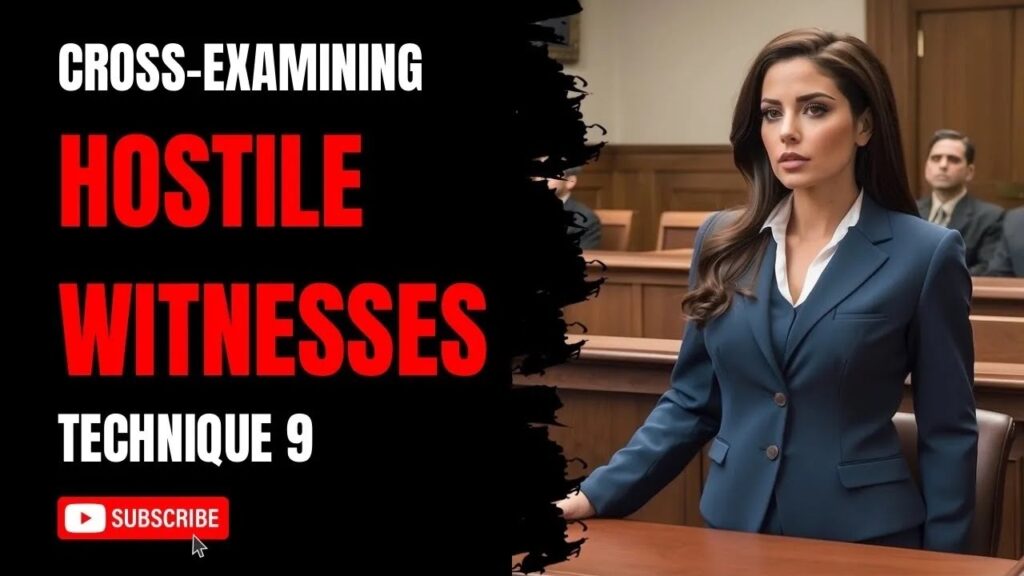
Cross-examination is one of the most powerful tools in a trial attorney’s arsenal. But what happens when a witness becomes evasive, long-winded, or outright difficult? Controlling such witnesses requires skill, patience, and a strategic approach. In this post, we’ll explore insights from military defense lawyer Michael Waddington’s video Kick-Ass Cross Exam Technique 9: Controlling Difficult Witnesses on Cross-Examination, breaking down his proven method to maintain control and keep your case on track.
Why Controlling Difficult Witnesses is Crucial
Witnesses who ramble or evade answering questions can derail the flow of cross-examination, confuse the jury, and weaken your position. Especially in high-stakes cases—such as military sexual assault, false accusations, or white-collar crimes—effective control over witnesses can make the difference between winning and losing.
Michael Waddington, renowned for defending serious criminal cases in Florida, federal courts, and military tribunals worldwide, emphasizes that controlling a witness is not about intimidation but about maintaining clarity and focus. This ensures the jury understands the facts as you present them.
Technique #9: The Art of Asking “Are You Finished Yet?”
Waddington’s ninth cross-exam technique is deceptively simple yet highly effective: when a witness starts to ramble, interrupt politely but firmly by asking, “Are you finished yet?”
Consider the example Waddington provides. When a witness starts giving an irrelevant and long-winded explanation—about a busy bar, a late night, missing staff, broken entrances, and even raccoons stealing hot dogs—the attorney cuts through the noise with a calm, controlled question: “Are you finished yet?”
This question serves multiple purposes:
- Regains control: It signals to the witness and the court that the attorney is steering the conversation.
- Prevents evasion: It discourages witnesses from dodging the question or providing unnecessary details.
- Focuses the record: It allows the attorney to bring the witness back to the specific point relevant to the case.
Why This Technique Works
Cross-examination is a delicate balancing act. You want to appear respectful and professional while firmly controlling the narrative. By asking, “Are you finished yet?” you maintain courtroom decorum without allowing the witness to monopolize the floor.
This approach also highlights the attorney’s preparedness and confidence. It underlines that you are not afraid to interrupt when necessary—a critical skill when dealing with witnesses who may try to overwhelm the jury with irrelevant information.
Additional Tips for Managing Difficult Witnesses
While Waddington’s technique is powerful, effective cross-examination often requires a multi-faceted approach:
- Preparation: Know your witness’s testimony inside and out. Anticipate evasions and prepare concise, pointed questions.
- Stay calm and composed: Difficult witnesses may try to provoke or frustrate you. Maintaining composure strengthens your credibility.
- Use closed-ended questions: Questions that require a simple “yes” or “no” limit the witness’s ability to stray off topic.
- Pause for effect: Silence can pressure witnesses to answer succinctly.
- Repeat or reframe questions: If a witness dodges, calmly ask again or rephrase to clarify.
Context: Why Military and Criminal Defense Cases Demand These Skills
Michael and Alexandra Waddington specialize in tough cases like military sexual assault under Article 120 of the UCMJ, false accusations, and complex criminal defense matters. In these arenas, witnesses can be especially challenging—whether due to the sensitive nature of the allegations, high emotions, or attempts to manipulate testimony.
Mastering control over witness testimony is vital to ensuring a fair trial and protecting the rights of the accused. It also helps to prevent the court record from becoming muddled with irrelevant or misleading information.
Conclusion: Take Control and Win Your Case
Controlling difficult witnesses during cross-examination is a skill every trial attorney should master. Michael Waddington’s technique of asking “Are you finished yet?” provides a simple yet effective tool to maintain control, focus the testimony, and convey confidence in the courtroom.
Remember, cross-examination is about precision and discipline. By preparing thoroughly and using strategic interruptions, you can keep difficult witnesses in check and present your case in the strongest light.
If you or a loved one faces serious criminal accusations, especially in military courts, experienced legal counsel like Michael and Alexandra Waddington can provide aggressive and knowledgeable defense. Contact their firm, González & Waddington, LLC, for expert assistance.
Learn More:
- Watch the full video: Kick-Ass Cross Exam Technique 9: Controlling Difficult Witnesses
- Visit ucmjdefense.com for legal resources and consultations.
Full Transcription
Video transcript: Cross-Examination Technique 9: Are You Finished Yet?
Transcript of the video “Cross-Examination Technique 9: Are You Finished Yet?,” with Michael Waddington of Gonzalez & Waddington.
Read the full transcript of this video
My name is Michael Waddington, and I’m a trial attorney. In this class, I’m going to teach you how to control difficult witnesses on cross-examination. Technique number nine: “Are you finished yet?” And here’s an example.
“Mr. Bouncer, when they left the bar, they were holding hands?” “That was a long time ago. It was a late night, the bar was packed, it was cold.
My manager asked me to help tend the bar. Jimmy didn’t show up to work until two hours late, and we were down a barback. And then the back entrance was broken open by some thieves, and some raccoons came in and stole all the hot dogs, blah, blah, blah, blah, blah.” “Are you finished yet?”
“Blah, blah. Yeah, I’m done.” “Okay. Going back to my original question: you told the police that when they left the bar, they were holding hands.
What is your answer to that question?” If you like our content, like and click subscribe below.
Video transcript: Cross-Examination: 9 Ways to Control Difficult Witnesses
Transcript of the video “Cross-Examination: 9 Ways to Control Difficult Witnesses,” with Michael Waddington of Gonzalez & Waddington.
Read the full transcript of this video
Welcome, everyone. My name is Michael Waddington, and I’m a trial attorney. In this class, I want to teach you how to control difficult witnesses on cross-examination, and I’m going to be teaching you the nine anxiety-proof techniques that I’ve developed over the past 22 years as a trial attorney. So let’s get started.
I want to start off with this quote from Mark Twain: “Never argue with stupid people. They will drag you down to their level and then beat you with experience.” I found that to be pretty typical when you’re battling it out with a witness that is just argumentative, not that smart, and they think that they’re on an episode of Judge Judy as you’re trying to cross-examine them. Now, a lot of people get flustered when they encounter a witness that is combative, rude, disrespectful, someone who just refuses to answer questions.
The good news is those folks are easy to deal with, and it’s easy to destroy their credibility, so long as you don’t lower yourself down to their level, take the bait, and start getting into a bickering contest with them. At trial, credibility is key. The credibility of the lawyers, of the legal team that is on your side, the credibility in front of the judge, in front of the jury, just overall credibility can make or break a case. Now, that includes the credibility of the witness on the stand.
Our goal as a cross-examiner is to maintain credibility, elicit information that can be used in our case, whether to discredit a witness or build up portions of our case or facts that we want to prove, and to sit there and watch that witness, if possible, destroy their own credibility. Now, I’m going to give you some examples of how witnesses do that and how you, as the lawyer, can rise above and outshine that witness and basically watch them self-destruct. In every case, whether it’s a civil case, a criminal case, a family law case, it doesn’t matter, you want to look at your opponent’s case, identify the weaknesses in their case, and identify the strengths in their case, and do the same thing for your case. Identify your strengths and weaknesses.
And you then want to pinpoint the weaknesses of your opponent’s case and attack those weaknesses. You spend as much time as possible and energy attacking and destroying weaknesses and exploiting them. The more time you spend on a subject area in front of the jury or the judge, the more important it becomes. By attacking your opponent’s weaknesses, it often pulls them into a defensive position where they’re trying to defend against all the weaknesses, you know, the lies, the inconsistencies, the missing evidence, whatever the weaknesses are.
You want them defending and scrambling as you attack, attack, attack. Rather than attacking their strengths. They would love if you had tried to attack their strengths. What it would end up happening is you would probably lose credibility, and they would become unlodged.
They would stay in their position and easily defend against your attacks. That’s why we attack what is weak and avoid what is strong. These techniques that I’m going to teach you apply to any type of case. It isn’t just criminal law.
It isn’t just civil law. It is any type of case, from an administrative hearing in immigration court to a felony murder trial to a case over millions of dollars, a truck accident case, a divorce case. These techniques apply to any time that you have to question a difficult or opposing witness, someone you have to cross-examine. Now, I want to briefly talk about impeachment with bad personality.
Now, I have a whole series of cross-examination videos that deal with impeachment and deal with cross-examination, but I will tell you, this is one of my favorites. It’s not something they teach in law school. It is not something that you’re going to read about in very many books, no books that I have seen. But it’s basically when you’re cross-examining a witness, you want their personality, their bad personality, rudeness, arrogance, inability to answer question, bias, foolishness, whatever it is, attitude, to shine and be spotlighted so the jury doesn’t like the witness.
If the jury doesn’t like a witness, they’re less likely to really find in favor of that witness. They’re less likely to believe the witness. They’re going to be more concentrating on all these aggravating flaws in this witness’s demeanor, the way they speak, what they say. Like, for example, they refuse to answer questions, a simple question, you’ve got to keep repeating the question.
That witness is digging their own grave. So let them. Give them a shovel. Give them two or three shovels and help them dig their own grave.
In this class, we talk about controlling difficult witnesses, and I want to remind the lawyers out there that just because a witness is sassy, arrogant, witty, they have a smart answer for everything that’s said, they have a quick comeback, they tell jokes, that does not mean they’re scoring points with the jury. Just because the jury’s entertained by some clown on the stand acting like a fool does not mean that you are losing. So don’t match these witnesses that are acting this way. Don’t match them.
You have to maintain credibility and remain calm and focused on getting the questions that you’re asking answered by that witness. And when we talk about this, the witnesses that are sarcastic and they have comebacks, again, like they think they’re on one of these reality TV shows like Judge Judy, but in reality, those people that I’m talking about, they don’t have a good demeanor. And a demeanor is defined as your outward behavior: the way you stand, talk, react, your facial expressions, and a whole bunch of other factors that really, when you’re looking at someone, you’re watching them and you’re determining, what is this person like? What are they about?
And you’re reading their micro-expressions, how they answer, how they don’t answer. All those things tie into a person’s demeanor. You want the difficult witnesses that you’re cross-examining to have bad demeanor, or demeanor that is not likable. Here’s the golden rule.
This comes from my 21 rules for preparing your client to testify: lose the attitude. If you’re testifying as a witness and it’s your witness, they need to lose the attitude. However, when the witness that you’re cross-examining has an attitude, has a bad attitude, has an attitude of arrogance, or whatever the bad attitude is, let them have that attitude. You want to shine a light on that bad attitude.
And so when I say the golden rule is to lose the attitude, that applies to your witnesses, and we want to magnify the attitude of hostile witnesses. And as we go through these questions, the ways and techniques to control the witnesses, I want you to remember, you have to control your attitude as the lawyer. You become flustered, you become angry, you become emotional, fearful, any of those things are bad for asking questions, are bad for cross-examining. If you’re scared, if you’re angry, if you’re anxious, the jury can see that, because it’s just you standing up there and it’s that witness.
You want the focus to be on their refusal to answer questions and their bad attitude instead of it being focused on your fear and anxiety. So in this class, I really want to show you how to approach witnesses with a calm demeanor, without anxiety. It’s doable, believe me. You’re going to be a little bit anxious, but not at the level of anxiety that a lot of lawyers have.
Even experienced lawyers, they freak out when they get thrown in there and they’re in there cross-examining a witness that’s giving them a hard time. I’ve seen very experienced lawyers crumble, miss very important facts, move on, and they look clearly flustered during their cross-examinations, when it doesn’t have to be that way. So, cross-examination basics. This is not an in-depth class on cross-examination, the fundamentals, or even an advanced cross class, but I would be remiss to not remind you of a couple factors that will make a huge difference in whether or not you can control a difficult witness.
Number one, you want to use leading questions. You want to ask questions that suggest the answer. You want to insert one new fact per question, one new fact per leading question. You don’t want to put three, four, five facts in there.
You can’t get an answer, to consistently and properly answer yes or no, to questions that have multiple facts. Insert one new fact per question. Always use leading questions. They should be as simple as this: You were born in 1947.
You were born in September. You were born on September 20th. m. on September 20th, 1947.
And you could always add in facts that have already been agreed to, but generally, you want to stick to one new fact per question. Your questions should follow a logical progression towards specific goals. This is called the chapter method. What I’m describing is a two-minute summary of the chapter method that comes from Cross-Examination: Science and Techniques.
That’s like the Bible of cross-examination. I recommend that anyone who’s cross-examining buy that book. You want to use what’s called the chapter method. Here’s an example.
Cigarette butts can contain DNA. That is the point you’re trying to make. Let’s say you’re trying to show that the law enforcement didn’t do a thorough job. They jumped to conclusions and targeted your client, and they didn’t check the cigarette butts at the crime scene for DNA.
And here would be a sample if you’re trying to establish that point, cigarette butts contain DNA. You could ask questions that are leading, that are geared towards proving that point. And now, this is a series of questions targeted towards establishing a specific goal or point. When a person smokes a cigarette, they can transfer saliva to the cigarette butt.
Saliva can contain DNA. There are skin cells in saliva. Skin cells contain DNA. Therefore, used cigarette butts can contain DNA.
On used cigarette butts, the DNA is typically from saliva. DNA testing of cigarette butts can help link a suspect to a crime scene. And that’s just a simple example. You can do it with any type of case.
You want to break down, when I talk about weaknesses, you want to break down the opponent’s case into weaknesses, and each weakness, or each fact that you want to establish, each point, each cluster of facts that support a point, should be grouped into this chapter method. And that is an example right there. So if you’re not asking leading questions, if you’re asking questions that have a lot of facts in there, adverbs or adjectives, or it’s compound, it’s very difficult to get a witness repeatedly to answer yes or no. The witness is scared, they might just say yes, yes, yes to everything.
But I’m talking about being prepared to cross-examine sophisticated witnesses, you know, opposing experts, professional witnesses, law enforcement, someone who’s very hostile and very well coached, like the spouse in a divorce case, something like that. People that aren’t going to just say yes, yes, yes. That is not a good tactic, getting to the yes, yes, yes, yes, and then hope they say yes. You have to break down your questions in order to control.
Use small questions, one fact per question. The other thing is, to control witnesses, you have to have your impeachment resources ready. That can include reports, statements, learned treatises, or books. In a medical malpractice or other types of cases where you’re going to impeach an expert with a journal article or a textbook, you need to have your materials ready.
Or let’s say it’s a divorce case and you’re trying to impeach one of the spouses with some text messages that were sent. Have that stuff ready. Have that stuff ready. You don’t want to be fumbling around through your folders, dropping things on the floor.
I see this all the time. It happened in the Johnny Depp trial. Have your stuff ready. Know what you’re doing.
Know what you’re talking about, or you lose credibility. So have those things ready to go so you can impeach on demand. When you’re cross-examining a witness, you’re asking the questions. Do not take the bait and answer questions posed by witnesses.
I’m not talking questions such as, “Can you please repeat the question? I don’t understand.” I’m talking about questions that are meant to divert the lawyer off of the witness giving an answer. So you’ve got to be listening and watching.
If the witness is not wanting to answer, they’re non-responsive, that’s a good sign. That’s a sign they don’t want to answer. They’re being evasive. Now you need to, like, focus in like a laser beam and repeat the question.
When it comes to gaining and maintaining witness control, you have to use the same system, meaning you ask a question, it’s leading, it’s one new fact, consistently. Because you can lose control if you’re asking leading questions, you’re doing a great job, and then you just start, you know, ad-libbing it and throwing out a bunch of open-ended who, what, when, where, why questions, or you start bantering back and forth with the witness. Don’t do that. You have to maintain control.
One of the ways you do it is by staying consistent. Here’s an example of how you have to be. You have to be like a puppy with a slipper. They just don’t want to give it up.
Now, I’m not saying that you belabor a point. Once your point’s made, move on. But what I’m referring to is when you ask a question that you need to have answered, that you want to have answered, and the witness won’t answer the question. Be carefully listening in, because when they don’t want to answer the question, that’s a clue to you that they’re trying to throw you off the scent, that they don’t want to answer the question, or that they’re trying to bury their answer in equivocations.
Don’t just move on. I see this a lot. You get to ask the witness a question, the witness gives an evasive answer or gives a smart-aleck answer, and then the lawyer says, “Oh, I’ll just move on.” Or you draw an objection: “Oh, I’ll just move on.”
Why are you asking the question if you didn’t want it answered? You shouldn’t be asking questions that you don’t want and need answered. So because you draw an objection doesn’t mean you should give up the point and move on. That is a sign of weakness.
I strongly recommend you don’t do that. Now, if the judge says, “That has been asked and answered, move on,” then move on, right? But sometimes you’ll get an objection, the judge will say move on. If it’s something you need to have answered, you need to make the record and come at it from a different way, but you need to get that question answered.
Here’s another tip: don’t back down until the witness answers the questions. You could be on one question for 3 to 4 minutes, and it could be uncomfortable, and you may be thinking, “Oh my God, the jury wants to go to lunch. I keep asking the same question. The witness won’t answer it.”
If you’re asking one new fact per question and the witness won’t answer, then you need to continue on. There’s always exceptions. And not back down until they answer the question. Because I’ve had it where I’ve asked questions five times, the same question, and then the prosecution will say, “Objection, asked and answered,” or “He’s asked this question,” and often the judge will say, “He has, but your witness refuses to answer.”
So keep that in mind as well. The judge is listening too. Now, if the witness is answering, obviously you don’t want to keep re-asking the same question, and be aware of that too. You have to potty train your witnesses, your cross-examination witnesses, the opposing witnesses.
I know you don’t usually, you don’t know the witness. Maybe you had a chance to interview them, maybe not. Maybe you deposed them, maybe not. Maybe this is the deposition.
You have to potty train the witnesses, and it’s as simple as this: You ask a question. It has a fact. The witness listens to the question, listens to the fact, and gives a yes or no answer to that fact. Anything else will cause the question to be repeated.
After you do it a few times, and the witness gives a sarcastic smart-aleck response or is evasive, and you keep coming back to the question, the witness will learn, if they have any sense: “Hey, this is how it works. Lawyer keeps asking. They’re not going to stop asking until I answer.” Hopefully then you start getting yeses, or the witness destroys their own credibility.
Here’s another technique that I see on YouTube videos, and I see in movies, and I’ve seen it in court a few times. Don’t turn to the judge and ask the judge to help: “Your Honor, please order them to answer my question.” You want to lose credibility fast? Do that.
Because it looks like you’re not in control. It also, if the judge comes back and says, “Hey, you’re the one doing the cross. Maybe you should ask better questions,” because I’ve heard judges say that too, or, “If your questions weren’t so compound and convoluted, the witness probably would answer your questions. Why don’t you try starting over?”
You don’t want to be that lawyer that does that and then you get a response like that back. You should be able to control your own witnesses, even the nastiest witnesses, the most aggressive witnesses. Those are the most fun ones. And you should be able to control them using your own skills.
You are the lawyer, after all. Dealing with crying witnesses. Certain cases, you end up with crying witnesses. There’s a couple ways to handle that.
If you ask a question, the witness keeps crying, what I generally do, and it depends, okay, what I generally do is I’ll stop. I’ll take not a recess, but a break. Go back to my folders on my desk, let the witness finish crying, and maybe say, “Are you okay with proceeding?” What I wouldn’t do is start yelling at the witness, because you could really turn off a lot of jurors that way.
And I also wouldn’t immediately run up there with the box of tissues, because that looks to me, I think, a little disingenuous. But I also wouldn’t immediately call for a recess either. Sometimes the witness is crying out of pure emotion. Sometimes the witness is crying because they’re about to get impeached and they know it.
So again, let them cry it out. I find that juries have a certain bandwidth. They can only take so much emotion, especially if they don’t really like the witness. And the witness keeps crying, that tends to annoy jurors.
So don’t immediately assume, because the person’s crying, that you need to quickly get them out of the room, although that could be an option in certain situations. Sometimes the judge will ask for that as well. When the witness is silent, often you should wait for their answer. People blurt out all sorts of stuff during the silence.
And I had a case about six months ago where I asked a question, and it had to do with two people going to a bar and whether or not the one witness wanted to go to the bar and hang out at the tequila bar. I asked the question about them going to the tequila bar, and the witness knew that no matter what they said, they were in trouble, because then I had various other crosses stemming out of that. And so the witness just sat there, and we sat there, and I was tempted to say, “Did you understand my question?” But we went for a couple minutes, and the judge looks at the witness and says, “You going to answer the question?”
“Oh, yes, yes, Your Honor.” “Okay, go ahead and answer it.” Or sometimes they’ll say, he or she will say, “Hey, Mr. Waddington, why don’t you repeat the question?”
And then I’ll do it, and then the witness is now really in the spotlight. So just because there’s silence doesn’t mean that you should always talk first. Often you can use the silence against a difficult witness. All right, let’s get into it.
Taking on hostile witnesses. Once you learn some of these techniques, you’re going to look forward to each and every opportunity that you have to cross-examine a hostile witness, rather than being nervous or scared or afraid of what they’re going to say. You can use these techniques. Now, with these materials, you’re going to get this list, and you’ll get these slides if you signed up and paid for this course.
Bring them with you. Maybe tape them on the inside of one of your folders, or just print it out and bring it into court with you. That way you don’t forget. Here are the nine techniques.
Again, you’re going to get a copy of them, and these are techniques that go in order of escalation. So the first technique, number one, is very basic, very simple. That’s repeat the question. That’s at the low level.
It’s, like, not super aggressive at all. It’s pretty calm. It’s pretty benign. As you get up to levels seven, eight, nine, it starts getting more and more aggressive, and you should only jump up to those higher levels if the witness continues to be difficult and continues to evade you.
You don’t want to come right out of the gates and start hitting him with the number seven, eight, or nine, or you look like a jerk. The jury or the judge has to be there with you on this journey of impeachment, or on potty training. They have to see what you’re doing. You don’t go from 0 to 60 immediately.
Technique number one: repeat the question. That’s pretty simple, and it’s the best technique for controlling hostile witnesses, so long as it’s one new fact per question, a leading question, and it’s a very basic question that elicits one fact. If, again, you can’t just repeat the question, repeat the question, if the question is convoluted and it’s like a super, super long question that doesn’t even make sense. Keep your words simple.
Keep your questions very, very factual and direct. Those are fundamentals to controlling hostile witnesses. So now I’m going to give you a couple examples as I go through this. Here’s an example of repeat the question in a divorce case.
“The day your husband asked for a divorce, you drained the bank account.” “It was a joint account.” That’s a non-responsive answer. “The day your husband asked for a divorce, you drained the bank account.”
Answer: “I work too, and I earn more than he does. I don’t really see your point.” Non-responsive. “The day your husband asked for a divorce, you drained the bank account.”
“Is that a crime?” And then you just continue to repeat the question. Now, “Is that a crime?” I’ve had that happen, where you ask a witness a question and they say, “Am I on trial here now, counsel?”
You don’t say, “No, you’re not on trial. I’m sorry, I’ll move on.” You listen to the question, ignore the question, and repeat your question. Don’t engage in banter back and forth with the witness.
That’s what they want. Don’t take the bait. Here’s a criminal law one. This is an assault case.
Somebody’s assaulted at a house, and you ask the witness, the victim: “After the assault, you returned to his house.” “What was I supposed to do? I left my phone there.” Well, that’s not a yes or no, and it really doesn’t answer the question.
“After the assault, you returned to his house.” “I needed my phone for work.” “After the assault, you returned to his house.” “Man, I don’t know what you’re getting at.”
And so forth. Here’s a real quick one, another follow-on to that last one. Assume you got a yes. “You returned to his house alone.”
“I didn’t want to wake my roommate up.” “You returned to his house alone.” “I didn’t know who else I could call. I mean, what are you attacking me for, lawyer?”
“You returned to his house alone.” And that’s, by the third try, that is about how I ask the question. Slow it down. You could even use their first and last name: “Jonathan Smith, after the assault, you returned to his house alone.”
And see what you get as an answer. If they keep being non-responsive, again, they’re destroying their own credibility. And we win a lot of cases where the facts are there, the evidence is there, and the witnesses just do a terrible job. The jury hates them.
They don’t like them. They don’t trust them. And they’re less likely to find for someone that they don’t like, they don’t trust, and they dislike because of whatever reason. So don’t give them that excuse.
Here’s a car one. “At the time of the accident, you were talking on your phone.” “Actually, my phone was connected through CarPlay.” That was really not responsive at all.
“At the time of the accident, you were talking on your phone.” “Like I said, my phone was hands-free.” “At the time of the accident, you, Jonathan Smith, were talking on your phone.” “I was more listening to my friend vent.
Her boyfriend had just dumped her.” This could go on forever, but what ends up happening is the witness is losing credibility. This is one question. Imagine 2 hours later, and the witness is this evasive throughout.
They’re going to hate the witness. So that’s technique number one, repeat the question. Now, technique number two: you repeat twice and then reverse. This one is one of my favorites, because I usually get the answer I need by the reversal.
And here’s an example. You repeat the question twice, like we did before. You repeat, you repeat. “You went to Cancun with Sally, the mistress.”
“The Cancun trip was a business trip, counselor.” “You went to Cancun with Sally.” “It was for an automotive conference. I’m not sure if you’ve ever been to one of those, Mr.
Waddington.” Now comes the reverse. “You have never been to Cancun with Sally.” “Well, I did, but it was a work trip.”
So now the jury knows that the person was refusing to answer the questions. They know that the guy’s making excuses, because he’s saying it’s a work trip. Then you can pivot from there. Follow-on would be, “In Cancun, you slept in the same bed as Sally.”
Here’s a criminal case. “After Johnny tried to kill you, you returned to his house.” “What was I supposed to do? I left my phone there.”
“After Johnny tried to kill you, you returned to his house.” “I needed my phone for work.” Here comes the reversal. “After Johnny tried to kill you, you never returned to his house.”
“Well, I did, because I needed my phone.” “Yes, you returned to his house.” “Yes.” Same thing.
“You returned to his house alone.” “You returned to his house alone.” “When you returned to his house, you brought someone with you.” So that’s the reversal.
You basically reverse the first two questions and make it a negative. Here’s another example, personal injury. “After the surgery, the doctor told you to not climb stairs for one week, correct?” “The week after the surgery, you climbed the stairs.”
“I live by myself. I don’t have many options. I don’t know if you know what that’s like.” “The week after the surgery, you climbed the stairs.”
“I followed her orders to the best I could.” Here comes the reversal. “The week after the surgery, you never once climbed the stairs.” “No, I did, but I was careful.”
And so you’re getting them to concede the points. You can also use this technique to set up a witness for an impeachment. So here’s an example I threw in here for, you’re setting them up for a prior inconsistent statement impeachment. ‘” “I talked to Julie all the time.
She’s my best friend. I’m not really sure where you’re going with this.” ‘” “I’m not sure I used those exact words, or what I said. I don’t really, I’m not even sure where you’re going with this.”
‘” At that point, if she says, “No, no, I actually did tell her that. I did tell Julie that,” well, then you’ve gotten your point across. You made your point. If she says no, or “I don’t recall,” you can impeach her with Julie, or with a sworn statement, or with whatever other impeachment material you have.
So these rules can morph into impeachments. They can set up witnesses. But you have to control yourself and control the witness with these questions. Here’s technique number three: “So your answer to my question, [insert question], is yes or no?”
This is up there with my top two. The reversal, repeat, repeat, reverse, is my first favorite. This is my second favorite technique. It can be a lot of fun, and it can really nail down the witness and leave them with really nowhere to turn but to answer your question, and it helps you gain and maintain credibility.
Here’s a family law example. “During your visitation, you told your children that their mother was a dirty [ __ ].” “Well, she is. Running around town with a new guy every week.”
“So your answer to my question, you told your children that their mother was a dirty [ __ ], is yes?” “Yeah.” Here’s one with a criminal law. “After Johnny tried to kill you, you returned to his house.”
“What was I supposed to do? I left my phone there.” “So your answer to my question, after Johnny tried to kill you, you returned to his house, is yes?” “Yes.”
“That is the answer to my question. You returned to his house alone.” “Well, I didn’t want to wake up my roommate.” “So the answer to my question, you returned to his house alone, is yes?”
There’s a family law one, another one. “You spent the child support payments on your girlfriend’s breast implants.” “It was my money to spend.” “So your answer to my question, you spent the child support payments on your girlfriend’s breast implants, is yes?”
Here’s another example, doctor. This is with personal injury. “Doctor, the improper placement of a feeding tube into the lung can result in asphyxiation.” “The improper placement of a tube can cause a variety of injuries, counsel.
Asphyxiation is one of those injuries. The complications inherent in this type of situation are plentiful and complicated, asphyxiation being one such potential outcome.” So now, here comes the technique. “So, Doctor, your answer to my question, the improper placement of a feeding tube into the lung can result in asphyxiation, is yes?”
Moving on to number four. Technique number four: true or false. You know, when we were kids, we would take these tests, the true or false tests. They’re always pretty fun.
Some are super tricky and not so fun, but most of them were, those were the easy ones on our middle school test, the true or false. So what I’ve done is I’ve converted the true or false questions into cross-examination questions. For example: “Officer, your report makes no mention of Johnny slurring his speech at the scene.” “I had limited time to write all the details because my partner was out sick, and it was dark, and, yeah, yeah, but he was definitely slurring.”
“Officer, true or false: your report makes no mention of Johnny slurring his speech.” “Well, that’s true. I just didn’t have time to write it down.” So you get your answer there.
“You did not record Johnny’s interrogation.” Answer: “Per department policy, we record interviews when practicable.” “True or false: you recorded Johnny’s interrogation.” “No, we did not record it.”
And again, when witnesses are being evasive and you have different techniques to get out the truth, it keeps the jury alert, and it keeps the witness on their toes, and eventually it usually potty trains the witness to answer. And if they don’t, again, they lose credibility. Here’s another child custody example. “Guardian, you recommended that Mama get full custody of child.”
That’s assuming the guardian in your state is allowed to testify, but this is an example. And the guardian says, “Yes.” “You never performed a drug test on Mama.” “Drug testing is discretionary.”
It’s non-responsive. “True or false,” and I like to pause in between the true or false, “true or false: you performed a drug test on Mama.” “No, I did not.” “Guardian, you did not do an in-person inspection of Mama’s home.”
“She sent us photos of her apartment, and she lives in Texas.” Those are both non-responsive. See here, the witness knows what I’m getting at, but they’re not answering it, so this is a perfect time for true or false. “True or false: you did an in-person inspection of Mama’s home.”
“No, I did not personally go there and inspect the apartment.” So you get your answer. Here’s a personal injury one. “At the time of the accident, you were not wearing a bicycle helmet.”
“Counsel, a helmet is not required by law, last I checked.” “True or false, bicyclist: at the time of the accident, you were wearing a bike helmet.” “No, I was not wearing a bike helmet, but I’m not required to.” So that is a twist there.
We reversed it and mixed it into true and false. You can mix and match these to get the answers, to get responsive answers, and to control the witnesses. Here’s another real quick one. “Three days after the accident, you completed a Spartan Mud Run.”
“I’d already signed up for it, and it’s not like I really pushed it. I kind of just walked it.” “True or false: 3 days after the accident, you completed a Spartan Mud Run.” “That’s true.”
Now, moving on. This is an escalation. See, in these, five, six, seven, eight, nine, we’re escalating after techniques one through four didn’t work. And this one is “Perhaps I didn’t make myself clear.”
And you want to mix these in with other techniques, but this is like a spotlight to the jury or the judge that the witness is not answering, and also it puts the witness on alert that you’re not playing games. So here’s an example, family law. “During your Christmas visitation, Billy,” it’s his 2-year-old son, “Billy was left alone with a neighbor.” “Yeah, so what?”
“Billy was left alone for 4 days and four nights.” “My neighbor took real good care of him.” “Mr. Smith, perhaps I did not make myself clear.
The question I asked you was, Billy was left alone for 4 days and four nights. What is your answer to that question?” Here’s a criminal one. This is actually from a case I did where they brought this renowned doctor in to talk about injuries to necks and strangulation, but there were no visible injuries, and there was no CT scans or X-rays.
But the doctor wouldn’t let it go. The doctor had to try to help the prosecution. And so I asked this question: “Doctor, you saw no bruises on the victim’s neck.” “When a person is strangled, counsel, if you didn’t know, you don’t always see bruising.
Sometimes bruising appears later. Sometimes it doesn’t appear at all,” blah, blah, blah, blah, blah. “Perhaps I did not make myself clear, Doctor. The question I asked you was, you saw no bruises on the victim’s neck.
What is your answer to that question?” And then you see what the person answers. Sometimes they won’t answer the question, and 5 minutes later, the judge is exasperated. There’s nothing better than having the judge slam down his or her hand and say, “Will you answer the question?
What are you doing? Answer the question.” And that’s pretty rare, but it happens. But that’s when the judge is exasperated.
The judge is thinking, “What is going on here? This person just is being evasive. I’m not going to be here all night because of this person.” Here’s another example, civil case.
“Doctor, you tested the water at the school.” “Yes, counsel, I already said that.” “According to your test, there was mercury in the water.” “This type of test is not always 100% accurate.
It depends on a lot of factors, counsel. As I already explained, the testing is sometimes,” blah, blah, blah. Your follow-up is, “Doctor, perhaps I did not make myself clear. The question I asked you was,” put a little pause in there, “according to your test, there was mercury in the water.
What is your answer to that question?” Now, here comes technique number six: “Did you hear the question I asked? What was it? What is your answer to that question?”
This is for witnesses that just, they’re not even in the ballpark of responding or trying to respond. They’re just blabbing on. And I use this more often than you would imagine. And here’s how it goes.
Talk about reining in a witness and making them look dumb when they’re just being non-responsive. Now, again, you don’t want to start off like this. You want to work your way up. Here’s a case where alleged victim claims a crime occurred.
There would have been evidence on the phone between the victim and the defendant. The police asked to see the messages on the phone. Victim refuses for various reasons, some of which are exculpatory. So here’s how it goes.
“The investigator asks to search your phone for text messages between you and the defendant.” “Yes.” “You refused to let the investigator see the messages.” “I need my phone for work.
I can’t just let the police rummage through it. Ever heard of privacy rights? People like you are the reason victims don’t want to come forward.” “Did you hear the question that I asked you?”
“Yes.” “What question did I ask you?” And I like to ask these questions and stop. Don’t keep blabbing.
“Did you hear the question I asked you?” “Yes.” “What was that question?” And then now the spotlight is back on the witness.
And then often a witness will say, “I don’t remember. I don’t know.” Then you say, “My question was, you refused to let the investigator see the messages between you and the defendant. What is your answer to that question?”
And by this point, the jury knows a couple things. The witness is being rude and disrespectful to the lawyer. They don’t want to answer the questions. They already know, from the opening statement possibly, that this alleged victim destroyed evidence or didn’t let the police see evidence that could show potentially your, the defendant’s, innocence.
And it’s relevant, okay? They want to know what was in these messages. And when this person’s being evasive, they’re really just hammering home that this person is trying to obstruct justice, or, you know, intentionally didn’t let the police see what was in the messages for a reason. Technique number seven: “There are a lot of things you want to tell the jury.”
So in technique number seven, I’m going to give you an example here, family law. “When you left your son with your neighbor for 4 days, you went to Reno.” “Yeah.” “You went to Reno with Amber.”
That’s his new girlfriend. “I went to Reno because I have a lot of stuff on my plate. You know what his mother put me through? I work my ass off, and I deserve a break too.
You know what she’s doing with the child support payments that I pay? Let me tell you.” At this point in time, you could let them blab, or you could just interrupt them and say, “Excuse me, Jimbo. I understand there are a lot of things you want to tell the jury,” or the judge, “but my question was, you went to Reno with Amber.
What is your answer to that question?” And you stop and wait for them to answer. Here’s technique number eight. When the witness just won’t answer yes or no, you can sometimes use this technique: “Does something prevent you from answering yes or no?”
You’ve got to make sure the answer to that question isn’t, “Yeah, your questions have, like, 30 new facts. You won’t let me finish, and they’re really horrible questions because they’re compound, and I don’t understand them.” If you’re following my original rules, the original basic rules of cross, one fact per question, one new fact per question, always leading, geared towards specific goals, you won’t have this problem. Here’s an example in a civil law case.
This is kind of based on the Amber Heard, Johnny Depp situation. “Amber, you testified that you donated $7 million to the children’s burn hospital.” “Yes, I did donate $7 million to the hospital. Those children need that money.
Have you ever seen those children? There’s such sadness in that hospital.” “You donated that money in 2017.” “Yes.”
“As of June 2022, none of the $7 million has been transferred to the hospital.” “You obviously don’t understand how charitable donations work. When you make a donation, the hospital has pledged that amount, and they receive the money as part of the donation. And I wanted really to donate it because I really needed and wanted to help those children.
I had to help those children.” This would be a time when you would say, “Amber, is there something about my question that prevents you from answering yes or no?” “No.” Repeat the question.
“As of June 2022, none of the $7 million has been transferred to the hospital.” And again, this is an escalation. And I know this isn’t exactly what happened in the case. There was some money donated to the hospital, allegedly never got put into the hospital’s hands, but this is loosely based on the trial for demonstrative purposes.
Technique number nine: “Are you finished yet?” Now, this is, again, the end of the line. I’ve done this on witnesses that just are so non-responsive, the judge is exasperated, the jury, like, throwing their pens down on the paper, and they’re just fed up. And now you can be a little more at liberty with how you act and react.
This works in any type of case. In this case, it could be people met at a bar, they went back to an apartment, some allegations are made, and it’s a civil or criminal case, basically of assault or something of that nature. But this is the questioning of a bouncer. “Mr.
Bouncer, when they left the bar, they were holding hands.” “There were a lot of people coming and going out of the bar that night. I mean, it was a Friday night. We were so busy.
We were just trying to keep our heads above water.” “When they left the bar, they were holding hands.” “That was a long time ago. It was a late night.
The bar was packed. It was cold. My manager asked me to help tend the bar. Jimmy didn’t show up to work until 2 hours late, and we were down a barback.
And then the back entrance was broken open by some thieves, and some raccoons came in and stole all the hot dogs,” blah, blah, blah, blah, blah. “Is there anything else you’d like to add?” Blah, blah, blah. “Are you finished yet?”
Blah, blah. “Yeah, I’m done.” “Okay, going back to my original question. You told the police that when they left the bar, they were holding hands.
What is your answer to that question?” There’s other things that can be woven in there, from impeachments to setting up for someone being impeached with another witness or document, with a direct impeachment there. The sky is the limit. But the key with these nine techniques is that when you go to approach a hostile witness, or someone who’s being difficult, instead of getting anxious, you go to the nine rules and use them in that order and integrate them into your cross-examination system.
Always be calm. Always be credible. Always remember that this is a battle of credibility. Let that witness that you’re cross-examining destroy their own credibility.
Let them be the jerk. Let their personality destroy their own credibility in their own case. You don’t take the bait and lower yourself down to that level and bicker back and forth with them, because in the end, it all comes down to who’s more believable, who’s more credible, which legal team and which witnesses. Now, I want to answer some commonly asked questions.
Whenever I teach this class to other lawyers, I often get the same questions, and these are the most common ones. Number one: What if the witness simply refuses to answer your question? Well, if you ask the questions properly and you follow the rules, okay, and you’re asking the question and repeating the question, and the witness just won’t answer the question, if it’s a yes or no question, like “The car was a Porsche,” and that’s an undisputed fact in your mind, and there’s evidence there, and the witness knows that, I think that the best way to do it is to just slow the question down after you use multiple techniques that I talked about. And if they won’t answer the question after a few minutes of that, the judge is going to get fed up, opposing counsel is going to be squirming in their chair, and the jury is going to be getting annoyed.
Remember, this isn’t about you just controlling and dictating everything that’s said and how exactly it’s said. It’s about getting facts on the record, number one. And number two, it’s about letting that witness destroy their own credibility piece by piece by piece. I’ve had cases where, after a few minutes, the witness won’t answer those basic questions.
Like, for example, I had one where the witness burned my client’s passport. That was the issue. That was the question I was asking about. And we went on and on and on about whether it was burned or singed, or whether she meant to do it, but she wouldn’t ever say that she burned the passport.
And that was a case that was a close call, and after that witness’s testimony, it was a slam dunk for the defense. Next question: What if you get an objection, asked and answered? Here’s the thing. If the question is asked and it is answered, then that’s a valid objection.
What constitutes an answer? And this is where your questioning comes in, and inserting one simple fact without any adjectives and adverbs really, really matters. Because if you’re asking questions that, for example, the Porsche example I gave, “The car was a Porsche.” If it’s a Porsche, it’s a Porsche.
That’s it. It’s not a Ford. It’s not a Chevy. If the person doesn’t know, that’s fine.
They could say they don’t know, they don’t remember. That’s fine. There are techniques for that. But if they know it’s a Porsche, it was a Porsche, then repeating the question and having them be evasive, or talk about all the different cars that they know about or seen, or giving the history of the Porsche automobile industry, those are non-responsive.
Again, it goes back to, did they answer the question? Did they answer the question, yes or no, that it was a Porsche? Sometimes they’ll answer in a way that could be construed as a yes, padded with a bunch of other verbiage. Sometimes the judges will say, “Yeah, asked and answered, move on.”
And it’s okay to say to the judge, “Your Honor, I just want to be clear that the witness has conceded that the car was a Porsche.” Make sure what you’re trying to get at is important as well. Like we’ve said this repeatedly, it has to have a point, right? The point must be relevant, and it must be moving the ball down the field.
And if it is, then you should be asking the questions, and you shouldn’t be asking questions that aren’t relevant, don’t really matter, that don’t prove a fact, an important fact, one way or another. Here’s another question, and this makes a lot of lawyers anxious: What if the judge or jury get annoyed with you repeating the question and repeating the question? It comes back to this. It’s not about you.
It really is not about you. It’s about the witness. The witness is on the stage. The witness is the one answering the questions.
And whenever you make it about them and their refusal to answer the question, assuming all the other rules are followed, then it becomes about them, and it becomes about their credibility. It becomes about their integrity, their bias, whether they are intentionally misleading the jury, they’re intending to not answer, whether they’re maybe confused. It becomes about them. I wouldn’t worry too much about if the judge is annoyed.
I would be worried about whether the judge is annoyed with me because my questions are bad, they’re not relevant, and I’m being aggressive and combative and just being a real jerk to every witness. That might annoy the judge, and it might annoy the jury. But if you’re calmly asking a question, and you’re asking the question in a professional way that you want to have answered, and you want the jury to know this information, and you have to get it out because it’s part of your case and it’s relevant, then whether the judge gets annoyed is really not a problem, especially if the judge is getting annoyed and the jury is getting annoyed with that witness. I’ve had plenty of cases where I’m questioning witnesses and you’re asking them questions, especially if it’s impeachment material, and they’re fighting you and fighting you.
“Did you delete the messages from the phone?” I think we used that as an example. You either did or you didn’t. If I’m asking a question that’s very important in a case, for example, “You sent your lover nude selfies.”
Now, the person testifying should know whether they did or didn’t. And if they’re being evasive and they’re quibbling over what a selfie is, and what nude is, and what send means, that’s what we call quibbling. Quibbling is bad for the witness. If it’s your witness, it’s bad.
If it’s their witness, that’s good for you. You want quibbling witnesses. You want witnesses up there that are bickering back and forth, that are not answering, because again, it goes back to the original point of this video, of this class, is that credibility is key. Last question: What if the witness says “I don’t recall”?
If you get a bunch of “I don’t recalls,” it should be something that, again, the person should know. If you’re asking questions they shouldn’t know or shouldn’t recall, then you’re wrong. But if it’s something they should recall, then there’s other techniques to impeach your recollection. Now, if they’re using “I don’t recall” as a shield, some states are much more aggressive with how you can do that, where you can come in, if you get an “I don’t recall,” that’s basically a denial in some states, and you can straight up impeach them right then and there, which is a great way to potty train that witness and get him in line.
So don’t be afraid of “I don’t recalls.” Use it to your advantage. So here’s a recap of the nine techniques for controlling difficult witnesses. One: repeat the question, repeat the question, repeat the question.
Technique number two: repeat twice, then reverse. Technique number three: you ask the witness, after they give a non-responsive answer, “So your answer to my question, [insert the question], is yes or no?” Technique number four, one of my favorites, is the true or false technique. Technique number five is, after they answer the question, nonresponsiveness.
And technique number seven is to say, “There are lots of things you want to tell the jury,” and then bring them back to the question: “But my question to you is,” what is your answer to that question. Technique number eight is, after you get a long-winded, non-responsive answer, at this point the jury’s fed up as well, probably the judge is too, you say to the witness, “Does something prevent you from answering yes or no?” Again, make sure that there isn’t something that prevents them from answering yes or no. And then technique number nine is, after you get a long, rambling, non-responsive answer, sometimes two or three non-responsive ramblings, you could say, “Mr.
Witness, are you finished yet?” Okay, if so, let’s go back to the question that I asked you. If you have any questions or feedback, you can contact me here. If you need a copy of the slides and you couldn’t get them off the download or off the video, contact me.
Text me, call me, email me, and I will send you a copy. According to Aristotle [this line is Will Durant’s summary of Aristotle], “We are what we repeatedly do. Excellence, then, is not an act, but a habit.” That’s why you need to practice these techniques.
You need to practice them all the time. You practice them on your children, on your co-workers, on the person at the checkout line in Target. When you ask a question that they don’t answer, it’s amazing how people don’t really listen to questions, and they don’t really answer questions that they’re being asked, just in everyday life. So use these techniques.
Put a magnet on them and put them on your fridge so you don’t forget, and so you can practice, practice, practice.ally answer questions that they’re being asked, just in everyday life. So use these techniques. Put a magnet on them and put them on your fridge so you don’t forget, and so you can practice, practice, practice.
Recent Blogs
- Nonpunitive Letter of Caution vs. Punitive Letter of Reprimand: What Navy and Marine Corps Officers Need to KnowNovember 6, 2026
- First 24 Hours After CGIS Contacts You: What Coast Guard Members Should DoNovember 6, 2026
- First 24 Hours After OSI Contacts You: What Airmen and Guardians Should DoNovember 6, 2026
- First 24 Hours After NCIS Contacts You: What Sailors and Marines Should DoNovember 6, 2026
- First 24 Hours After CID Contacts You: What Soldiers Should DoNovember 6, 2026
- Is Hiring the Cheapest Military Defense Lawyer a Mistake?November 6, 2026