Joint Base Pearl Harbor-Hickam Military Defense
Short answer: Gonzalez & Waddington defends sailors, airmen and other service members at Joint Base Pearl Harbor-Hickam, in courts-martial, NCIS and Air Force OSI investigations, Article 15/NJP, reprimands and administrative separation boards. Michael Waddington is a former Army JAG prosecutor and Senior Defense Counsel with over 25 years defending service members. The firm travels to Hawaii for interviews, hearings and trials. Call 1-800-921-8607 or text 954-799-4019.
Why Pearl Harbor-Hickam Service Members Hire Gonzalez & Waddington
- Who we defend: Sailors, airmen and other service members assigned to Pacific Fleet ships and submarines and the Air Force’s 15th Wing.
- Military experience: Former Army prosecutor, Trial Defense Counsel and Senior Defense Counsel. The firm has defended thousands of service members since 2006.
- Trial lawyers: Michael Waddington tries contested courts-martial himself, including Article 120 sexual assault cases. He has handled well over 100 separation boards.
- Works with your free lawyer: You keep your free detailed military defense counsel, and we work alongside them.
- Off-base arrests: An arrest in Honolulu or elsewhere on Oahu can also lead to military action, such as a reprimand or separation.
- NCIS or Air Force OSI wants to interview you: You have the right to stay silent. Call a lawyer before any interview.
For military defense guidance covering all of Hawaii, see our Hawaii court-martial lawyers page.
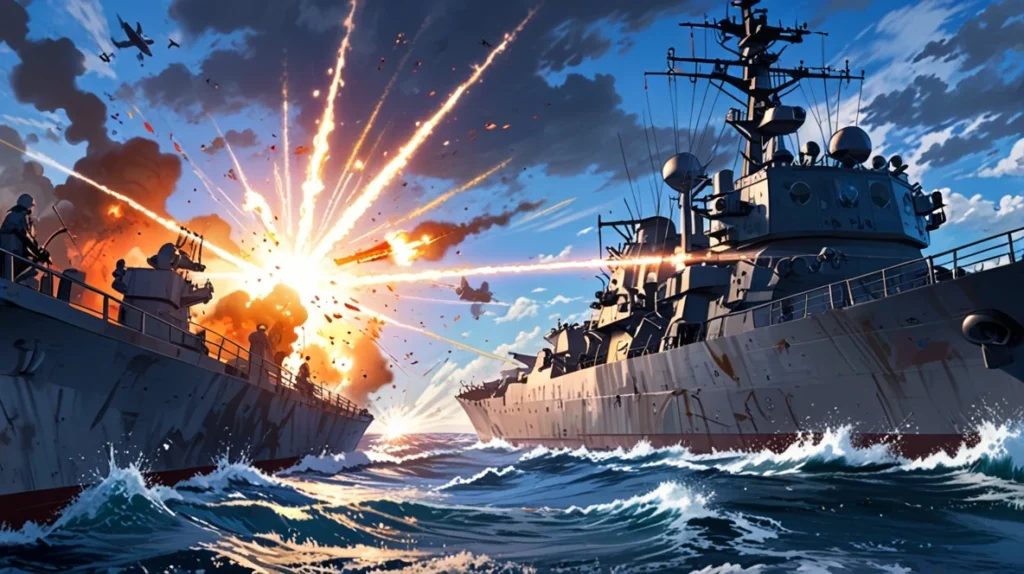
Court-Martial and UCMJ Defense at Naval Base Pearl Harbor
Naval Base Pearl Harbor is part of Joint Base Pearl Harbor-Hickam, one of the most strategically important military installations in the Indo-Pacific. It is located on Oʻahu near Honolulu, ʻAiea, Pearl City, Waipahu, Hickam Field, Ford Island, Daniel K.
Gonzalez & Waddington defends service members stationed at Naval Base Pearl Harbor. We handle court-martial cases, Captain’s Mast/NJP and Article 15 actions, letter of reprimand rebuttals, administrative separation or discharge boards, and Boards of Inquiry.
We represent service members across:
- Pearl Harbor and Hickam
- U.S. Pacific Fleet and Submarine Force Pacific
- Navy Region Hawaii
- Surface ships, submarines, and aviation squadrons
- Joint commands and other JBPHH tenant organizations
Cases here often start with:
- Shipboard incidents, submarine or surface fleet operations, and aviation missions
- Deployment cycles and off-base housing
- Honolulu nightlife and Waikīkī hotel allegations
- Domestic calls, DUI stops, and dating-app encounters
- Digital evidence and classified or sensitive duties
- NCIS or OSI investigations and civilian police contact on Oʻahu
Call 1-800-921-8607 or text 954-799-4019 for a confidential consultation.
Pearl Harbor, Hickam Field & the Indo-Pacific Mission Environment
Joint Base Pearl Harbor-Hickam combines two historic military installations into one joint base supporting Navy and Air Force missions, tenant commands, service members, and families. The official history page explains that JBPHH combines Pearl Harbor and Hickam Field to support both Air Force and Navy missions and improve warfighting readiness and installation support. See Joint Base Pearl Harbor-Hickam History. Pearl Harbor’s historic significance is obvious, but the modern legal environment is just as important. Service members at Pearl Harbor and Hickam may work in Pacific Fleet headquarters, submarine commands, surface ships, aviation squadrons, logistics units, security forces, medical commands, joint staff organizations, or other Indo-Pacific units. Allegations may be evaluated through the lens of readiness, trust, operational security, deployability, clearance eligibility, watchstanding reliability, and mission confidence. For Sailors and Airmen at JBPHH, an allegation can affect more than one command decision. It can affect deployment eligibility, clearance, qualifications, watchstanding, flying or maintenance duties, advancement, evaluations, reenlistment, sea duty, shore duty, retirement, special duty, and future assignments. A civilian arrest in Honolulu can become a military issue. A shipboard report can become an Article 120 investigation. A domestic call can become an Article 128b case. A drug or alcohol incident can become Captain’s Mast, Article 15, or administrative separation. A command inquiry can turn into an NCIS or OSI investigation or court-martial referral.
Shipboard, Submarine, Aviation & Joint-Base Cases at Pearl Harbor
Pearl Harbor cases often involve facts that are uniquely Navy, Air Force, and joint-service. A shipboard or submarine allegation may involve berthing areas, duty sections, watchstanding, restricted spaces, pier access, deployment cycles, liberty rules, alcohol use, close-quarters living, and witnesses who may be junior Sailors, chiefs, officers, contractors, or civilian employees. A Hickam-side allegation may involve aviation units, security forces, medical personnel, airfield operations, base housing, or Air Force command structures. In Article 120 sexual assault and abusive sexual contact cases, the evidence may include text messages, social media, phone extractions, shipboard witness statements, berthing-area timelines, hotel records, alcohol evidence, delayed reports, prior relationships, civilian witness accounts, and command assumptions. In domestic violence cases, the evidence may include 911 calls, body-camera footage, protective orders, photographs, medical records, Family Advocacy records, base housing witnesses, and competing statements from spouses, partners, neighbors, or children. In drug and urinalysis cases, the government may rely on command-directed testing, probable cause urinalysis, barracks or vehicle searches, phone messages, admissions, or civilian evidence. In fraud, larceny, classified-information, or false official statement cases, the records may involve travel claims, BAH, government purchase cards, leave records, ship logs, access records, duty records, classified workspaces, or electronic submissions. For shipboard, submarine, aviation, and deployment-related cases, timing can be critical. If a ship, submarine, squadron, or unit is scheduled to deploy or move, the command may push for a quick administrative resolution. Witnesses may be unavailable later. A service member may feel pressure to accept Captain’s Mast, Article 15, give a statement, or submit paperwork without understanding how those choices may affect a later court-martial or administrative separation board.
Honolulu, Waikīkī, ʻAiea, Pearl City, Ewa Beach & the Oʻahu Civilian Environment
Naval Base Pearl Harbor and Hickam sit inside a dense military and civilian environment on Oʻahu. Service members may live or socialize in Honolulu, Waikīkī, ʻAiea, Pearl City, Kapolei, Ewa Beach, Mililani, Wahiawa, Kaneohe, Kailua, or near other installations such as Marine Corps Base Hawaii, Schofield Barracks, Fort Shafter, Tripler Army Medical Center, and Wheeler Army Airfield. That geography matters because off-base conduct often becomes part of the military case. Honolulu and Waikīkī create a broad evidence environment. A service member may be involved in a DUI stop, domestic call, hotel allegation, apartment dispute, assault allegation, bar incident, protective order, drug issue, rideshare encounter, traffic crash, beach incident, or dating-app allegation far from the pier or flight line but still face command action. Records may include Honolulu Police Department reports, Oʻahu court filings, body-camera footage, 911 calls, hospital records, hotel records, restaurant surveillance, apartment complex video, private security footage, rideshare data, and phone location records. Hawaii’s geography creates additional defense challenges. Witnesses may be tourists, contractors, visiting service members, local civilians, deployed personnel, or people who leave the island quickly. Surveillance video can be overwritten, phone data may be lost, and military witnesses may transfer or deploy. Civilian and military evidence may be scattered across the island. A defense team must preserve evidence early before the command accepts a one-sided report as the full story. The local court environment also matters. The Hawaii State Judiciary provides access to traffic, criminal, civil, family, and appellate case information through its eCourt Kōkua system. See Hawaii Judiciary Court Records. A civilian case in Honolulu can move on one track while command action at Pearl Harbor or Hickam moves on another.
How Local Pearl Harbor Incidents Become Military Legal Problems
The following examples are hypothetical. They are not claims about any actual case, command, or person. They illustrate how local facts can matter when a Sailor, Airman, or service member stationed at Pearl Harbor or JBPHH is accused of misconduct.
- Honolulu DUI: A service member leaves dinner, a bar, a unit event, or a Waikīkī gathering, is stopped by civilian police, and later faces both a Hawaii DUI case and command action — Captain’s Mast, Article 15, letter of reprimand, driving restrictions, clearance review, or separation processing.
- Waikīkī hotel allegation: A hotel stay, dating-app encounter, rideshare trip, or liberty event near Waikīkī or downtown Honolulu leads to an Article 120 sexual assault or abusive sexual contact allegation involving text messages, hotel records, location data, civilian witnesses, and competing accounts.
- Shipboard or submarine berthing allegation: A report from a berthing area, duty section, workspace, or restricted shipboard space becomes a sexual misconduct, abusive sexual contact, assault, hazing, maltreatment, or harassment investigation involving close-quarters witnesses.
- Base housing domestic call: A family argument at base housing or an off-base rental in ʻAiea, Pearl City, Ewa Beach, Kapolei, or Honolulu leads to a 911 call, police report, protective order issue, no-contact order, firearm restriction, Family Advocacy involvement, and possible Article 128b domestic violence or administrative action.
- Deployment or liberty misconduct: An incident during pre-deployment, post-deployment, port call, liberty, return from deployment, or shipboard downtime produces an allegation involving alcohol, sexual misconduct, assault, orders violations, or false statements.
- Classified or clearance-sensitive allegation: A member in a sensitive billet is accused of mishandling information, failing to report foreign contact, misusing government systems, financial misconduct, drug use, dishonesty, or conduct raising clearance concerns.
- Drug or urinalysis case: A member faces a positive urinalysis, prescription issue, suspected distribution allegation, vehicle search, barracks inspection, phone messages suggesting drug use, or allegations involving civilian contacts on Oʻahu.
- Digital evidence case: The government relies on Snapchat, Instagram, texts, deleted messages, partial screenshots, photos, videos, metadata, location data, or a limited phone extraction. Early defense work can preserve context and expose incomplete evidence.
How Civilian & Military Consequences Overlap Near Naval Base Pearl Harbor
A service member at Naval Base Pearl Harbor or JBPHH does not need to be convicted in civilian court before military consequences begin. A single incident may trigger a civilian police report, base security involvement, an NCIS or OSI investigation, a command-directed inquiry, a no-contact order, suspension from duties, a letter of reprimand, Captain’s Mast/NJP, Article 15, an administrative separation or discharge board, a Board of Inquiry, a clearance review, or a court-martial referral. Off-base cases near Pearl Harbor may involve Hawaii District Court, Circuit Court, Family Court, traffic court, or other state court systems. The Hawaii Judiciary explains that eCourt Kōkua provides access to traffic cases, District Court criminal, Circuit Court criminal, Family Court criminal, civil matters, and appellate case information. A DUI, assault allegation, domestic violence report, protective order, traffic offense, drug allegation, or civilian arrest can move through state court while the command separately evaluates military action. Federal jurisdiction may also matter in some cases. The U.S. District Court for the District of Hawaii is the federal district court for Hawaii. See the District of Hawaii. Most Pearl Harbor discipline still moves through the UCMJ and the chain of command, but some cases may involve federal property, federal investigations, firearms issues, cyber evidence, fraud allegations, child exploitation allegations, classified information, or overlapping civilian and military exposure.
The key point for a service member is practical: civilian and military consequences are separate. A local dismissal does not automatically stop a letter of reprimand. A reduced civilian charge does not automatically prevent Captain’s Mast or Article 15. A protective order can still affect command decisions. A weak civilian case can still become a career-threatening military case if the defense fails to address both the civilian record and the chain of command.
Military Law Issues for Service Members at Naval Base Pearl Harbor
Pearl Harbor and JBPHH service members may face court-martial charges, Article 32 preliminary hearings, Captain’s Mast/NJP and Article 15 actions, letters of reprimand, administrative separation or discharge boards, Boards of Inquiry, command-directed investigations, clearance reviews, detachment for cause, adverse evaluations, and other adverse administrative paperwork. The issue may begin with NCIS, OSI, base security, local police, a commander’s inquiry, a SAPR report, a barracks complaint, a shipboard report, a spouse allegation, a civilian protective order, a positive urinalysis, or an allegation from another member, civilian, family member, hotel witness, contractor, shipmate, coworker, or dating partner.
Article 120 Sexual Assault & Abusive Sexual Contact
These allegations may involve berthing spaces, barracks rooms, off-base apartments, hotels, parties, liberty events, shipboard gatherings, alcohol, dating apps, delayed reports, text messages, social media, phone extractions, rideshare records, hotel security records, or civilian witnesses from Honolulu, Waikīkī, ʻAiea, Pearl City, Kapolei, Ewa Beach, Kailua, or Kaneohe. Cases often turn on consent, credibility, intoxication, timing, witness contamination, digital evidence, and command assumptions.
Domestic Violence & Assault
These cases may involve Honolulu police reports, 911 calls, body-camera footage, photographs, medical records, protective order filings, Family Advocacy records, text messages, no-contact orders, and firearms restrictions. Even if the civilian case is reduced, dismissed, or unresolved, the command may still pursue a letter of reprimand, Captain’s Mast, Article 15, separation or discharge, Board of Inquiry, or clearance action.
Drug & Alcohol Cases
A positive urinalysis, prescription issue, suspected distribution allegation, DUI, drunk-and-disorderly incident, or alcohol-related barracks, shipboard, dorm, or hotel event may lead to investigation, adverse paperwork, or separation. For members in shipboard operations, submarine duty, aviation, maintenance, medical, logistics, security, command, or clearance-sensitive jobs, administrative consequences can move faster than the criminal process.
Fraud, Larceny, False Statements, Classified & Property Offenses
These allegations may involve government property, travel cards, TDY claims, BAH questions, hotel records, ship logs, maintenance documentation, medical records, classified systems, government computers, digital messages, or command-directed inquiries. The defense must evaluate whether the government can prove intent, whether records are complete, whether witnesses are reliable, and whether administrative mistakes are being framed as crimes.
Under Investigation at Joint Base Pearl Harbor-Hickam? Know These Rules First
Your rights in an interview with military investigators. Article 31(b) of the UCMJ gives you the right to know what you are suspected of and to remain silent, and you may ask for a lawyer before any questioning by military investigators (CID, OSI, NCIS or CGIS). Declining to answer is not an admission. At Joint Base Pearl Harbor-Hickam, as anywhere, the safest first step is to say you want to speak with counsel and then stop talking.
Being titled is not the same as being charged. Investigators can title a service member and index the name in the Defense Central Index of Investigations on only "credible information." The case may go nowhere, yet the entry can resurface years later in background investigations and clearance reviews, so how the investigation is handled from the start matters.
Your commander may not be the one deciding. Covered offenses such as sexual assault, domestic violence, stalking, kidnapping, murder, child pornography and (since 2025) sexual harassment are now controlled by an independent Office of Special Trial Counsel, which decides whether charges are preferred and referred. Other allegations at Joint Base Pearl Harbor-Hickam still go through the chain of command.
Domestic violence allegations. Article 128b covers violence against a spouse, intimate partner or family member, and an allegation of strangulation or suffocation can be charged as aggravated assault even without a visible injury. A qualifying conviction can also trigger the federal firearms ban under the Lautenberg Amendment, which can end a career that requires carrying a weapon.
Drug allegations. Article 112a of the UCMJ applies to service members at Joint Base Pearl Harbor-Hickam on post and off, separately from Hawaii law. A positive urinalysis is serious but contestable: the chain of custody, the testing process and innocent ingestion can all be challenged, and the government must prove the use was knowing and wrongful.
Pay and allowance allegations. BAH and other allowance cases are usually charged as larceny under Article 121 or as frauds against the United States under Article 124. An overpayment by itself is not a crime: the government must prove you intended to steal or defraud, and many of these cases begin as paperwork errors.
If you are under investigation at Joint Base Pearl Harbor-Hickam, talk to a military defense lawyer before you make any statement. Call Gonzalez & Waddington at 1-800-921-8607.
Working Alongside Detailed Military Defense Counsel
A service member facing court-martial generally has the right to detailed military defense counsel. Civilian counsel does not replace that lawyer — it works alongside them. Civilian counsel can bring an independent defense strategy, communicate with the family, conduct early investigation, prepare witnesses, review digital evidence, challenge weak assumptions, and help the service member understand both legal and career risks. At Naval Base Pearl Harbor and JBPHH, civilian counsel may need to review evidence from many sources, including NCIS reports, OSI reports, base security records, ship logs, duty rosters, watchbills, Honolulu police reports, Hawaii court filings, body-camera footage, 911 calls, phone extractions, berthing witness statements, command emails, counseling records, medical records, hotel records, private security records, rideshare data, social media, protective order filings, urinalysis documents, maintenance records, deployment records, weapons records, and clearance paperwork. Gonzalez & Waddington is a civilian military defense firm focused on military criminal defense and UCMJ litigation. We represent members of every branch — Army, Navy, Air Force, Marine Corps, Coast Guard, Space Force, Reserve, and National Guard. The firm defends courts-martial, Article 120/120b/120c cases, Article 128 and 128b assault and domestic violence cases, CSAM and online sting cases, investigations, Article 15/NJP actions, Boards of Inquiry, administrative separations, GOMOR and letter of reprimand rebuttals, clearance matters, and serious felony-level military cases.
Naval Base Pearl Harbor Military Defense Lawyers: Key Points
Service members stationed at Naval Base Pearl Harbor or Joint Base Pearl Harbor-Hickam may face serious military consequences from allegations that occur on base, off base, aboard ship, during liberty, or while assigned to Indo-Pacific missions. These cases can involve Navy, Air Force, Marine Corps, Coast Guard, or joint command personnel connected to the Pearl Harbor-Hickam military community. A civilian military defense lawyer can assist service members facing courts-martial, Article 120 sexual assault allegations, Captain’s Mast, NJP, Article 15 actions, letters of reprimand, administrative separation boards, discharge boards, Boards of Inquiry, and command investigations.
Key Pearl Harbor-Hickam Defense Issues
- Location risks: Honolulu, Waikīkī, ʻAiea, Pearl City, Kapolei, Ewa Beach, Hickam Field, Ford Island, and other Oʻahu military communities.
- Investigative agencies: NCIS, OSI, command investigators, local police, and civilian prosecutors may become involved.
- Evidence issues: ship logs, duty rosters, deployment records, digital messages, hotel records, rideshare data, surveillance video, gate records, and liberty documentation.
- Career risks: loss of rank, discharge, confinement, sex offender registration, clearance problems, PCS limitations, and long-term military career damage.
- Local defense concerns: Pearl Harbor-Hickam cases often involve shipboard life, aviation units, submarine commands, classified work, deployment cycles, off-base incidents, and command pressure.
Bottom line: A military defense strategy at Naval Base Pearl Harbor should account for the joint Navy-Air Force environment, the Honolulu civilian setting, Indo-Pacific operational demands, command influence, digital evidence, and the service member’s long-term career consequences.
Video transcript
Transcript of the video “Hawaii Court-Martial Lawyer | CID, NCIS, OSI & Article 120 Defense,” with Michael Waddington of Gonzalez & Waddington.
Read the full transcript of this video
If you’re stationed in Hawaii at Scoffield Barracks, Fort Shater, Joint Base Pearl Harbor Hickham, Marine Corps Base Hawaii at Kaneoh Bay, Tripler, or another military installation on Aahu, and you’ve just learned you’re under investigation, this video is for you. I’m Michael Waddington, civilian military defense lawyer and co-founder of Gonzalez & Waddington. My partner, Alexandra Gonzalez-Waddington, and I have defended soldiers, sailors, marines, airmen, officers, and senior enlisted service members in serious military cases for more than 20 years. Hawaii is different because virtually every military service has a significant presence on Aahu. That means a serious allegation may involve Army CI, NCIS, Air Force OSI, Honolulu Police, military police, civilian prosecutors, or multiple commands.
Off-post incidents can quickly produce parallel civilian and military proceedings. A Hawaii criminal case may continue at the same time as a military investigation, military protective order, flag, security clearance action, or administrative proceeding. The cases we commonly defend in Hawaii include Article 120 sexual assault allegations, Article 128 assault, Article 128 Bravo domestic violence, Article 112 alpha drug allegations, and investigations involving senior personnel assigned to Pacific commands. Here’s an example of a case that Gonzalez & Waddington has defended in Hawaii. Imagine a service member accused under Article 120 after a night in Wy Ki.
The accused denied committing sexual assault. Both parties had been drinking and the allegation was reported after the encounter. A good defense investigation would not simply wait for the government’s file. Wy Ki is full of potentially useful evidence. Hotel cameras, lobby cameras, bars, restaurants, rid share records, photographs, receipts, phone messages, and digital location information.
Some of that evidence may disappear quickly. That’s one reason early representation matters. If you’re under investigation in Hawaii, here’s where I would start. First, don’t give CI, NCIS, OSI, Honolulu Police, or your chain of command a substantive statement before obtaining legal advice. Second, don’t voluntarily consent to a search of your personal phone or accounts merely because investigators ask.
Third, if civilian police have arrested or questioned you, tell your military defense lawyer immediately. The civilian and military cases need to be coordinated. Fourth, comply exactly with any civilian restraining order, military protective order, restriction, or no contact directive. Fifth, preserve evidence immediately. If there is hotel or business surveillance that may matter, your lawyer should consider preservation efforts before it is automatically overwritten.
Service members may receive detailed military defense counsel through their branch. Civilian counsel can work alongside that attorney. At Gonzalez & Waddington, we have decades of experience defending serious military cases that require counsel, experts, and witnesses to travel worldwide. When interviewing a Hawaii military defense lawyer, ask whether the lawyer actually travels to Aahu for cases, how many courts-martial they’ve tried, how many Article 120 cases they’ve defended, and who will personally appear at trial. Our fees are generally flat fees quoted in advance based upon the case, stage, travel requirements, and expected amount of work.
If you’re facing a CI investigation, NCIS investigation, OSI investigation, Article 120 allegation, court-martial, or administrative board in Hawaii. Contact Gonzalez & Waddington. I’m civilian military defense lawyer Michael Waddington with Gonzalez & Waddington. We defend service members worldwide. You can learn more at ucmjdefense.com or call 1-800-921-8607 for a free confidential consultation.
I was wrongly accused under articles 120, 128b, and 130, and the legal battle was an incredibly draining experience. Throughout the two-and-a-half-year ordeal, Michael and Alexandra displayed unmatched professionalism, deep legal expertise, and genuine care for my case.
Prior results and client testimonials do not guarantee a similar outcome, and you may not obtain the same or similar results. Every case is different. No client was paid for a review.
Naval Base Pearl Harbor Military Defense FAQ
Can a DUI in Honolulu or Waikīkī affect my military career at Pearl Harbor?
Yes. A DUI or alcohol-related incident in Honolulu, Waikīkī, Pearl City, ʻAiea, Ewa Beach, or Kapolei can trigger civilian court proceedings and military consequences. The command may consider a letter of reprimand, Captain’s Mast/NJP, Article 15, separation or discharge processing, clearance review, or driving restrictions while the civilian case is still pending.
Can a shipboard, hotel, apartment, barracks, party, or dating-app allegation become an Article 120 case?
Yes. An off-base or on-base allegation can become a military sexual assault investigation if the accused is subject to the UCMJ. Ships, submarines, berthing spaces, hotels, apartments, barracks rooms, dorms, dating apps, rideshares, text messages, social media, civilian witnesses, delayed reports, and phone extractions may all become central evidence in an Article 120 case.
Do Pearl Harbor service members need civilian military defense counsel if they already have military counsel?
They may. Detailed military counsel can be an important part of the defense team. Civilian counsel can add independent investigation, family communication, digital evidence review, witness preparation, cross-examination strategy, and continuity outside the command structure.
Can Pearl Harbor commanders take action before civilian charges are resolved?
Yes. The command may act before a civilian case is complete. A service member may face a no-contact order, letter of reprimand, Captain’s Mast, Article 15, clearance review, separation processing, duty restriction, or removal from sensitive duties while the civilian process is still pending.
Can a Pearl Harbor Sailor or Airman face separation even if civilian charges are dismissed?
Yes. The military may pursue a letter of reprimand, Captain’s Mast, Article 15, administrative separation or discharge, Board of Inquiry, clearance review, or other career action even if civilian charges are dismissed, reduced, or unresolved. Administrative decisions often focus on retention, judgment, trustworthiness, mission reliability, and service suitability — not only criminal guilt.
Can an officer at Pearl Harbor-Hickam face a Board of Inquiry after an off-base allegation?
Yes. Officers may face a Board of Inquiry or show-cause action after allegations involving misconduct, civilian arrest, domestic violence, sexual misconduct, fraternization, dishonesty, leadership failures, loss of confidence, or conduct unbecoming. The defense should address both the allegation and the officer’s complete service record.
Military investigators want to interview me at Joint Base Pearl Harbor-Hickam. Do I have to talk to them?
No. Article 31(b) of the UCMJ requires investigators to tell you what you are suspected of and that you have the right to remain silent, and you can ask for a lawyer before answering anything. An interview is evidence collection, and military investigators can title you as a subject on a low "credible information" standard that can follow you into background and clearance checks even if the case is dropped. Politely decline, ask for counsel, and call a military defense lawyer before you say anything.
Why Choose Gonzalez & Waddington for Pearl Harbor Military Defense
Gonzalez & Waddington, LLC is a civilian military defense firm representing service members worldwide. The firm is led by Michael Waddington and Alexandra Gonzalez-Waddington, a husband-and-wife defense team focused on military criminal defense, court-martial litigation, UCMJ investigations, separation boards, Boards of Inquiry, GOMOR and letter of reprimand rebuttals, Article 15/NJP matters, sexual assault defense, violent offense defense, and cyber and digital-evidence cases.
Michael Waddington
Michael Waddington is a former Army officer and former Army JAG. He served as an Army Trial Defense Counsel, Senior Defense Counsel, Army prosecutor, Special Assistant United States Attorney, and Chief of Military Justice. He has more than 25 years of military defense experience, is licensed in Florida, Georgia, Pennsylvania, New Jersey, and South Carolina, and practices in military courts worldwide.
Alexandra Gonzalez-Waddington
Alexandra Gonzalez-Waddington is a founding partner, former public defender, and experienced military defense lawyer licensed in Florida and Georgia. She practices in military courts worldwide and has defended service members in sexual assault, violent crime, war crimes, murder, classified-information, domestic violence, and white-collar cases. She co-tries the firm’s cases with Michael Waddington and is bilingual in English and Spanish. The firm’s attorneys have defended service members in the United States, Germany, Italy, Spain, the United Kingdom, Japan, South Korea, Guam, the Middle East, Iraq, Afghanistan, and other deployed environments. They have written and taught extensively on trial advocacy, cross-examination, sexual assault defense, digital evidence, DNA evidence, expert witnesses, and military justice. For Pearl Harbor Sailors, Airmen, and service members facing allegations involving shipboard conduct, submarine duty, aviation missions, classified work, Honolulu-area evidence, digital records, NCIS or OSI investigations, command pressure, or serious UCMJ charges, that trial-focused background matters.
Talk to a Civilian Military Defense Lawyer Serving Naval Base Pearl Harbor
If you are stationed at Naval Base Pearl Harbor, Hickam Field, or JBPHH and are under investigation or facing command action, get legal guidance before making statements or submitting paperwork that may be used against you later. This includes situations where you are:
- Facing NCIS or OSI questioning
- Accused of Article 120 sexual assault
- Dealing with a DUI or civilian arrest
- Receiving Captain’s Mast or Article 15, or fighting a letter of reprimand
- Preparing for an administrative separation or discharge board, or a Board of Inquiry
- Worried about your security clearance
Gonzalez & Waddington defends service members in serious military cases worldwide. The firm can work alongside detailed military counsel, review the evidence, help preserve favorable information, prepare for command decisions, and build a strategy that accounts for the military case, the Pearl Harbor-Hickam joint-base environment, local Hawaii courts, shipboard evidence, deployment cycles, Honolulu civilian evidence, classified or sensitive duties, operational pressure, and the long-term consequences to your rank, clearance, retirement, and future.
Call Gonzalez & Waddington at 1-800-921-8607 or text 954-799-4019 to request a confidential consultation. No attorney can guarantee a result. The goal is to intervene early, protect your rights, and help you make informed decisions before the command or prosecution theory hardens.
Helpful Pearl Harbor-Hickam & Hawaii Legal Resources
- Joint Base Pearl Harbor-Hickam Official Website
- Joint Base Pearl Harbor-Hickam About
- Joint Base Pearl Harbor-Hickam History
- Hawaii Judiciary Court Records
- U.S. District Court for the District of Hawaii
Related Military Legal Guides
- Hawaii Military Defense Lawyers
- Navy Military Defense Lawyers
- Global Military Base Directory
- Court-martial defense attorneys
- Article 120 sexual assault defense
- Article 15 and NJP lawyer
- Separation board and Board of Inquiry lawyers
- GOMOR and reprimand rebuttal lawyer
Nearby & Related Military Installations
- Hickam AFB (covered on this page)
- Fort Shafter (covered on this page)
- MCB Hawaii Kaneohe Bay Court-Martial Lawyers
- Naval Base San Diego Court-Martial Lawyers
Aggressive Criminal Defense Lawyers
This video explains what your rights are and how experienced criminal defense lawyers can make a difference.






Facing a military investigation, UCMJ allegation, or serious criminal charge? Gonzalez & Waddington provides trial-focused defense for high-stakes cases. Call 1-800-921-8607 or text 954-799-4019 for a confidential, no-cost consultation.