UCMJ Article 79 is the statute that allows a court-martial to convict an accused of a lesser included offense or an attempt to commit the charged offense, even when neither was separately alleged. A lesser included offense is one whose elements are entirely contained within the charged offense. Article 79 does not create a standalone crime; it governs how overlapping offenses and attempts are resolved at findings.
Under Article 79, the government must prove every element of the lesser offense beyond a reasonable doubt using the elements test — all elements of the lesser offense must also be elements of the charged offense. For attempts, prosecutors must prove specific intent to commit the target offense plus a substantial step beyond mere preparation. Gonzalez & Waddington defends service members facing Article 79 findings at courts-martial.
Under the Manual for Courts-Martial, Article 79 carries no standalone maximum punishment; the maximum is determined entirely by the underlying offense, whether the conviction is for a lesser included offense or an attempt. A conviction — even for a lesser charge — can result in a punitive discharge, reduction in rank, forfeiture of pay, and separation from service that ends a military career and threatens a security clearance.
Michael Waddington, a former Army Senior Defense Counsel, challenges Article 79 findings by scrutinizing whether the lesser offense truly meets the elements test and whether the panel was properly instructed when the evidence raised it. Defense strategies include contesting the sufficiency of the government's proof on individual elements, challenging attempt charges by arguing the accused's conduct did not cross the line from mere preparation to a substantial step.
Gonzalez & Waddington defends service members from every branch — Army, Navy, Air Force, Marine Corps, Coast Guard, and Space Force — in military courts across the United States and overseas, including Germany, Italy, Japan, and South Korea. Michael Waddington and Alexandra Gonzalez-Waddington handle courts-martial, Article 32 hearings, administrative separations, and related matters. Call Gonzalez & Waddington at 1-800-921-8607 for a confidential consultation.
Reviewed by Michael Waddington, Founding Partner · Updated October 8, 2026
Table Content
Article 79 of the Uniform Code of Military Justice defines when an accused may be found guilty of a lesser included offense or of an attempt to commit an offense. It establishes that a court-martial may convict an accused of an offense necessarily included in the charged offense, even if the lesser offense was not separately alleged. The article also authorizes conviction for an attempt when the evidence proves incomplete execution of the charged crime.
Article 79 does not create a standalone crime but determines how offenses overlap for purposes of findings. A lesser included offense is one whose elements are fully contained within the greater charged offense. Attempt liability applies when the accused takes a substantial step toward committing the intended offense but does not complete it.
Any person subject to the UCMJ may be convicted of a lesser included offense or attempt under Article 79. This includes active-duty servicemembers, certain reserve component personnel, and others who fall within UCMJ jurisdiction under Article 2.
The mental state required under Article 79 depends on the underlying offense. For lesser included offenses, the government must prove the mens rea associated with the incorporated elements. For attempts, the prosecution must show specific intent to commit the target offense plus an overt act amounting to a substantial step.
Article 79 directly addresses attempts but does not govern conspiracy or accomplice liability. However, those doctrines may coexist with Article 79 findings when supported by evidence under Articles 81 and 77. Attempt liability is common when proof shows intent and action toward an offense but insufficient completion to sustain conviction for the greater charge.
Watch the military defense lawyers at Gonzalez & Waddington break down how they defend service members worldwide against UCMJ allegations, CID/NCIS/OSI investigations, court-martials, Article 120 cases, administrative separations, and GOMORs. If you’re under investigation or facing charges, this video explains what your rights are and how experienced civilian military counsel can make the difference.
Under Article 79, the government must prove every element of a lesser included offense or an attempt beyond a reasonable doubt before a conviction may be entered. The article establishes when an accused may be found guilty of an offense other than the one originally charged.
The mens rea for a lesser included offense is the mens rea required by that specific offense; the factfinder must determine that the government has met that mental-state requirement independently of the greater offense. For attempts, Article 79 requires specific intent to commit the underlying offense, even when the completed offense could be satisfied by a lesser mental state.
The actus reus for a lesser included offense is simply the conduct establishing the elements embedded within the charged offense. For attempts, the actus reus is a substantial step that clearly demonstrates the accused’s commitment to completing the offense but falls short of final execution.
Critical statutory terms include “lesser included offense,” defined as an offense whose elements are necessarily included in the charged offense, and “substantial step,” which identifies conduct that strongly corroborates the accused’s criminal intent.
Punishment under the Uniform Code of Military Justice depends on the date of the alleged misconduct. Offenses occurring before December 27, 2023 are sentenced under the historical maximum_punishment model, while offenses on or after that date use the sentencing_category framework established by the Military Justice Act of 2016 as fully implemented in 2023.
Article 79 does not create standalone punitive offenses; instead, it governs liability for lesser included offenses and attempts. The maximum authorized punishment is therefore determined by the underlying offense. For attempts, the maximum punishment generally mirrors that of the completed offense, except that an attempt to commit an offense punishable by death carries a maximum of confinement for 20 years rather than death.
Under the post_2023 system, Article 79 still derives punishment from the offense actually adjudged. The sentencing category is that of the lesser included offense or of the offense attempted. Attempts fall within the sentencing category assigned to the completed offense, except that the confinement range for attempted capital offenses is capped at 20 years.
Sentencing categories establish standardized confinement ranges and accessory penalties, replacing the prior model that relied on individualized maximum punishments for each offense. Under the new framework, punishment exposure is tied to the category assigned to the offense rather than a standalone statutory maximum, providing a structured range within which the sentencing authority must operate.








Charging decisions involving Article 79 typically follow the facts developed during an investigation, the evolution of witness statements, and the command’s assessment of what offenses the available evidence can realistically support. Prosecutors often rely on Article 79 to preserve flexibility in proving misconduct when the evidence aligns more closely with a lesser offense or an attempt rather than the originally suspected violation.
Article 79 is most often implicated when the underlying allegation develops gaps or ambiguities during the investigative process. This frequently occurs in cases where intent, degree of harm, or specific elements are disputed. For example, a service member may be suspected of a serious offense such as sexual assault, larceny of a high value, or assault with a dangerous weapon, but the evidence may ultimately support only a lesser form of that offense. Similarly, attempt charges arise where actions clearly demonstrate steps toward committing an offense but fall short of completion due to intervention, abandonment, or factual impossibility.
In practice, Article 79 helps prosecutors refine charges to match the conduct that can be reliably proven at trial, especially when witness recollections vary or forensic evidence is partial.
Cases involving Article 79 typically begin with routine reports to command or law-enforcement channels, including mandatory reporting obligations. Command-directed inquiries may identify misconduct that prompts referral to CID, NCIS, OSI, or CGIS for full investigation. During these inquiries, investigators gather witness statements, digital evidence, and forensic material, which often clarifies whether the conduct meets the elements of the charged offense or only a lesser included or attempted version.
Military prosecutors frequently use Article 79 to maintain alternative theories of liability, especially in complex or evolving fact patterns. Charge-stacking may occur when multiple offenses stem from the same conduct, with Article 79 providing structured fallback options. Overlap is common in offenses with hierarchical elements—such as varying degrees of assault or property offenses—allowing the factfinders to consider the full range of conduct proven without requiring separate, speculative charges.
Prosecutions under UCMJ Article 79, which addresses lesser included offenses and attempts, often hinge on the government’s ability to establish specific statutory elements and the defense’s challenge to those elements. Cases typically involve disputes over factual sufficiency, the interpretation of statutory language, credibility of witnesses, and the admissibility or weight of evidence presented.
Litigation frequently centers on whether the government has satisfied every required element of the charged offense or the alleged lesser included offense. Because Article 79 allows conviction of an offense other than the one expressly charged, parties often dispute whether the purported lesser offense is properly included within the greater offense and whether its distinct elements have been proven. In attempt cases, challenges commonly arise regarding the existence of a substantial step, the proximity of the accused’s conduct to the completed offense, and whether the conduct was more than mere preparation. These issues typically involve close examination of the record to determine whether the evidence reasonably supports each element.
Intent is a recurring point of contention, particularly when the charged offense or the lesser included offense imposes a specific mens rea requirement. Prosecutors must show that the accused possessed the requisite intent, knowledge, recklessness, or negligence, depending on the statutory definition. In attempt offenses, the government must generally prove specific intent to commit the underlying offense, which can be more demanding than proving the mental state for the completed offense. Disputes often arise over whether conduct or statements sufficiently demonstrate the required mental state or whether the evidence supports a permissible inference of intent.
Because many Article 79 cases involve reconstructing a sequence of events or evaluating the significance of disputed conduct, credibility determinations may strongly influence the outcome. Conflicts between witness accounts, inconsistencies in statements, or questions about investigative thoroughness can lead to contested factual issues. These disputes typically focus on the reliability and coherence of the evidence rather than the character of any individual.
Common evidentiary matters include challenges to the admissibility of statements made by the accused, the propriety of search and seizure procedures, and the handling or authentication of digital or documentary evidence. Suppression motions may arise when parties dispute compliance with constitutional or military procedural requirements. Evidentiary rulings can significantly affect the proof available for elements of both the charged offense and any lesser included offense.
Article 79 cases often require interpretation of how offenses interrelate, whether one offense is a proper lesser included offense of another, and how statutory definitions or cross-referenced provisions apply. Ambiguities in phrasing, evolving case law, or changes in the Manual for Courts-Martial can lead to contested interpretations, making statutory construction a frequent issue in litigation.
Criminal attempt provisions that frequently accompany lesser included offenses
Liability as a principal when lesser included offenses are charged
Accessory-after-the-fact considerations related to partial or incomplete offenses
Conspiracy charges that often appear alongside attempt-based offenses
Collateral consequences are administrative, professional, or legal effects that may arise independently of the sentence imposed by a court_martial. A conviction under UCMJ Article 79, which covers lesser included offenses and attempts, may trigger these secondary outcomes because the underlying conduct—not just the adjudged sentence—can influence various military and civilian systems that manage personnel, security, and regulatory compliance.
A conviction may prompt administrative review of a service member’s suitability for continued service. Potential consequences include:
Because clearance determinations consider trustworthiness and reliability, a conviction may affect eligibility for or continuation of a security clearance. This can limit access to classified information and may impact military assignments or civilian employment in fields requiring clearance eligibility, such as defense contracting or certain federal positions.
Some convictions, depending on the specific offense established under Article 79’s lesser included or attempt provisions, may trigger registration or reporting obligations, such as sex offender registration. These requirements are governed by federal and state law and depend on the nature of the offense rather than the article number itself.
The conduct underlying a conviction may also constitute an offense under federal or state law. This can create exposure to separate civilian prosecution or to civil claims, independent of the military process.
Non_citizen service members may experience immigration impacts, such as questions related to admissibility, removability, or eligibility for naturalization, depending on the offense and its classification under immigration law.
Decisions made during the investigative phase often influence the direction and outcome of a case long before charges are preferred. Early legal guidance helps ensure that a service member understands the process, the scope of potential allegations, and how initial actions may affect later proceedings under UCMJ Article 79 concerning lesser included offenses and attempts.
Military investigations typically begin collecting evidence immediately, including statements, command documents, electronic communications, and digital media. Early legal involvement can help a service member understand the significance of this evidence, how it may be interpreted, and the implications of providing or withholding information. Counsel can also advise on the proper handling of materials that may later become relevant to determining lesser included offenses or attempted misconduct.
Command or law-enforcement interviews often occur before a service member fully understands the allegations or their rights. Early interviews may lead to incomplete or inaccurate statements that later shape charging decisions or support alternative theories of liability, such as attempts. Legal guidance before any interview helps ensure the service member understands the investigative scope and the consequences of participating.
Command-directed investigations and administrative inquiries can proceed regardless of criminal action. Findings in these processes may influence later determinations under Article 79 or affect administrative outcomes. Early legal support, including from civilian military defense lawyers when appropriate, helps the service member understand how these inquiries intersect with potential criminal allegations.
Choices made early—such as consenting to searches, providing statements, or responding to administrative requests—can shape the trajectory of a case. These actions may carry forward into court-martial proceedings or administrative actions, influencing how evidence is viewed, what charges are pursued, and whether lesser included offenses or attempts become central considerations.
Gonzalez & Waddington is a civilian military defense law firm that represents service members worldwide in cases arising under the Uniform Code of Military Justice. The firm focuses on complex courts_martial litigation, military investigations, and administrative actions, providing legal guidance to personnel from all branches of the armed forces. Their attorneys draw on extensive experience with the military justice system to help clients navigate the procedures, laws, and strategic considerations that shape UCMJ cases, including those involving Article 79.
If you are facing an investigation or charges involving UCMJ Article 79 and would like to discuss your situation, you may contact Gonzalez & Waddington to request a confidential consultation. The firm can provide information about available legal options and answer questions about the military justice process.
Q: What does UCMJ Article 79: Lesser Included Offenses and Attempts cover?
A: Article 79 explains how an accused may be found guilty of a lesser included offense or an attempt that is embedded within a charged offense. It allows a factfinder to consider related misconduct even when the primary charge is not proven. The article provides structure for aligning offenses with the evidence presented and ensures that findings accurately reflect the conduct established during the investigation or trial.
Q: What is the maximum punishment for UCMJ Article 79: Lesser Included Offenses and Attempts?
A: Article 79 does not contain its own standalone punishments. Instead, the maximum punishment depends on the specific lesser included offense or attempted offense for which the accused is ultimately found guilty. Each related offense carries its own defined penalties under the UCMJ. As a result, the sentence is tied to the underlying offense that the evidence supports rather than to Article 79 itself.
Q: Can an allegation under this article lead to administrative separation even without a conviction?
A: Yes. Commanders may initiate administrative separation based on the underlying conduct associated with a lesser included offense or attempt, even when no court_martial conviction occurs. Administrative decisions use a lower evidentiary threshold, allowing separation if the command determines the conduct is inconsistent with military standards. Outcomes vary depending on the service member’s record, the nature of the allegation, and the circumstances documented in the inquiry or investigation.
Q: Do I need a civilian military defense lawyer for an investigation under this article?
A: Service members are entitled to appointed military defense counsel, but some choose to hire civilian military defense attorneys for additional support. Whether civilian counsel is needed depends on the complexity of the underlying alleged offense, the investigative posture of the command, and the potential administrative or judicial consequences. Obtaining legal advice early may help a service member understand available options and prepare an informed response to the inquiry.
Q: Can allegations involving lesser included offenses or attempts be handled without a court-martial?
A: Yes. Commanders may address underlying conduct through nonjudicial punishment, administrative counseling, or separation proceedings when appropriate. These alternatives depend on the severity of the conduct, the available evidence, and the command’s assessment of unit readiness and good order. The decision to proceed administratively or through judicial channels typically follows review by legal advisors and consideration of the service member’s performance and disciplinary history.
Q: Which investigative agencies typically handle matters related to lesser included offenses or attempts?
A: The agency involved depends on the nature of the underlying alleged offense. Cases may be investigated by command authorities, military law enforcement units, or specialized agencies such as CID, NCIS, or OSI. Each agency collects statements, physical evidence, and digital records as appropriate. The scope of the investigation is guided by the seriousness of the suspected conduct and the evidence needed to support the primary charge or any related lesser offense.
If you want to review the Articles of the UCMJ and learn more about military law, you can start here: UCMJ Articles and Military Justice Resources. You may also find helpful official information from the Air Force Judge Advocate General’s Corps at afjag.af.mil.

A renowned military criminal defense attorney and best-selling author, Michael Waddington defends clients worldwide in serious cases and trains lawyers in advanced cross-examination. He is frequently featured by major media outlets like CNN and 60 Minutes.
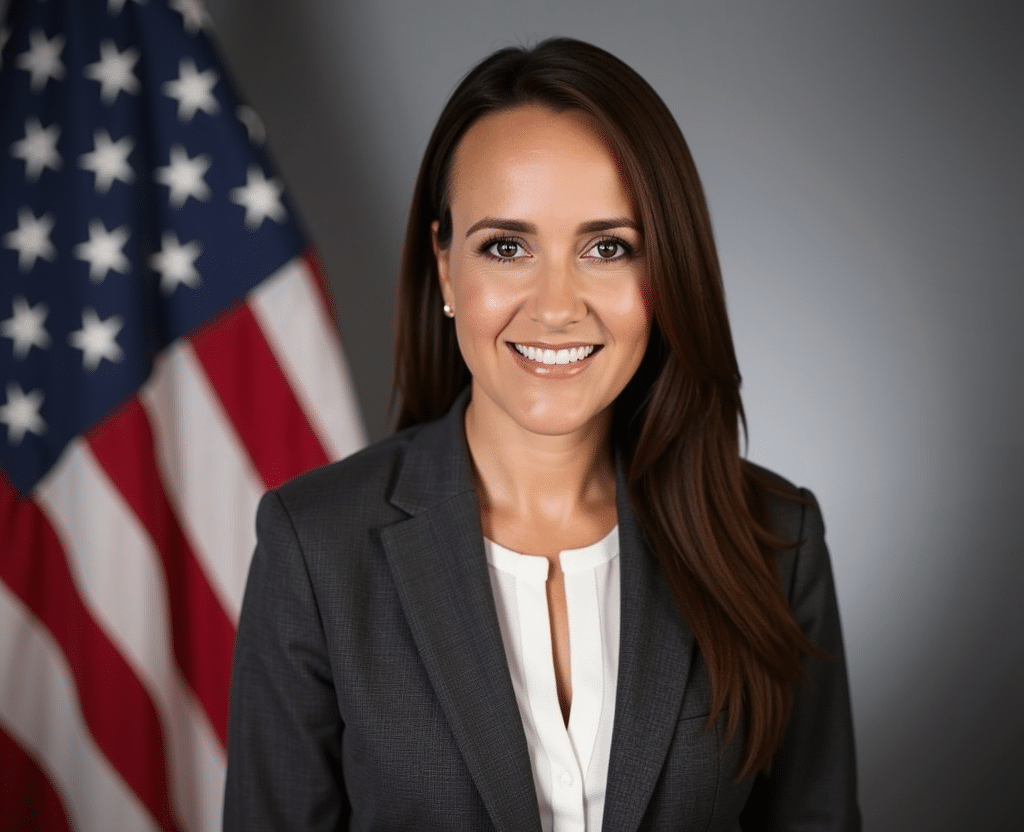
Alexandra González-Waddington is a top military and civilian defense attorney who has handled high-profile sexual assault, violent crime, and war-crimes cases globally. Her work is widely recognized by media outlets including 60 Minutes and ABC’s Nightline.

