Table Content
Article 128b of the Uniform Code of Military Justice establishes a specific offense for acts of strangulation or suffocation committed in a domestic violence context. The provision criminalizes the intentional, knowing, or reckless application of pressure to another person’s throat or neck, or the blocking of their nose or mouth, when the victim is a spouse, intimate partner, or similarly protected person. The statute is designed to address conduct that restricts airflow or blood flow, regardless of whether visible injury occurs.
The article covers physical acts that impede respiration or circulation. It applies whether the impediment is caused by hands, arms, or another object. The government is not required to prove prolonged loss of consciousness; the act of restricting breathing or blood flow is enough when paired with the required mental state.
Any servicemember subject to the UCMJ may be charged under Article 128b. The victim must fall into a qualifying domestic relationship as defined by statute, which typically includes spouses, intimate partners, and household members. Jurisdiction is retained even if the conduct occurs off base or outside the United States.
Article 128b generally requires that the accused acted intentionally, knowingly, or recklessly. Negligence alone is insufficient. The government must show that the accused applied pressure or impeded breathing with the requisite mental state, not merely that contact occurred.
Attempt liability may apply under Article 80 when the accused takes a substantial step toward strangulation, even if the act is not completed. Conspiracy liability may arise when two or more persons agree to commit domestic violence strangulation and an overt act is taken in furtherance of that agreement. Accomplice liability under Article 77 can attach to individuals who aid, abet, or encourage the offense.
The government must prove each element of domestic violence strangulation under Article 128b beyond a reasonable doubt to establish guilt. These elements define the prohibited conduct, the requisite mental state, and the protected status of the victim.
The mens rea for this offense is generally an intentional act. The government must show that the accused deliberately applied pressure or force that impeded respiration or circulation, rather than doing so accidentally or unknowingly.
The actus reus consists of the physical application of pressure to the neck, throat, or chest, or the blocking of the nose or mouth, resulting in restricted breathing or blood flow. The statute encompasses both “strangulation” and “suffocation,” each defined by the manner in which normal physiological functions are impeded.
Article 128b defines “intimate partner” and “immediate family member” broadly, covering spouses, former spouses, individuals with whom the accused shares a child, and persons in a romantic or cohabiting relationship. These status elements are essential to establishing that the conduct qualifies as domestic violence under the statute.
Punishment under the Uniform Code of Military Justice (UCMJ) depends on the date the alleged offense occurred. Offenses committed before December 27, 2023 are governed by the traditional maximum_punishment model, while offenses committed on or after that date are sentenced under the revised sentencing_category system implemented by the FY22 NDAA.
Under the pre_December 27, 2023 framework, Article 128b (Domestic Violence) contains a specific offense for domestic violence strangulation or suffocation. The maximum authorized punishment for this offense was:
These maximum punishments were fixed values listed in Part IV of the Manual for Courts_Martial (MCM) and applied regardless of the sentencing approach used at trial.
For offenses committed on or after December 27, 2023, Article 128b domestic violence strangulation falls within a defined sentencing category under the updated MCM. This offense is classified in a category that authorizes:
Under the sentencing_category system, each offense is assigned a statutory confinement range rather than a single maximum term. Sentencing authorities impose a specific sentence within the prescribed range, and the structure applies uniformly to judge_alone and panel_sentencing proceedings.
This framework differs from the prior model, which relied solely on individual maximum punishments for each offense. The new system provides standardized ranges for categories of offenses, while still retaining the possibility of punitive discharges, reductions in grade, and forfeitures where authorized by the applicable punitive article.








Charging decisions under Article 128b for domestic violence strangulation are largely shaped by the specific fact pattern, the quality and sequence of investigative findings, and the degree of command involvement early in the process. While the statute provides a clear framework, actual charging practices reflect how incidents are reported, documented, and corroborated within the military environment.
Most charges arise from domestic disputes in which one partner reports that the service member applied pressure to the neck or throat during an argument or physical altercation. These cases commonly emerge from:
These situations usually rely heavily on the initial verbal report, observable injuries, and follow-up interviews rather than extended or complex forensic evidence.
These cases typically begin with a 911 call, a report to military police, or a direct disclosure to a supervisor. Once domestic violence is alleged, law-enforcement agencies such as CID, NCIS, OSI, or CGIS generally assume the lead. Investigators collect statements, document any visible injuries, obtain medical records, and conduct follow-up interviews. Commands may initiate parallel safety assessments or administrative inquiries, but formal investigative steps remain with the service-specific law-enforcement organizations.
Prosecutors often employ charge-stacking to account for each distinct act within a single domestic incident. Overlap occurs when the same conduct supports both a general assault and a strangulation-specific offense, allowing alternative theories at trial. It is also common to include related misconduct, such as property destruction or violations of orders, to present a complete picture of the event. These patterns reflect the emphasis on documenting the full sequence of actions rather than relying on a single statutory provision.
Prosecutions under UCMJ Article 128b: Domestic Violence Strangulation often hinge on whether the evidence satisfies the statute’s specific elements. These cases frequently involve disputes over witness credibility, the interpretation of statutory language, the admissibility of key evidence, and the sufficiency of proof regarding the required mental state and physical acts.
Litigation commonly centers on whether the government has established the statutory elements beyond a reasonable doubt. Questions may arise regarding whether the alleged conduct constituted “strangulation” or “suffocation” as defined by statute, whether bodily injury or impeded breathing occurred, and whether the complainant qualifies as a protected relationship member under Article 128b. In some cases, the medical evidence or lack thereof can be a point of contention, particularly where marks or injuries are minimal or inconsistent. Disagreements also emerge over whether the physical contact described by witnesses satisfies the threshold for “force,” “pressure,” or “application of external force” as contemplated by the statute.
Intent and mental state frequently become central issues. Parties may litigate whether the government has shown that the accused acted intentionally, knowingly, or recklessly, depending on the phrasing of the specific charged offense. These questions often arise when conduct occurred during a chaotic or rapidly evolving interaction, making it difficult to determine purposeful action versus accidental or incidental contact. Disputes can also involve whether the accused was aware that the alleged conduct created a substantial risk of impairment to breathing or circulation.
Because these cases frequently rely on testimony from a limited number of witnesses, credibility assessments can play a significant role. Inconsistencies between statements, potential motives to misremember events, and the effects of intoxication or stress may all become points of litigation. Investigators’ actions and the accuracy of their reports may also be scrutinized when the factual record is largely testimonial rather than supported by extensive physical evidence.
Common evidentiary disputes include the admissibility of statements made by the accused, statements by the complainant, and any digital or documentary evidence capturing the incident or its aftermath. Suppression motions may arise from questions about the lawfulness of searches, the voluntariness of statements, or the reliability of body-worn camera footage. Medical records, photographs, and forensic documentation can also raise foundational or relevance concerns.
Interpretation challenges may stem from definitions of key terms such as “strangulation,” “household member,” or “domestic violence offense.” Ambiguities in cross-referenced provisions or interactions with other UCMJ articles can lead to disputes about the scope of the offense and the required proof. Courts may be asked to resolve questions about legislative intent or the extent to which civilian case law informs military practice.
General assault and aggravated assault provisions related to violent conduct
Maiming offenses involving serious bodily injury
Stalking behaviors that may accompany domestic violence cases
Threat-based misconduct often charged alongside domestic violence allegations
Coercive or intimidating conduct that may overlap with domestic violence situations
Collateral consequences are administrative, professional, and legal effects that may arise independently of any sentence imposed by a court-martial. These consequences flow from service regulations, federal law, state law, or professional standards and may continue to affect a service member after the judicial process concludes.
A conviction under UCMJ Article 128b: Domestic Violence Strangulation may be considered in administrative actions separate from the court-martial. These actions can include:
Domestic violence offenses can raise concerns related to judgment, reliability, and suitability for access to classified information. A conviction may result in suspension, denial, or revocation of a security clearance. This, in turn, may affect continued service in clearance-dependent occupational fields and limit eligibility for certain post-service employment requiring federal background investigations.
Article 128b convictions do not automatically trigger sex offender registration, as federal and state registration requirements are offense-specific. However, some jurisdictions require reporting for certain violent offenses or protective-order violations. Registration or reporting obligations, if any, are determined by applicable federal statutes and state law.
The conduct underlying a domestic violence strangulation conviction may also constitute an offense under federal or state law. Separate civilian prosecution is possible, and the alleged victim may pursue civil remedies, such as protective orders or civil claims for damages.
For non-citizen service members, certain domestic violence convictions may affect immigration status, admissibility, or future naturalization eligibility. These consequences depend on federal immigration law and are evaluated independently of military proceedings.
During the investigative phase of an allegation under UCMJ Article 128b: Domestic Violence Strangulation, decisions made by the service member and by investigators often influence the eventual course of the case. Much of the evidentiary foundation is set before charges are ever preferred, making early legal guidance essential to navigating this stage accurately.
Military law-enforcement agencies typically collect physical evidence, witness statements, digital communications, and medical documentation immediately after an allegation arises. Early legal involvement can help ensure that statements are not made without context, that documents are preserved appropriately, and that digital information is interpreted within its proper scope. Counsel, including civilian military defense lawyers, can help a service member understand how investigative steps may shape the evidentiary record.
Commands and investigators often request interviews before a service member fully understands the nature of the allegations or the potential consequences. Without legal guidance, a service member may provide incomplete, inaccurate, or unnecessary information. These early statements frequently become key evidence later in the process, even if made under stress or without full situational awareness.
Administrative inquiries, command-directed investigations, and collateral reviews may begin independently of any criminal action. Early decisions—such as how to respond to initial questioning or requests for documents—can influence administrative findings and set the tone for subsequent actions by the command.
Choices made early in the investigation, including consenting to searches, providing statements, or responding to administrative notices, can carry forward into court-martial proceedings or administrative actions. These decisions may affect case strategy, available defenses, and the interpretation of evidence throughout the process.
Gonzalez & Waddington is a civilian military defense law firm that focuses on representing service members facing allegations under the Uniform Code of Military Justice. The firm handles a wide range of military criminal cases worldwide, providing guidance and defense strategies tailored to the unique procedures, rules, and culture of the military justice system.
If you or a loved one is facing an allegation under UCMJ Article 128b, Gonzalez & Waddington is available to discuss the situation and provide guidance on possible options. Contact the firm to schedule a confidential consultation and learn more about how experienced civilian military defense counsel can assist you.
Q: What does UCMJ Article 128b: Domestic Violence Strangulation cover?
A: Article 128b on domestic violence strangulation addresses situations where a service member intentionally, knowingly, or recklessly impedes the normal breathing or blood circulation of an intimate partner or household member. The article applies to acts involving the use of hands, arms, or any object that causes pressure to the neck or throat. The charge focuses on the act itself and the relationship between the parties involved, regardless of whether visible injury is present.
Q: What is the maximum punishment for UCMJ Article 128b: Domestic Violence Strangulation?
A: Maximum punishment may include a dishonorable discharge, confinement, forfeiture of pay and allowances, and reduction in rank. Actual punishment depends on the facts of the case, the level of harm, and findings at a court-martial. Sentencing under this article considers aggravating or mitigating factors, including the nature of the relationship, the circumstances of the incident, and any prior misconduct. Command decisions and legal reviews also influence potential outcomes.
Q: Can an allegation under this article lead to administrative separation even without a conviction?
A: Yes. A command may initiate administrative separation proceedings based on substantiated misconduct, even when no court-martial conviction occurs. Administrative actions rely on a lower standard of proof and may proceed if the command determines the conduct is inconsistent with military standards. Possible outcomes can include retention, probationary measures, or separation with various characterization levels, depending on the evidence and the service member’s overall record.
Q: Do I need a civilian military defense lawyer for an investigation under this article?
A: Service members are entitled to free military counsel, but some choose to consult civilian military defense attorneys for additional representation. Whether to hire civilian counsel is a personal decision that depends on factors such as the complexity of the case, potential career impact, and individual preference. Both military and civilian attorneys can explain rights, investigative processes, and potential consequences under the article.
Q: Can this be handled without a court-martial, such as through administrative action or nonjudicial punishment?
A: Commands may address allegations through options other than court-martial, depending on the severity of the conduct and available evidence. These options can include nonjudicial punishment, administrative reprimands, or separation actions. The chosen approach typically reflects the command’s assessment of the incident, the service member’s history, and the strength of investigative findings. Not all cases automatically proceed to court-martial, but serious allegations may increase the likelihood of formal charges.
Q: What types of evidence are commonly used in strangulation-related investigations?
A: Investigations may rely on physical evidence, witness statements, medical evaluations, photographs, and recordings. Because strangulation may leave limited visible injury, investigators often review medical reports detailing symptoms such as hoarseness, dizziness, or neck tenderness. Statements from neighbors, law enforcement, or responding personnel may also be considered. The evidence collected can influence decisions regarding charges, administrative actions, or further investigative steps.
You can review the individual Articles of the UCMJ and learn more about military law by clicking here: UCMJ Articles and Military Justice Resources. You can also explore official military law guidance from the Army Judge Advocate General’s Corps at jagcnet.army.mil.

A renowned military criminal defense attorney and best-selling author, Michael Waddington defends clients worldwide in serious cases and trains lawyers in advanced cross-examination. He is frequently featured by major media outlets like CNN and 60 Minutes.
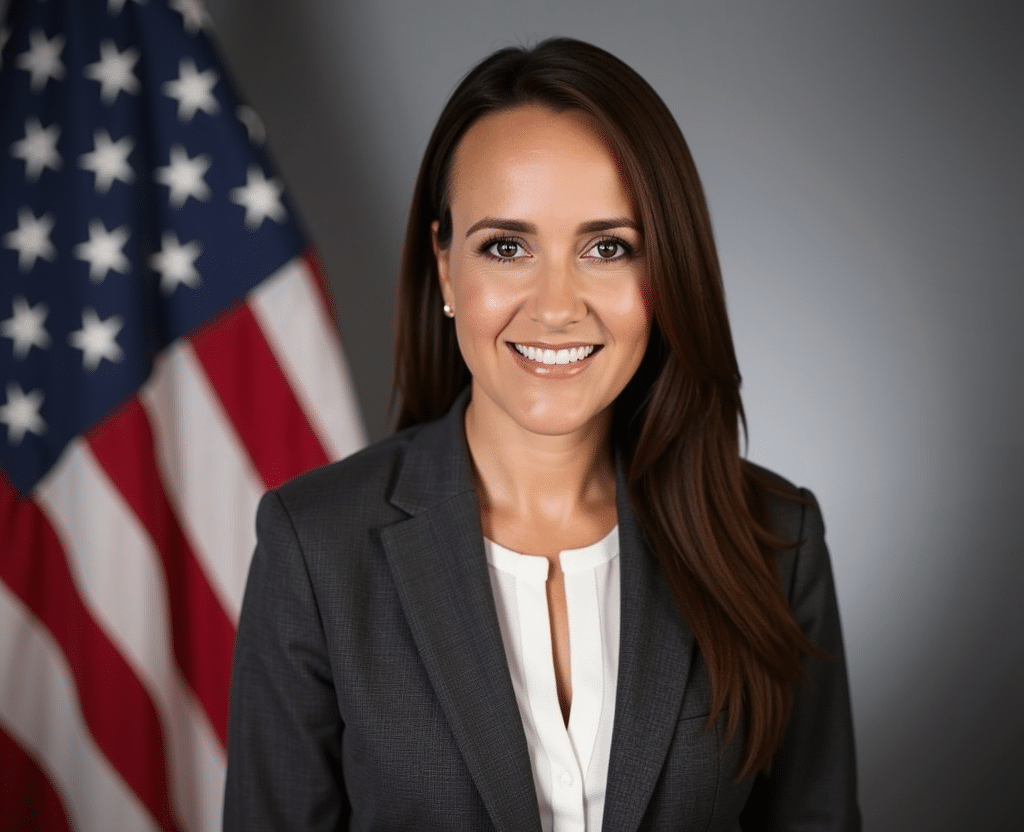
Alexandra González-Waddington is a top military and civilian defense attorney who has handled high-profile sexual assault, violent crime, and war-crimes cases globally. Her work is widely recognized by media outlets including 60 Minutes and ABC’s Nightline.

