Fort Polk Army Court-Martial & UCMJ Defense Lawyers
Michael Waddington and Alexandra Gonzalez-Waddington of Gonzalez & Waddington are civilian defense attorneys who defend Army soldiers at Fort Polk, Louisiana — the home of the Joint Readiness Training Center — in courts-martial, Article 15 proceedings, administrative separation boards, and related UCMJ matters.
As civilian defense counsel who take on CID investigators and commands on behalf of soldiers and rotational units at Fort Polk, Waddington and Gonzalez-Waddington travel to Leesville and represent service members worldwide. CID handles criminal investigations at Fort Polk, covering sexual assault, drug offenses, larceny, fraud, domestic violence, and misconduct arising during JRTC rotations or off-post in Vernon Parish.
Fort Polk cases carry distinct defense challenges: witnesses from rotating brigade combat teams — including 3rd Brigade, 10th Mountain Division and 1st Battalion, 509th Infantry OPFOR — may leave Louisiana days after an allegation surfaces, and evidence such as training lane timelines, range logs, observer-coach-trainer notes, and Leesville police reports must be preserved quickly across multiple commands.
Contact Gonzalez & Waddington at 1-800-921-8607 for a free, confidential consultation about any UCMJ investigation or charge at Fort Polk.
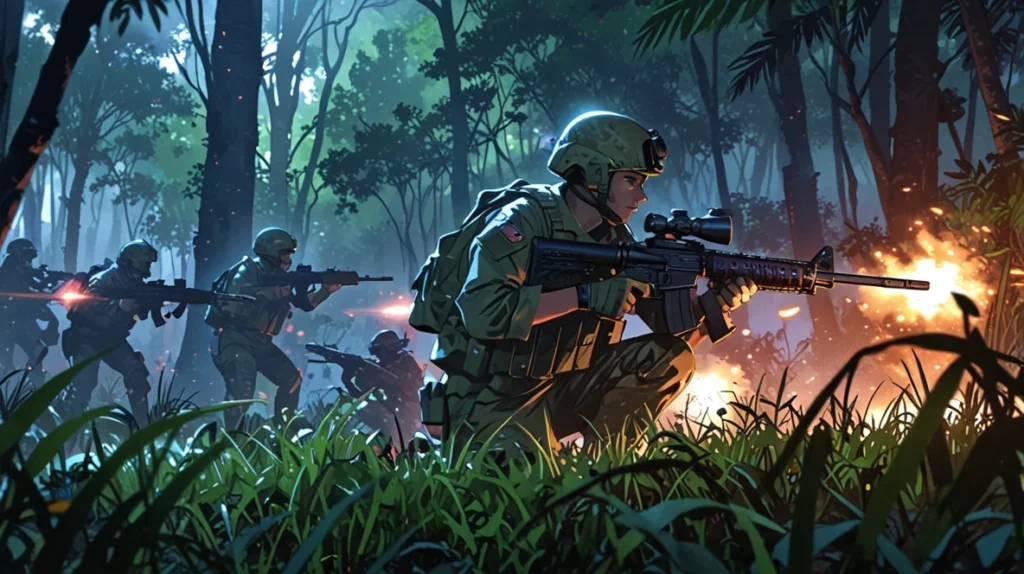
Fort Polk Military Defense Lawyers | UCMJ & Court-Martial Defense
Fort Polk is the home of the Joint Readiness Training Center in west-central Louisiana. It sits near Leesville, New Llano, Anacoco, DeRidder, Vernon Parish, Beauregard Parish, Alexandria, Lake Charles, U.S. 171, Louisiana Highway 467, and the pine forests of western Louisiana.
Fort Polk is not a normal Army post. It is a combat training installation. Its mission is built around JRTC rotations, opposing-force operations, field exercises, live training, brigade-level readiness, and deployment preparation.
Service members at Fort Polk may face UCMJ investigations that begin on post, off post, in the box, during a rotation, in barracks, in housing, during field training, or after civilian police contact in Louisiana.
Cases may involve:
- Joint Readiness Training Center rotational units
- JRTC Operations Group personnel
- 1st Battalion, 509th Infantry Regiment OPFOR personnel
- 3rd Light Brigade Combat Team, 10th Mountain Division personnel
- Brigade support, aviation, medical, and garrison personnel
- Temporary-duty Soldiers from across the Army
- Training records, range logs, field timelines, and duty rosters
- Off-post incidents in Leesville, New Llano, Anacoco, DeRidder, Alexandria, or Vernon Parish
- DUI stops, domestic calls, hotel allegations, and civilian court matters
- Digital evidence, phone extractions, social media, and witness timelines
Civilian Court-Martial Attorneys for Fort Polk Service Members
Gonzalez & Waddington defends service members stationed at Fort Polk in serious UCMJ matters. The firm handles courts-martial, Article 15/NJP actions, GOMOR rebuttals, letters of reprimand, administrative separation boards, Boards of Inquiry, and security clearance matters.
An allegation at Fort Polk can threaten a career quickly. This is true for permanent-party Soldiers and for Soldiers who are only there for a JRTC rotation.
Fort Polk is different from a large garrison post. It is remote. It is training-focused. A case may involve field conditions, rotational units, tactical scenarios, observer-coach-trainers, OPFOR witnesses, range records, local police reports, and command pressure tied to readiness.
If you are accused of a UCMJ offense at or near Fort Polk, do not wait for the command’s theory to harden. This includes Article 120 sexual assault, abusive sexual contact, domestic violence, assault, DUI, drug misconduct, fraud, larceny, false official statement, orders violations, harassment, stalking, threats, weapons misconduct, child exploitation, online misconduct, range incidents, training misconduct, and field exercise allegations.
Call Gonzalez & Waddington at 1-800-921-8607 or text 954-799-4019 to request a confidential consultation with civilian military defense lawyers who defend service members worldwide.
Civilian Military Defense for Service Members at Fort Polk, Louisiana
Fort Polk is located in Vernon Parish in west-central Louisiana. It is closely tied to Leesville, New Llano, Anacoco, and DeRidder.
The official Fort Polk website identifies the installation as the home of the Joint Readiness Training Center. The post supports large-scale combat training and readiness preparation for Army units. See the Fort Polk Official Website.
This mission matters in a military defense case. Fort Polk cases may involve field training, brigade rotations, OPFOR witnesses, training lanes, observer-coach-trainer notes, unit timelines, and witnesses who leave the installation quickly.
A case may begin as a command concern or a civilian police matter. It can still become a UCMJ case. A service member may face Article 15, GOMOR, administrative separation, Board of Inquiry, security clearance review, Article 32 hearing, or court-martial.
Early defense action can help preserve favorable evidence. It can also protect the service member before statements are made to investigators or command representatives.
Fort Polk, Fort Polk and the Current Name Issue
The current official name is Fort Polk. The installation was renamed Fort Johnson in 2023. The Fort Polk name was later restored.
This name history matters for search. Service members and families may still search for Fort Polk, Fort Polk, JRTC Louisiana, Leesville Army base, or Louisiana Army training center.
This page uses Fort Polk because it is the current name and the name many Soldiers and families use. It also recognizes the recent Fort Polk naming history.
Why Fort Polk Cases Are Different
Fort Polk is a JRTC training environment. Many cases involve rotating units, temporary-duty personnel, tactical scenarios, and field conditions.
That changes the evidence. Witnesses may leave after the rotation. Records may be held by the rotational unit, JRTC personnel, a home-station command, or a training directorate.
A Fort Polk case may involve:
- JRTC rotation records
- Training lane timelines
- Range logs and safety records
- Observer-coach-trainer notes
- OPFOR witness statements
- Convoy records and vehicle movement
- Duty rosters and shift schedules
- Command emails and workplace messages
- Phone extractions, texts, and social media
- Leesville police reports or Vernon Parish court records
- 911 calls, body-camera footage, hotel records, or rideshare data
The defense must identify who controlled the records. It must also determine whether the allegation is criminal, administrative, training-related, readiness-related, or based on incomplete information.
Fort Polk History and Joint Readiness Training Center Mission
Fort Polk was established during World War II as a major Army training installation. It later became one of the Army’s most important combat training centers.
The installation’s modern identity is built around the Joint Readiness Training Center. JRTC trains brigade combat teams and other units for complex operations against realistic threats.
The Fort Polk mission environment is demanding. Units train in difficult terrain, long field conditions, high heat, heavy rain, dense woods, tactical stress, and realistic battlefield scenarios.
This training culture can shape UCMJ cases. Allegations may arise from field problems, unit conflict, barracks issues, convoy incidents, safety events, weapons issues, alcohol, relationship disputes, or off-post conduct during downtime.
A defense strategy must account for the mission. A field allegation is different from an off-post DUI. A rotation case is different from a permanent-party case. A training record can matter as much as a witness statement.
Major Fort Polk Units and Why They Matter in a Defense Case
Fort Polk includes permanent-party units, JRTC units, and rotational units. That makes defense strategy more complicated.
Important Fort Polk mission areas include:
- Joint Readiness Training Center: Large-scale combat rotations. Cases may involve training records, field timelines, role players, and tactical witnesses.
- JRTC Operations Group: Observer-coach-trainers manage and evaluate training rotations. Their notes, timelines, and observations may become important evidence.
- 1st Battalion, 509th Infantry Regiment: The OPFOR mission creates realistic threat conditions for rotational units. Cases may involve field events, OPFOR witnesses, tactical interactions, and unit timelines.
- 3rd Light Brigade Combat Team, 10th Mountain Division: Permanent combat forces may create cases tied to unit life, barracks, leadership, training, and deployment readiness.
- Rotational units: Soldiers may return to home station after training. Witness preservation becomes urgent.
- Medical, aviation, logistics, and garrison support organizations: Cases may involve records, clinics, vehicle movement, supply issues, maintenance, housing, or command-directed inquiries.
The unit matters. A Soldier assigned to the OPFOR has different evidence issues than a Soldier passing through on rotation. A permanent-party case is different from an allegation involving a brigade that leaves Louisiana after training.
Leesville, New Llano, Anacoco, DeRidder and the Fort Polk Community
Fort Polk is closely tied to Leesville. It is also connected to New Llano, Anacoco, DeRidder, Rosepine, Many, Alexandria, Lake Charles, and the larger western Louisiana region.
This geography affects military defense. Service members may live on post, rent off post, stay in hotels, drive long distances, or interact with local police during off-duty time.
Off-post incidents can quickly become military cases. A DUI stop, domestic call, assault allegation, hotel incident, traffic crash, protective order, drug issue, or civilian arrest may lead to command action at Fort Polk.
Local evidence may include:
- Leesville police reports
- Vernon Parish Sheriff’s Office records
- Louisiana State Police reports
- Vernon Parish court filings
- 911 calls and body-camera footage
- Hospital or urgent care records
- Hotel and restaurant records
- Private security video
- Rideshare and phone location data
- Text messages and social media
- Witnesses from local businesses, hotels, housing areas, or training events
A defense strategy must account for both systems. A Louisiana civilian case may move forward while the command separately considers UCMJ or administrative action.
Louisiana Civilian Courts and Federal Court Issues Near Fort Polk
Some Fort Polk cases overlap with Louisiana civilian courts. The military does not always wait for the civilian case to finish.
The Vernon Parish Clerk of Court is located at 215 South 4th Street in Leesville. See the Vernon Parish Clerk of Court.
Federal jurisdiction may also matter in some cases. The U.S. District Court for the Western District of Louisiana has divisions across the western part of the state. See the U.S. District Court, Western District of Louisiana.
A service member may face a civilian case and a military case at the same time. The civilian case may involve DUI, assault, domestic violence, traffic offenses, protective orders, drug allegations, weapons issues, or other local charges.
The key point is practical: a local dismissal does not automatically stop a military case. A reduced civilian charge does not automatically prevent an Article 15. A weak civilian case can still become a career-threatening UCMJ matter.
How Local Fort Polk Incidents Become Military Legal Problems
The following examples are hypothetical. They are not claims about any actual case, business, command, employee, contractor, trainee, or person. They show how local facts can matter when a service member at Fort Polk is accused of misconduct.
- Leesville DUI: A Soldier is stopped after dinner, drinks, or a unit event. The civilian case may trigger a reprimand, Article 15, driving restrictions, clearance review, or separation processing.
- JRTC rotation misconduct allegation: A Soldier on temporary duty is accused of assault, harassment, threats, drug use, false statements, or orders violations during a rotation.
- Field training allegation: A training event, convoy, range incident, safety issue, lost equipment problem, or negligent discharge allegation becomes a command investigation.
- Hotel or lodging allegation: A temporary-duty stay near Leesville, DeRidder, Alexandria, or Lake Charles leads to an Article 120 allegation involving phone data, hotel records, and witness timelines.
- Off-post domestic call: A family argument in Leesville, New Llano, Anacoco, or DeRidder leads to a 911 call. The command may issue a no-contact order and consider Article 128b or administrative action.
- Drug or urinalysis case: A positive urinalysis, prescription issue, vehicle search, suspected distribution allegation, or text-message evidence leads to command action.
- OPFOR or training witness issue: A case involves witnesses from 1-509th Infantry, Operations Group, support units, or a rotational unit that may leave the installation.
- Digital evidence case: Investigators rely on screenshots, deleted messages, social media, phone extractions, metadata, or incomplete digital records.
Common UCMJ Charges at Fort Polk
Service members at Fort Polk may face UCMJ allegations tied to training, rotations, off-post conduct, digital communications, field conditions, or command investigations.
- Article 120 sexual assault and abusive sexual contact allegations
- Article 128 assault and Article 128b domestic violence allegations
- Drug offenses, urinalysis cases, and prescription-related allegations
- Larceny, fraud, travel-card issues, and property-related misconduct
- False official statement allegations
- Orders violations and training-related misconduct
- Harassment, stalking, threats, or workplace-related allegations
- Weapons, range, convoy, safety, or equipment-related concerns
- Computer, phone, and digital evidence investigations
Once a case enters the court-martial system, the stakes increase. The result can affect liberty, rank, retirement, clearance, future assignments, civilian employment, and reputation.
What to Know If Army CID Contacts You at Fort Polk
Your rights in an Army CID interview. Article 31(b) of the UCMJ gives you the right to know what you are suspected of and to remain silent, and you may ask for a lawyer before any questioning by the Department of the Army Criminal Investigation Division (CID). Declining to answer is not an admission. At Fort Polk, as anywhere, the safest first step is to say you want to speak with counsel and then stop talking.
Being titled is not the same as being charged. Investigators can title a service member and index the name in the Defense Central Index of Investigations on only "credible information." The case may go nowhere, yet the entry can resurface years later in background investigations and clearance reviews, so how the investigation is handled from the start matters.
Your commander may not be the one deciding. Covered offenses such as sexual assault, domestic violence, stalking, kidnapping, murder, child pornography and (since 2025) sexual harassment are now controlled by an independent Office of Special Trial Counsel, which decides whether charges are preferred and referred. Other allegations at Fort Polk still go through the chain of command.
Domestic violence allegations. Article 128b covers violence against a spouse, intimate partner or family member, and an allegation of strangulation or suffocation can be charged as aggravated assault even without a visible injury. A qualifying conviction can also trigger the federal firearms ban under the Lautenberg Amendment, which can end a career that requires carrying a weapon.
Drug allegations. Article 112a of the UCMJ applies to service members at Fort Polk on post and off, separately from Louisiana law. A positive urinalysis is serious but contestable: the chain of custody, the testing process and innocent ingestion can all be challenged, and the government must prove the use was knowing and wrongful.
Pay and allowance allegations. BAH and other allowance cases are usually charged as larceny under Article 121 or as frauds against the United States under Article 124. An overpayment by itself is not a crime: the government must prove you intended to steal or defraud, and many of these cases begin as paperwork errors.
If you are under investigation at Fort Polk, talk to a military defense lawyer before you make any statement. Call Gonzalez & Waddington at 1-800-921-8607.
How Court-Martial Investigations Often Begin at Fort Polk
Many Fort Polk military justice cases begin with a complaint or command notification. Investigators may then collect statements, digital records, official documents, photos, and witness timelines.
A typical case may involve:
- An initial complaint, allegation, or command report
- A CID investigation or command inquiry
- Witness interviews
- Collection of official, documentary, and digital evidence
- Review of emails, messages, training records, duty rosters, or travel records
- Command review and legal evaluation
- Preferral of charges
- An Article 32 preliminary hearing when required
- Referral to a special or general court-martial
Investigators often seek statements early. Those statements can shape the government’s theory. A service member should not assume an interview is harmless because charges have not yet been filed.
Why Early Defense Action Matters at Fort Polk
Fort Polk cases can move quickly. Many involve temporary-duty personnel, rotational units, training records, field witnesses, digital evidence, and command pressure.
Early defense action can help preserve favorable evidence. It can also identify gaps, inconsistencies, and unsupported assumptions before the command’s view becomes fixed.
This is especially important in cases involving Article 120 allegations, training records, convoy issues, range incidents, false statements, digital evidence, drug allegations, contradictory witness accounts, or clearance concerns.
A civilian military defense lawyer can help protect the service member before avoidable mistakes are made.
Military Law Issues for Service Members at Fort Polk
Article 120 Sexual Assault & Abusive Sexual Contact
Article 120 cases may involve hotels, temporary lodging, barracks rooms, unit events, alcohol, dating apps, delayed reports, text messages, social media, phone extractions, and civilian witnesses.
These cases often turn on consent, credibility, intoxication, timing, digital evidence, witness contamination, and command assumptions.
Domestic Violence & Assault
Domestic violence and assault cases may involve Louisiana police reports, 911 calls, medical records, photographs, protective orders, Family Advocacy records, text messages, and command no-contact orders.
Even if the civilian case is reduced or dismissed, the command may still pursue Article 15, adverse paperwork, separation, Board of Inquiry, or clearance-related action.
Training, Rotation & Field Misconduct
Fort Polk cases may involve JRTC rotation records, OPFOR witnesses, range logs, convoy timelines, training disputes, safety concerns, lost equipment, and temporary-duty personnel.
The defense must determine whether the allegation is criminal, administrative, professional, or based on incomplete information.
Fraud, Travel, False Statements & Records Issues
These cases may involve travel cards, official claims, lodging records, orders, official forms, emails, text messages, or command-directed inquiries.
The defense must evaluate whether the government can prove intent. It must also determine whether records are complete and whether administrative mistakes are being treated as crimes.
Drug & Alcohol Cases
A positive urinalysis, prescription issue, DUI, drunk-and-disorderly allegation, or off-post incident can lead to adverse paperwork, Article 15, separation processing, or clearance concerns.
For service members in training, OPFOR, support, supervisory, or clearance-sensitive roles, administrative consequences may move faster than the criminal process.
Why Service Members at Fort Polk Hire Civilian Court-Martial Lawyers
Military criminal cases are not routine administrative matters. A serious allegation can threaten confinement, punitive discharge, rank, pay, clearance, reputation, and long-term career prospects.
A civilian military defense lawyer provides independent trial-focused representation. The goal is to protect the client early and prepare the case as if it may be litigated in court.
- Immediate intervention during CID, NCIS, OSI, CGIS, or command investigations
- Protection from damaging statements during interviews, rights advisements, and written responses
- Evidence preservation involving texts, emails, call logs, social media, photos, and witness timelines
- Record review when allegations involve training, rotations, travel, or official documents
- Investigation review to identify credibility problems and missing evidence
- Article 32 preparation designed to expose weaknesses in the government’s proof
- Motions practice challenging unlawful searches, statements, digital extractions, expert testimony, and procedural violations
- Trial preparation for contested special and general courts-martial
Civilian Military Defense Counsel Working With Detailed Military Defense Counsel
A service member facing court-martial generally has the right to detailed military defense counsel. Civilian military defense counsel does not replace detailed military counsel. Civilian counsel can work alongside the detailed military lawyer.
Civilian counsel can bring independent investigation, family communication, digital evidence review, witness preparation, cross-examination strategy, and continuity outside the command structure.
At Fort Polk, civilian defense counsel may need to review evidence from many sources. These may include CID reports, command emails, local police records, 911 calls, body-camera footage, official records, training schedules, duty rosters, rotation records, travel records, phone extractions, text messages, social media, hotel records, civilian court filings, protective order records, urinalysis documents, and adverse administrative paperwork.
Gonzalez & Waddington represents service members worldwide in serious military cases. The firm defends clients in courts-martial, Article 120 cases, Article 128 and 128b cases, CID, NCIS, OSI, and CGIS investigations, Article 15/NJP actions, Boards of Inquiry, administrative separations, GOMOR rebuttals, security clearance matters, fraud cases, violent offenses, digital evidence cases, and other serious UCMJ matters.
Quick Answer: Military Defense Lawyers for Fort Polk
Service members stationed at or rotating through Fort Polk can face military consequences from both on-post and off-post allegations. Cases may involve Fort Polk, the Joint Readiness Training Center, Leesville, New Llano, Anacoco, DeRidder, Vernon Parish, Louisiana civilian courts, training records, rotation timelines, digital evidence, field witnesses, and command investigations.
A civilian military defense lawyer can work alongside detailed military defense counsel in courts-martial, Article 120 cases, Article 15/NJP matters, letters of reprimand, GOMOR rebuttals, administrative separations, Boards of Inquiry, security clearance matters, and command investigations.
Because Fort Polk is a combat training and JRTC rotation environment, defense strategy should account for temporary-duty witnesses, OPFOR personnel, range records, local court exposure, digital evidence, witness timelines, training pressure, and long-term military career consequences.
Exceptional defense attorney. Highly recommend his service with any military matters.
Prior results do not guarantee a similar outcome. Every case is different.
Fort Polk Military Defense FAQ
Can a service member hire a civilian lawyer for a Fort Polk court-martial?
Yes. Service members have the right to military defense counsel and may also retain civilian defense counsel. Civilian counsel can assist during investigations, Article 32 hearings, courts-martial, Article 15 proceedings, administrative separations, Boards of Inquiry, and rebuttals to adverse paperwork.
What types of cases go to court-martial at Fort Polk?
Serious UCMJ cases may include Article 120 sexual assault allegations, assault, domestic violence, drug offenses, fraud, false official statements, training misconduct, digital evidence cases, and other felony-level military charges.
Do CID investigations happen before charges are filed?
Yes. Investigations often begin long before charges are preferred. Investigators may request interviews, collect witness statements, search devices, and review digital or official records before the service member fully understands the risk.
Can a civilian arrest near Fort Polk affect my military career?
Yes. A civilian arrest or police report in Leesville, New Llano, Anacoco, DeRidder, Vernon Parish, or another Louisiana community can lead to command action. The command may consider Article 15, adverse paperwork, administrative separation, Board of Inquiry, clearance review, or court-martial.
Are Fort Polk cases different from normal Army post cases?
They can be. Fort Polk is remote and rotation-focused. Cases may involve temporary-duty witnesses, JRTC records, OPFOR personnel, field conditions, Leesville-area evidence, and mission pressure.
Can commanders take action before civilian charges are resolved?
Yes. The military does not always wait for civilian courts. A command may issue adverse paperwork, impose restrictions, initiate Article 15 proceedings, or begin separation action while the civilian case is still pending.
Army CID wants to interview me at Fort Polk. Do I have to talk to them?
No. Article 31(b) of the UCMJ requires investigators to tell you what you are suspected of and that you have the right to remain silent, and you can ask for a lawyer before answering anything. An interview is evidence collection, and Army CID can title you as a subject on a low "credible information" standard that can follow you into background and clearance checks even if the case is dropped. Politely decline, ask for counsel, and call a military defense lawyer before you say anything.
Why Gonzalez & Waddington for Fort Polk Military Defense Cases
Gonzalez & Waddington, LLC is a civilian military defense law firm representing service members worldwide. The firm focuses on military criminal defense, court-martial litigation, UCMJ investigations, administrative separation boards, Boards of Inquiry, GOMOR and letter of reprimand rebuttals, Article 15/NJP matters, sexual assault defense, violent offense defense, fraud cases, digital evidence cases, and other high-stakes military legal matters.
Michael Waddington is a former Army officer and former Army JAG. He has served as an Army Trial Defense Counsel, Senior Defense Counsel, Army prosecutor, Special Assistant United States Attorney, and Chief of Military Justice. He has more than 25 years of military defense experience and is admitted to all U.S. military trial courts worldwide.
Alexandra González-Waddington is a founding partner, former public defender, and experienced military defense lawyer. She is admitted to all U.S. military trial courts worldwide and has defended service members in sexual assault, violent crime, war crimes, murder, classified-information, domestic violence, and white-collar cases.
For Fort Polk service members, that background matters. Cases at this installation may involve rotational units, field training, OPFOR witnesses, Louisiana civilian evidence, digital messages, command pressure, clearance concerns, and serious UCMJ allegations.
Talk to a Civilian Military Defense Lawyer Serving Fort Polk
If you are stationed at Fort Polk or rotating through the Joint Readiness Training Center and are under investigation, do not wait. Get legal guidance before making statements or submitting paperwork that may be used against you later.
Gonzalez & Waddington can work alongside detailed military defense counsel. The firm can help review the evidence, preserve favorable information, prepare for command decisions, and build a defense strategy that accounts for both the military case and the Fort Polk training environment.
Call Gonzalez & Waddington at 1-800-921-8607 or text 954-799-4019 to request a confidential consultation. No attorney can guarantee a result. The goal is to intervene early, protect your rights, and help you make informed decisions before the command or prosecution theory hardens.
Helpful Fort Polk and Louisiana Legal Resources
- Fort Polk Official Website
- JRTC Operations Group
- 1st Battalion, 509th Infantry Regiment
- Vernon Parish Clerk of Court
- U.S. District Court, Western District of Louisiana
Related Military Legal Guides
Nearby and Related Military Bases
Aggressive Criminal Defense Lawyers
This video explains what your rights are and how experienced criminal defense lawyers can make a difference.






Facing a military investigation, UCMJ allegation, or serious criminal charge? Gonzalez & Waddington provides trial-focused defense for high-stakes cases. Call 1-800-921-8607 or text 954-799-4019 for a confidential, no-cost consultation.