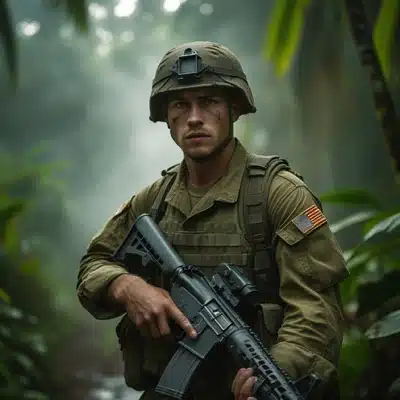
The combination of high deployment tempo, intense training cycles, heavy family and relationship stress, and a nearby civilian community that frequently interacts with Soldiers leads to a steady flow of UCMJ investigations, Article 15s, domestic incidents and courts-martial.
This FAQ library gives Soldiers and families clear answers to the most common questions about military justice at Fort Stewart.
Gonzalez & Waddington is a global civilian military defense firm that represents Soldiers at Fort Stewart, Hunter Army Airfield and installations worldwide in serious UCMJ and administrative cases.
For confidential assistance, call 1-800-921-8607.
Aggressive Military Defense Lawyers: Gonzalez & Waddington
Watch the military defense lawyers at Gonzalez & Waddington break down how they defend service members worldwide against UCMJ allegations, CID/NCIS/OSI investigations, court-martials, Article 120 cases, administrative separations, and GOMORs. If you’re under investigation or facing charges, this video explains what your rights are and how experienced civilian military counsel can make the difference.
General Legal Concerns at Fort Stewart
Why is Fort Stewart a high-incident installation for UCMJ actions?
Fort Stewart’s heavy deployment cycles, relationship stress, on-post housing dynamics, alcohol-related incidents in the local community and the operational demands of the 3rd Infantry Division all contribute to frequent UCMJ issues.
Soldiers also interact constantly with civilian police in Hinesville and Savannah, increasing the risk of dual civilian–military cases.
What types of cases are most common at Fort Stewart?
Common cases include:
- Article 120 and 120b sexual assault / child sexual abuse
- Domestic violence, strangulation and assault (128 & 128b)
- DUI, disorderly conduct and alcohol-related charges
- Barracks fights and off-post altercations
- Drug possession, use or distribution (112a)
- Article 92 and 107 violations (orders violations and false statements)
- GOMORs and AR 15-6 investigations
- Administrative separation boards
How does being near Savannah and Hinesville affect Fort Stewart Soldiers legally?
Off-post conduct frequently involves Savannah Police, Hinesville Police, Georgia State Patrol and local prosecutors.
Civilian arrests for DUI, domestic violence or sexual misconduct often trigger UCMJ investigations or administrative actions.
Civilian court outcomes can impact your military case and vice versa.
CID, AR 15-6 and Command Investigations at Fort Stewart
What happens when CID opens a case against a Fort Stewart Soldier?
Once CID receives a complaint, they begin collecting statements, digital evidence, medical reports and search authorizations.
Soldiers are often flagged immediately, placed under restrictions or given a no-contact order.
Many Soldiers are unaware they are being investigated until CID asks them to “come in and talk.”
Should I talk to CID or my chain of command if I’m being investigated?
In most situations, no.
CID’s goal is to gather evidence to support the allegation.
Soldiers often incriminate themselves by trying to explain or “clear things up.”
The safest action is to politely ask for a lawyer and stay silent.
What is an AR 15-6 investigation and how is it used at Fort Stewart?
An AR 15-6 is an administrative fact-finding investigation used frequently by commands to address misconduct, leadership failures or disciplinary concerns.
The findings often lead to GOMORs, administrative separations, adverse evaluations or relief-for-cause actions.
Do I have rights during a 15-6 investigation?
Yes, but they are limited.
You can consult an attorney before responding, but you are not automatically assigned one.
You do not have cross-examination rights.
However, strategic written submissions and legal guidance can prevent irreversible damage.
Article 15s, GOMORs and Administrative Actions at Fort Stewart
How serious is an Article 15 at Fort Stewart?
Very serious.
Punishments can include reduction, forfeitures and extra duty, but the long-term impact can be even worse:
Soldiers receiving Article 15s may face separation boards or lose promotions, schools and career opportunities.
Can I refuse an Article 15 at Fort Stewart?
Yes—most Soldiers can refuse and demand a court-martial.
This may be appropriate if the evidence is weak or the allegation is false.
However, the decision must be part of a larger strategy coordinated with an experienced military defense lawyer.
How do Fort Stewart commanders use GOMORs?
GOMORs are frequently issued in cases involving DUIs, domestic disputes, sexual misconduct, leadership failures and allegations that do not rise to court-martial.
A permanent GOMOR is career-ending.
A strong rebuttal can keep it local and prevent long-term damage.
What should a GOMOR rebuttal contain?
A strong rebuttal should:
- Avoid emotions and excuses
- Provide factual clarity
- Include strong character statements
- Explain behavior without self-incrimination
- Show rehabilitation or risk mitigation
A weak rebuttal often does more harm than good.
Why are administrative separation boards so common at Fort Stewart?
High turnover, readiness concerns and command climate contribute to frequent separation actions.
Boards are initiated for:
- Misconduct
- Domestic disputes
- Sexual misconduct
- Drug issues
- Patterns of minor disciplinary problems
- Failure to adapt to military life
The standard of proof at boards is far lower than at court-martial.
Court-Martial Practice at Fort Stewart
What types of court-martial cases occur most frequently at Fort Stewart?
The most common include:
- Sexual assault (Article 120)
- Child sexual abuse (120b)
- Indecent conduct (120c)
- Domestic violence (128b)
- Drug distribution and conspiracy
- Assault and violent offenses
- Child pornography (134)
Many cases hinge on credibility, digital evidence and forensic analysis.
How important is the Article 32 hearing at Fort Stewart?
Extremely important.
It allows the defense to confront witnesses, lock in testimony, challenge weak allegations and influence the convening authority’s decision.
A strong Article 32 performance often sets the tone for the entire case.
How do panels at Fort Stewart view sexual assault or domestic violence cases?
Panel members are often influenced by Army-wide training and expectations, but many also value fairness, credibility and evidence.
The key is presenting a coherent defense narrative and exposing inconsistencies in the government’s case.
Can a Soldier be separated even after being acquitted?
Yes.
Commands can still initiate administrative separation based on the same allegations, using a lower standard of proof.
Many Soldiers face a board immediately after an acquittal.
Civilian Defense Lawyers at Fort Stewart
Why do Soldiers at Fort Stewart hire Gonzalez & Waddington?
Because Fort Stewart cases often involve high stakes and complex evidence.
Our firm has handled sexual assault, child pornography, domestic violence, drug conspiracies, homicide allegations, war crime investigations, GOMORs and separation boards tied to Fort Stewart and Hunter Army Airfield.
What experience do Michael and Alexandra Gonzalez-Waddington bring?
They have defended service members on four continents in some of the most serious UCMJ trials worldwide.
They write books on cross-examination, trial strategy and military law, and they are known for dismantling weak investigations and exposing unreliable witnesses.
Can I still work with my assigned TDS lawyer?
Yes.
Fort Stewart Soldiers often use a combined defense team where civilian counsel leads trial strategy and TDS supports with on-post resources, filings and coordination.
Practical Concerns for Fort Stewart Soldiers
How do UCMJ cases affect daily life at Fort Stewart?
Soldiers under investigation may face:
- No-contact orders
- Weapon restrictions
- Duty reassignments
- Restrictions on movement
- Stigma and workplace isolation
These restrictions often last months or longer.
How does an investigation affect family life?
Allegations can trigger:
- Civilian protective orders
- Child custody disputes in Georgia courts
- Financial strain
- Housing disruptions
Family members often suffer prolonged stress and uncertainty.
What are the biggest mistakes Fort Stewart Soldiers make?
Common errors include:
- Talking to CID or MPs without counsel
- Trying to “fix” the situation themselves
- Deleting texts or social media
- Violating no-contact orders
- Posting about the case online
These actions can turn a defensible case into a damaging one.
What should I do immediately if accused?
Stay calm, request a lawyer, do not make statements to anyone, preserve evidence and contact a civilian military defense lawyer to begin building your defense strategy.
Facing UCMJ, GOMOR or CID Action at Fort Stewart?
If you are facing a UCMJ investigation, Article 15, GOMOR, administrative separation or court-martial at Fort Stewart, you need strong legal representation.
Gonzalez & Waddington defend Soldiers worldwide in high-stakes cases, including many tied to Fort Stewart and Hunter Army Airfield.
Call 1-800-921-8607 or visit ucmjdefense.com to request a confidential case review.