Court-martial confinement under the UCMJ controls your schedule, calls, letters, and visits. Gonzalez & Waddington explains how a prison sentence can break a marriage, restrict custody in civilian court, stack child-support arrears, and leave searchable public records. You fight for more than freedom. Call 1-800-921-8607. Educational only, not legal advice.
Quick answers
Can a court-martial conviction hurt my custody case?
Yes. Civilian courts often use domestic-violence or sex-offense convictions to limit custody or order supervised visitation. Confinement also keeps you out of daily parenting.
Do I still owe child support while confined?
Usually yes. Military pay may stop, but support obligations continue. Arrears can grow and later trigger collections, license suspension, or asset seizure after release.
Watch on YouTube. Questions about a case: call 1-800-921-8607 or text 954-799-4019.
Educational information only. Not legal advice. Using this briefing does not create an attorney-client relationship. Facts, commands, and outcomes vary. For advice about your case, speak with a lawyer.
Video transcript
Transcript of the video “Court-Martial Confinement: Marriage, Custody & Finance Risks,” with Michael Waddington of Gonzalez & Waddington.
Read the full transcript of this video
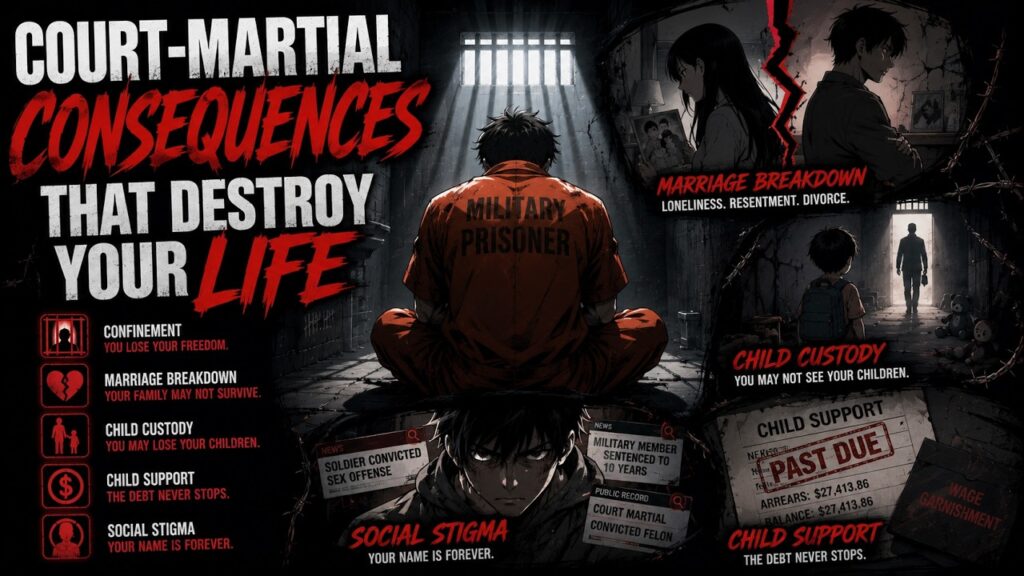
So let’s talk about confinement. You’re in a cage. You eat the crappy food they give you. It’s not as bad as most county jails, but it’s not great. You wear what they give you. They tell you when to get up, when to go to sleep, and who you can talk to. They limit and monitor all your phone calls, except calls with your lawyers. They read every single letter. You read the books they allow. You have very limited privacy and limited visitation. You’re in prison. Bad things happen in prison. Military prison is not as bad as most state prisons, but it’s not a good place. You’re in there with a bunch of convicted felons, for the most part. They tell you when to move and what line to stand on, and you can’t see your family. You don’t get to tuck your kids into bed. And time is passing. Your life is passing, and the lives of your family members are going on without you.
Now I’m going to talk about something that is controversial, because it upsets people: marital breakdown after a conviction. This is a real thing. When someone goes to prison, especially for sex offenses or violent crimes, marriages often break. There’s a very high chance your marriage is going to fall apart. Not in every case, but very often, statistically. I’m not making this up to scare you. I’m just telling you this is serious business. Financial strain is going to affect your family members and your kids. Social stigma: people asking, “Hey, what happened to Dad?” “Dad’s at Leavenworth. Dad got 10 years. He’s a federal convict.” You’re talking about loneliness and resentment.
Yes, I have seen many wives stand strong. If they truly love their husband, they’ll stand up and fight. Often those wives are the ones going out and finding the best military defense lawyer they can find to help fight for their husband. If you have a wife who is out there looking to fight for you and wanting to get you the best defense, that’s a very good sign, and I would say you have a much better chance of staying together. But on the other hand, I’ve seen many divorces, sometimes filed a day or two after the conviction. Even if they say they’re going to stay with you, by the time you get out of prison, they’ve moved on. They have another man who’s living with your kids. I’m just being brutally honest with you. And in many cases they also use your conviction against you to deny you custody of your kids.
Which leads into a more important thing that I want to spend a little more time on: child custody. Family courts consider criminal convictions. Domestic violence convictions can restrict custody. Sex offense convictions can lead to supervised visitation. So the bottom line is, you might not be able to see your kids freely if you’re convicted at a court-martial. This isn’t just being emotional or dramatic; it is a procedural reality. So when I hear people say, “Oh, I’m just going to wing it. I’m going to go with the free lawyer the Army gave me,” I’m like, “What are you doing?” At a minimum, talk to some people who might be able to help, who have been doing this for a while.
Let’s talk about another thing: child support. If you have kids, you still owe child support. I’ve had many clients get out of prison and find out that the child support kept accruing. You don’t get out of child support simply because you’re in jail. But here’s the problem with paying child support: in most cases, your income has dropped if you’re convicted, yet your obligations remain, especially if you have two, three, or four young kids. The arrears build up, the debt builds up, and in some cases they can take your car or your license if you’re behind. There are a lot of collateral consequences that come with falling behind on child support, depending on your state, even if you’re in jail and don’t want to be.
Now let’s talk about social stigma. Your conviction will follow you. People can Google you and see if you’ve been convicted. You’re going to be on public websites, public records, and online databases. Maybe you’re even going to be in the news; a lot of times military cases end up in the news. Your identity is forever marred. So anytime you apply for a job and someone Googles your name, they’re going to say, “Oh, that’s the guy at Norfolk who got convicted of fill-in-the-blank.”
Video transcript: Court-Martial Confinement: Marriage, Custody & Finance Risks
Transcript of the video “Court-Martial Confinement: Marriage, Custody & Finance Risks,” from Gonzalez & Waddington.
Read the full transcript of this video
So, let’s talk about confinement. So, you’re in a cage. You eat the crappy food that they give you. It’s not as bad as most county jails, but it’s not great.
You wear what they give you. They tell you when to get up, when to go to sleep, who you can talk to. They limit and monitor all your phone calls except for with your lawyers. They read every single letter.
You read books that they allow. You have very limited privacy, limited visitation. You’re in prison. Bad things happen in prison.
Military prison is not as bad as most state prisons, but it’s not a good place. You’re in there with a bunch of convicted felons for the most part. They tell you when to move, what line to stand on, and you can’t see your family. You don’t get to tuck your kids into bed.
And time is passing on. Your life is passing on. The lives of your family members without you. Now, I’m going to talk about something that is controversial because it upsets people, marital breakdown after a conviction.
This is a real thing. When someone goes to prison, especially for sex offenses or violent crimes, marriages often break. There’s a very high chance your marriage is going to fall apart. Now, not every case, but very often statistically.
I’m not making this up to make you scared. I’m just telling you, this is serious business. Financial strain is going to affect your family members, your kids, social stigma, people asking, “Hey, what happened to Dad?” Dad’s at Leavenworth.
Dad got 10 years. He’s a federal convict. You’re talking about loneliness, resentment. Yes, I have seen many wives stand strong.
If they truly love their husband, they’ll stand up and fight. Often those wives are the ones going out and finding the best military defense lawyer they can find to help fight for their husband. If you have a wife that is out there looking to fight for you and wanting to get you the best defense, that’s a very good sign and you have a much better chance, I would say, of staying together. But on the other hand, I’ve seen many divorces, sometimes filed a day or two after the conviction.
Even if they say they’re going to stay with you, by the time you get out of prison, they moved on. They have another man who’s living with your kids. I’m just being brutally honest with you. And they also, in many cases, use your conviction against you to deny you custody of your kids, which leads into a more important thing that I want to spend a little more time on.
It’s child custody. Family courts consider criminal convictions. Domestic violence convictions can also restrict custody. Sex offense convictions can lead to supervised visitation.
So, the bottom line is you might not be able to see your kids freely if you’re convicted at a court-martial. This isn’t just being emotional or dramatic, it is a procedural reality. So, when I hear people say, “Oh, I’m just going to wing it. I’m going to go with the free lawyer that the Army gave me.”
I’m like, “What are you doing?” At a minimum, at least talk to some people that might be able to help, that have been doing this for a while. So, let’s talk about another thing, child support. If you have kids, you still owe child support.
I’ve had many clients who get out of prison to find out that that child support kept continuing on. You don’t get out of child support simply because you’re in jail. But, here’s the problem with paying child support. Your income has dropped if you’re convicted in most cases.
Yet, your obligations remain, especially if you have two, three, four kids that are young. The arrears start to build up, the debt builds up, and in some cases they can take your car, take your license if you’re behind. And there’s a lot of collateral consequences that come with falling behind on child support payments, depending on your state. Even if you’re in jail and you don’t want to be in jail.
Now, let’s talk about social stigma. Your conviction will follow you. You could Google people and see if they’re convicted. You’re going to be on public websites, public records, online databases.
Maybe you’re even going to be in the news. A lot of times military cases end up in the news. Your identity is forever marred. So, anytime you go apply for a job and someone Googles your name, you’re going to be like, “Oh, that’s the guy at Norfolk who got convicted of fill in the blank.”
Recent Blogs
- Nonpunitive Letter of Caution vs. Punitive Letter of Reprimand: What Navy and Marine Corps Officers Need to KnowNovember 6, 2026
- First 24 Hours After CGIS Contacts You: What Coast Guard Members Should DoNovember 6, 2026
- First 24 Hours After OSI Contacts You: What Airmen and Guardians Should DoNovember 6, 2026
- First 24 Hours After NCIS Contacts You: What Sailors and Marines Should DoNovember 6, 2026
- First 24 Hours After CID Contacts You: What Soldiers Should DoNovember 6, 2026
- Is Hiring the Cheapest Military Defense Lawyer a Mistake?November 6, 2026