Italy Military Defense Lawyers | UCMJ Court-Martial Defense
CID, NCIS, and OSI investigate U.S. service members stationed across Italy — at Aviano, Vicenza, Naples, Sigonella, and Camp Darby — and Gonzalez & Waddington defends Soldiers, Sailors, Airmen, Marines, and Guardians in court-martial proceedings and administrative actions throughout Italy.
Attorneys Michael Waddington and Alexandra Gonzalez-Waddington defend service members against every charge brought at installations across Italy, traveling there and representing clients worldwide. Investigations by CID, NCIS, and OSI across all services — roughly 11,500 personnel — cover Article 120 allegations, DUIs, assault, drug offenses, and digital misconduct.
A single allegation near Vicenza, Aviano, or Naples can trigger Italian Carabinieri or Polizia reports, NATO SOFA jurisdiction questions, foreign-language records, and parallel U.S. military investigations — while the command restricts the service member or begins separation. The firm handles court-martial defense, Article 15 and NJP responses, GOMOR rebuttals, separation boards, Boards of Inquiry, and security clearance matters.
Contact Gonzalez & Waddington at 1-800-921-8607 for a free, confidential consultation.
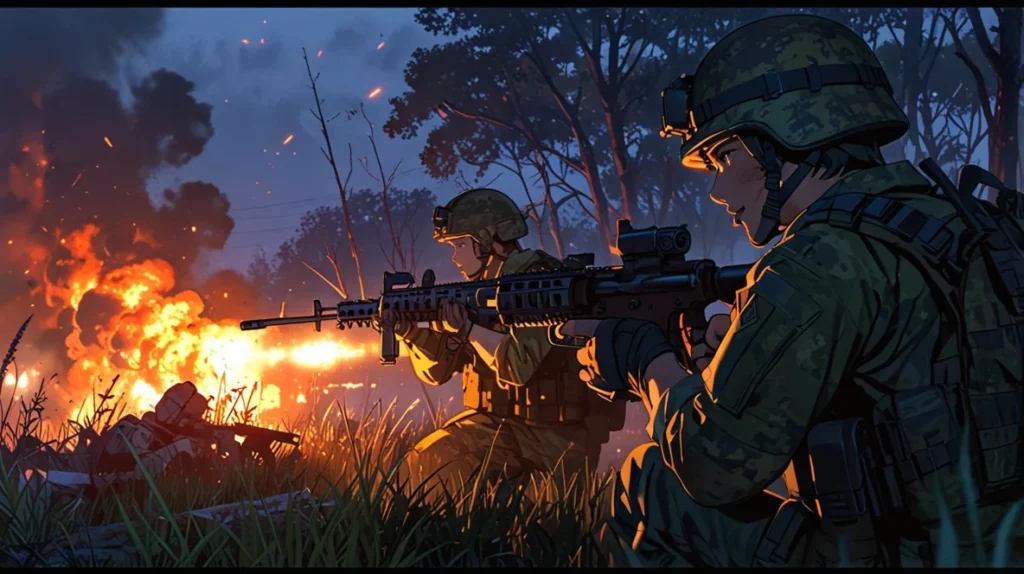
Italy Military Defense Lawyers | UCMJ & Court-Martial Defense for U.S. Service Members
Italy is one of the most important overseas hubs for U.S. military operations. Army, Navy, Air Force, NATO, airborne, aviation, naval, and logistics communities are spread across Vicenza, Aviano, Naples, Sigonella, Camp Darby, Pisa, Livorno, Sicily, and the broader Southern Europe region.
Service members stationed in Italy may face UCMJ investigations that arise from a wide range of situations, including:
- Off-post housing disputes and Italian police contact
- Alcohol-related incidents and DUIs
- Article 120 allegations, domestic calls, and hotel allegations
- Dating-app encounters and online misconduct
- NATO exercises, airborne operations, and naval support missions
- Digital evidence, classified work, and host-nation jurisdiction issues
- Command pressure inside a strategically critical European environment
Civilian Court-Martial Attorneys for U.S. Service Members in Italy
Gonzalez & Waddington defends U.S. service members stationed in Italy in serious UCMJ matters. We handle court-martial cases, Article 15/NJP actions, GOMOR and letter of reprimand rebuttals, administrative separation boards, Boards of Inquiry, and security clearance matters.
An allegation can threaten your freedom, rank, clearance, assignment, and career long before charges are preferred. This applies to every member of the community connected to a U.S. installation in Italy — Soldiers, Sailors, Airmen, Marines, Guardians, officers, NCOs, enlisted members, spouses, and family. Affected installations include:
- Aviano Air Base
- USAG Italy — Vicenza, Caserma Ederle, and Caserma Del Din
- Camp Darby, Livorno, and Pisa
- Naval Support Activity Naples and NSA Capodichino
- Naval Air Station Sigonella and Gaeta
An Italy case is different from a stateside case. A single matter may pull in the UCMJ, Italian law, NATO SOFA issues, Carabinieri or Polizia reports, local prosecutors, U.S. investigators (CID, NCIS, OSI), Italian hospitals, off-post landlords, civilian witnesses, hotel evidence, phone extractions, WhatsApp messages, and foreign-language records.
The geography compounds the problem. A service member may be stationed in Vicenza, live off post in an Italian town, travel to Venice, Rome, Naples, Florence, Milan, Sicily, Croatia, Austria, or Germany — and suddenly face both military and host-nation consequences.
If you are accused of any UCMJ offense in Italy, do not wait for the command’s theory to harden. This includes Article 120 sexual assault, abusive sexual contact, domestic violence, assault, DUI, drug misconduct, fraud, larceny, false official statement, orders violations, harassment, stalking, threats, weapons misconduct, child exploitation, online misconduct, or classified-information violations.
Call Gonzalez & Waddington at 1-800-921-8607 or text 954-799-4019 to request a confidential consultation with civilian military defense lawyers who defend service members worldwide.
Civilian Military Defense for Service Members Stationed in Italy
Italy is not simply an overseas assignment. It is a major U.S. military platform supporting NATO, airborne forces, Mediterranean operations, naval logistics, aviation missions, special operations, intelligence activity, multinational training, and contingency response across Europe, Africa, and the Middle East. U.S. Army Garrison Italy describes itself as “The Army’s Power Projection Platform South of the Alps.” See U.S. Army Garrison Italy.
That mission matters in a defense case. A service member in Italy may serve in an airborne unit, aviation unit, fighter wing, naval support activity, logistics command, military police unit, medical command, intelligence billet, NATO-facing mission, or multinational environment.
Allegations can surface almost anywhere — in barracks, off-post housing, Italian hotels, training areas, NATO exercises, local bars, command-directed inquiries, or during leave travel across Europe.
An effective Italy defense lawyer must understand more than the court-martial process. The defense must also account for:
- Overseas command structures and SOFA issues
- Host-nation evidence and Italian law enforcement contact
- U.S. investigative agencies and digital evidence
- International witnesses, foreign-language records, and translation problems
- Travel restrictions and security clearance consequences
- The speed at which a command-driven investigation becomes career-threatening
UCMJ Jurisdiction, Italian Authorities & Overseas Military Justice
Service members in Italy remain subject to the Uniform Code of Military Justice. At the same time, they live in a sovereign host nation where Italian law may also apply. A single event can therefore create multiple parallel tracks:
- A local Italian police matter
- A command investigation
- A CID, NCIS, or OSI investigation
- A security clearance review
- An Article 15 or NJP action
- A GOMOR or letter of reprimand
- Administrative separation or a Board of Inquiry
- A court-martial referral
This is one of the most important differences between an Italy case and a stateside case. A DUI near Vicenza, an assault allegation in Naples, a domestic call near Aviano, a sexual assault allegation in Sigonella, or a hotel incident in Rome may involve local police, Italian medical providers, Italian witnesses, foreign-language records, and U.S. military investigators at the same time.
Meanwhile, the command may restrict the service member, issue a no-contact order, begin adverse paperwork, start separation processing, or refer charges while host-nation coordination is still unfolding.
Host-nation status can also create dangerous confusion. A service member may assume a matter is “only Italian,” “only command,” or “only administrative.” In reality, the same conduct may trigger local, command, UCMJ, and long-term career consequences. A service member should not make statements to investigators, command, or local authorities without first understanding the risk.
Vicenza, Caserma Ederle, Caserma Del Din & the 173rd Airborne Brigade
Vicenza is one of the most important U.S. Army communities in Italy. The 173rd Airborne Brigade describes itself as based in Vicenza, Italy, and Grafenwoehr, Germany — built to move quickly, strike decisively, and integrate with allied forces. See the 173rd Airborne Brigade Mission.
That rapid-response mission creates a legal environment shaped by physical readiness, deployment cycles, multinational training, field exercises, off-post living, and high command expectations.
Cases connected to Vicenza commonly involve Caserma Ederle, Caserma Del Din, airborne units, SETAF-AF environments, NATO exercises, barracks incidents, local nightlife, off-post apartments, and travel to Venice, Verona, or Padova. They may also include driving incidents, domestic calls, Article 120 allegations, drug cases, and digital evidence.
Because Vicenza is a tight-knit military community, witness contamination can happen fast. Soldiers may talk inside barracks, workspaces, and group chats before investigators have separated witnesses or preserved evidence.
A Vicenza case may also involve witnesses who travel, deploy, or rotate to Germany. That makes early evidence preservation critical. The defense may need to identify hotel records, taxi records, WhatsApp messages, Italian police reports, medical records, CCTV footage, gate records, and travel documents before the command accepts a one-sided account.
Aviano Air Base & Air Force Defense Cases in Italy
Aviano Air Base is one of the most important U.S. Air Force installations in Italy. The 31st Fighter Wing states that its mission is to secure the base, generate combat airpower, and be ready to deploy and fight from home. See the 31st Fighter Wing.
That high-readiness mission means allegations are often evaluated through the lens of mission trust, clearance, access, aircraft operations, security, and deployability.
Air Force cases at Aviano may involve OSI investigations, Security Forces records, command-directed inquiries, letters of reprimand, Article 15 actions, discharge boards, Boards of Inquiry, maintenance records, flight-line issues, dormitory incidents, and off-base housing. A DUI near Pordenone, a domestic call, a drug or Article 120 allegation, or a security concern can all affect a clearance, duties, assignment, and promotion.
Aviano also has a distinct off-post setting. Service members may live or socialize in Pordenone, Aviano, Sacile, Roveredo, Venice, or Treviso. An allegation there may involve Italian police, hospitals, restaurants, hotels, train travel, taxi records, WhatsApp messages, and civilian witnesses. A sound defense strategy must address both the military case and the host-nation evidence problem.
Naples, NSA Capodichino, Gaeta & U.S. Naval Forces in Italy
Naval Support Activity Naples is a major U.S. Navy presence in Southern Italy. The official page states NSA Naples hosts more than 50 separate commands and roughly 8,500 personnel, sitting about 60 miles south of Gaeta and 145 miles from Rome. See Naval Support Activity Naples.
Naples cases can be especially complex. The local environment includes a dense city, multiple installations, an international airport area, local police, Navy commands, families, contractors, schools, and travel throughout Southern Italy.
A Naples case may involve NSA Capodichino, the Support Site in Gricignano, Gaeta-related naval activity, off-post housing, hotels, nightlife, driving incidents, domestic calls, Article 120 allegations, child exploitation investigations, fraud, digital evidence, or clearance concerns.
Service members assigned to Naples may work in headquarters, naval support, communications, logistics, medical, security, or operational roles. Allegations may involve office conduct, classified work, international partners, contractors, school communities, or family matters. A weak local report can still become a career problem if the defense does not respond early and strategically.
NAS Sigonella, Sicily & Mediterranean Operations
Naval Air Station Sigonella sits at NATO Maritime Airfield Sigonella and provides operational command and control plus administrative, logistical, and advanced logistical support to U.S. and NATO forces. The Navy describes it as a major support element for U.S. Sixth Fleet Mediterranean operations. See NAS Sigonella Operations and Management.
Sigonella cases can involve Navy, Marine Corps, Air Force, NATO, logistics, aviation, ISR, medical, security, and transient personnel. The Sicilian setting differs from northern Italy or Naples and creates unique evidence issues involving Catania, Motta Sant’Anastasia, off-post housing, local hotels, Italian police, travel to Palermo or the mainland, and witnesses who may leave the island quickly.
A serious allegation at Sigonella may involve Article 120, abusive sexual contact, domestic violence, assault, drug use, false official statements, travel claims, government property, classified information, or online misconduct. Because Sigonella supports operational missions, command pressure can build fast when allegations are seen as affecting trust, readiness, access, or host-nation relations.
Camp Darby, Pisa, Livorno & Logistics Cases in Italy
Camp Darby and the Darby Military Community sit in Tuscany between Livorno and Pisa. This environment differs from Vicenza, Aviano, Naples, or Sigonella. Darby-related cases may involve logistics, ammunition or equipment support, port operations, small-community command dynamics, travel to Pisa or Florence, off-post housing, Italian police contact, and driving incidents.
Logistics cases carry unique UCMJ risk. A service member may face allegations involving:
- Government property and transportation records
- Ammunition accountability and supply records
- Travel cards and false statements
- Larceny, fraud, and vehicle incidents
- Safety violations and orders violations
A matter that begins as an accountability issue can escalate into an Article 15, GOMOR, administrative separation, Board of Inquiry, or court-martial if the command believes the facts show dishonesty, dereliction, or criminal intent.
Because Darby is more remote than larger garrisons, evidence preservation is especially important. The defense may need to secure Italian civilian witnesses, local police records, port records, property documents, duty logs, hotel records, travel data, text messages, and command communications before the investigation narrows around a single theory.
Italian Cities, Hotels, Airports, Trains & Off-Post Evidence
Italy cases often turn on local civilian facts. An accusation may follow an incident in Vicenza, Aviano, Pordenone, Venice, Verona, Padova, Milan, Rome, Naples, Gaeta, Pisa, Livorno, Florence, Catania, Palermo, or Sigonella. Relevant evidence may include:
- Italian police reports and translated statements
- Taxi, rideshare, and train records
- Hotel key records and airport records
- Phone location data, texts, and WhatsApp messages
- Restaurant witnesses, bar staff, and Italian medical records
Driving and alcohol cases carry military consequences of their own. An Italian DUI, reckless driving allegation, traffic accident, e-scooter incident, license issue, or refusal allegation may trigger command action even when Italian authorities handle part of the matter. The command may impose restrictions, revoke driving privileges, issue adverse paperwork, start an Article 15 or NJP, or pursue separation for the same conduct.
Hotel and nightlife allegations can be especially complicated. A weekend trip to Rome, Venice, Florence, Milan, Naples, Sicily, Croatia, Austria, or Germany may involve civilian witnesses, tourists, bar staff, hotel employees, phone records, language barriers, and tight travel timelines.
A delayed Article 120 allegation may rely heavily on digital communications and competing accounts. Early evidence preservation is essential — hotel video can be overwritten, witnesses may leave the country, and command assumptions can harden quickly.
How Local Italy Incidents Become Military Legal Problems
The following examples are hypothetical. They are not claims about any actual case, command, or person. They illustrate how local facts can matter when a service member stationed in Italy is accused of misconduct.
- Vicenza alcohol incident: A Soldier leaves a bar or unit event in Vicenza, is contacted by Italian police, and later faces both local consequences and command action — an Article 15, GOMOR, driving restrictions, clearance review, or separation processing.
- Aviano DUI: An Airman is stopped near Aviano or Pordenone after drinking off post. Police records, breath testing, witness statements, and command notification trigger both host-nation issues and Air Force administrative action.
- Naples domestic call: A family argument in off-post housing near Naples leads to police contact, command notification, a no-contact order, Family Advocacy involvement, access restrictions, and possible UCMJ or administrative action.
- Sigonella hotel allegation: A hotel stay or dating-app encounter in Catania or Palermo leads to an Article 120 allegation involving hotel records, phone location data, civilian witnesses, and competing accounts.
- Headquarters misconduct allegation: A workplace complaint inside a NATO or multinational environment involves emails, Teams messages, foreign contacts, classified concerns, contractor witnesses, and clearance issues.
- Darby logistics issue: A service member is accused of mishandling equipment, violating safety procedures, falsifying records, or making a false statement during a command inquiry.
- Clearance-sensitive allegation: A member in a sensitive billet is accused of mishandling information, failing to report foreign contact, misusing government systems, or financial misconduct raising clearance concerns.
- Digital evidence case: The government relies on Snapchat, Instagram, WhatsApp, Signal, texts, deleted messages, partial screenshots, metadata, or a limited phone extraction. Early defense work can preserve context and expose incomplete evidence.
How Military & Host-Nation Consequences Overlap in Italy
You do not need to be convicted in an Italian court before military consequences begin. A single incident may trigger Italian police contact, military police involvement, a CID/OSI/NCIS investigation, a command-directed inquiry, a no-contact order, suspension from duties, a GOMOR or letter of reprimand, an Article 15/NJP, separation, a Board of Inquiry, a clearance review, or a court-martial referral.
The overseas setting adds pressure and confusion. A service member may not understand what Italian police are asking. A translated statement may be incomplete. A local record may omit helpful facts. Medical records may require translation. Civilian witnesses may be hard to locate. Meanwhile, the command may move fast to show accountability, maintain host-nation relations, or protect the mission.
Italy cases also raise practical evidence problems. Witnesses may rotate to Germany, Spain, the United States, or another exercise. A member may be flagged or restricted while favorable evidence is still uncollected. Local video may disappear, phone data may be lost, and travel records may need immediate preservation.
The key point is practical: Italian civilian consequences and U.S. military consequences are separate. A matter handled by Italian authorities does not automatically stop command action, and a command decision does not resolve host-nation concerns. A weak local case can still become a career-threatening UCMJ case if the defense fails to address both the host-nation record and the chain of command.
Military Law Issues for Service Members in Italy
Italy-based service members may face a broad range of military legal actions, including:
- Court-martial charges and Article 32 preliminary hearings
- Article 15/NJP actions, GOMORs, and letters of reprimand
- Administrative separation boards and Boards of Inquiry
- Command-directed investigations and security clearance reviews
- Relief-for-cause actions and adverse evaluations
The issue may begin with CID, OSI, NCIS, CGIS, military police, Italian police, a commander’s inquiry, a SAPR report, a barracks complaint, a spouse allegation, a positive urinalysis, or an allegation by another member, civilian, contractor, subordinate, or dating partner.
Article 120 Sexual Assault & Abusive Sexual Contact
These allegations may involve barracks rooms, off-post apartments, Italian hotels, parties, unit events, alcohol, dating apps, delayed reports, and digital messages. Cases often turn on consent, credibility, intoxication, timing, witness contamination, digital evidence, and command assumptions.
Domestic Violence & Assault
These cases may involve Italian police reports, emergency calls, medical records, photographs, protective orders, Family Advocacy records, no-contact orders, and firearms restrictions. Even when host-nation authorities handle part of the matter, the command may still pursue a GOMOR, Article 15, separation, Board of Inquiry, or clearance action.
Drug & Alcohol Cases
A positive urinalysis, prescription issue, distribution allegation, Italian DUI, or off-post nightlife incident may lead to investigation, adverse paperwork, or separation. For members in leadership, aviation, military police, intelligence, medical, or clearance-sensitive roles, administrative consequences can move faster than the criminal process.
Fraud, Larceny, False Statements & Property Offenses
These allegations may involve government property, travel cards, OHA, TDY records, field equipment, weapons, supply records, government computers, or host-nation documents. The defense must evaluate whether the government can prove intent, whether records are complete, whether witnesses are reliable, whether translations are accurate, and whether administrative mistakes are being framed as crimes.
Under Investigation at Italy? Know These Rules First
Your rights in an military investigators interview. Article 31(b) of the UCMJ gives you the right to know what you are suspected of and to remain silent, and you may ask for a lawyer before any questioning by military investigators (CID, OSI, NCIS or CGIS). Declining to answer is not an admission. At Italy, as anywhere, the safest first step is to say you want to speak with counsel and then stop talking.
Titling can follow you. military investigators can title you as the subject of an investigation, which indexes your name in the Defense Central Index of Investigations, on a low "credible information" standard. Titling is not a finding of guilt, but the record can surface in later background and security clearance checks even if no charges are ever brought.
Who decides whether you are charged. For covered offenses, including sexual assault, domestic violence, stalking, kidnapping, murder, child pornography and, since 2025, sexual harassment, the decision to prefer and refer charges belongs to an independent special trial counsel rather than your commander at Italy. For other offenses the command still decides. Which track a case is on shapes the defense from the first day.
Family and relationship allegations. Domestic violence is charged under Article 128b, and strangulation or suffocation can be charged as aggravated assault whether or not there is a mark. The hidden cost is the Lautenberg Amendment: a qualifying conviction bars possession of firearms and ammunition, which few military careers survive.
Drug and off-duty allegations overseas. Article 112a of the UCMJ applies to service members in Italy whatever local law allows, and host-nation authorities may also have jurisdiction under the Status of Forces Agreement. A positive urinalysis can still be challenged on chain of custody, testing and innocent ingestion.
BAH and allowance cases. An overpayment is a debt, not a crime. To convict under Article 121 (larceny) or Article 124 (frauds against the United States), the government must prove intent, and that is where many BAH cases fall apart once the paperwork history is reconstructed.
If you are under investigation at Italy, talk to a military defense lawyer before you make any statement. Call Gonzalez & Waddington at 1-800-921-8607.
Working Alongside Detailed Military Defense Counsel in Italy
A service member facing court-martial generally has the right to detailed military defense counsel. Civilian counsel does not replace that lawyer — it works alongside them. Civilian counsel can bring an independent defense strategy, communicate with family in the United States, conduct early investigation, prepare witnesses, review digital evidence, challenge weak assumptions, and help the member understand both legal and career risks.
In Italy, civilian counsel may need to review evidence from many sources, including CID/OSI/NCIS reports, military and Italian police records, translated witness statements, Italian medical records, barracks statements, deployment timelines, command emails, counseling entries, evaluations, hotel and travel records, taxi records, social media, WhatsApp messages, protective order information, urinalysis documents, weapons and supply records, and clearance paperwork.
Gonzalez & Waddington is a civilian military defense firm focused on military criminal defense and UCMJ litigation. We represent members of every branch — Army, Navy, Air Force, Marine Corps, Coast Guard, Space Force, Reserve, and National Guard. The firm defends courts-martial, Article 120/120b/120c cases, Article 128/128b assault and domestic violence cases, CSAM and online sting cases, investigations, Article 15/NJP actions, Boards of Inquiry, separations, reprimand rebuttals, clearance matters, and serious felony-level military cases.
Quick Answer: Military Defense Lawyers for Italy
U.S. service members stationed in Italy can face military consequences from both on-base and off-base allegations across Vicenza, Aviano, Pordenone, Naples, Capodichino, Gaeta, Sigonella, Catania, Camp Darby, Livorno, Pisa, Florence, Rome, Venice, Milan, and surrounding communities. A civilian military defense lawyer can work alongside detailed military counsel in courts-martial, Article 120 cases, Article 15/NJP matters, reprimand rebuttals, separation boards, Boards of Inquiry, clearance matters, and command investigations. Because Italy is a major overseas hub tied to NATO, airborne forces, Air Force combat airpower, and Navy Mediterranean operations, defense strategy should account for command pressure, local civilian records, digital evidence, translation issues, host-nation evidence, deployment timelines, and long-term career consequences.
I was wrongly accused under articles 120, 128b, and 130, and the legal battle was an incredibly draining experience. Throughout the two-and-a-half-year ordeal, Michael and Alexandra displayed unmatched professionalism, deep legal expertise, and genuine care for my case.
Prior results do not guarantee a similar outcome. Every case is different.
Italy Military Defense FAQ
Can Italian police involvement affect my U.S. military career?
Yes. Italian police contact can trigger U.S. military consequences before any host-nation process is finished. A DUI, assault allegation, domestic call, traffic incident, drug allegation, or sexual misconduct allegation may lead to command action, restrictions, an Article 15 or NJP, a GOMOR or letter of reprimand, separation, a Board of Inquiry, a clearance review, or a court-martial — depending on the facts.
Can an off-post allegation in Italy become an Article 120 case?
Yes. An off-post allegation in an Italian apartment, hotel, bar, train station, taxi, or barracks can become a military sexual assault investigation if the accused is subject to the UCMJ. Texts, WhatsApp messages, dating apps, hotel records, travel records, phone extractions, civilian witnesses, delayed reports, and translated statements may all become central evidence.
Do I need a civilian military defense lawyer if I already have detailed military counsel?
You may. Detailed military counsel is an important part of the defense team. Civilian counsel can add independent investigation, family communication across time zones, digital evidence review, host-nation evidence analysis, witness preparation, cross-examination strategy, and continuity outside the command structure.
Can my command take action before Italian authorities finish their case?
Yes. The command may act before a host-nation matter is complete. A service member may face restriction, no-contact orders, a GOMOR or letter of reprimand, an Article 15 or NJP, a clearance review, separation processing, or duty removal while Italian authorities are still reviewing the matter.
Can an Italy-based service member face separation even if Italian authorities do not prosecute?
Yes. The military may pursue a GOMOR, letter of reprimand, Article 15, NJP, administrative separation, Board of Inquiry, or clearance review even if Italian authorities decline, reduce, or dismiss a matter. Military administrative decisions often focus on retention, judgment, trustworthiness, and service suitability — not only criminal conviction.
Can an officer in Italy face a Board of Inquiry after an off-post allegation?
Yes. Officers may face a Board of Inquiry or show-cause action after allegations involving misconduct, Italian police contact, domestic violence, sexual misconduct, fraternization, dishonesty, leadership failures, loss of confidence, security violations, or conduct unbecoming. The defense should address both the allegation and the officer’s complete service record.
Military investigators want to interview me at Italy. Do I have to talk to them?
No. Article 31(b) of the UCMJ requires investigators to tell you what you are suspected of and that you have the right to remain silent, and you can ask for a lawyer before answering anything. An interview is evidence collection, and military investigators can title you as a subject on a low "credible information" standard that can follow you into background and clearance checks even if the case is dropped. Politely decline, ask for counsel, and call a military defense lawyer before you say anything.
Why Choose Gonzalez & Waddington for Italy Military Defense
Gonzalez & Waddington, LLC is a civilian military defense firm representing service members worldwide, including those stationed in Italy and across Europe. The firm is led by Michael Waddington and Alexandra González-Waddington, a husband-and-wife defense team focused on military criminal defense, court-martial litigation, UCMJ investigations, separation boards, Boards of Inquiry, reprimand rebuttals, sexual assault defense, violent offense defense, and digital-evidence cases.
Michael Waddington
Michael Waddington is a former Army officer and former Army JAG. He served as an Army Trial Defense Counsel, Senior Defense Counsel, Army prosecutor, Special Assistant United States Attorney, and Chief of Military Justice. He has more than 25 years of military defense experience, is licensed in Florida, Georgia, Pennsylvania, New Jersey, and South Carolina, and is admitted to all U.S. military trial courts worldwide.
Alexandra González-Waddington
Alexandra González-Waddington is a founding partner, former public defender, and experienced military defense lawyer licensed in Florida and Georgia. She is admitted to all U.S. military trial courts worldwide and has defended service members in sexual assault, violent crime, war crimes, murder, classified-information, domestic violence, and white-collar cases. She co-tries the firm’s cases with Michael Waddington and is bilingual in English and Spanish.
The firm’s attorneys have defended service members in the United States, Germany, Italy, Spain, the United Kingdom, Japan, South Korea, Guam, the Middle East, Iraq, Afghanistan, and other deployed environments. They have written and taught extensively on trial advocacy, cross-examination, sexual assault defense, digital evidence, DNA evidence, expert witnesses, and military justice. For Italy-based service members facing host-nation evidence, Italian police reports, command pressure, Article 120 accusations, or serious UCMJ charges, that trial-focused background matters.
Talk to a Civilian Military Defense Lawyer for Italy UCMJ Cases
If you are stationed in Italy and are under investigation or facing command action, get legal guidance before making statements or submitting paperwork that may be used against you later. This includes situations where you are:
- Facing CID, OSI, NCIS, CGIS, or command questioning
- Accused of Article 120 sexual assault or dealing with an Italian police matter
- Facing a DUI, an Article 15, or an NJP
- Fighting a GOMOR or letter of reprimand
- Preparing for a separation board or Board of Inquiry
- Worried about your security clearance
Gonzalez & Waddington defends service members in serious military cases worldwide. The firm can work alongside detailed military counsel, review the evidence, help preserve favorable information, prepare for command decisions, and build a strategy that accounts for the military case, the overseas environment, host-nation evidence, translation issues, NATO/SOFA realities, and the long-term consequences to your rank, clearance, retirement, and future.
Call Gonzalez & Waddington at 1-800-921-8607 or text 954-799-4019 to request a confidential consultation. No attorney can guarantee a result. The goal is to intervene early, protect your rights, and help you make informed decisions before the command or prosecution theory hardens.
Helpful Italy U.S. Military Resources
- U.S. Army Garrison Italy
- 173rd Airborne Brigade Mission
- 31st Fighter Wing, Aviano Air Base
- Naval Support Activity Naples
- Naval Air Station Sigonella
Major U.S. Military Installations in Italy
- Aviano Air Base Court-Martial Lawyers
- Naval Air Station Sigonella Court-Martial Lawyers
- USAG Vicenza Court-Martial Lawyers
- Naval Support Activity Naples Court-Martial Lawyers
- NSA Capodichino Court-Martial Lawyers
Related Military Legal Guides
Aggressive Criminal Defense Lawyers
This video explains what your rights are and how experienced criminal defense lawyers can make a difference.






Facing a military investigation, UCMJ allegation, or serious criminal charge? Gonzalez & Waddington provides trial-focused defense for high-stakes cases. Call 1-800-921-8607 or text 954-799-4019 for a confidential, no-cost consultation.