Article 120, UCMJ (10 U.S.C. . 920) criminalizes rape, sexual assault, aggravated sexual contact, and abusive sexual contact — four distinct offenses covering sexual acts and sexual contact committed by force, threat, bodily harm, fraud, or upon a person incapable of consenting.
The statute applies to every person subject to the Code regardless of duty status, rank, or location, on a military installation or off, in the United States or overseas. Gonzalez & Waddington defends service members charged under Article 120.
To convict under Article 120, the government must prove a sexual act or sexual contact was committed by force, threat, bodily harm, fraud, administering a substance, or upon a person incapable of consenting. Consent is a defined statutory term — a freely given agreement by a competent person — and voluntary intoxication does not automatically equal incapacity. Gonzalez & Waddington defends service members facing Article 120 charges.
Under the Manual for Courts-Martial, rape carries confinement for life without parole eligibility, sexual assault carries up to 30 years, aggravated sexual contact carries up to 20 years, and abusive sexual contact carries up to 7 years. Article 56(b), UCMJ mandates a dismissal or dishonorable discharge for rape and sexual assault convictions — no judge or panel may waive it. Every Article 120 conviction also triggers federal sex offender registration and forfeiture of all pay and allowances.
Michael Waddington, a former Army Senior Defense Counsel, challenges Article 120 cases by attacking the government's incapacity theory, litigating M.R.E. 412 and 413 motions before trial, and securing forensic and digital evidence early. Defense at the investigation stage — before charges are preferred — limits the government's narrative and preserves options. Gonzalez & Waddington also moves to suppress unlawfully obtained phone and digital evidence, which investigators routinely seek in sexual assault investigations.
Gonzalez & Waddington defends service members of every branch — Army, Navy, Air Force, Marine Corps, Coast Guard, and Space Force, including Reserve and National Guard members — in military courts across the United States and overseas, including Germany, Italy, Japan, and South Korea. Michael Waddington brings more than 25 years of military defense experience; Alexandra Gonzalez-Waddington is a founding partner and former public defender. Call 1-800-921-8607 for a confidential consultation.
Reviewed by Michael Waddington, Founding Partner · Updated October 8, 2026
Table Content
By Michael Waddington, former U.S. Army JAG officer and civilian court-martial defense attorney · Legally reviewed by Alexandra González-Waddington, founding partner
Article 120, UCMJ (10 U.S.C. § 920) is the military’s principal sexual offense statute. It creates four offenses: rape, sexual assault, aggravated sexual contact, and abusive sexual contact. Rape carries confinement for life without eligibility for parole; sexual assault carries up to 30 years. Under Article 56(b), UCMJ, a conviction for either rape or sexual assault carries a mandatory minimum of dismissal or dishonorable discharge that no judge or panel may waive. There is no statute of limitations for these offenses, and since 28 December 2023 the independent Office of Special Trial Counsel — not your commander — decides whether you are charged. Gonzalez & Waddington defend Article 120 cases worldwide. Call 1-800-921-8607.
Under investigation or charged under Article 120? Do not give a statement, do not consent to a phone search, and do not contact the complaining witness. Call 1-800-921-8607 or text 954-799-4019 for a confidential consultation.
| Offense | Statute | Conduct | Maximum confinement | Mandatory punitive discharge |
|---|---|---|---|---|
| Rape | Art. 120(a) | Sexual act by force, threat, rendering unconscious, or drugging | Life without eligibility for parole | Yes — dismissal or dishonorable discharge |
| Sexual assault | Art. 120(b) | Sexual act by bodily harm, fraud, or on a person unable to consent | 30 years | Yes — dismissal or dishonorable discharge |
| Aggravated sexual contact | Art. 120(c) | Sexual contact under circumstances that would be rape if a sexual act | 20 years | No, but authorized |
| Abusive sexual contact | Art. 120(d) | Sexual contact under circumstances that would be sexual assault if a sexual act | 7 years | No, but authorized |
All four carry total forfeiture of pay and allowances and reduction to E-1 for enlisted members, and all four can trigger sex offender registration.
Article 120, UCMJ criminalizes sexual acts and sexual contact committed by force, by threat, by causing bodily harm, by fraud, or upon a person who is legally incapable of consenting. It applies to every service member subject to the Code, on duty or off, on an installation or off, in the United States or overseas.
The structure is worth understanding because it drives everything else. The difference between rape and sexual assault is not the intimacy of the act — both require a “sexual act.” The difference is the circumstance: rape requires force, a threat of death or grievous bodily harm or kidnapping, rendering someone unconscious, or administering a drug. Sexual assault covers the remaining circumstances — bodily harm, fraud, and incapacity.
Likewise, aggravated sexual contact and abusive sexual contact mirror rape and sexual assault exactly, but involve “sexual contact” rather than a “sexual act.” The circumstance determines which of the four offenses applies, and the government frequently charges more than one theory in the alternative from the same facts.
Two companion statutes are commonly confused with Article 120. Article 120b covers rape and sexual assault of a child, where consent is legally impossible and the government never has to prove its absence. Article 120c covers other sexual misconduct — indecent viewing, recording, or broadcasting, forcible pandering, and indecent exposure.
The government must prove that the accused committed a sexual act upon another person, and that it was accomplished by one of five statutory circumstances:
| Theory | What the government must prove |
|---|---|
| Unlawful force | Force used without legal justification or excuse |
| Force causing or likely to cause grievous bodily harm | Force of that severity, whether or not harm resulted |
| Threat or placing in fear | Threatening or placing any person in fear of death, grievous bodily harm, or kidnapping |
| First rendering unconscious | The accused rendered the person unconscious and then committed the act |
| Administering a substance | Administering a drug, intoxicant, or similar substance, by force, threat, or without knowledge or permission, thereby substantially impairing the ability to appraise or control conduct |
Note the distinction in the fifth theory, which is frequently misunderstood. It is not enough that a person was intoxicated. Rape by administering a substance requires that the accused administered it, by force or threat or without the person’s knowledge or permission. Voluntary intoxication by the complaining witness is a sexual assault theory under 120(b), not a rape theory under 120(a).
Sexual assault requires a sexual act committed under one of the following circumstances:
The “bodily harm” theory deserves emphasis because it drives a large share of contested prosecutions. Because bodily harm includes any offensive touching, and a touching is offensive if it is without consent, the government can charge sexual assault on a straightforward non-consent theory without proving force of any kind. Whether the touching was “offensive” then collapses into whether there was consent — which is why the statutory definition of consent, below, is the center of gravity in most Article 120 trials.
Article 120(g) defines the terms that control every theory. These definitions, not ordinary usage, govern.
Sexual act — contact between the penis and the vulva or anus or mouth (penetration however slight is sufficient), or penetration however slight of the vulva, anus, or mouth by any part of the body or any object, with intent to abuse, humiliate, harass, degrade, or arouse or gratify sexual desire.
Sexual contact — touching, or causing another to touch, the genitalia, anus, groin, breast, inner thigh, or buttocks of any person, with the requisite intent. Touching may be done with any part of the body or with an object, and through the clothing.
Bodily harm — any offensive touching of another, however slight, including any nonconsensual sexual act or sexual contact.
Force — the use of a weapon; the use of physical strength or violence sufficient to overcome, restrain, or injure; or inflicting physical harm sufficient to coerce or compel submission.
Unlawful force — an act of force done without legal justification or excuse.
Consent — the statutory definition is the single most important sentence in this area of military law:
“The term ‘consent’ means a freely given agreement to the conduct at issue by a competent person. An expression of lack of consent through words or conduct means there is no consent. Lack of verbal or physical resistance does not constitute consent. Submission resulting from the use of force, threat of force, or placing another person in fear also does not constitute consent.”
— Article 120(g)(8)(A), UCMJ, 10 U.S.C. § 920(g)
The statute continues: a current or previous dating, social, or sexual relationship by itself, and the manner of dress of the person involved, do not constitute consent. And a sleeping, unconscious, or incompetent person cannot consent.
Incapable of consenting — the person lacks the cognitive ability to appreciate the nature of the conduct, or lacks the physical or mental ability to make or communicate a decision about whether they agree to it. Note carefully what this does not say: it does not say “intoxicated,” and it does not set a blood-alcohol threshold.
More contested Article 120 cases turn on this distinction than on anything else, and the law is clearer than the practice.
Intoxication is not incapacity. A person can be drunk — even substantially impaired, even someone who later has no memory of the encounter — and still be legally capable of consenting at the time. Alcohol-induced amnesia is a memory phenomenon; it is not proof of incapacity, and the two are frequently conflated in investigative reports and by witnesses recounting what a complaining witness said the next day.
The government carries a second burden. Even where incapacity is established, the statute requires proof that the accused knew or reasonably should have known of that condition. That is an objective standard measured against what a reasonable person in the accused’s position would have perceived — not what a toxicologist can reconstruct after the fact from a retrograde extrapolation.
The evidence that matters here is contemporaneous and specific: what the person actually did and said, whether they were walking and talking normally, what messages were sent before and after, what other people at the scene observed, what surveillance footage shows, and whether the government’s expert is stating conclusions the underlying data supports. Retrograde extrapolation of blood alcohol content is a recurring area of overstatement, and cross-examining that testimony is a technical discipline.
Mistake of fact as to consent remains an available defense at court-martial under R.C.M. 916(j). Where it is raised by some evidence, the accused’s mistaken belief that the other person consented must have been both honest and reasonable under all the circumstances, and the burden then rests on the government to disprove it beyond a reasonable doubt. The Military Judges’ Benchbook contains a pattern instruction on it.
Two practical points. First, the defense is fact-intensive: it depends on what the accused actually perceived, which means contemporaneous communications, witness observations, and the sequence of events do the work. Second, it must be raised properly — a defense that is not raised by the evidence does not get instructed on, and an instruction that is requested late or framed incorrectly is a recurring appellate issue.
| Offense | Maximum confinement | Punitive discharge | Other |
|---|---|---|---|
| Rape — Art. 120(a) | Life without eligibility for parole | Mandatory dismissal or dishonorable discharge | Total forfeitures; reduction to E-1 |
| Sexual assault — Art. 120(b) | 30 years | Mandatory dismissal or dishonorable discharge | Total forfeitures; reduction to E-1 |
| Aggravated sexual contact — Art. 120(c) | 20 years | Dishonorable discharge authorized | Total forfeitures; reduction to E-1 |
| Abusive sexual contact — Art. 120(d) | 7 years | Dishonorable discharge authorized | Total forfeitures; reduction to E-1 |
The mandatory minimum is real and it is absolute. Under Article 56(b), UCMJ, a conviction at a general court-martial for rape or sexual assault under Article 120 — or for an attempt or conspiracy to commit either — carries a mandatory minimum punishment of dismissal for officers or a dishonorable discharge for enlisted members. A military judge cannot decline to impose it. No amount of mitigation, no record of service, and no recommendation from the panel changes it.
That single fact reshapes the entire strategic picture. In many criminal cases, a strong mitigation package can meaningfully change the outcome at sentencing. Here, conviction on either of the two principal offenses means the career ends regardless. The consequence is that Article 120 cases are disproportionately contested cases — because the sentencing upside of a plea is far more limited than defendants expect.
For offenses committed on or after 28 December 2023, sentencing in non-capital cases is by military judge alone, under sentencing parameters and criteria established by Executive Order 14103 — a structure analogous to the federal sentencing guidelines.
Offenses are assigned to categories with defined confinement ranges. Article 120 offenses sit at the top of that structure; rape falls within the most serious category, with a parameter range materially higher than the ranges applicable to most other offenses, while the jurisdictional maximum remains life without eligibility for parole. A military judge may sentence outside the parameter range on specific findings placing the case above or below the ordinary case, but must state the basis on the record.
Which regime applies depends entirely on the offense date, not the trial date. In cases alleging conduct spanning that boundary, or where the date is itself disputed, the applicable sentencing framework becomes a live issue worth litigating early. See the UCMJ maximum punishments chart.
Rape and sexual assault under Article 120 may be tried and punished at any time without limitation under Article 43, UCMJ. The same is true for rape and sexual assault of a child under Article 120b.
The practical consequence is that allegations surface years or decades later — commonly during a divorce or custody dispute, in the course of an unrelated investigation, after a unit reassignment, or following a therapy disclosure. Delayed-report cases present their own defense problems: witnesses have scattered, phones and messages are gone, and contemporaneous corroboration no longer exists for either side. Reconstructing a timeline from surviving records is often the central defense task.
This changed fundamentally and the change is recent enough that a great deal of published material — including some still on law firm websites — is out of date.
Sexual assault is a covered offense. Since the Office of Special Trial Counsel reached full operational capability, the OSTC holds exclusive authority over the disposition of covered offenses alleged to have occurred on or after 28 December 2023. Your commander does not decide whether you are charged, cannot resolve the matter with an Article 15, and cannot make it go away.
Special trial counsel are certified career prosecutors, organized independently, who work these cases as a specialty and who integrate with investigators early — often advising CID, NCIS, OSI, or CGIS while the investigation is still open. In fiscal year 2025, Navy OSTC alone received 2,666 investigations, a 23 percent increase over the prior year. See our page on the Office of Special Trial Counsel.
What remains with the command is everything on the administrative side: the no-contact order, the flag, the clearance suspension, the reassignment, and — if the criminal case ends without conviction — the separation board.
Investigation is conducted by a military criminal investigative organization: CID (Army), NCIS (Navy and Marine Corps), OSI (Air Force and Space Force), or CGIS (Coast Guard). Department of War policy requires that adult sexual assault allegations be referred to an MCIO; commanders have no option to handle them internally.
The recurring investigative steps:
See our guides to criminal military investigations and Article 31(b) rights and searches.
More Article 120 cases are shaped by pretrial evidentiary motions than by anything that happens in front of the panel. Four rules dominate.
M.R.E. 412 — the military rape shield rule. Evidence of a complaining witness’s other sexual behavior or sexual predisposition is generally inadmissible, subject to narrow exceptions: evidence of specific instances offered to prove someone other than the accused was the source of physical evidence; specific instances of sexual behavior with the accused offered on consent; and evidence whose exclusion would violate the accused’s constitutional rights. The rule requires a written motion, notice, and a closed hearing at which the complaining witness has a right to be heard. Getting a 412 motion right is frequently the highest-value pretrial work in the case.
M.R.E. 413 — propensity evidence. In sexual offense cases the government may offer evidence of the accused’s commission of other sexual offenses, which may be considered on any relevant matter including propensity. There is an important limit: in United States v. Hills, 75 M.J. 350 (C.A.A.F. 2016), the Court of Appeals for the Armed Forces held that charged offenses in the same case may not be used as M.R.E. 413 propensity evidence against one another. Whether the government is attempting exactly that is worth checking in every multi-specification case.
M.R.E. 513 — the psychotherapist-patient privilege. Mental health records of a complaining witness are privileged, and the exceptions are narrow and have been narrowed further by amendment. Litigation over 513 is contentious, is conducted with the victim represented by their own counsel, and is frequently the subject of interlocutory appeals.
M.R.E. 404(b) — uncharged misconduct offered for a non-propensity purpose, which the defense must police carefully in these cases.
Alongside these, Article 6b, UCMJ gives the alleged victim enforceable rights, including the right to be heard, the right to confer with counsel, the right to be reasonably protected from the accused, and the right to seek extraordinary relief from an appellate court. Every Article 120 case now effectively has three parties: the government, the defense, and the victim through a Special Victims’ Counsel or Victims’ Legal Counsel.
Before charges may be referred to a general court-martial, an Article 32 preliminary hearing must be held. A preliminary hearing officer considers whether there is probable cause and recommends a disposition.
One feature specific to sexual offense cases: the alleged victim may decline to testify at the Article 32, and is deemed not reasonably available if they decline. In practice this means the defense frequently reaches trial without ever having cross-examined the central witness. That reality shapes the entire pretrial approach — the hearing becomes an opportunity to examine investigators, forensic examiners, and third-party witnesses, and to establish on the record what the government’s evidence actually is rather than what its summary asserts.
A general court-martial panel consists of eight members, selected by the convening authority rather than drawn at random from a community. Conviction requires the concurrence of at least three-fourths of the members under Article 52(a)(3) — six of eight. There is no hung jury and no mistrial from deadlock.
An accused may instead elect trial by military judge alone. For offenses on or after 28 December 2023, sentencing is by military judge regardless of who decides findings. Panel selection, voir dire, challenges for cause, and implied bias litigation carry more weight in Article 120 cases than almost anywhere else, because attitudes about these allegations are strongly held and rarely volunteered.
Two of these are worth flagging because they are self-inflicted. Article 107 charges arise from the interview a service member gave without counsel. Article 131b and Article 92 charges arise from contacting the complaining witness or a mutual friend after the allegation surfaces. Both are among the most common ways a defensible case becomes a conviction.
If special trial counsel decline to prefer charges, or a panel acquits, the case frequently continues on the administrative track. Double jeopardy does not apply to administrative proceedings.
A separation board or Board of Inquiry applies a preponderance of the evidence standard, admits hearsay, does not require the complaining witness to testify, and decides by simple majority. In other words, the case that could not be proven beyond a reasonable doubt is often much stronger before a board — and the board can impose an Other Than Honorable characterization that costs VA benefits, GI Bill eligibility, clearance eligibility, and, for members near twenty years, the retirement itself.
Service members who have just been acquitted are the least prepared clients in this practice. They have won, they are exhausted, and then a notification memorandum arrives with a two-week clock. Treating that memorandum with the same seriousness as the court-martial is what preserves the discharge characterization.
Each service reports annually to Congress under Article 146a, UCMJ. The fiscal year 2025 reports, published in December 2025, show the scale of this practice area.
In the Department of the Air Force, Article 120 was the second most frequently preferred offense in FY 2025, with 167 offenses preferred — behind only Article 112a drug offenses at 190, and ahead of Article 128b domestic violence at 155. The Air Force tried 137 general courts-martial that year and recorded 32 acquittals at that level.
In the Navy, the Office of Special Trial Counsel received 2,666 investigations in FY 2025, up 23 percent from 2,176 the prior year, and closed 2,746 cases. OSTC prosecuted 88 courts-martial.
And on the appellate side, applying the factual sufficiency standard enacted in the FY 2021 NDAA, the Air Force Court of Criminal Appeals concluded that convictions in six cases were clearly against the weight of the evidence — most of them sexual assault convictions — and found convictions factually insufficient in five additional cases reviewed under the prior standard. Reversal in this category of case is not hypothetical.
In the Article 120 cases we defend, the government’s strongest evidence is very often something the accused created after the allegation surfaced and before counsel was retained.
A statement to investigators intended to explain the encounter. A text message to the complaining witness saying “I’m sorry if I hurt you.” Consent to a phone extraction given in the first hour. A conversation with a mutual friend that becomes a sworn statement. A denial about one peripheral detail that becomes an Article 107 charge.
None of these people were confessing. All of them were trying to fix something. The system does not distinguish between the two.
What to do immediately: invoke your Article 31 rights clearly and stop talking; decline consent to any search of your phone, accounts, or quarters; do not contact the complaining witness or any mutual acquaintance, directly or through anyone else; comply precisely with every no-contact order; do not delete anything; preserve your own messages, location data, and rideshare records before they age out; write your own timeline for your lawyer and no one else; and call counsel before your interview, not after it.
We stop the record from being built against you. Interposing counsel ends the interview and consent phase, which is where the government gains the most ground fastest.
We preserve evidence that expires. Surveillance footage, access-control logs, rideshare records, and application data have short retention windows. Preservation letters go out in the first days, not after referral.
We litigate M.R.E. 412, 413, and 513 seriously, because those rulings define what the trial actually is. These motions are written months in advance and are frequently more consequential than anything said in closing.
We use the Article 32 to establish what the government’s evidence is on the record — examining investigators, forensic examiners, and third-party witnesses even where the complaining witness declines.
We test the science. Toxicology, retrograde extrapolation, forensic examination findings, and expert testimony about counterintuitive behavior are all areas where the government’s certainty commonly exceeds its data.
We cross-examine. Contested Article 120 cases are credibility cases, and cross-examination is the defense’s primary instrument. Our partners have written the books other lawyers use to learn it, including the NACDL Press Pattern Cross-Examination volumes on sexual assault cases, forensic experts, DNA, and digital evidence.
We plan for the administrative track from week one, so the separation board eighteen months later is not litigated against positions taken without considering it.
Michael Waddington is a former U.S. Army JAG officer (2001–2005) who has defended court-martial and war-crimes cases worldwide, including cases featured in the Academy Award–winning documentary Taxi to the Dark Side. He is the author of nine books on trial advocacy and cross-examination, an adjunct professor at Florida International University College of Law teaching the Law of Armed Conflict, a Life Member of the National Association of Criminal Defense Lawyers, and a Fellow of the American Board of Criminal Lawyers. He is licensed in Florida, Georgia, Pennsylvania, New Jersey, and South Carolina, and has provided legal commentary for CNN, 60 Minutes, and other national media.
Alexandra González-Waddington is a founding partner with more than two decades defending service members worldwide, with particular depth in sexual assault and violent crime cases. A graduate of Temple University Beasley School of Law and its Integrated Trial Advocacy Program and a former public defender in Georgia’s Augusta Judicial Circuit, she is the author of six books on trial advocacy — including the NACDL Press Pattern Cross-Examination series on sexual assault cases, forensic experts, DNA, and digital evidence — and a contributing author to the American Bar Association’s The State of Criminal Justice from 2013 through 2024. Her work has been recognized by media outlets including 60 Minutes and ABC’s Nightline.
Between them: fifteen published books on how to try cases. In a category of case decided almost entirely by credibility and expert testimony, the lawyers who wrote the cross-examination playbooks are the ones examining the witnesses against you.
We defend Article 120 cases in the Army, Navy, Air Force, Marine Corps, Space Force, and Coast Guard, at installations across the United States and in Germany, Italy, the United Kingdom, Japan, Korea, Guam, Hawaii, and the Middle East. Overseas cases add status of forces complications, potential host-nation jurisdiction, and witnesses who rotate out before trial. See the locations we serve.
Article 120, UCMJ (10 U.S.C. § 920) is the military’s principal sexual offense statute. It creates four offenses: rape, sexual assault, aggravated sexual contact, and abusive sexual contact, each defined by the circumstances under which a sexual act or sexual contact occurred.
Both require a sexual act. Rape under 120(a) requires force, a threat of death or grievous bodily harm or kidnapping, rendering the person unconscious, or administering a drug. Sexual assault under 120(b) covers the other circumstances — bodily harm, fraud, and incapacity to consent.
Rape carries confinement for life without eligibility for parole. Sexual assault carries up to 30 years, aggravated sexual contact up to 20 years, and abusive sexual contact up to 7 years. All carry total forfeitures and reduction to E-1.
Yes. Under Article 56(b), UCMJ, a conviction for rape or sexual assault under Article 120 — including attempts and conspiracies — carries a mandatory minimum of dismissal for officers or a dishonorable discharge for enlisted members. A judge cannot waive it.
Article 120(g) defines consent as “a freely given agreement to the conduct at issue by a competent person.” Lack of verbal or physical resistance does not constitute consent, submission resulting from force or threat is not consent, and a prior relationship or manner of dress does not constitute consent.
Yes. Intoxication is not the same as incapacity. The statute requires that the person was incapable of consenting — lacking the cognitive ability to appreciate the conduct or the ability to make or communicate a decision — and additionally that the accused knew or reasonably should have known it. There is no blood-alcohol threshold in the statute.
No. Alcohol-induced memory loss is a memory phenomenon and is not itself proof that a person was legally incapable of consenting at the time. The two are frequently conflated in investigative reports, and the distinction is one of the most heavily litigated issues in Article 120 cases.
Yes, under R.C.M. 916(j). The accused’s belief that the other person consented must have been both honest and reasonable under all the circumstances. Once raised by the evidence, the government must disprove it beyond a reasonable doubt.
No. Rape and sexual assault under Article 120 may be tried at any time without limitation under Article 43, UCMJ. Allegations are regularly charged years or decades after the alleged conduct.
The Office of Special Trial Counsel. Sexual assault is a covered offense, and OSTC holds exclusive disposition authority over covered offenses occurring on or after 28 December 2023. Your commander cannot charge you, cannot resolve it with an Article 15, and cannot dismiss it.
Generally no, and this is a common misconception carried over from older guidance. For covered offenses the charging decision belongs to special trial counsel, not the command. Commanders retain authority over administrative measures such as no-contact orders, flags, and separation processing.
M.R.E. 412 is the military rape shield rule, generally barring evidence of a complaining witness’s other sexual behavior or predisposition, subject to narrow exceptions. It requires a written motion, notice, and a closed hearing, and rulings on it frequently define the scope of the trial.
Under M.R.E. 413 the government may offer evidence of other sexual offenses in a sexual offense case. But in United States v. Hills, 75 M.J. 350 (C.A.A.F. 2016), CAAF held that charged offenses in the same case may not be used as propensity evidence against one another.
Rarely, and only through litigation. M.R.E. 513 establishes a psychotherapist-patient privilege with narrow exceptions, and the alleged victim is separately represented on the motion. It is one of the most contested areas of pretrial practice in these cases.
No. In sexual offense cases the alleged victim may decline to testify at the Article 32 and is deemed not reasonably available. The defense frequently reaches trial without having cross-examined the central witness.
A general court-martial panel has eight members, and conviction requires the concurrence of at least three-fourths — six of eight — under Article 52(a)(3). There is no hung jury.
An Article 120 conviction is generally a qualifying conviction for sex offender registration under federal law. The tier, duration, and public-disclosure rules are administered by the state where you live after service.
Yes. Administrative separation proceeds on a preponderance of the evidence with relaxed evidence rules, and double jeopardy does not apply. Commands routinely convene separation boards after a declination, dismissal, or acquittal.
Yes. The Department of the Air Force recorded 32 acquittals out of 137 general courts-martial in FY 2025. Appellate reversal also occurs — the Air Force Court of Criminal Appeals found convictions clearly against the weight of the evidence in six cases that year, most of them sexual offense convictions.
No. Invoke your Article 31(b) rights and request a lawyer. In the cases we defend, the government’s strongest evidence is very often a statement the accused gave trying to explain the encounter, or a message sent to the complaining witness afterward.
Yes. Article 38(b), UCMJ gives every accused the right to civilian counsel of their own selection, and your detailed military defense counsel remains on the case as associate counsel at no cost. See our court-martial defense attorneys page.
Invoke your rights and stop talking. Decline consent to any search. Do not contact the complaining witness or mutual friends. Comply exactly with any no-contact order. Delete nothing. Preserve your own messages and records. Then call counsel before your interview.
An Article 120 allegation is an existential threat to your freedom, your career, and your name — and the government’s advantage is largest in the first days, before anyone has told you what your rights are.
Gonzalez & Waddington defend service members in the Army, Navy, Air Force, Marine Corps, Space Force, and Coast Guard, worldwide, from the investigative stage through court-martial, sentencing, appeal, and the administrative proceedings that follow. Call 1-800-921-8607 or text 954-799-4019 for a confidential consultation.
Sources: Article 120, UCMJ, 10 U.S.C. § 920; Article 43, UCMJ (statute of limitations); Article 52, UCMJ; Article 56(b), UCMJ (mandatory minimum punishment); Article 6b, UCMJ (victim rights); Article 32, UCMJ; Manual for Courts-Martial (2024 ed.), Part IV and Appendices 12, 12B–12C; R.C.M. 916(j); Military Rules of Evidence 304, 311, 404(b), 412, 413, and 513; Executive Order 14103 (sentencing parameters and criteria); United States v. Hills, 75 M.J. 350 (C.A.A.F. 2016); Department of the Air Force and U.S. Navy Reports on Military Justice for Fiscal Year 2025 (Article 146a, UCMJ).
Disclaimer: This page is for general information and does not create an attorney-client relationship. Nothing here is legal advice for any individual case. Elements, maximum punishments, sentencing frameworks, and available defenses depend on the version of Article 120 in effect on the date of the alleged offense, and Article 120 has been amended substantially and repeatedly. Every case depends on its own facts, and past results do not guarantee future outcomes.
Watch the military defense lawyers at Gonzalez & Waddington break down how they defend service members worldwide against UCMJ allegations, CID/NCIS/OSI investigations, court-martials, Article 120 cases, administrative separations, and GOMORs. If you’re under investigation or facing charges, this video explains what your rights are and how experienced civilian military counsel can make the difference.
The government must prove every element of the charged offense beyond a reasonable doubt. Article 120 creates four offenses, and each offense can be charged under several alternative theories. The theory the government selects determines the elements, the maximum punishment, and the entire shape of the defense.
Common element: that the accused committed a sexual act upon another person. The government must then prove one of the following five circumstances:
| Theory | What the government must prove |
|---|---|
| Unlawful force | The act was accomplished by using unlawful force — force applied without legal justification or excuse. |
| Force likely to cause grievous bodily harm | The act was accomplished using force causing or likely to cause death or grievous bodily harm, whether or not harm actually resulted. |
| Threat or fear | The act was accomplished by threatening or placing any person in fear of death, grievous bodily harm, or kidnapping. |
| Rendering unconscious | The accused first rendered the other person unconscious, then committed the sexual act. |
| Administering a substance | The accused administered a drug, intoxicant, or similar substance — by force or threat, or without knowledge or permission — thereby substantially impairing the person’s ability to appraise or control conduct. |
Maximum punishment: confinement for life without eligibility for parole, total forfeitures, reduction to E-1, and a mandatory dismissal or dishonorable discharge under Article 56(b), UCMJ.
Common element: that the accused committed a sexual act upon another person. The government must then prove one of the following circumstances:
| Theory | What the government must prove |
|---|---|
| Threat or fear | By threatening or placing the person in fear — of something short of death, grievous bodily harm, or kidnapping. |
| Bodily harm | By causing bodily harm, which is statutorily defined to include any offensive touching, however slight, including a nonconsensual sexual act itself. |
| Fraudulent representation | By fraudulently representing that the sexual act served a professional purpose. |
| Artifice or pretense | By inducing a belief, through artifice, pretense, or concealment, that the accused was another person. |
| Asleep, unconscious, or unaware | The person was asleep, unconscious, or otherwise unaware the act was occurring, and the accused knew or reasonably should have known it. |
| Incapable of consenting | The person was incapable of consenting due to impairment by a drug, intoxicant, or similar substance, or due to a mental disease or defect or physical disability, and the accused knew or reasonably should have known it. |
Maximum punishment: 30 years confinement, total forfeitures, reduction to E-1, and a mandatory dismissal or dishonorable discharge under Article 56(b), UCMJ.
Two features of this subsection do a great deal of work in practice. First, the bodily harm theory permits the government to prosecute on a straightforward non-consent theory without proving force of any kind, because an offensive touching is one done without consent. Second, the last two theories each contain two elements the government must prove — the condition itself, and the accused’s actual or constructive knowledge of it. Defense attention frequently belongs on the second.
That the accused committed sexual contact upon another person under any circumstance that would constitute rape if a sexual act had been committed. Maximum punishment: 20 years confinement, total forfeitures, reduction to E-1, and an authorized dishonorable discharge.
That the accused committed sexual contact upon another person under any circumstance that would constitute sexual assault if a sexual act had been committed. Maximum punishment: 7 years confinement, total forfeitures, reduction to E-1, and an authorized dishonorable discharge.
Article 120 cases are prosecuted by specialists. Since 28 December 2023, covered offenses are charged and tried by the independent Office of Special Trial Counsel — certified career prosecutors who handle these cases exclusively and who advise investigators while the case is still open. Understanding their standard practice is not cynicism; it is the necessary starting point for a defense.
Prosecutors routinely charge a single encounter under multiple theories — force and bodily harm and incapacity — so that a panel unpersuaded by one theory may still convict on another. Related offenses are often stacked alongside. This inflates apparent sentencing exposure and can suggest a pattern where a single incident exists. Multiplicity and unreasonable multiplication of charges are the responsive motions, and they should be filed early.
Because “bodily harm” includes any offensive touching, the government can reach a conviction on a pure non-consent theory without proving force at all. Practically, the trial then becomes a referendum on consent alone — which is why the statutory definition of consent, and the evidence bearing on it, receives disproportionate attention from both sides.
Testimony that a complaining witness “doesn’t remember” is frequently offered as if it establishes that they were incapable of consenting. It does not. Alcohol-induced memory loss is a memory phenomenon, not proof of incapacity at the time of the conduct, and it says nothing about the second element — whether the accused knew or reasonably should have known. This conflation appears in investigative summaries, in lay testimony, and occasionally in expert testimony, and it must be dismantled explicitly.
Investigators commonly ask the complaining witness to call or text the subject while recording. The objective is an apology or an ambiguous acknowledgment. A message as innocuous as “I’m sorry if I hurt you” or “I feel terrible about that night” is then argued to the panel as an admission. These communications are almost always obtained before the subject has counsel.
Where investigators conclude a subject was untruthful about any detail — including a peripheral one — an Article 107 false official statement charge frequently follows. This gives the government a conviction to argue for even if the Article 120 specification fails, and it is entirely self-inflicted: it exists only because the subject agreed to an interview.
Contact with the complaining witness or mutual friends after an allegation surfaces regularly produces Article 92 (violation of a no-contact order) or Article 131b (obstruction of justice) charges. Contact through a third party counts. So does a single message.
The government may offer evidence of other sexual offenses in a sexual offense case, and will do so where any second allegation exists. The limit worth policing: in United States v. Hills, 75 M.J. 350 (C.A.A.F. 2016), CAAF held that charged offenses in the same case may not be used as propensity evidence against one another. Every multi-specification case should be checked against that rule.
Prosecutors often call an expert to explain that delayed reporting, continued contact with the accused, fragmented memory, or lack of physical injury are consistent with sexual assault. This testimony is admissible for limited purposes, but it is frequently offered in a form that edges toward vouching for the complaining witness or toward telling the panel that the absence of corroboration is itself corroborative. The boundaries are litigable.
Retrograde extrapolation of blood alcohol content, interpretation of SAFE examination findings, and DNA testimony are all areas where stated certainty commonly exceeds what the underlying data supports. Absence of injury is not evidence of consent, and presence of DNA is rarely disputed in a consent case — but both are sometimes presented as though they resolve the contested issue.
In sexual offense cases the alleged victim may decline to testify at the preliminary hearing and is deemed not reasonably available. The government relies on this: the defense frequently reaches trial without having cross-examined the central witness even once, while the government has had months of access.
Where charges are declined, dismissed, or an acquittal is returned, the command frequently initiates administrative separation on the same evidence — where the burden drops to a preponderance, hearsay is admissible, the complaining witness need not appear, and a simple majority decides.








There is no template defense for an Article 120 case. What follows are the approaches that recur, and the evidence each one actually depends on. Which apply in a given case is a judgment that requires the full file — not the charge sheet.
Where the defense is that the encounter was consensual, the case is built from contemporaneous material rather than assertion: messages before and after, what witnesses at the scene observed, movement and access records, rideshare and location data, and the sequence of events across the full evening. The strongest consent defenses are documented, not narrated.
Available under R.C.M. 916(j). The accused’s belief must have been both honest and reasonable under all the circumstances; once raised by some evidence, the government must disprove it beyond a reasonable doubt. This defense depends on what the accused actually perceived, which makes contemporaneous communications and third-party observations central. It must also be raised properly and instructed on correctly — defective instructions in this area are a recurring appellate issue.
In an incapacity case the government carries two burdens, and the second is often the weaker. First, that the person was legally incapable of consenting — not merely intoxicated, not merely unable to remember. Second, that the accused knew or reasonably should have known it, judged objectively from what a reasonable person in that position would have perceived. Evidence that the person was walking, talking, texting coherently, ordering drinks, or navigating independently bears directly on the second element regardless of what a toxicologist later calculates.
Particularly in delayed-report cases, building an hour-by-hour timeline from surviving records — messages, photos with metadata, transaction records, badge and gate logs, rideshare receipts, social media activity — frequently establishes facts neither party remembers accurately. This is often the highest-yield defense work in the case and it is time-sensitive, because much of this material ages out.
Where the record supports it — a relationship or custody dispute, a pending disciplinary action, an inconsistent disclosure history, a regretted encounter recharacterized later. This must be developed within the constraints of M.R.E. 412 and framed as bias and motive rather than as sexual history, or it will be excluded. It also has to be evidenced; argued without support, it damages the defense.
Complaining witnesses in these cases typically give an account multiple times: to a friend, to a first responder, at a SAFE examination, to investigators, to a Special Victims’ Counsel, and at trial. Obtaining every version and charting the divergences is methodical work that produces the material for cross-examination.
Statements taken in violation of Article 31(b) are excludable under Article 31(d) and M.R.E. 304. Evidence obtained through a defective command authorization, a search exceeding its authorized scope, or a consent that was not voluntary is challengeable under M.R.E. 311 through 315. In a case resting on a single device or a single interview, suppression can be dispositive.
Government-funded defense expert assistance is available on the showing established in United States v. Gonzalez, 39 M.J. 459 (C.M.A. 1994) — why the expertise is needed, what the expert would do, and why the defense cannot proceed without it. Toxicologists, digital forensic examiners, and memory researchers are the specialties most often warranted here.
UCI remains a live and consequential issue in this category of case, arising from command statements about sexual assault, pressure on witnesses or counsel, and interference with the disposition decision. Where established, remedies range from curative instructions to dismissal with prejudice.
Where one encounter is charged as several specifications under alternative theories, motions to dismiss for multiplicity or to consolidate for unreasonable multiplication reduce exposure and prevent a single incident from appearing to a panel as a pattern.
Members are selected by the convening authority, not drawn at random, and conviction requires only three-fourths — six of eight. Attitudes about sexual assault allegations are strongly held and rarely volunteered without careful questioning. Voir dire, challenges for cause, implied bias litigation, and the single peremptory challenge carry more weight here than in almost any other case type.
Not a fallback so much as a parallel track. Applying the factual sufficiency standard enacted in the FY 2021 NDAA, service appellate courts do set convictions aside — the Air Force Court of Criminal Appeals found convictions clearly against the weight of the evidence in six cases in fiscal year 2025, most of them sexual offense convictions. Preserving the record for that review is part of trial strategy, not an afterthought.
Because a separation board can follow an acquittal on a preponderance standard, positions taken during the criminal case constrain what can be argued at a board later. The two tracks are planned together from the first week.
More Article 120 cases are shaped by pretrial evidentiary litigation than by anything said in front of the panel. These motions are written months in advance, and the rulings on them define what the trial actually is.
Evidence of a complaining witness’s other sexual behavior or sexual predisposition is generally inadmissible. Three exceptions exist: specific instances offered to prove someone other than the accused was the source of physical evidence; specific instances of sexual behavior with the accused offered on consent; and evidence whose exclusion would violate the accused’s constitutional rights. The rule requires a written motion, advance notice, and a closed hearing at which the complaining witness has a right to be heard. Framing matters enormously — the same facts may be admissible as bias or motive and inadmissible as sexual history.
The government may offer evidence of the accused’s commission of other sexual offenses, which the panel may consider on any relevant matter including propensity. The controlling limitation is United States v. Hills, 75 M.J. 350 (C.A.A.F. 2016): charged offenses in the same case may not be used as propensity evidence against one another. Admissibility also remains subject to M.R.E. 403 balancing, which is frequently under-litigated.
Offered for a non-propensity purpose such as motive, intent, plan, or absence of mistake. The defense should require the government to articulate the specific non-propensity purpose, demand a limiting instruction, and litigate 403 balancing separately.
M.R.E. 513 establishes a psychotherapist-patient privilege covering the complaining witness’s mental health records, with narrow exceptions that have been narrowed further by amendment. M.R.E. 514 covers communications with a victim advocate. These motions are contested, are litigated with the alleged victim separately represented, and are frequently the subject of interlocutory appellate practice under Article 6b.
Statements taken from a suspect without proper warnings are excludable. The recurring issue is the suspect-witness transition: where a person is interviewed as a witness and becomes a suspect mid-interview, everything after that point is vulnerable. Identifying the moment requires reading the recording or transcript against the investigative file. M.R.E. 304 also requires independent corroboration before a confession or admission may be considered.
Command authorizations for search and seizure are challengeable on whether the authorizing commander was neutral and detached, whether probable cause existed on the information actually presented, and whether the authorization described the items with adequate particularity. Digital device authorizations are not unlimited, and forensic examinations that range beyond the authorized scope are a distinct challenge. Consent searches under M.R.E. 314(e) turn on voluntariness.
Retrograde extrapolation of blood alcohol content depends on assumptions — absorption state, elimination rate, drinking timeline, food consumption, individual tolerance — that are frequently estimated rather than known. Small changes in the inputs produce large changes in the output. Cross-examination establishes the range of uncertainty and, critically, that a calculated BAC says nothing about the second statutory element: what the accused perceived.
The absence of injury is common in both consensual and nonconsensual encounters and is not evidence either way. Where injury is present, its interpretation, mechanism, and timing are all contestable. Statements made during the examination frequently come in under M.R.E. 803(4) as statements for medical diagnosis or treatment, and the scope of that exception is worth testing where the statement served an investigative rather than a treatment purpose.
In a consent case DNA usually confirms something nobody disputes. Where it matters, the challenges are transfer and persistence, mixture interpretation, statistical presentation, contamination, and laboratory protocol and validation records — which should be requested in full rather than accepted in summary form.
Extraction reports must be tested against the raw data. Recurring issues include selective production of message threads, missing context around excerpted exchanges, attribution of an account or device to a person, timestamp and time-zone accuracy, application-specific behavior, and authentication under M.R.E. 901. Request the complete extraction, not the investigator’s excerpts.
Prior consistent statements, excited utterances under M.R.E. 803(2), and statements for medical diagnosis under M.R.E. 803(4) are the routes by which a complaining witness’s account reaches the panel multiple times. Where a statement is testimonial and the declarant does not testify, Crawford v. Washington, 541 U.S. 36 (2004) applies.
Expert testimony in courts-martial is governed by M.R.E. 702 and the framework in United States v. Houser, 36 M.J. 392 (C.M.A. 1993) — qualifications, proper subject matter, basis, relevance, reliability, and probative value against prejudice. Testimony about counterintuitive victim behavior is the most frequently offered and the most frequently overbroad; the boundary between explaining behavior and vouching for a witness is where the motion practice lives.
R.C.M. 701 and Brady obligations extend to material in the government’s constructive possession, including investigative files, prior statements, and information bearing on credibility. R.C.M. 703 governs production of witnesses and evidence. Evidence with short retention windows — surveillance footage, access-control logs, application data — requires preservation requests in the first days, not after referral.
Related child sexual offense provisions under Article 120b
Assault and aggravated assault charges that may accompany sexual assault allegations
Obstruction of justice concerns arising in sexual assault investigations
Wrongful distribution of intimate images associated with sexual misconduct cases
Serious bodily harm and maiming issues potentially linked to violent sexual offenses
Collateral consequences are the effects that attach to a conviction independent of the sentence a court-martial adjudges. In sexual offense cases they routinely outlast the confinement by decades, and for most service members they are the more significant punishment. They should be understood before any plea is negotiated, not after.
A court-martial conviction for a qualifying offense is a qualifying conviction for sex offender registration under the federal Sex Offender Registration and Notification Act, 34 U.S.C. § 20901 et seq. Department of War policy requires that convicted service members be notified of the requirement and that confinement facilities coordinate registration before release.
Registration itself is administered by the states, not by the military. That has three consequences people consistently underestimate:
Because registration exposure varies by offense and by charging language, two dispositions that look similar in confinement terms can differ enormously here. Analyzing that difference is a necessary step before any agreement is signed.
A conviction for rape or sexual assault under Article 120 carries a mandatory dismissal or dishonorable discharge under Article 56(b), UCMJ. That characterization is not discretionary and cannot be mitigated away.
The benefits consequence is severe. A discharge issued pursuant to the sentence of a general court-martial is a statutory bar to VA benefits under 38 U.S.C. § 5303(a) — not a discretionary determination, and not subject to the character-of-discharge review that applies to administrative discharges. That reaches disability compensation, VA health care, the GI Bill, VA home loan eligibility, and burial benefits.
Special and general court-martial convictions are federal convictions. They appear on background checks, must be disclosed on most employment and licensing applications, and carry the standard consequences of a federal felony — including a lifetime firearms prohibition under 18 U.S.C. § 922(g)(1) for any conviction punishable by more than one year.
Clearance eligibility ends as a practical matter, which forecloses defense-sector, intelligence, and most federal contracting work. Professional licensing boards — medical, nursing, legal, teaching, aviation, commercial driving — maintain their own reporting and disqualification rules, and a sexual offense conviction triggers them. Occupations involving contact with children or vulnerable adults are effectively closed.
For non-citizen service members the consequences can be terminal. Rape and sexual abuse of a minor are enumerated aggravated felonies under the Immigration and Nationality Act, which generally means removability, permanent inadmissibility, ineligibility for most forms of relief, and a bar to naturalization. Naturalization applicants also face a good moral character bar. A non-citizen accused of an Article 120 offense needs immigration analysis alongside the court-martial defense, not after it.
State family courts treat a sexual offense conviction as directly relevant to custody and visitation. Outcomes commonly include supervised visitation, restrictions on overnight contact, and modification of existing orders. Registration status is itself a factor courts weigh.
A court-martial does not bar subsequent state or federal prosecution for the same conduct — the dual sovereignty doctrine applies. Civil suit by the complaining witness also remains available, with a lower burden of proof, and a court-martial conviction can be used against the defendant in that proceeding.
Military confinement facilities operate sex offender treatment programs, and participation — including the admissions required by treatment protocols — interacts with clemency and parole consideration in ways worth understanding before sentencing. Registration obligations begin at release, and supervision conditions may extend well beyond it.
Beyond the characterization line, the DD-214 carries a narrative reason for separation, a separation program designator code, and a reentry code. Federal hiring authorities and defense contractors read all four, and the codes state why the member was separated in language the member never chose.
Why this matters strategically. Because a punitive discharge is mandatory on conviction for rape or sexual assault, the sentencing upside of a guilty plea in these cases is far narrower than defendants expect. Understanding the full collateral picture is what allows an accurate comparison between a negotiated disposition and a contested trial — and that comparison should be made with counsel who can explain the registration and immigration consequences of each specific charging outcome, not just the confinement number.
Sexual offense prosecutions are assembled from a small number of recurring evidence types, each with its own vulnerabilities. Working through them by category — rather than waiting to see what the government offers — is how the defense identifies what the case actually rests on.
In most cases the government’s single best exhibit is something the accused said or wrote. The challenges:
The account is typically given six or more times: to a friend, to a first responder, at a medical examination, to investigators, to a Special Victims’ Counsel, and at trial. Obtaining every version and charting the divergences is methodical work that produces the material for cross-examination.
The related fight is over how many times the panel hears it. Prior consistent statements, excited utterances under M.R.E. 803(2), and statements for medical diagnosis or treatment under M.R.E. 803(4) are the routes by which the account is repeated through other witnesses. Each has limits worth enforcing — 803(4) in particular is available for statements made for treatment purposes, not for statements made to an examiner functioning as an investigator. Where a statement is testimonial and the declarant does not testify, Crawford v. Washington, 541 U.S. 36 (2004) governs.
Where capacity is at issue, the government often offers a calculated blood alcohol content. Retrograde extrapolation depends on assumptions — absorption state, elimination rate, drinking timeline, food, individual tolerance — that are usually estimated rather than measured, and small input changes produce large output changes. Cross-examination establishes the uncertainty range and, more importantly, establishes that a calculated BAC says nothing about the separate element of what the accused perceived.
In a consent case, DNA typically confirms something no one disputes. Where it is genuinely contested, the challenges are transfer and persistence, mixture interpretation, the statistical framing presented to the panel, contamination, and laboratory protocol and validation records — which should be requested in full rather than accepted as a summary conclusion.
Usually the most important evidence in the file, for both sides. Recurring challenges:
Admissibility is governed by M.R.E. 702 and the framework in United States v. Houser, 36 M.J. 392 (C.M.A. 1993): qualifications, proper subject matter, basis, relevance, reliability, and probative value weighed against prejudice. The most frequently offered and most frequently overbroad testimony concerns counterintuitive victim behavior — delayed reporting, continued contact, fragmented memory. It is admissible for limited purposes, and the line between explaining behavior generally and vouching for this witness specifically is where the motion practice lives. Government-funded defense expert assistance is available on the showing described in United States v. Gonzalez, 39 M.J. 459 (C.M.A. 1994).
M.R.E. 413 permits evidence of other sexual offenses in a sexual offense case, subject to M.R.E. 403 balancing that is frequently under-litigated. United States v. Hills, 75 M.J. 350 (C.A.A.F. 2016) holds that charged offenses in the same case may not be used as propensity evidence against one another. M.R.E. 404(b) evidence requires the government to articulate a specific non-propensity purpose and warrants a limiting instruction.
M.R.E. 412 restricts evidence of the complaining witness’s other sexual behavior or predisposition, with narrow exceptions and a written-motion, notice, and closed-hearing procedure. M.R.E. 513 protects psychotherapist-patient communications; M.R.E. 514 protects victim advocate communications. All three are litigated with the alleged victim separately represented under Article 6b, and rulings are subject to interlocutory appellate practice.
R.C.M. 701 and Brady obligations extend to material in the government’s constructive possession, including full investigative files, prior statements, and information bearing on witness credibility. R.C.M. 703 governs compelled production of witnesses and evidence. The most valuable evidence in these cases is frequently material that exists but has not been turned over, and identifying its absence requires knowing what such a file normally contains.
Gonzalez & Waddington is a civilian military defense law firm that represents service members worldwide in cases arising under the Uniform Code of Military Justice. The firm focuses on defending clients in complex military criminal matters, including allegations involving sensitive offenses, and provides guidance throughout the military justice process.
If you are facing allegations under Article 120b or have been notified of an investigation, Gonzalez & Waddington can provide guidance on your options within the military justice system. To discuss your situation in a confidential setting, you may contact the firm to request a consultation.
Military sexual offense cases are prosecuted by specialists. Since 28 December 2023, covered offenses are charged and tried by the independent Office of Special Trial Counsel — certified career prosecutors who handle these cases exclusively and who advise investigators while the case is still open. Their methods are lawful and largely predictable. Knowing what happens at each phase is the starting point for defending against it.
The interview is an interrogation. It is scheduled at a time the subject has not prepared for, framed as an opportunity to give their side, and conducted by trained investigators. Federal investigators may lawfully misstate what evidence they hold and may suggest that cooperation helps. It does not; it supplies the case.
Consent is sought before counsel is. A device search that would otherwise require probable cause and a command authorization becomes lawful the moment the subject agrees. This request typically comes early, casually, and before any lawyer is involved.
Pretext communications. The complaining witness is asked to call or message the subject while investigators record, with the goal of eliciting an apology or an ambiguous acknowledgment. “I’m sorry you feel that way” becomes a government exhibit.
Canvassing the social network. Roommates, coworkers, and friends are interviewed early — often before the subject knows an investigation exists. Things said in confidence weeks earlier appear in sworn statements.
Early prosecutor involvement. Special trial counsel frequently advise investigators during the investigation, meaning the file is being shaped toward provable elements from the beginning.
Alternative theories. A single encounter is charged under several theories at once, so that a panel unpersuaded by one may convict on another.
Charge stacking. Related offenses are added — assault, orders violations, obstruction — which inflates apparent exposure and can make one incident look like a pattern. Multiplicity and unreasonable multiplication motions are the response, and they should be filed early rather than saved.
Charges manufactured during the investigation. Two are especially common and entirely avoidable. An Article 107 false official statement charge arises when investigators conclude the subject was untruthful about any detail, including a peripheral one — a charge that exists only because there was an interview. Article 92 and Article 131b charges arise from contact with the complaining witness or mutual friends after the allegation surfaced, including contact through a third party.
The lesser theory as insurance. Contact offenses are charged alongside act offenses so a conviction remains available on a lesser specification.
Limiting the Article 32. In sexual offense cases the alleged victim may decline to testify at the preliminary hearing and is deemed not reasonably available. The practical result is that the defense frequently reaches trial without having cross-examined the central witness even once, while the government has had months of access.
Resisting discovery at the margins. Complete extraction data, examiner notes, laboratory validation records, and prior statements are produced in summary form unless specifically demanded.
Opposing defense expert funding. Requests for government-funded expert assistance are routinely contested, which is why the request has to be built properly under the Gonzalez framework the first time.
Litigating privilege aggressively. M.R.E. 513 and 514 motions are opposed by both the government and the alleged victim’s counsel, with interlocutory appellate practice available to them under Article 6b.
Repeating the account through other witnesses. Prior consistent statements, excited utterances, and statements for medical diagnosis allow the complaining witness’s version to reach the panel multiple times through multiple mouths.
Propensity evidence. Where a second allegation exists, M.R.E. 413 will be invoked. The limit to enforce is Hills: charged offenses in the same case cannot serve as propensity evidence against one another.
Expert testimony on counterintuitive behavior. Offered to explain delayed reporting, continued contact, or fragmented memory. Frequently framed so that the absence of corroboration becomes itself corroborative — a formulation that should be confined by motion and by limiting instruction.
Overstated forensic certainty. Retrograde extrapolation, examination findings, and DNA testimony presented with more confidence than the underlying data supports.
Conflating intoxication with incapacity. Evidence that the complaining witness does not remember is offered as though it establishes legal incapacity. It does not, and it says nothing about the separate element of what the accused knew or reasonably should have known.
The administrative pivot. Where charges are declined, dismissed, or an acquittal is returned, the command frequently initiates separation processing on the same evidence. Double jeopardy does not apply. Before a board, the burden drops to a preponderance, hearsay is admissible, the complaining witness need not appear, and a simple majority decides — which means the case that failed at trial is often stronger there. Service members are least prepared for this at exactly the moment it arrives.
If you want to review the Articles of the UCMJ and learn more about military law, you can start here: UCMJ Articles and Military Justice Resources. You may also find helpful official information from the Air Force Judge Advocate General’s Corps at afjag.af.mil.
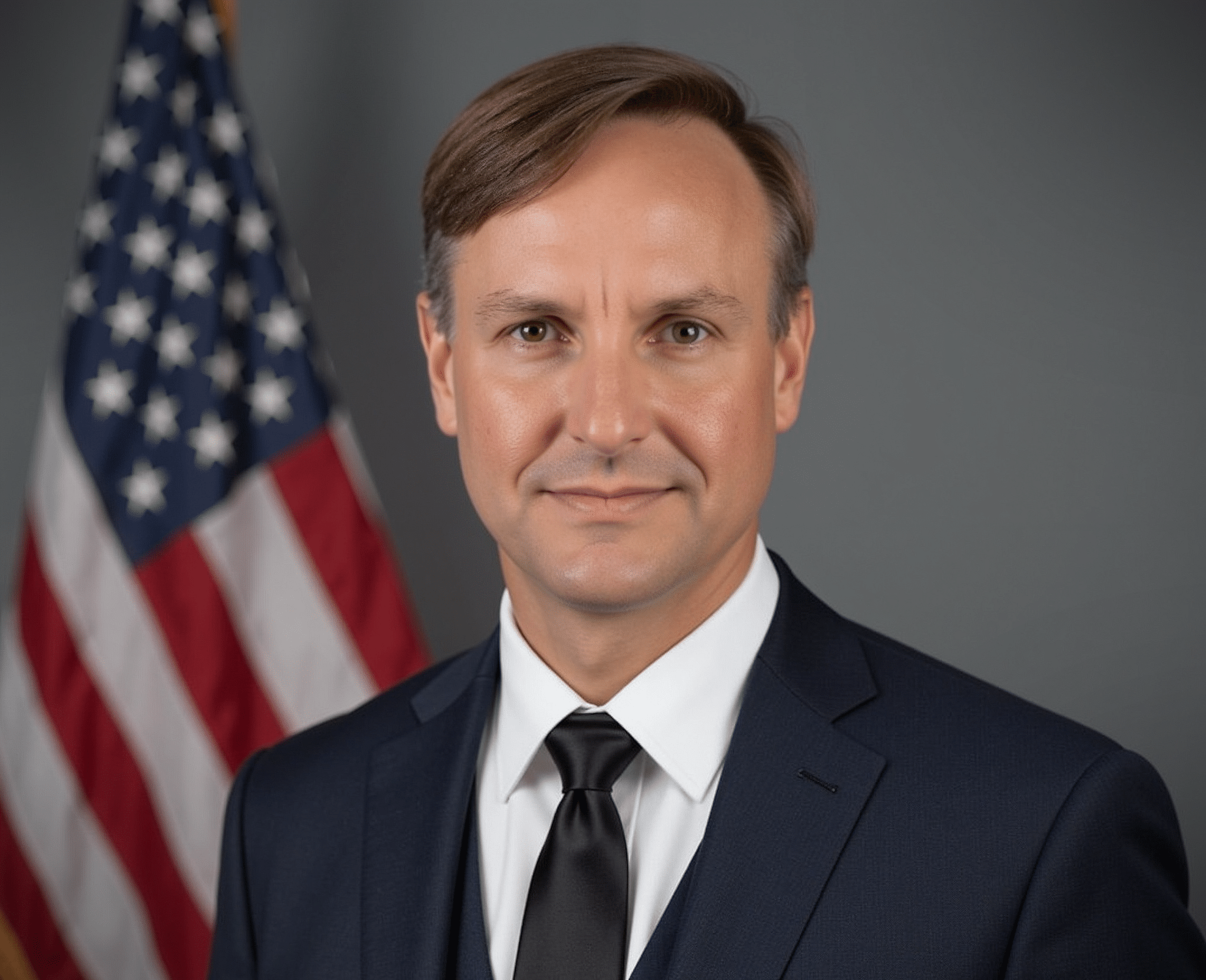
A renowned military criminal defense attorney and best-selling author, Michael Waddington defends clients worldwide in serious cases and trains lawyers in advanced cross-examination. He is frequently featured by major media outlets like CNN and 60 Minutes.
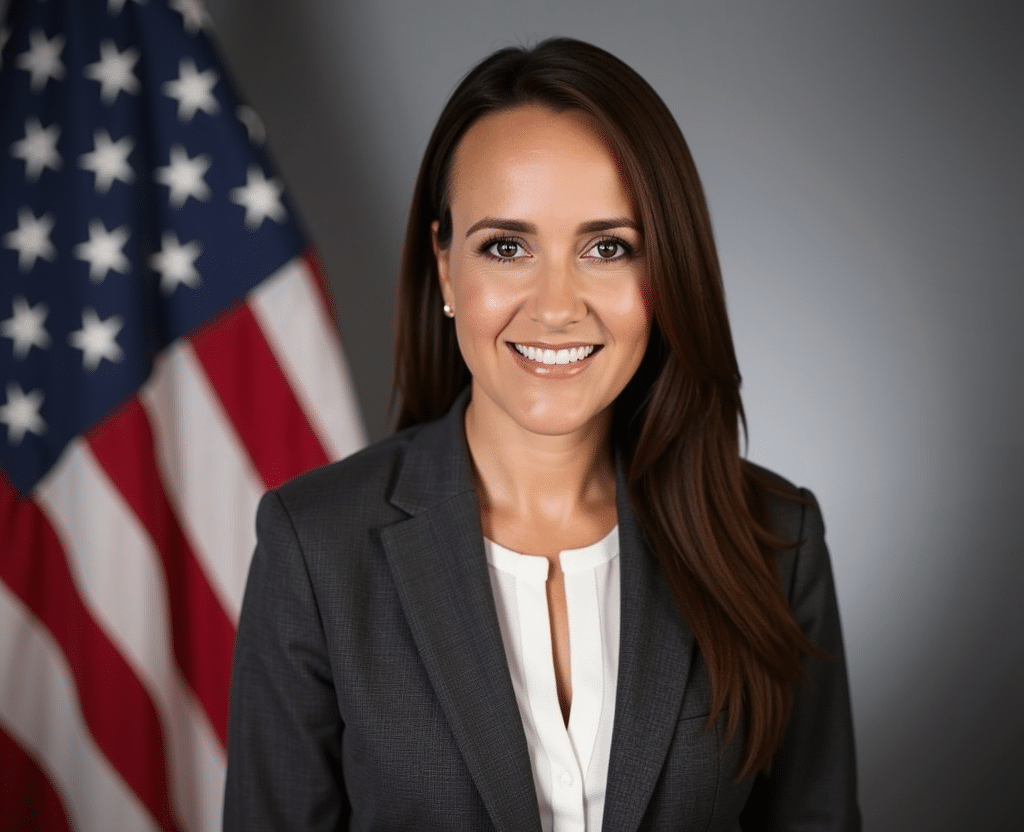
Alexandra González-Waddington is a top military and civilian defense attorney who has handled high-profile sexual assault, violent crime, and war-crimes cases globally. Her work is widely recognized by media outlets including 60 Minutes and ABC’s Nightline.

